
Meet mayoral candidate Douglas Fischer
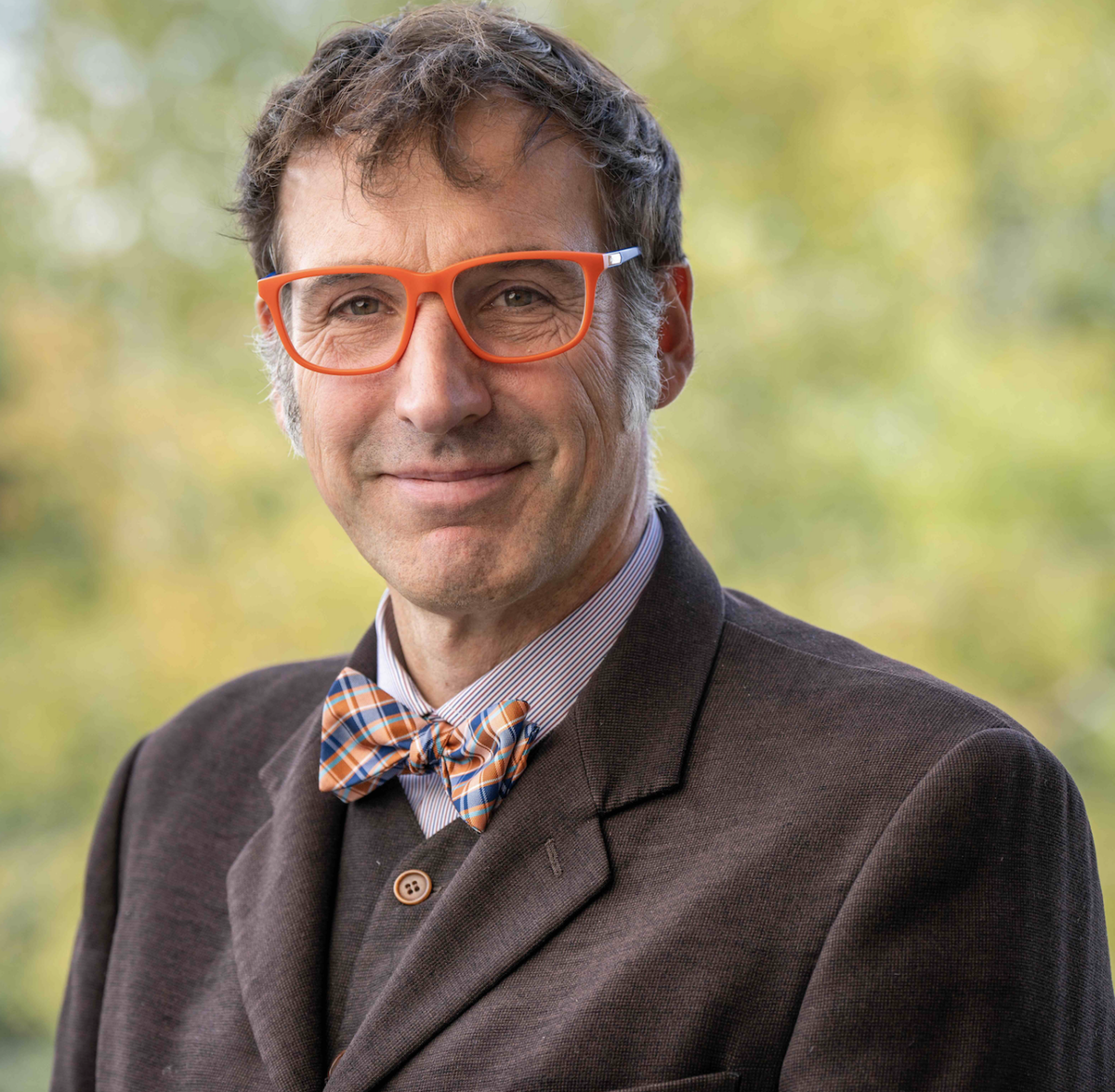
While in high school, a teacher told a young Douglas Fischer that democracy works when people show up and get involved. After nine years serving in the public sphere, he is aiming to bring this sentiment to the mayoral seat.
Fischer is a journalist-turned-city-commissioner seeking to bring a collaborative approach to local government. In his bid to become the mayor of Bozeman, he is platforming on three main issues: affordability, safety and community.
“Local government is how we come together and make decisions,” he said. “It’s how we bring different perspectives together and say, ‘How do we solve this?’”
Fischer was elected to the City Commission in 2023 and will finish his term this November. Before that, he spent eight years on the school board. According to him, the board’s consensus-oriented approach inspired his method for local leadership.
“The school board here has a strong culture of consensus and collaboration,” he said. “That is something that I think we can learn as a city in terms of getting people out of their corners and into the room, solving problems.”
“On the school board, there is a culture of also parking your agenda at the door and focusing on the main goal. I want to bring that muscle to the city,” Fischer said.
For most of his adult life, Fischer worked as a journalist. “I was at a nonprofit news organization that focused on environmental health science — things like air quality, plastics in our environment, water quality,” he said.
Fischer and his family have lived in Bozeman for fifteen years. His wife is a professor at MSU with deep family ties to the city, according to him. Her great-grandmother was involved in creating the Lee Metcalf Wilderness, a set of four separate units of wilderness land in southwest Montana managed by the Bureau of Land Management.
Fischer said his top priority as mayor would be ensuring housing affordability. According to him, this issue can be broken down into three main components: housing costs, tax rates and job availability.
“Affordability is making sure that we have the job base, so that folks like [my son] can come out of MSU or Bozeman schools and have a job where [they] can start a career,” he said. Fischer said that the city could use the research being done at MSU to create startups and more local job opportunities.
In addition to affordability, safety is another priority for Fischer. “I want all of us to feel safe in our public spaces and downtown, and I want us enforcing traffic law,” he said.
Fischer said he would advocate for a community-policing model. He said he wants officers who understand the neighborhoods they are policing and thinks more mental health awareness should be incorporated into policing methods.
“The person downtown who is not breaking any laws, just having the worst day of their lives — to call somebody with a gun to solve that problem, it’s not what that person needs,” Fischer said. He added that he wants to work with Gallatin County to see how public safety funds can be used to make sure there are behavioral and mental health components involved in addressing individual crises.
Regarding this year’s ballot measures, Fischer recommended voting against the water adequacy for residential development (WARD) initiative. WARD is a ballot initiative that would require developers to commit to making 33 percent of units affordable to secure cash-in-lieu of water rights, according to the City’s website.
“I highly admire and respect the aspirations that WARD is looking for, but it’s going to make it hard to build in Bozeman,” Fischer said. “It takes two very complex issues, [water and housing], and it takes the toolbox that we need to deal with these two and puts it on the windowsill.”
Bozeman Tenants United, the Southwest Montana Building Industry Association and the Montana Conservation Voters have endorsed Fischer’s mayoral bid, according to him. “I feel like that says I speak to a lot of different, diverse interests,” he said.
Fischer said he also hopes to strengthen town-to-gown relations: the relationship between MSU and the City. “[MSU’s student government] is working on ways to get student voices engaged in our advisory panels, and I think if we can get students sitting on those panels, it'd be cool,” he said.
Fischer added that he hopes to build community in the city.
“Community is this notion that, as we grow, we need to build places where you can work, live, show, gather and play — not just housing,” he said. “Growth has been the story of Bozeman for decades. We need to be careful on how we grow.”


Comments ()