
Missoula judge, public defender clash over artificial intelligence use
A dispute over the use generative artificial intelligence in Missoula's district court system boiled over last month with questions of personal bias, leading to a request for the Montana Supreme Court to weigh in.
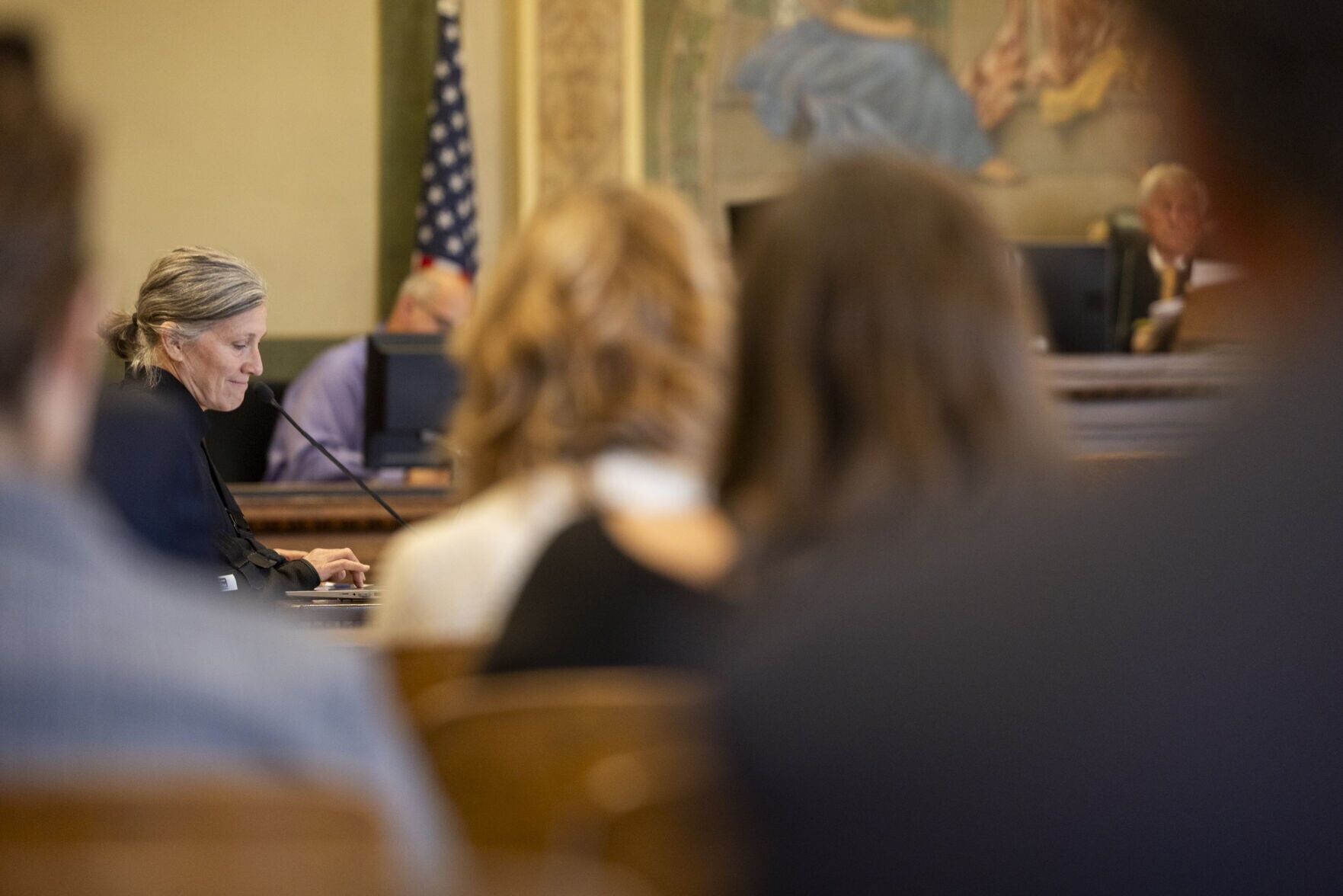
Missoula County District Court Judge John Larson rejected court submissions in multiple cases made by Missoula Public Defender's Office supervisor Monica Tranel, citing her use of artificial intelligence in a recent case filing.
Tranel then requested Montana's highest court disqualify Larson as a judge in her cases because of personal bias, arguing that Larson was singling her out.
The Montana Supreme Court sided with Larson over the complaint. On March 27, Montana Supreme Court Chief Justice Cory Swanson ruled that the evidence does not point to a personal bias against Tranel.
"The affidavit and motion make it clear Judge Larson based his rejection of Tranel's filings on her conduct in another court proceeding, of which he took judicial notice," Swanson wrote in the ruling. "There is no allegation of personal bias against Tranel."
Generative AI systems are currently allowed in the local court system, but their use requires a public disclosure and a verification of facts involved by a human.
The clash developed following a Missoulian story that reported Tranel had been accused of violating Missoula County District Court's local AI rules after she filed a court document with language seemingly generated by a large language model, but that lacked the required AI disclosure.
On March 23, Tranel wrote in an affidavit to the Supreme Court that Larson rejected two other filings on March 11 related to other cases where she represented the defendant.
Tranel argued to the Supreme Court that both filings properly followed the local rules around AI, and Larson's rejections because of his suspicions over AI constituted bias.
"The court went beyond the record before it, amplifying inflammatory (and incorrect) headlines about 'incompetent use of GenAI,'" Tranel wrote. "In doing so, the court deliberately pulled in unconnected cases and extra-record information, based on suspicion. Under these facts, the appearance of impartiality is impossible and disqualifying."
The underlying argument of the case was that the denials violated her client's constitutional rights to due process and a fair trial, Tranel wrote.
The cases involve one man charged with aggravated assault, and another man facing assault with a weapon and driving under the influence charges. Both defendants pleaded not guilty in the cases.
The Missoulian reached out to Tranel by phone and left voicemails on Monday afternoon and Tuesday morning and had not heard back as of Tuesday afternoon.
Tranel was previously a Democrat candidate for western Montana's congressional seat in 2022 and 2024, but lost to current incumbent Ryan Zinke, a Republican. She also ran for the Public Service Commission in 2020. This year, she's on the ballot as a candidate for the state Legislature in House District 92.
Larson has been critical of the public defender's office in the past. He admonished the office for not assigning cases in the midst of a staffing shake up in August 2025, the Missoulian reported.
Larson has also faced criticism over his actions in court. In April 2025, the Missoulian reported Larson stepped away from the first-ever treatment court in Montana following a string of complaints and concerns from prosecutors and defense attorneys.
In the March 27 ruling, Swanson wrote two issues stood out from Tranel's request to disqualify Larson.
He wrote Tranel could have instead addressed the rejection by filing an appeal on the specific cases, which would also be brought to the Montana Supreme Court.
He also wrote that Tranel's argument does not distinguish between a personal bias versus professional skepticism based on her representation of a different client in a different case.
"In that regard, the undersigned finds Tranel has 'not submitted the type of evidence necessary to overcome the presumption of fairness and impartiality accorded to all judges,'" Swanson wrote, citing direct case law.


Comments ()