
Montana AG: Helena must change federal immigration enforcement resolution or face lawsuit
Montana Attorney General Austin Knudsen is demanding the city of Helena make changes to an immigration resolution city commissioners adopted in January within 15 days, saying it violates a 2021 law that forbids sanctuary cities in Montana, or he will sue, according to a letter he sent to Helena officials Tuesday.
House Bill 200, passed in 2021, prohibits Montana from having so-called "sanctuary cities," a term used for cities that have made policies blocking some federal immigration enforcement activities. Specifically, the law says local governments are not allowed to enact policies that restrict the exchange of information about someone’s immigration or citizenship status “for a lawful purpose.”
“Helena’s resolution appears to contain blatant violations of this law,” Knudsen wrote in the letter.
His office is asking Helena to explain how each section of the resolution complies with state law and to provide all emails and correspondence between city officials, including the City Commission, about the resolution.
In a statement, City Manager Alana Lake said the city was aware of the letter and is reviewing it.
"While we cannot discuss the details of a potential legal issue, the City is committed to transparency and compliance with the law," Lake said in a statement. "The City takes these matters seriously and will continue to cooperate with the appropriate authorities while remaining focused on serving our community."
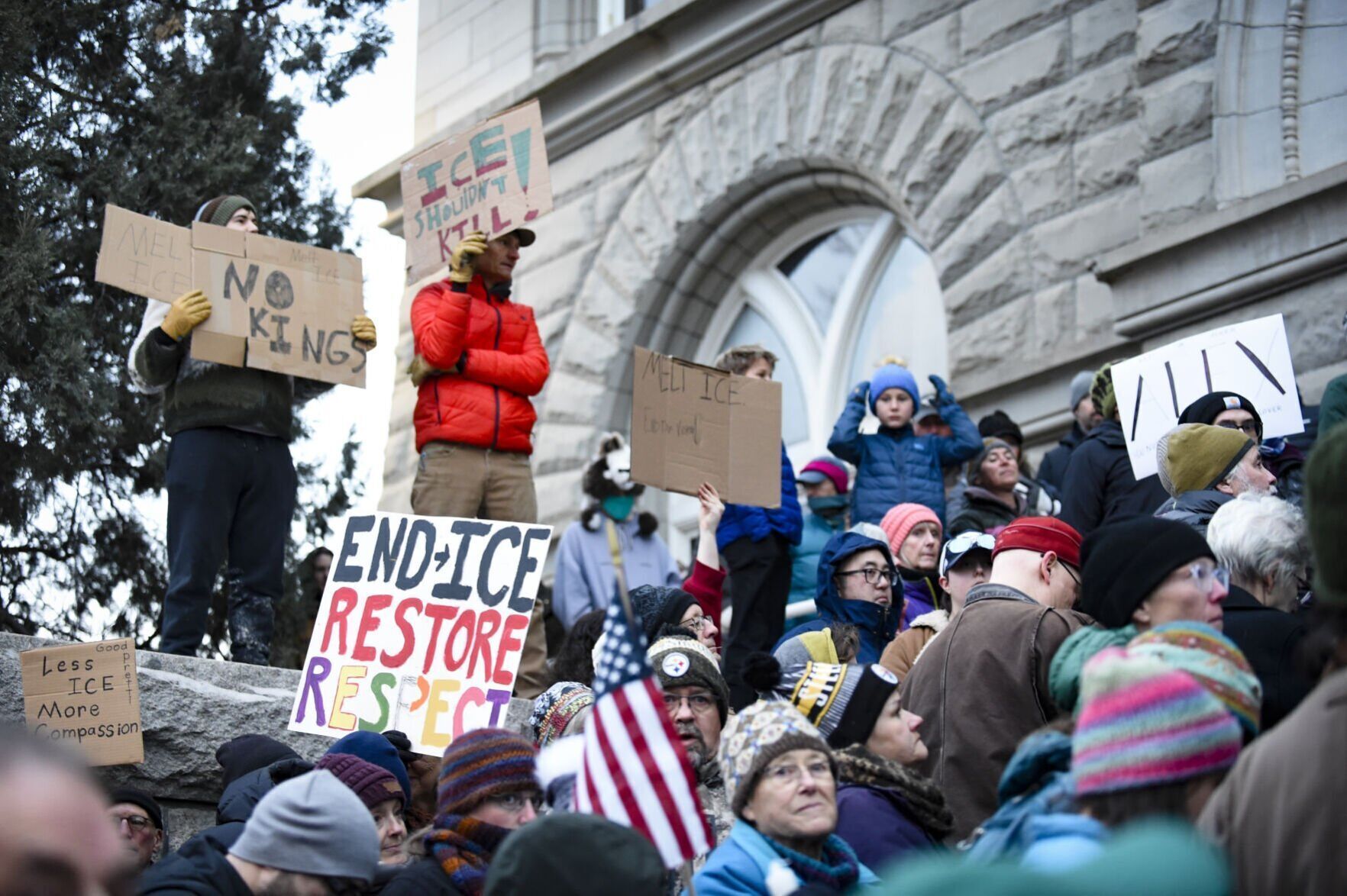
On Jan. 26, the Helena City Commission passed a resolution instructing HPD to not enter a 287(g) agreement, which would allow Helena officers to be deputized to aid in specific U.S. Immigrations and Customs Enforcement tasks.
It also tells Helena employees, including law enforcement, not to disclose a person's immigration or citizenship status to anyone outside city government unless required by law.
“The Commission supports the Helena Police Department’s policy that it will not, independently or assisting other law enforcement agencies, stop, pursue, interrogate, investigate, arrest, or otherwise detain a person based solely on their immigration status or suspected violations of immigration law,” the resolution states.
On a technical level, City Attorney Rebecca Dockter previously told the Independent Record, a resolution is not policy, and it cannot command HPD. Resolutions are typically used as a formal statement of opinion for elected officials.
HPD answers to City Manager Alana Lake, so a disagreement between the resolution's intent and HPD's actions, such as HPD entering a 287(g) agreement without Commission approval, would be handled by her.
But Knudsen wrote in his letter he believes the resolution does amount to a policy as defined by the sanctuary city law, pointing to its title: "a resolution memorializing City of Helena policy when federal immigration enforcement actions are present within city limits.”
Knudsen’s letter quotes HB 200’s definition of policy: “a formal or informal rule, order, ordinance, or policy, whether written or unwritten.”
He points to Sections 2 and 3 of Helena’s resolution, which instruct city employees to not share a person's immigration status without a legal order, and not to aid in arrests “based solely on their immigration status or suspected violations of immigration law.”
Specifically, these sections could prevent city employees from voluntarily completing administrative tasks for federal officers, such as sharing the immigration status of an individual, without a court order, Knudsen wrote. It also prevents HPD from aiding with detainer requests, he said.
Montana state law passed under HB 200 prohibits policies that prevent a local municipality “sending to, receiving from, exchanging with, or maintaining for a federal, state, or local government entity information regarding a person's citizenship or immigration status for a lawful purpose.”
It also prevents local governments from asking law enforcement to ignore lawfully issued immigration detainer requests.
Beyond the specific language of Helena's resolution, Knudsen said it would likely “have a chilling effect on HPD officers and city employees.”
“Indeed, the Resolution appears designed to send a strong signal to HPD officers that any cooperation with federal immigration enforcement agencies is contrary to the policy of the City Commission, and that HPD officers should instead adopt an adversarial posture such as trying to ‘unmask’ them and refuse to voluntarily comply with their administrative subpoenas,” the letter states.
At a February press conference, Knudsen said he believed the resolution "clearly" showed that Helena's City Commission was "thumbing its nose" at state law. An investigation was launched by request of Gov. Greg Gianforte.
City officials have previously maintained that Helena’s resolution complies with the law.
One week after Knudsen announced he’d investigate the city of Helena on suspicion of breaking anti-sanctuary city laws, Dockter said she felt "comfortable" Helena was legally sound.
On Feb. 18, Dockter went over the timeline of the resolution with commissioners, saying most of the resolution was drafted to memorialize existing HPD stances and policies.
HPD policy already doesn’t allow officers to hold individuals for immigration charges unless the detainees are charged with a federal crime or if law enforcement has a warrant, affidavit or removal order, the city states on its website.
The lone tangible change the resolution brought was a push to identify federal agents, requesting they unmask at an HPD officer’s discretion, Helena Police Chief Petty previously said.
At the meetings leading up to the resolution's December drafting, Dockter identified multiple comments from commissioners stating they wished to follow state and federal law.
Between the language of the resolution and the timeline, she said she believed the resolution complies with the law.
She added that she had invited a third party to legally review the resolution, and she asked commissioners loop in her office or the third party if contacted about the investigation.



Comments ()