
Montana-based challenge to Trump climate policies heads to appeals court
As they bring their latest Montana climate case before a federal appeals court, environmental attorneys are hoping to pull their challenge to federal climate policies out from the shadow cast by their failed attempt a decade earlier.
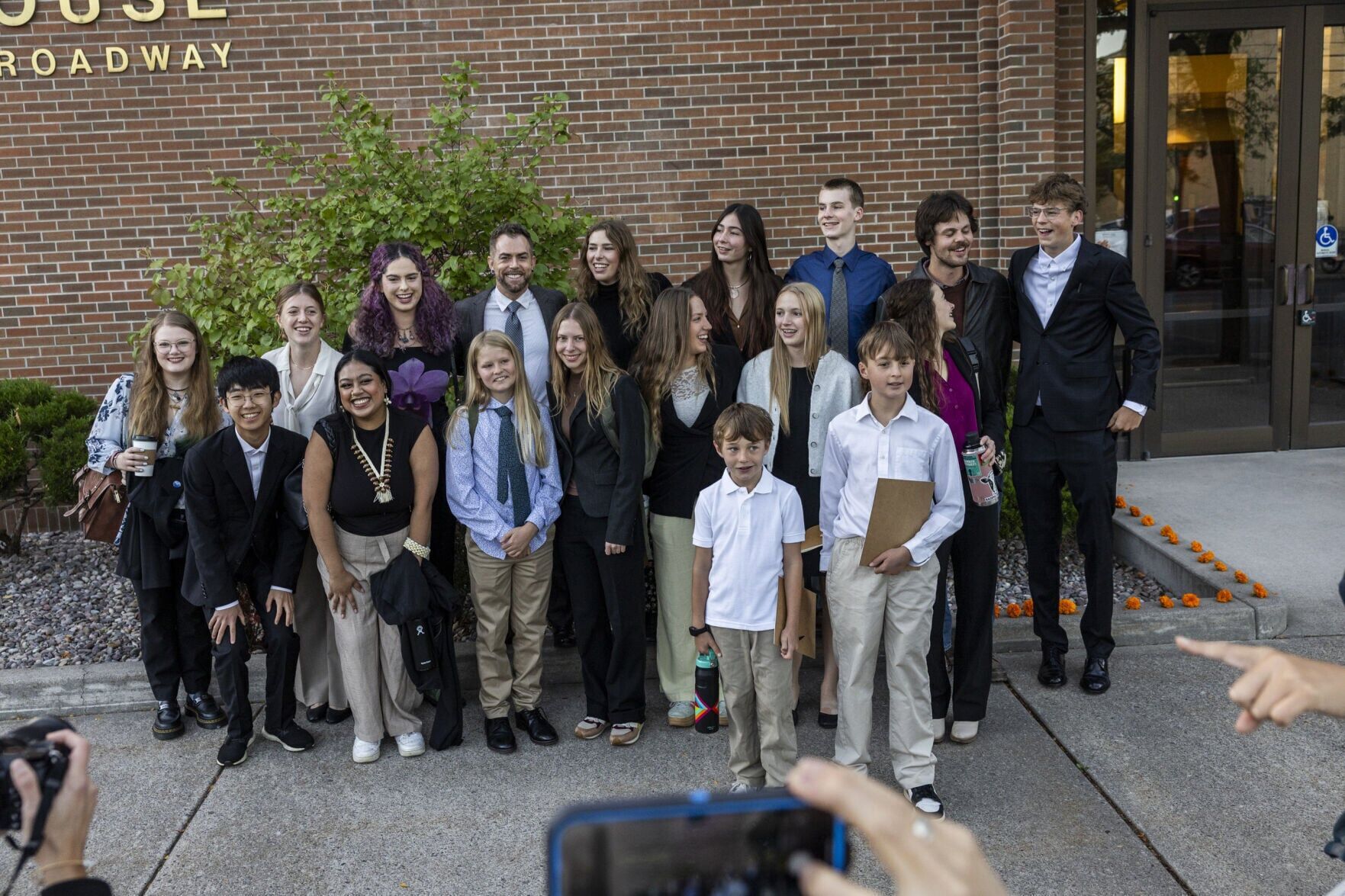
Our Children’s Trust is one of the groups representing Livingston resident Eva Lighthiser and 21 of her fellow young plaintiffs in the latest case. The law firm is appealing a federal district judge’s order last fall dismissing their attempt to block three executive orders by President Donald Trump to boost fossil fuel production and consumption.
Our Children's Trust notched a major victory in the 2024 Held v. Montana decision, which established that the state’s Constitution guarantees a right to a stable climate for its citizens.
But in opening briefs filed over the past two months, the plaintiffs and the federal government defendants have locked their sights on an earlier attempt by the firm to reshape federal climate policy: Juliana v. the United States.
The 9th Circuit found in 2015 that the Juliana plaintiffs were asking the courts to go too far in dictating the federal policies set by the executive branch. In legal parlance, the plaintiffs “lacked standing,” meaning they hadn’t overcome the requirements to establish harms caused by the defendants while offering up a solution the courts could provide.
“Not every problem posing a threat — even a clear and present danger — to the American Experiment can be solved by federal judges,” the 9th Circuit panel wrote at the time.
U.S. District Judge Dana Christensen quoted that language in his order dismissing the Lighthiser case last fall, a month after the two sides sparred during a two-day hearing in his Missoula courtroom.
While the plaintiffs had established the federal government’s actions as a “children’s health emergency,” the judge wrote he had “reluctantly” concluded they had not broken free from the constraints of Juliana.
In a 60-page appeal brief filed in January, attorneys for the plaintiffs argue their new case is very different from that earlier one.
Unlike Juliana, they are no longer challenging 50 years of government policies. They are also not requesting the court to create a “comprehensive climate recovery plan” that laid out specific policies.
Instead, they argue, their latest challenge asks only for a narrower set of climate policies to be thrown out by the court — the three executive orders or “EOs” named in the lawsuit. Those orders seek to “unleash American energy” — with the notable exceptions of wind and solar power — declare a national energy emergency and revitalize the country’s ailing coal industry.
“There are specific executive directives the court could enjoin," the plaintiffs wrote, "that would redress plaintiffs’ injuries by halting unnecessary mandated unleashing of fossil fuels, freeing wind and solar from the challenged EOs’ constraints and ending the EOs’ attack on science as an ‘undue burden’ on fossil fuels.”
Mitch WerBell, an assistant professor of law at the University of Montana, said Juliana plaintiffs' request for a remedial plan could be a significant difference between the two cases.
"The argument here goes to that type of relief, as far as what the court can do ... (whether) the court does have the power to render a declaratory judgment as to those executive orders, and that's what is different from that remedial plan," WerBell said.
During last year’s oral arguments and in his subsequent order, Judge Christensen indicated the plaintiffs' preferred solution wasn’t so straightforward.
Questioning an attorney for Our Children’s Trust, the judge theorized that the federal government could simply continue similar policies — just without referencing the executive orders. Under a hypothetical injunction, he suggested the court would be stuck ruling on each agency action alleged to violate the injunction.
“I’d be required to continue to monitor the actions of this administration to determining whether or not they are acting in a manner that contravenes my injunction, finding these three executive orders to be unconstitutional,” Christensen told the plaintiffs’ attorney.
In their appeal, the Lighthiser attorneys dispute what the judge called an "unworkable" request, and they recite a litany of other cases in which courts have blocked executive orders or other federal actions undertaken by the Trump administration.
But in a response to the appeal brief filed last week, Department of Justice attorneys for the federal defendants wrote that even without the executive orders in place, federal policy could remain the same.
"After all, the agencies can continue to permissibly exercise their discretion to promote the President’s policies as expressed in the executive orders by streamlining permitting decisions, reviewing funding decisions, convening committees, and the like," the defendants argue.
More broadly, they argue the courts have no authority to block executive orders.
"The nature of the executive orders themselves makes this so," the DOJ wrote. "They are general policy directives that set the Executive Branch’s priorities and are explicit that they can be implemented only in accordance with applicable law."
Deriding the plaintiffs’ case as “policy advocacy masquerading as litigation,” the government leans heavily on the Juliana precedent and accuses the plaintiffs of asking the courts “to micromanage the President’s policy choices.”
Beyond that issue of standing, the government also rejects Christensen’s finding that there is a clear causal line between the executive orders and the climate-fueled harms to the plaintiffs.
Along with the briefs from the two parties, the case has also attracted amicus briefs from individuals and groups ranging from law professors and renewable energy advocates to faith organizations, climate rights scholars and former federal officials. That's not necessarily uncommon for major cases at the federal appeals level, WerBell noted.
"I think all eyes are sort of on this one as well," he said. "Juliana was litigated for many years in several different forums, went up to the 9th Circuit several times, and it influences how other courts of appeal may look at this issue, of how courts can provide some sort of relief."
The Ninth Circuit has set a hearing for oral arguments in its Portland courthouse for Monday, April 13.
This article has been updated to clarify Mitch WerBell's comment that the plaintiffs argue the court has the power to issue a declaratory judgment.


Comments ()