
Montana Democrats talk conservation at congressional candidate forum
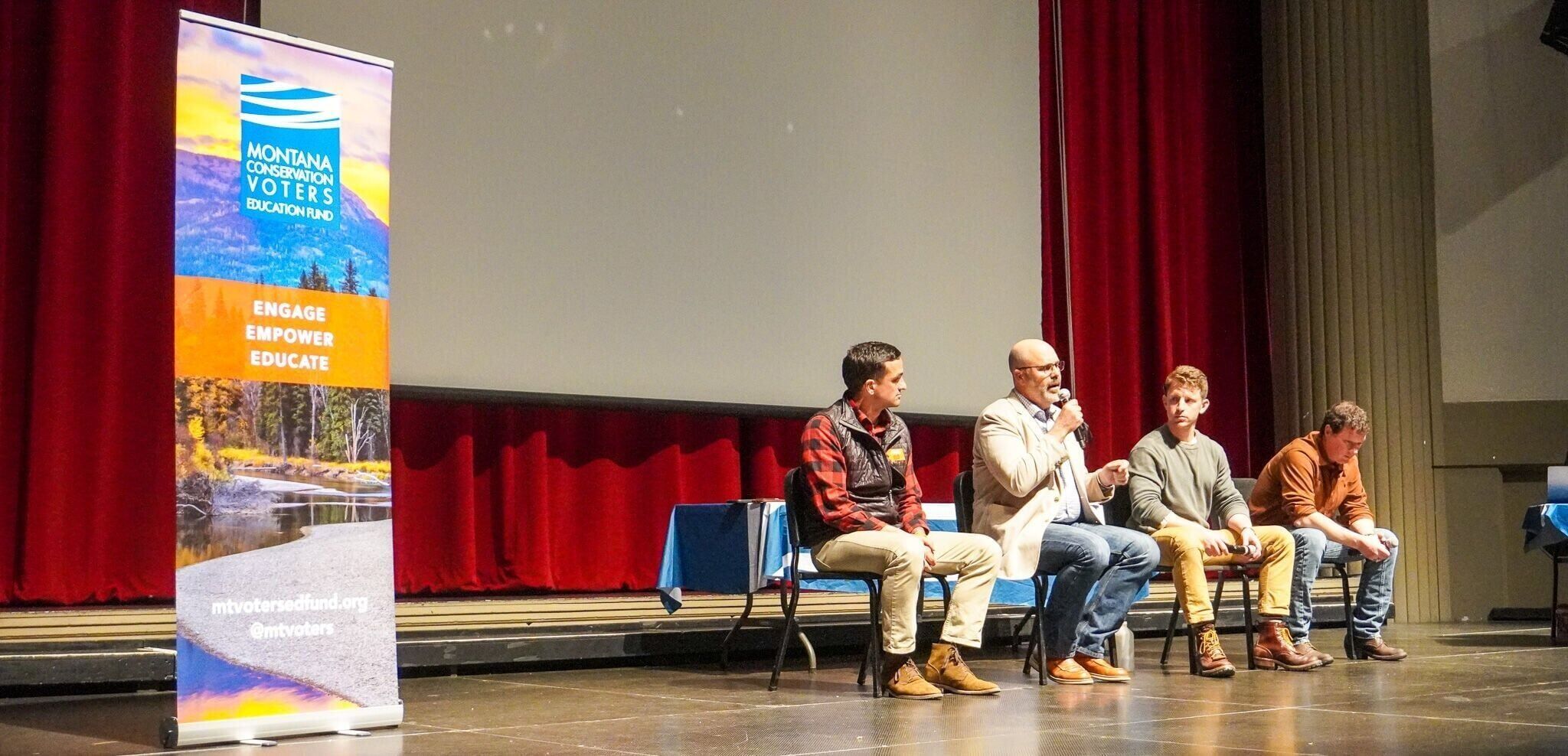
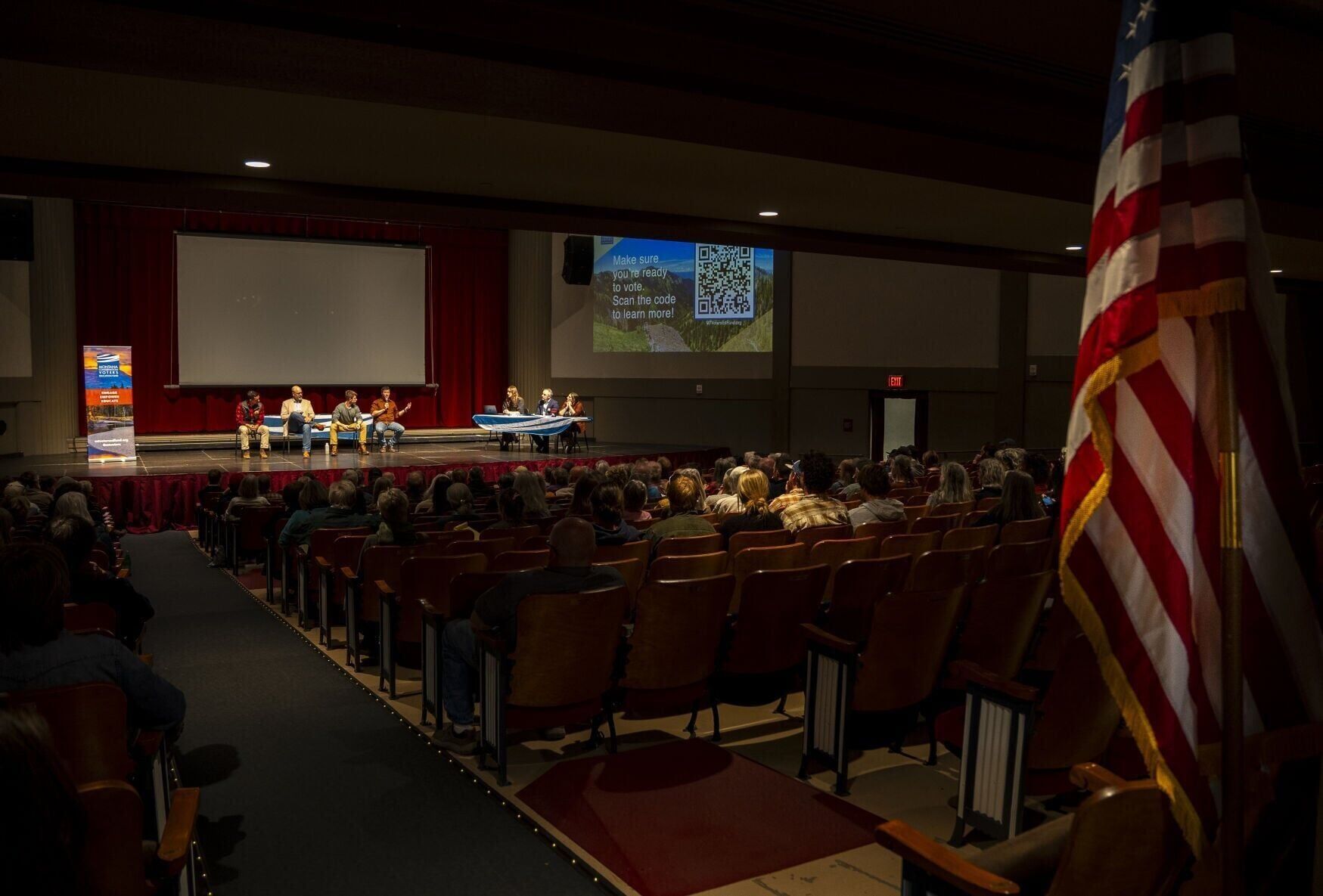
All four 1st Congressional District Democratic contenders answered primarily environment-focused questions at a candidate forum Tuesday evening at the Willson Auditorium.
Environmental advocacy nonprofit Montana Conservation voters sponsored the event. Less than 60 days remain until the June 2 Democratic primary.
Each attending candidate rarely strayed from their lane of expertise.
Sam Forstag, 31, a Missoula smokejumper and union leader, focused on firefighting, union workers and working for public lands.
“For all of the unique things these candidates bring, something unique that I bring is I’ve been in this state doing the organizing, advocacy work the past decade in between fire seasons for public lands, for homeless shelters, for the American Civil Liberties Union, actually getting some bills passed into law,” Forstag said.
“If we want to keep our lands public we should send a congressman to Washington that knows what it’s like to work on them.”
Russell Cleveland, a St. Regis rancher, Navy veteran and onetime Colorado Childcare owner, took a different tack. Cleveland, 40, whose campaign coffers were larger than the other primary hopefuls at the beginning of the year, repeatedly hammered his campaign’s financial independence from corporate PACs and special-interest groups.
“Do you want a representative that’s been bought and paid for by corporations and special interests, who is beholden to anything their party asks or what their endorsers asks?” Cleveland said. “I am none of those things.”
Ryan Busse, the former firearms executive, author and unsuccessful 2024 gubernatorial candidate, garnered the most applause for his responses. Busse’s name recognition and advisory experience hit home.
“The battle for this state, for the special things in our country changed my life,” said Busse, a former Montana Conservation Voters board chairperson.
Simms resident Matt Rains, an Army veteran, photographer and rancher, also sought to differentiate himself.
Candidates answered the following moderator questions. Their responses are edited for clarity and brevity.
Legislation to improve Montana public lands?
Forstag: “Reinvesting in public lands does not just mean fighting for the previous budget. That returns us to where we were a year and a half ago. A lot of our agencies were understaffed, and a lot of our processes were not as efficient as they could be. None of those inefficiencies were the people who’s jobs they came after in western Montana a year and a half ago.”
Forstag said eliminating administrative inefficiencies could make public-lands management most cost-effective.
“Cut the sticks before they are burning, before I have to call in a large air-tanker at $7,000,” he said. “We need to be having a discussion about how we invest in our public two to three times the magnitude of what we’ve been doing.
“The inefficiencies were things like federal hiring, where a wild-land firefighter has to apply for their job nine months before that fire season starts. They might be making $14 an hour. Those inefficiencies look like a workman’s compensation program where if I tear my calf in a wildfire and limp back three days later like I did in Washington, I end up spending a year and a half chasing down that workman’s comp plan, going back and forth spending dozens of man hours just to try to get an injury paid for. That needs reformed.”
Cleveland: “We are living in a corporatocracy. Big corporations are flexing their muscles to get their hands on the last assets we have that are precious. Montana is rich with natural resources, rich with opportunity. We need to attack those corporations and say ‘you’ve gone too far’, put up a firewall around our most vital natural assets.
“That means water, that means land, that means air. We have to get money out of politics and put corporations in check again to be able to actually take a stand and reign in this power.”
Busse: “The Clean Water Act, under attack. The Roadless Rule, under attack. The Clean Air Act, under attack. The wilderness study areas in this state, under attack. The big corporate bosses have lots of representation, they have lobbyists, they have attorneys, they have all kinds of money to pay for this influence.
“Industry is running rough-shod over our public lands. They’re attacking the very core bedrock environmental legislation on which all conservation policy is based. The largest corporations on the planet are pushing this policy.”
Rains: “Our public lands are the core essence of who we are. I’m going to fight to protect every single acre we have because I have generations demanding I stand up and protect what we have. We need to get ahead and shut down these mining propositions.
“I don’t give a damn about rare earth metals in Montana. They can stay in the ground. Our water is vastly more important. We don’t need to be developing public lands. We have to put a stop to that. Once they start developing it’s done.”
How to shield consumers from rising gas prices?
Forstag: “We need to stop providing incentives to large corporations and fossil fuel companies. The reason gas prices are going through the roof is because of the chaos, the cruelty and corruption that is at the heart of our government right now.
“The power to declare war is not vested in the president. Congress hasn’t voted for a war since WWII. Both parties have failed to stand up for working people who bare the brunt when gas prices go through the roof.”
Cleveland: “One man decided to force us into (Iran), a place that we never should have gone. That’s putting the entire world in a petroleum crisis. One good thing the U.S. can take out of this is realizing how dependent we are on oil.
“Just like healthcare, petroleum has its grip on this country. Our politicians are controlled by big money, including oil, pharmaceuticals. We can invest in renewable energy, which is a vibrant opportunity in Montana, not just for the energy sector, but for jobs, something that Montanans desperately need. Renewable energy is the answer, but to get there we have to get representation that is not influenced by this kind of money.”
Busse: “We must reinstate the incentives for clean-energy development. If we say climate change, global warming is an urgent thing, we should stop saying it and start acting like it. We should be treating climate with the urgency it deserves and we should put clean energy back on the grid. It’s the cheapest form of energy.
“By reducing the development of wind and solar, we are making things more expensive for everyone. We’re exacerbating the energy crisis, the affordability crisis. Let’s level the playing field so we are not so dependent on fossil fuels.”
Rains: “After I got my West Point engineering degree, I (served), traveled, I took a job inspecting power plants. Those four years allowed me to get to understand how our national power grid works.
“Renewables started taking over the base load of all the energy production in the Midwest, and that was not expected by any of the gas companies. We need to keep investing. Montana is second in the nation for wind production. We need to capitalize on that.”
Balancing data center opportunity with environmental concerns?
Forstag: “If they want to come develop data centers, they should be federally required to produce all of their own power, systems that are maximumly water efficient. The industry driving these data centers, artificial intelligence, is perhaps the biggest existential threat to our economy, to working people.
“It is technology that has the biggest potential to further consolidate immense, terrifying amounts of power in the hands of even fewer people. What that regulation should look like is making sure we are not leaving this technology to a few corporate executives, that we have some way to conduct oversight.”
Cleveland: “We are feeling the pressure, the squeeze from big tech that wants to push in data centers at the expense of our environment in Montana. We must demand transparency at every level.
“I’ve been to data center meetings where tech companies give canned answers. They won’t give specifics or schematics. There needs to be a moratorium in place, a pause until they are willing to provide these things. Montanans deserve those jobs, but not unless companies can check boxes on cooling, power generation and sound production to protect Montana’s environment and the people who live here.”
Busse: “One data center will take more energy than all the residential customers in this state combined. The modern labor movement was born here in Montana. I think we’ve learned not to take a corporation’s word when it makes promises.
“These are tech trillionaires who want to take your intelligence, your water, your electricity, to package it back up and sell it to you to take your jobs.”
Rains: “Artificial intelligence isn’t data centers, but it is the wave of the future. We need to make sure the U.S. maintains and is the epicenter of AI development because we can’t afford to let that go to China, overseas. The companies that own data centers aren’t being held accountable.
“Federally we have to build something that doesn’t exist. I don’t know if it’s a department of technology, if it’s within the department of energy, but we need to start regulating in a way that we can advance technology, but also regulate these data centers. The research and development is not even close to being where it’s safe to bring into our communities to start relying on our natural resources.”
Top conservation issue?
Forstag: “Reinvesting in public lands, fully funding the Forest Service, the Department of Interior.”
Cleveland: “Water is the most precious commodity. From a federal perspective it is the thing we should be seeking to protect.”
Busse: “I’d love to pass corner-crossing, to see maintaining public lands adjusted for inflation.”
Busse also mentioned implementing legislative safeguards against fast-tracking new Montana mining efforts.
Rains: “I don’t think I can stress enough, it doesn’t matter what we say up here if one of us doesn’t get elected in the general election. This is a red state, this is a red district. We have to make sure we win the general election. What we need to win this election is someone who can go across the political spectrum.”
Is Democracy threatened?
Forstag: “A year and a half ago I would have told you how incredibly ignorant it was the national Democratic Party was running a platform defending democracy. This last election Democrats did not win voters making less than $100,000 per year for the first time in a long time.
“Working-class people in this country voted majority Republican. That is a problem. Half the union members voted Republican. We saw a lot of young people who stayed home. The way we protect democracy is we have to win back working people and union members.”
Cleveland: “A star burns brightest before it dies. That’s how I view this administration. To win we have to cut ties with dark money.”
Busse: “We all know our democracy is in peril. It is not normal to have masked ICE agents killing U.S. citizens and zip-tying kids in class. That means Democrats must deliver. One of the reasons we have Trump sitting in the Oval Office firing off these incendiary tweets, getting us in wars of choice is because Democrats talked a lot and didn’t deliver enough.
“If we don’t win this election and then deliver big things like universal healthcare, fixing public lands, delivering real help for people who can’t afford to live here, stopping this destruction, then our democracy is gonna be further in peril.”
Rains: “Democracy is absolutely under attack. We’ve lost so many soldiers in the wars in Iraq and Afghanistan. We don’t know why the hell we are in Iran right now. It is a ploy to get us to stop talking about the Epstein files. This administration is out of control and they use smoke and mirrors to distract.”



Comments ()