
Montana Raptor Conservation Center in Bozeman sees more birds with lead poisoning
BOZEMAN, Mont. — The Montana Raptor Conservation Center in Bozeman is reporting an increase in cases of lead poisoning in the birds they are treating.
Becky Kean, the center’s director of rehabilitation, said so far this year they have treated four birds for extreme levels of lead toxicity in their blood. However, many that come in for other injuries have elevated lead levels.
“We can see severe cases into, like, seizures and being blind and, so yeah, it's pretty nasty effects that it can have on these animals,” Kean said.
One of the clinical signs of lead poisoning is clenched talons and an inability to walk or move very well. Lead impacts the circulatory, respiratory and nervous system, as well as other internal organs, Kean said. It especially makes it difficult for the birds to breathe.
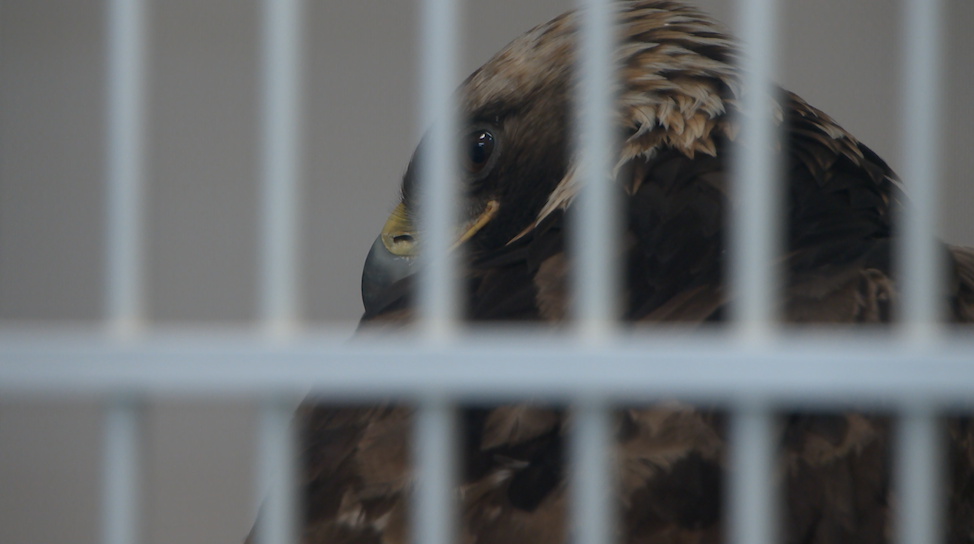
Of the four raptors with severe cases of lead poisoning, three died. They currently have one golden eagle that came to the center about four weeks ago, which is still going through treatment hanging on.
Kean said the chelating agent used to remove lead from a bird’s systems has become more expensive and harder to find. She also said the treatment is demanding for both staff and the birds.
“Very labor-intensive and very stressful on the bird. And that's what really matters, you know, and putting them through that. I can't imagine how they feel in this process,” Kean said.
They usually supplement the birds with fluids to rehydrate them, along with antibiotics and calcium, as lead can interfere with bones, too.
Kean said they suspect spent ammunition and sometimes lead sinkers are behind the poisonings. They tend to see a correlation between hunting season and more lead poisoning cases.
Common Montana raptors include birds like eagles, hawks, osprey, falcons, owls, kestrels and harriers. While these birds are not huntable, they can still be exposed to lead ammunition through their diets.
According to Fish, Wildlife and Parks, in Montana, federal rules require hunters to use non-toxic ammunition when hunting for waterfowls such as ducks, cranes and swans.
“Before this regulation was in place, lead shot would kind of wind up in ponds where ducks could kind of ingest that, that lead shot," said FWP Information Officer Morgan Jacobsen. "And then that became a more common occurrence. And there was recognition that something had to change,” Jacobsen said.
He said there were no ammunition requirements for hunting upland fowls such as pheasants or grouse unless the hunting happened in a national wildlife refuge or waterfowl production area.
“Really, there's just so many options out there in terms of what, you know, what type of ammunition is available. It's really up to the hunter to decide what they want to do,” Jacobsen said.
Non-toxic options for ammo include bismuth, steel and tungsten. You can visit FWP to learn more about hunting and ammo regulations for fowls.
The Raptor Center has been working to bring awareness to the lead poisoning issue, and providing education through their ambassador birds and education campaigns.
The recovering golden eagle has been at the conservation center for around three and a half weeks. Kean said birds that come in with high lead levels often survive only about a week.
She said she hoped the eagle would become healthy enough to move into a larger rehabilitation room, build strength to fly and eventually be released. Two other eagles were already recovering from other injuries in that space.
“You see him day after day. You know, you just hope, hope. But then they sometimes they just tank on you, and sometimes, you know this guy’s just lingering. But am I doing him any favors? I don’t know. I’m sure trying, but it’s hard,” Kean said.
The Montana Raptor Conservation Center covers 88,000 square miles of land. If you find an injured raptor, the Center asks to call for assistance at (406) 585-1211.



Comments ()