
Montana's LGBTQIA+ advocates navigate legislative challenges: a conversation with Shawn Reagor
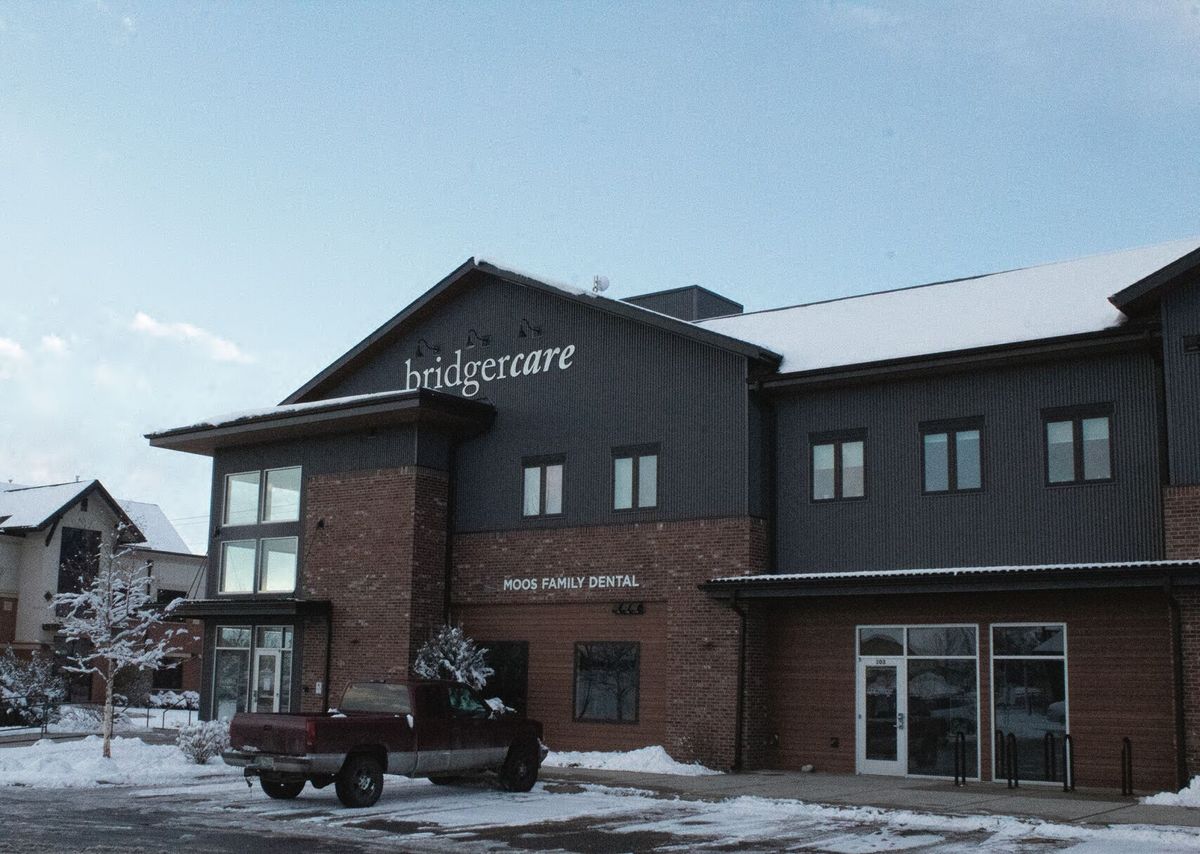
“I think having those relationships [with marginalized and queer people] is a really strong motivating factor to continue to do the work that I do and to support the work that other folks are doing,” Shawn Reagor, the LGBTQIA+ allies coordinator at BridgerCare, said.
At BridgerCare, Reagor works with educators and healthcare workers across Montana to provide them tools to “[positively] interact in professional and personal situations” with queer people in their lives, he said.
Reagor is a transgender man from Great Falls who is passionate about LGBTQIA+ activism and work in the American political landscape. Before working at BridgerCare, Reagor was the lead for the Montana Free and Fair Coalition (MFFC) at the Montana Human Rights Network (MHRN), a network of progressive groups across the state that advocate for LGBTQIA+ issues in the legislature.
Reagor also spoke about his time at the MHRN. “All of the bills [conservative Montana legislators] were passing that were targeted at the trans and [LGBTQIA+] community really had far-reaching and harmful impacts for everyone,” he said of his observations while working in the state legislature.
He specified one such bill, Montana Senate Bill 458, signed into law by Governor Gianforte last May. The bill defines two sexes, male and female, based on reproductive systems — producing sperm or eggs, or having an endocrine system “oriented around the production of those gametes.”
The exact language of the bill after the definitions for male and female reads: “An individual who would otherwise fall within this definition, but for a biological or genetic condition, is [female/male].” This exception does not explicitly recognize transgender or intersex individuals.
“That doesn’t even take into consideration all of the folks who aren’t able to do that [produce those gametes], for any number of reasons,” Reagor said.
Another piece of legislation, Montana House Bill 359, aims to prevent minors from attending sexually explicit performances and drag story hours in publicly funded libraries and schools. Bill 359 defines a drag queen as “a male or female performer who adopts a flamboyant or parodic feminine persona with glamorous or exaggerated costumes and makeup” and a drag king as someone who adopts a masculine persona in the same way.
On Oct. 13, 2023, Brian Morris, the chief district judge of the Montana District Court, granted a preliminary injunction of the bill as “no evidence before the Court indicates that minors face any harm from drag-related events or other speech and expression critical of gender norms.”
Amanda Frost, a law professor at American University, writes in a paper she wrote on injunctions from 2017 that a preliminary injunction may be sought by the plaintiff, “in cases challenging the legality of a federal statute, regulation or executive order,” to “preserve the status quo while the case is under consideration.” The case of an injunction and Morris’s acts means that the bill is temporarily suspended from being law before it can be considered by the U.S. Court of Appeals for the Ninth Circuit, which has jurisdiction over Western U.S. states, Alaska, Hawaii and some overseas U.S. territories.
On Feb. 15, 2024, the national American Civil Liberties Union (ACLU) and ACLU of Montana filed an amici curiae urging the U.S. Court of Appeals for the Ninth Circuit to leave in place the injunction granted by Judge Morris, according to the ACLU website. An amici curiae is a brief offered by a person or organization who is not a party in a legal case that provides information to the Court. The ACLU wrote that “live theatrical and musical performances” are free speech, and thus anyone who wishes to see them is protected by the First Amendment.
Given this proposed legislation and Reagor’s experience advocating for marginalized groups, he asserts that conservative lawmakers are using LGBTQIA+ issues to gain support from voters. “It really is just based in fear-mongering and turning the LGBTQIA+ community into a political football that everyone wants to kick.”
“[By going after drag shows] they’re trying to remove a piece of our culture,” he said. “Drag shows have been going for decades, and haven’t been an issue. Transgender athletes have been participating in sports for decades, and haven’t been an issue. But you take something that people have little familiarity with, and then you make that a controversial subject, make it sound like something terrible is happening, when the reality is we’re just living our lives.”
Based on his experience working with legislators in the MFFC, Reagor also discusses the political pressure that conservative lawmakers have received, according to him, from those higher up in the political food chain. “We heard from folks who had been with us the previous legislative session, who had gotten pressure from the Republican National Committee to vote a particular way on [LGBTQIA+] rights, and they were told that if they did not, they would have no future in anything larger than state politics.”
As a human rights advocate and lifelong Montanan, Reagor has faith in the community of marginalized Montanans and their persistence. “No matter what laws and regulations you pass, we’re going to continue to be us, and you can’t take that away,” he said.


Comments ()