
MSU ag researchers share advice for fertilizer use as Iran conflict impacts prices
BOZEMAN, Mont. — Rising fertilizer prices tied to conflict in the Strait of Hormuz are putting more pressure on Montana producers, and Montana State University researchers are saying soil testing and careful planning could help farmers manage costs.
Clain Jones with the MSU Extension is studying fertilizer practices as prices have climbed. He said in the past, fertilizer often made up about a quarter of growers’ input costs, but that share could rise as trade disruptions affect key products, like nitrogen fertilizer.
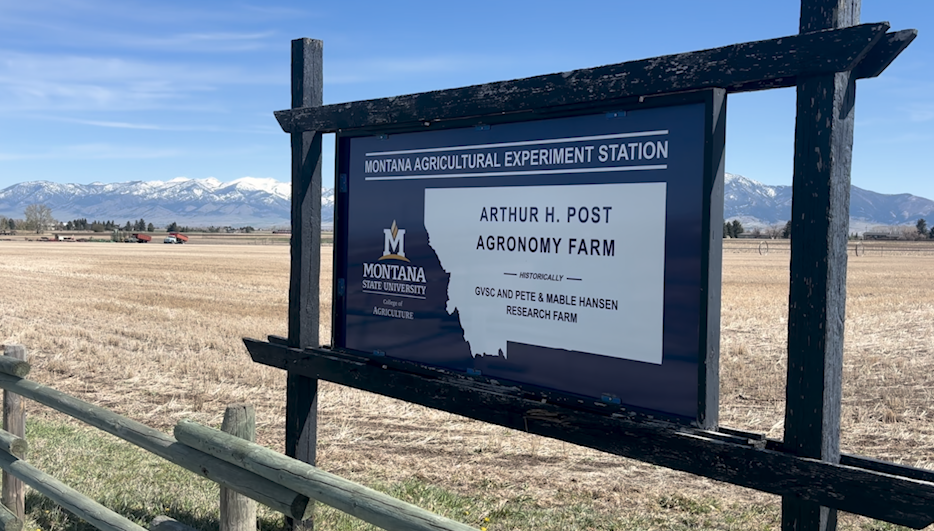
In an interview at Arthur H. Post Agronomy Farm, he said producers should test their soil nutrients and conditions now, especially after a warm winter that likely increased microbial activity and released more nitrogen into the ground.
“I'm encouraging farmers to soil test, to think about what source of fertilizer they use to make sure the rates they apply are economically the best, rather than maybe what traditionally they've applied when fertilizer prices were lower,” Jones said.
This way, farmers can ensure they are not over-fertilizing with nitrogen products.
The MSU Extension has an online tool producers can use to help determine how much fertilizer they should use to produce the right yield, while maintaining the best profit.
"Producers need to maximize their profits. And again, with high fertilizer prices, that probably means not putting on what they maybe typically put on," he said.
“You really kind of need to sit down and talk to your agronomist, kind of have a good quality yield goal and make sure that like, your fertilizer costs are matching that yield old goal,” emphasized Andrew Swanson, farm management extension specialist.
Jones also warned producers to pay close attention to phosphorus. He explained that sulfuric acid is used to break down phosphorus for fertilizer use, and much of the sulfuric acid supply also moves through the Strait of Hormuz, and has been impacted by the conflict.
While much of the crops Montana growers produce require less phosphorus, it is still necessary for many, and placement matters.
“It really needs to be put in the root zone. If it's applied on the surface, it might not find the roots for 1 or 2 years. So, getting it right with the seed is the best strategy for phosphorus,” said Jones.
There are many elements that affect the supply chain, especially with raw materials like oil and fertilizer chemicals, many of which come from the Middle East. If the conflict eventually calms down, there will still be work to determine how much damage was done to trade infrastructure. At this point, the amount of damage is still difficult to determine, Swanson said.
"Some reports I've seen, they're saying it could take up to two years for all these kind of Gulf export facilities and production facilities and refineries to go back to where they were before the war," he said.
As for the markets and prices themselves, it will likely take a while to calm down.
“For events like this, it usually takes at least like a year, if not more for the markets to kind of calm down and go back to somewhat close to normal. Sometimes they don't fully go back to where they were beforehand,” said Swanson.
Swanson advised producers to talk with their agronomists and suppliers as market conditions continue shifting.
“Get an idea of what they're seeing inventory-wise and supply chain-wise, because you don't want to get in a position where can where there's some sort of major shortages that you just don't know about, or maybe your input supplier is having trouble actually just finding supplies,” he said.
This includes fertilizer, herbicide, pesticide and equipment suppliers. There is additional potential value in planning ahead and securing contracts early with suppliers and negotiating discounts on prices, Swanson said.
“If you’re at your local coffee shop or if it’s the middle of July and you’re out there at the hardware store or one of your input supply salesmen, that’s a good time to talk to them, kind of see how the situations are going,” he said.



Comments ()