
MSU organizations aim to get students home safe on Halloweekend
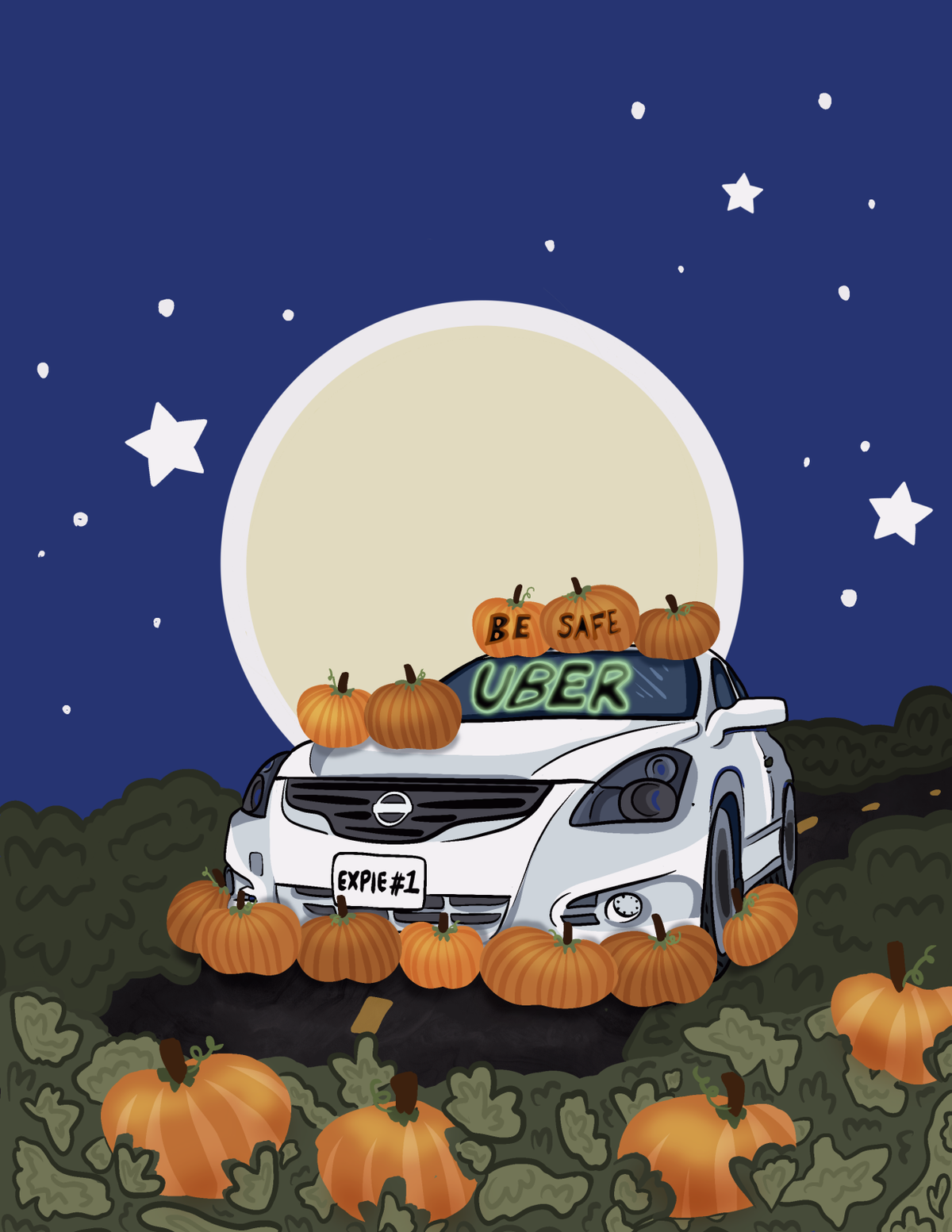
Halloween weekend typically calls to mind memories of fun costumes and carved jack-o-lanterns, trick-or-treating and celebrating with friends or family. What is usually not considered, however, is the danger of celebrating too hard — especially when alcohol is involved.
It’s impossible to ignore the fact that many college students go to parties and drink. It can also be quite tempting for many to drive home from a party after consuming alcohol. To help students get home safely after their festivities this year, Off-Campus Student Life (OCSL) — a branch of the Office of Student Engagement and Associated Students of MSU (ASMSU) — is offering the Halloweekend SafeRide Voucher Program to help students travel responsibly.
The program offers students the opportunity to claim a limited amount of vouchers for one free Uber ride. It was active last weekend from Thursday, Oct. 24 to Sunday, Oct. 27 and will be reactivated again from Thursday, Oct. 31 to Sunday, Nov. 3.
Rebecca Eberlin, manager of the voucher program at OCSL, explained that the office hopes to promote safe travel to and from different places on Halloween weekend. She said part of OCSL’s role is to provide students with resources to help them understand how to be a good member of the broader Bozeman community. “Students are going to need resources to get themselves home and to do so safely,” Eberlin said.
Drunk driving is a national issue. According to the U.S. Department of Transportation, every day about 37 people in the U.S. die in drunk-driving accidents — that’s one person every 39 minutes. Unfortunately, Montana has one of the highest fatality rates in the country for the number of deaths caused by drunk drivers and ranks as the worst state in the country for incidences of drunk driving.
According to a 2024 Forbes study, more than two-fifths of traffic deaths in the state are caused by drunk drivers — the highest rate in the nation. Until 2005, it was even legal to have an open container and drive in the state of Montana, making it one of the last states to institute a ban on drinking and driving.
With these sobering facts in mind, transportation is one of the parts of student life OCSL considers important — and that includes considering drunk driving, according to Eberlin. “It affects people and communities a lot more than a passerby who thinks they can get away with it would think,” she said.
Eberlin said she hopes the program will help students make the right decisions in regard to drunk driving. “MSU and the community as a whole are giving students the option to keep themselves safe and keep the community safe,” she said.
Along with some of the highest rates of drunk driving fatalities in the country, Montana also has the highest number of Driving Under the Influence (DUI) arrests in the country, with 450.50 per 100,000 licensed drivers, according to Forbes. DUI charges are considered criminal offenses that occur when someone operates a vehicle while under the influence of drugs or alcohol. While Eberlin and the OCSL focus on the prevention of DUIs, the Office of the Dean of Students (DOS) handles the conduct review aspect of driving while intoxicated.
“I think holding students accountable for DUIs off-campus is critical, and we’ve been doing that since 2013,” Dean of Students Matthew Caires said. According to him, MSU’s Student Code of Conduct (SCC) was changed that year to allow off-campus violations of the code to be brought to the DOS. According to the SCC, “operating a vehicle while under the influence in violation of federal, state or local law” constitutes a violation of the code of conduct.
From 2015 to 2017, Caires served on the Gallatin County DUI Task Force, a County committee created in 1982 with the goal of reducing incidences of driving under the influence, according to its website. Caires said his time on this task force is part of why DUIs are on his radar. From 2023 to 2024, there have been 300 DUIs in Gallatin County. Of these, 30 were students at MSU, he said.
The DOS follows the same process for every student cited for a DUI, according to Caires. “The first time a student gets a DUI, we hold them accountable. Conduct probation, generally an educational class. Second time — you are going to be [suspended],” he said.
Regarding enforcement of the SCC, Caires said because it is at his discretion, there are special cases that don’t always result in suspension upon a second violation. “My job is to balance [student’s] rights with community safety, and it’s always a balance. If we’re stuck — should this person be here or not? The tie goes to the community,” he said. This means that in complicated situations, Caires will lean toward suspending the student on the basis that someone with two DUIs could be a threat to members of the MSU community.
This focus on protecting MSU’s community is also shared by the University Police Department (UPD). “Being a good member of society is making choices that are best for the community you live in and drinking and driving is a horrible choice for your community,” Deputy Chief Adam Pankratz said.
UPD’s main mission is to ensure the safety of the staff and students on MSU’s campus, according to Pankratz. Included in that mission is maintaining student health and wellbeing. “The greatest chance you have of dying as a 20-year-old is an accident. You take alcohol out, and a lot of those accidents won’t happen,” he said. While he stated that prohibition of substances is not the goal, enjoying alcohol and drugs in a responsible and legal manner is very important.
Pankratz had a few tips to offer students who find themselves out partying. “If you plan ahead and make alternative transportation plans, you can mitigate all that risk,” he said. Other safe partying practices include partying closer to home so you can walk back or partying at your house, Pankratz said.
Many departments at MSU share the responsibility for keeping students safe, including the DOS, OCSL and the UPD, according to Pankratz. Caires also echoed Pankratz’s concerns about drunk driving. “Cars are dangerous. Alcohol is dangerous. Cars and alcohol are exceptionally dangerous,” he said.
“Safety is our number one priority at MSU, and we are committed to that,” Caires said. “We will never be risk-free, all we can really do, in my mind, is make [the student experience] safer. How do we do that? One program at a time,” he said.
According to him, that’s part of why ASMSU President Jacob Zink has been working to spearhead another prospective program to help alleviate the problem of drunk driving.
“CatCab [would be] a student-operated late-night transportation service, free for students, giving students a reliable and safe ride home Thursday through Saturday nights,” Zink said. According to him, CatCab would be similar to Uber or Lyft, but would be an MSU-sponsored program under OCSL. Zink said the main advantage of CatCab will be its low-cost to the University relative to the voucher program.
While CatCab is a future program designed to help students not drive while impaired, the SafeRide Voucher program is something students can take advantage of right now. As of Saturday, Oct. 27, all the available vouchers had been redeemed despite the program having another weekend to go, according to Eberlin.
“We actually added about 600 more vouchers for this weekend,” she said. She explained that 400 vouchers were originally made available for students, though they are all claimed now. “That doesn’t mean that everybody cashed in a ride, but it does mean they were all claimed,” she said. According to Eberlin, her decision to add more vouchers was because of the success of the first weekend of the program.
There are still vouchers left from the 600 allotted for this weekend. “If you have claimed your ride voucher already, be sure to use it this weekend as it will run out,” she said.
For more information on the SafeRide program — or to claim a voucher — visit https://www.montana.edu/calendar/events/51866.
If you or someone you know is struggling with alcohol or drug addiction, reach out to Counseling and Psychological Services for help at https://www.montana.edu/counseling/services/index.html#Substanceusecounseling.


Comments ()