
MSU's HEART Initiative presents the complexities of human trafficking
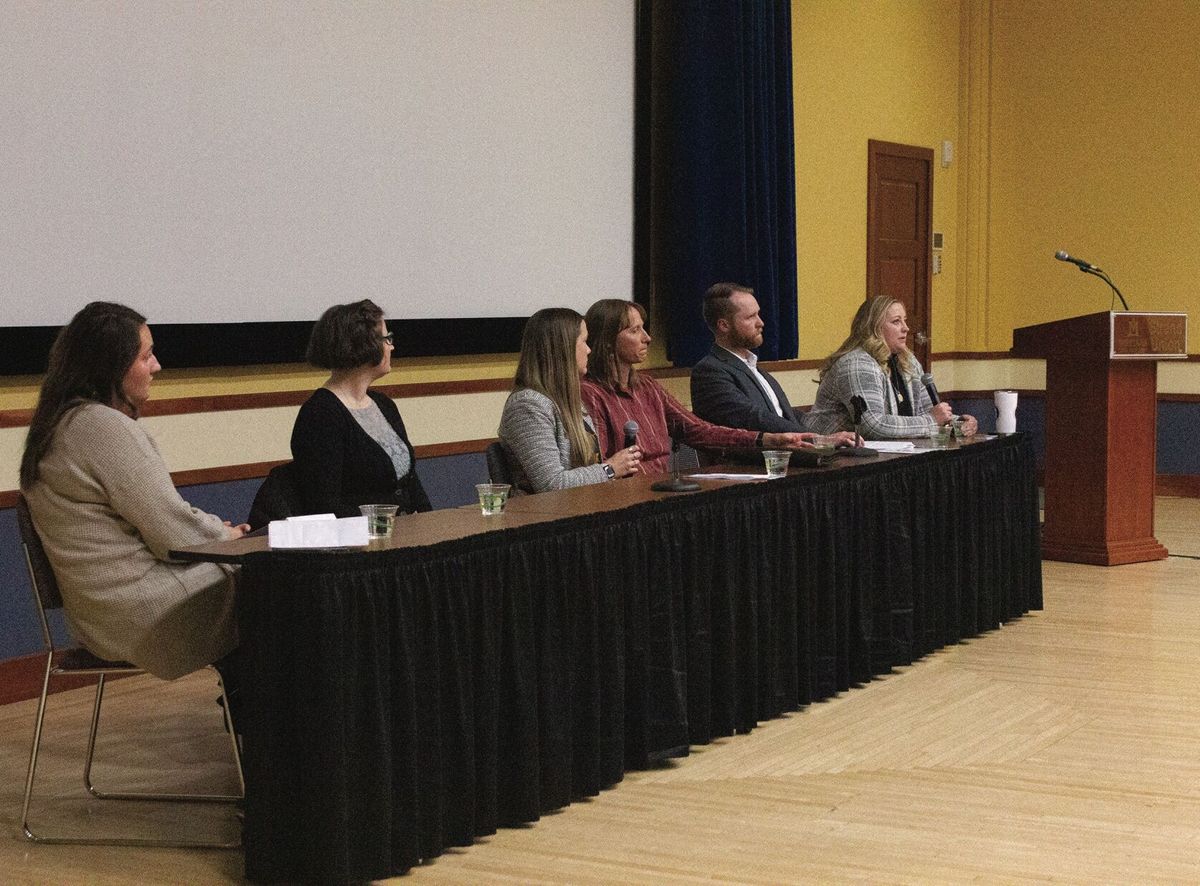
The HEART Initiative at MSU recently hosted a panel that focused on human trafficking in the Gallatin Valley. The discussion featured members from the MSU Police Department, the Bozeman Police Department, Haven and the Help Center’s Sexual Assault Counseling Center. The event was a part of the HEART Initiative's broader mission to raise awareness about human trafficking in Gallatin County and beyond, according to Betsy Danforth, the faculty advisor to the HEART Initiative and Director of the Women's Center.
Danforth initiated the Nov. 29 panel by introducing the panelists: Detectives Mike Mertz and Shay Stephens from the Bozeman Police Department, Sandy Schroeder from the Gallatin County Sheriff's Office, and other representatives from Haven and the Bozeman Health Center. The panel was moderated by a HEART Initiative student leader, Chloe Zuraff.
According to the Department of Homeland Security, human trafficking involves the use of force, fraud or coercion to obtain some type of labor or commercial sex act.
Stephens, who specializes in cases involving human trafficking, sex crimes, child abuse and violent crimes, led a significant part of the discussion. She demonstrated the extent of sex work demand in Montana by revealing a fake escort profile she had created that same day, which had already received numerous texts from potential clients.
“I’ve gotten 17 texts from Johns in Bozeman. If I get them whenever I'm up here I'll just raise my phone,” she said.
Stephens also explained common misconceptions about human trafficking, emphasizing that it doesn't necessarily involve crossing state or national borders and can occur in local settings. According to her, another misconception is that victims do not consent to their position. Sometimes they choose to stay out of fear, inability to reintegrate back into society, or other circumstances, feeling that they don't see a way out, they remain in their situation, she said.
During her presentation, Stephens also described the tactics used by pimps, drawing attention to the manipulative techniques they employ to exploit victims. “They listen and pay attention, identify needs, hopes and dreams, and then sell the dream or promise to fulfill the need. He seems great. You'll fall in love, then he’ll leverage that, saying things like, we need money to get a house, will you have sex with this person if I arrange it?” she said.
Signaling to the audience that she had gotten a new text on her escort profile, Stephens raised her phone two times throughout her portion of the panel.
Zuraff’s first question to the panel was: “If there is a typical case of human trafficking in Montana, what does that look like? And then in your experience, where is it happening most locally.”
Stephens responded by discussing a perspective on the market, she noted how prostitutes often come and go, traveling alongside the fluctuations of the market. “Where you see most of it, it's supply and demand. You'll see it in Bozeman because we've got a decent population,” Stephens said.
Mertz added, “I guess another thing you'll see in Montana is trafficking in farm work, livestock and construction. It's more on the labor trafficking side than necessarily the sex work stuff.”
Zuraff then asked what the general public should do if they suspect incidents of human trafficking are happening around them.
Schroeder responded with, “I would just pay attention and don't use the phrase, it's not my problem. Ask somebody if they're OK, ask if you can help.” Shroeder then added that nearly everyone has a recording device and that if they see something weird, they should take a photo.
She later emphasized the importance of prioritizing individual safety and advised against intervening if situations escalate. “That's not your guys' lane,” she said.
Stephens emphasized the need for conversations in communities and families to recognize and respond to these issues. “I think sometimes [with] sex trafficking, labor trafficking, sex crimes and things like that, we sometimes don't think about them as happening around us.”
In further silent gestures, Stephens lifted her phone three additional times before the panel concluded, each instance adding to the closing total of 22 persons seeking to purchase the services provided by human trafficking in Gallatin County.
In a later interview with the Exponent, Zuraff detailed that the HEART Initiative has been committed to raising conscientious awareness about human trafficking. This is achieved through outreach events, such as Wednesday's panel discussion.
Zuraff also commented on the panel's individual goals.“I would say the event being less formal was our first goal. We really wanted to strive for open engagement and communication with the audience and I do think we achieved that. The second goal was our presentation just being informative and creating a foundational knowledge,” she said.
Zuraff said students and faculty could reach out to the HEART Initiative’s Instagram, @msuheartinitiative, for more information about the organization.



Comments ()