
New AI world: Fear of the unknown meets fear of missing out

Businesses across the country face the brave new world of artificial intelligence (AI).
AI brings promises of revolutionary innovations and productivity gains, but also stirs worries about job losses, deep fakes and a dystopian future dominated by robots and autonomous machines.
“There’s a lot of fear of the unknown,” said Kerry Baker, executive director of the Greater Key West Chamber of Commerce in Florida.
Baker said her group is hearing a lot from local businesses about the fast-changing landscape of AI.
“It’s a game changer,” Baker said of its expected efficiencies as well as AI’s impacts on business operations as well as the nature of work and jobs. “I definitely think it is going to play a role in every industry.”
On April 14, the 600-member Key West Chamber will host an AI seminar to help members from various industries with various starting points learn about AI and the new technology wave.
The seminar will help businesses check out different AI platforms and tools, how to create and improve prompts and how to navigate some of its challenges.
Other chambers of commerce and local business groups are also hearing from their members regarding the AI wave.
AI FOMO
Businesses and other enterprises also have plenty of concerns about the fear of missing out (FOMO) when it comes to artificial intelligence.
“Competitive pressure is growing as some small business owners view AI as a threat, fearing being outpaced by others who adopt it more effectively,” said Jeff Muir, communications director for the Blount Partnership economic development group in Maryville, Tennessee.
The group is the parent organization of the Blount County Chamber of Commerce and Smoky Mountain Tourism Development Authority.
Muir said businesses are also leery of the “growing patchwork of state‑level AI regulations, which small business owners fear could complicate compliance and limit expansion,” and “a widening skills gap with lack of AI literacy being the biggest barrier to adoption.”
Still, large majorities of business owners say they are adopting AI and other emerging technologies.
A U.S. Chamber of Commerce survey last year found that 96% of small businesses plan to adopt emerging technologies, 72% have a positive view of AI and 88% of companies are already using AI.
“There needs to be a greater emphasis on clearer guidance, stronger governance, and more training,” Muir said. “The consensus is that AI is no longer optional, and businesses see it as a resource that will shape their future competitiveness in an increasingly digital economy.”
BIG MONEY FROM BIG TECH
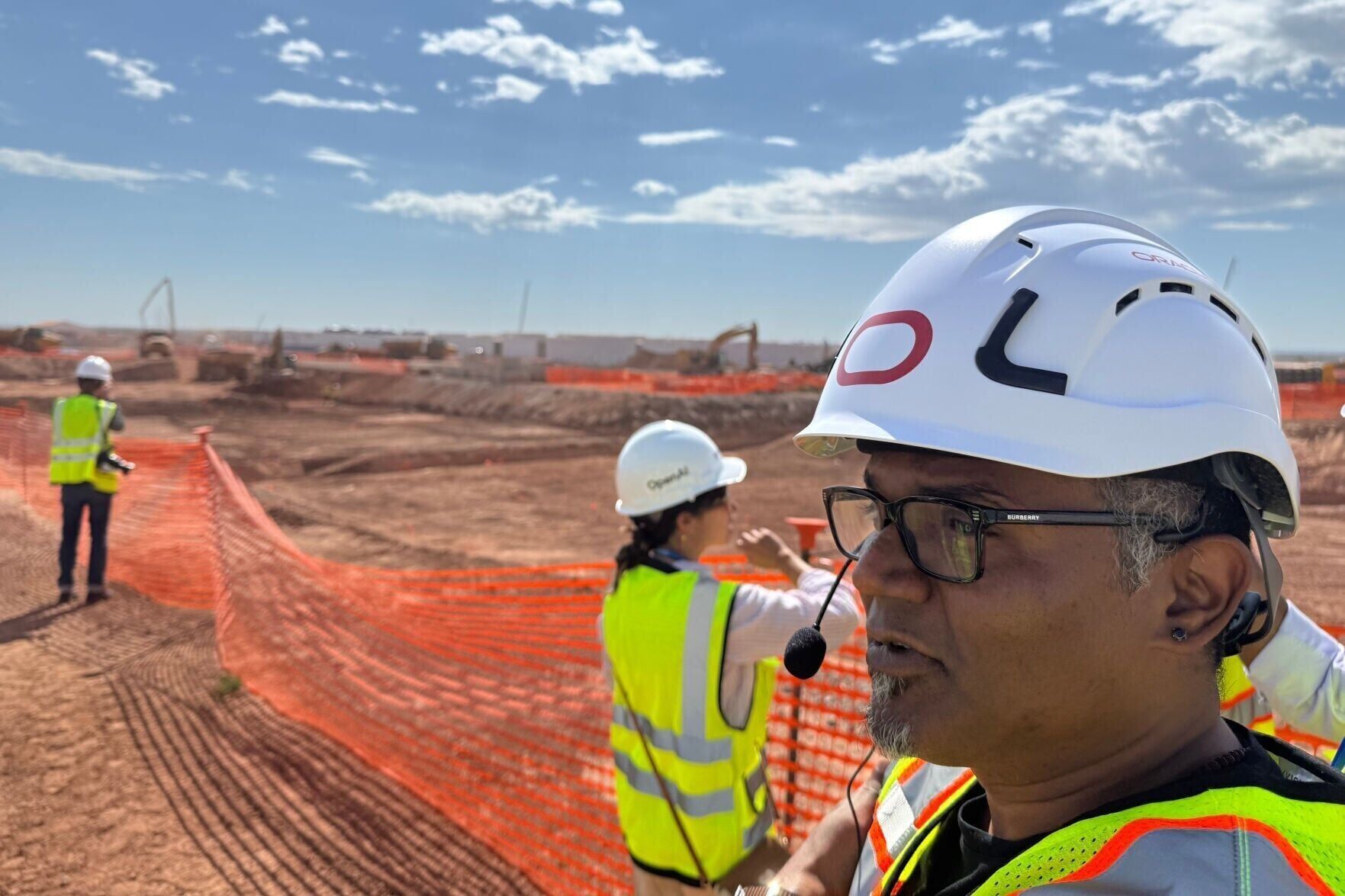
Businesses large and small are spending massive sums on AI infrastructure (including data centers) and adoption.
Consulting firm Gartner expects global AI spending to surpass $2.5 trillion this year and $3.3 trillion in 2027. Connecticut-based Gartner projected worldwide AI spending at more than $1.75 trillion.
Of the estimated $5.8 trillion that will be spent on AI globally for the next two years more than $3.1 trillion (or 53%) is expected to be spent on data centers and other infrastructure to accommodate machine learning, robotics and other aspects of the technology changes.
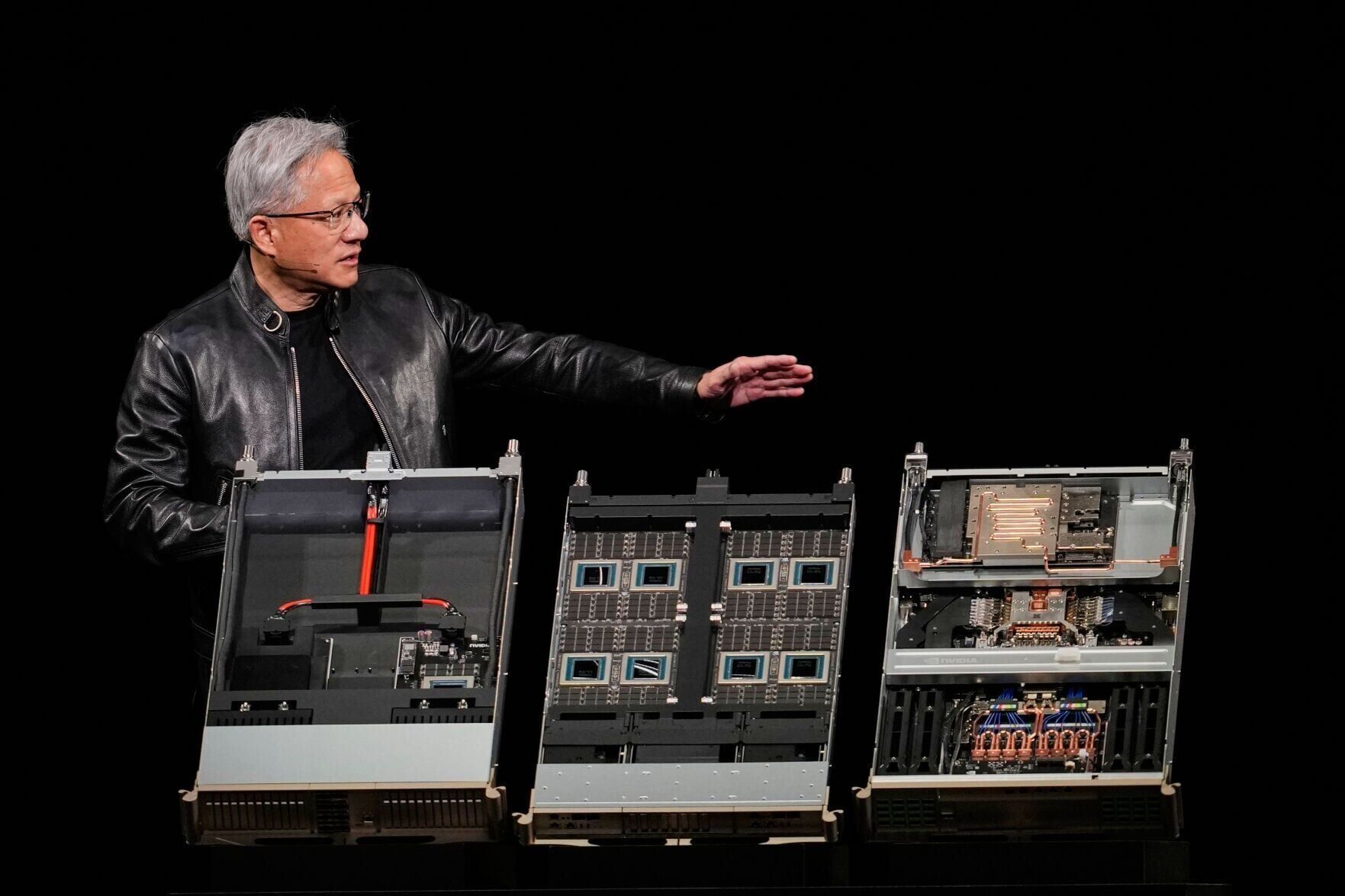
Big U.S. tech firms — Microsoft, Amazon, Alphabet/Google and Meta/Facebook — have plans to spend $635 billion this year on AI data centers, chips and machine learning, according to a research note from S&P Global. Chipmaker NVIDIA also announced in March it was planning to spend $26 billion over the next five years on AI models and innovations.
EXPOSED JOBS
But there is a potential historical anomaly: with all that AI capital spending comes the potential loss of jobs.
The U.S. economy lost 92,000 jobs in February, according to the U.S. Bureau of Labor Statistics. Some of those losses have been linked to AI reducing technology and other payrolls.
A report released last month by Goldman Sachs said that “300 million worldwide jobs are exposed to automation by AI” over the next decade. That could change job opportunities and hit income levels and consumer spending.
Joseph Briggs, a Goldman Sachs economist, expects AI adoptions will increase over the next decade with as many as 7% of workers displaced. The Goldman report says 25% of U.S. job duties and tasks can presently be taken over by AI and automation.
“You can see AI’s impact in the tech sector, where the employment share as a proportion of the whole economy has gone below the long-term trend,” Briggs said in a statement released with the analysis.
The Goldman report sees potential AI displacements for knowledge and creative workers, management consultants, graphic designers and fast food restaurant workers.
The intersection of mammoth capital spending and construction buildout for AI data centers with potential job losses due to automation and potentially robotics could be a marked change from other economic upheavals that created jobs and, generally, incomes.
On the flip side, expansive AI data center buildouts will create construction, infrastructure and engineering work. And, there are the promised productivity gains across scores of sectors.
KEEPING IT REAL
Muir said the Tennessee business group solicited anonymous comments from members regarding their hopes and concerns about AI.
The worries include knowledge gaps on how to use AI, job cuts and the loss of human connections and creativity.
The plus side of AI includes its ability to help with brainstorming ideas, workflow efficiencies, research capabilities, potential innovations and generation of business correspondence, marketing plans and other content.
Baker and Muir both say they and their organizations use AI to help with presentations, research and analysis.
Like businesses across the country, chambers and economic development groups are seeing where AI can offer improvements.
But both chamber executives stress they don’t want to lose the human touch to their organization’s culture.
“Our primary concern is maintaining the human touch — especially in tourism, where authenticity matters and the Smokies are fundamentally an outdoor experience destination,” Muir said, while noting that AI is “essential” for businesses to navigate.
Baker agrees. She sees AI’s value and necessity but wants to keep the personal touches in the tourism-heavy Florida Keys.
“I still like hands-on,” Baker said. “We still use verbal communications."


Comments ()