
NorthWestern Energy: 11 more data center firms eyeing Montana, South Dakota
There are nearly a dozen more data center companies interested in buying NorthWestern Energy's electricity than the ones already in the intermediate stages of planning.
NorthWestern Energy recently revealed it is conducting "high-level assessments" with five data center companies who'd like to buy electricity and be based in either Montana or South Dakota, and is working through requests from another six more.
It's not clear where these 11 data centers would be built, it's not clear how much power they'd like to use and it's not guaranteed that they will actually materialize. And the companies are not named.
But what is clear is that there seems to be a huge interest, more than has been revealed thus far, on the part of data center firms regarding their interest in Montana and our next-door neighbor.
And a coalition of environmental nonprofit groups wrote a letter to a Montana government agency last week asking for NorthWestern to identify those 11 mysterious companies.
The 11 data center company requests are in addition to the three data center companies that are already planning to build facilities in Montana and buy an enormous amount of power, between 850 and 1,400 megawatts, combined, by the year 2030.
The upper end of that megawatt range is roughly enough power to supply a million homes, and it's twice the total residential load that NorthWestern currently supplies to all customers.
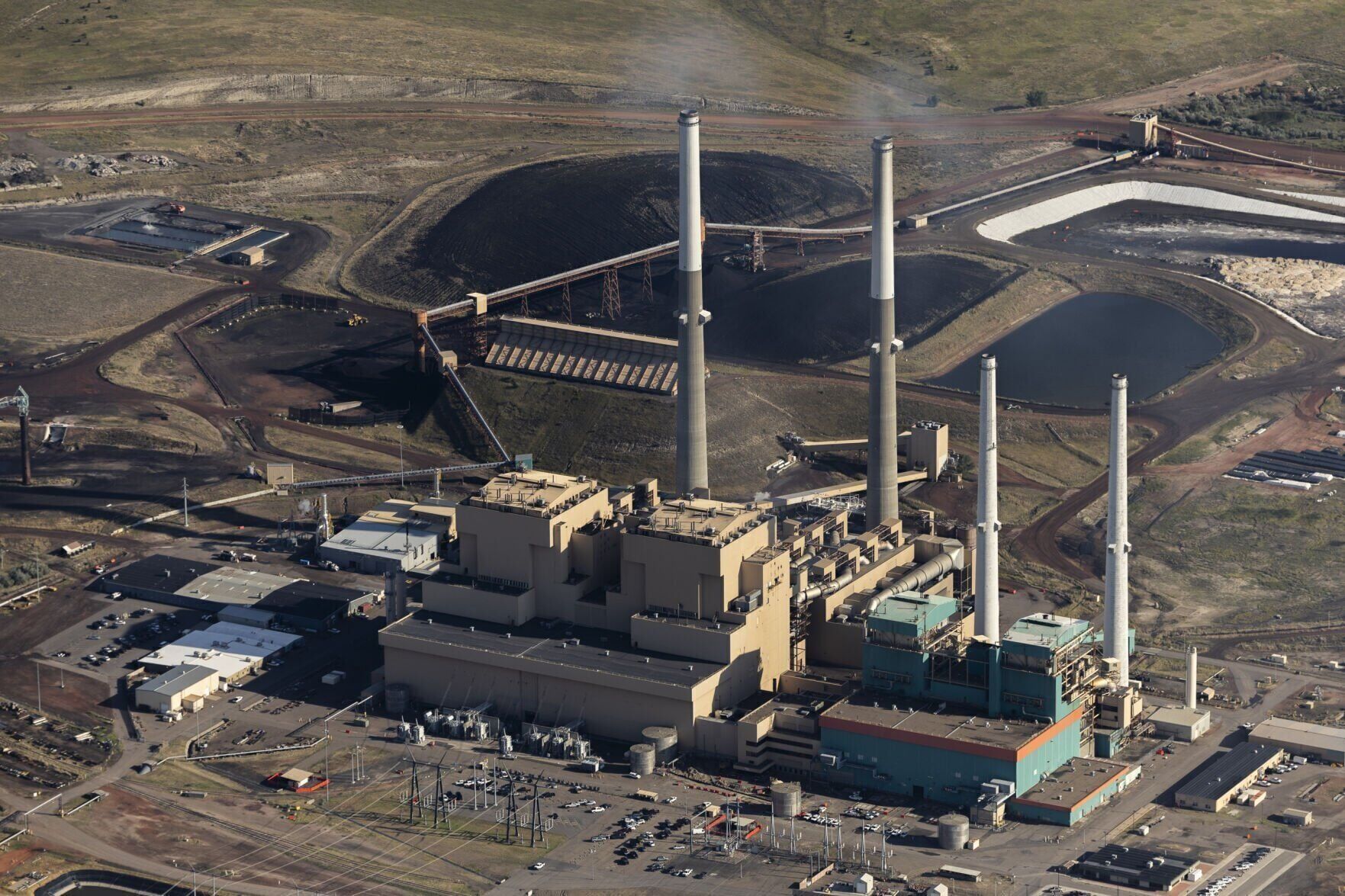
The total maximum generating capacity of the Colstrip Generating Station in southeast Montana, one of the largest coal-fired power plants in the West, is 1,480 megawatts of electricity.
The three companies already in the later stages of planning are Sabey, Atlas and Quantica.
11 companies in talks with NorthWestern Energy
NorthWestern Energy is a publicly-traded company, and they hold annual investor presentations.
During a recent presentation, CEO Brian Bird announced there are 11 companies in the early stages of negotiations, or discussions, with NorthWestern Energy.
He said there are six companies in the "data center request queue." That means the companies are in discussions with NorthWestern for power load and location, power supply potential and required timing.
Another five data center companies are further along in the process. They are in the "high-level assessment" stage with NorthWestern, which means they're undergoing a viability assessment, a high-level cost estimate and a Southwest Power Pool screening. The Southwest Power Pool is a nonprofit organization that manages transmission and the electric grid for much of the central U.S., including South Dakota and parts of Montana.
Bird did not name any of the companies, and he didn't say how many were planned for Montana compared to South Dakota.
Bird also said the "queue" of companies in those early stages is actually lower than it has been recently, meaning some companies have apparently canceled plans.
"You may note that the queue count is actually down a little bit there," he said. "And I think that happens, there's a lot of developers here, and they get to a certain point, and if they can't move forward and fast enough, can't find an off-taker or a customer, that count can reduce. Not necessarily surprised."
NorthWestern has a five-step process, basically, for data centers. They move from the request stage to the high-level assessment stage. Then, the third stage is the Letter of Intent stage and the development agreement stage. Then, the fourth step is the Energy Services Agreement (which no data center has reached in Montana yet) and the final phase is construction. Atlas Power in Butte is in the third stage, having signed a Letter of Intent.
Sabey in Butte and Quantica in Yellowstone County are in the third stage as well, having signed both Letters of Intent and also development agreements with NorthWestern Energy.
(NorthWestern actually counts those two stages as one stage, but they are a little bit different.)
Bird said he hopes NorthWestern can progress as many of the data center companies as possible to more advanced stages.
"I think from a high-level assessment (stage), there are some in there we believe certainly can move into that middle category," he said.
Request for information
Not everyone is as excited about the prospect of data centers as Bird.
There are mounting concerns about extreme water usage, rising electricity prices, greenhouse gas emissions, special tax breaks and other factors that have been linked to data centers around the country.
And a lack of information surrounding the data centers in Montana has drawn the ire of a coalition of environmental groups.
Last week, a group of environmental nonprofits, including the Montana Environmental Information Center and Earthjustice, sent a letter to the Montana Public Service Commission saying that NorthWestern has provided an "inadequate response" to the PSC's request for details on data center agreements.
Among other things, the groups want the PSC to force NorthWestern to name all the data center companies that are interested in buying NorthWestern's electricity.
"As part of its oversight efforts, the Commission should require NorthWestern to identify the eleven entities that are currently working through the utility’s five-part process for development in Montana, as well as any other data center developers that are seeking electricity supply service from NorthWestern in Montana," the letter to the PSC states. "Further, the Commission should expand the scope of its prior request for documents from NorthWestern to include copies of all letters of intent, memoranda of understanding, agreements in principle, term sheets, draft contracts or agreements, and executed contracts and agreements between NorthWestern and any of the entities engaged in the utility’s five-part process in Montana."
Finally, they say that the Public Service Commission should require NorthWestern to publicly disclose the cost of any transmission studies it has conducted or is conducting, if any, for large load data centers in Montana and whether those costs are currently being subsidized by its existing rate base.
"This request would fall within the 'detailed explanation of the steps NorthWestern is taking to evaluate or verify whether providing electricity supply service to these entities would adversely impact other NorthWestern customers'," the letter says.
The letter was written by E. Lars Phillips and Maxine C. Sugarman of Earthjusice's Bozeman office.
"We appreciate the Commission’s ongoing efforts to ensure that NorthWestern complies with the Commission’s binding regulatory directives along with the requirements imposed by Montana law," the letter concludes. "As the state agency empowered with broad, statutory authority to supervise, regulate, and control public utilities, we urge you to demand more transparency from NorthWestern regarding its electricity supply service to data centers."
NorthWestern Energy's spokesperson Jo Dee Black said in a statement that the company is developing a "Large Load Tariff" filing for consideration by the Montana PSC to provide a framework for integrating data centers into their system.
"The proposed Large Load Tariff filing will define the financial and contractual responsibilities of large-load customers and establish safeguards designed to protect all customer classes — particularly existing customers — from undue financial risk," Black said in the emailed statement. "In coordination with the Commission’s review and approval of electric service contracts for new large-load customers, the tariff will provide regulatory oversight and cost transparency, while ensuring that system growth is managed responsibly and costs are allocated fairly."



Comments ()