
Out for the Season: Torn ACLs are pushing students to the sidelines
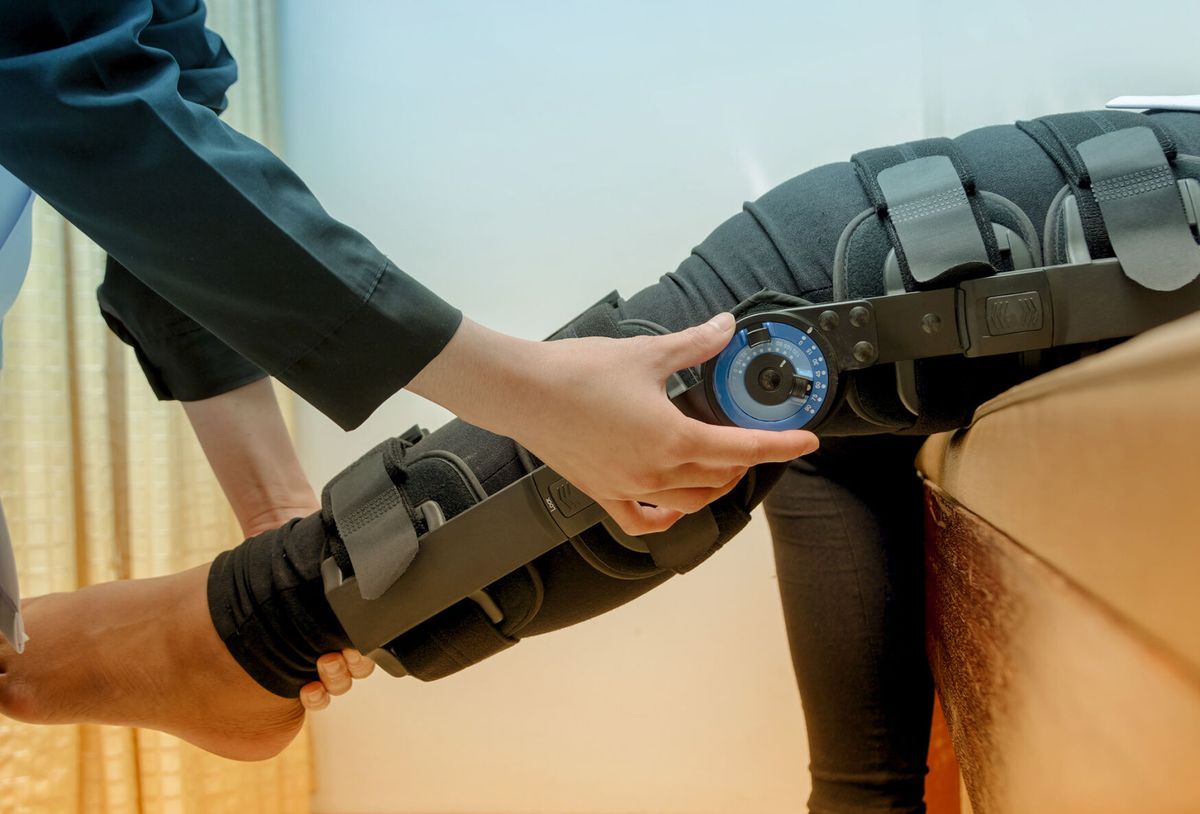
As the ski season unfolds, more and more students are returning to classes from Bridger Bowl on crutches. The main culprit? Torn ACLs.
An estimated 17,500 skiers tear their ACLs in the U.S., accounting for a third of all ski injuries annually, according to researchers at the University of Vermont School of Medicine.
Many of these patients can be found walking (or crutching) around campus. Sophomore Leah Sandberg, a kinesiology major, said she tore her ACL in March 2022. “I wasn’t even going fast, I just hit a little bump wrong and twisted,” she said.
Sandberg felt her knee pop but was able to ski down and even take a few more runs before getting checked out at an urgent care.
Sophomore Octavia Fisher, an architecture major, felt a similar “pop” in March 2021 during a ski-racing crash. She was also able to ski down and returned to normal activity after a few days of icing and rest.
Fisher skied through the entire 2021-2022 season before deciding to get her knee looked at “because it just didn’t feel right.”
The ACL (anterior cruciate ligament) is the ligament that connects the shinbone to the thigh bone at the knee. Because ACL tears can’t be diagnosed through physical exams and x-rays alone, patients must get MRIs, which provide more comprehensive imagery.
Sandberg’s MRI revealed that she had torn both her ACL and meniscus, the shock-absorbing piece of cartilage between the shinbone and the thigh bone.
Fisher’s MRI, which she had completed nearly a year after her injury, revealed she had been skiing, biking, and running on a completely torn ACL.
Because ACL tears don’t heal on their own, many patients opt to undergo surgery. Torn ACLs are reconstructed by replacing the injured ligament with a piece of tendon or muscle, taken either from the patient themself or a cadaver.
Over spring break last March, Sandberg’s surgical team repaired her ACL with a quad tendon graft. She used most of the break and the following week to recover. Because so much time had passed since her injury, Fisher opted to finish her ski season and undergo surgery in April. She received a hamstring graft.
Though those initial days and weeks post-surgery can be academically stressful, Fisher was thankful for classwork during the weeks following her surgery, calling school “something to do.” Sandberg’s teachers were accommodating, and “would’ve given her more time” if she had needed it, she said.
While ACL tears present differently in almost every patient, post-operative recovery is similar for most: 1-2 weeks of very limited mobility followed by 6-9 months of intensive physical therapy to rebuild strength and mobility, according to John Hopkins Medical Institute.
“At first, it’s like you have two different legs,” Fisher said. “But then it comes back pretty fast.”
Senior Maddy Larson, a biomedical engineering major who tore her ACL in June 2019, said that the mental part of recovering is difficult. “It takes a long time to trust your knee again. I bouldered in a knee brace for 3 years. It’s also tough to see all your friends doing what you love, but you can’t join them.”
Sandberg and Fisher were both cleared to ski this season, though Sandberg says she is now more cautious on the slopes.
While ACL tears are common, researchers at John Hopkins Medical Institute suggest that strength and flexibility training can reduce the risk of ACL injury.

Comments ()