
Petition underway for urban transportation district to be added to ballot
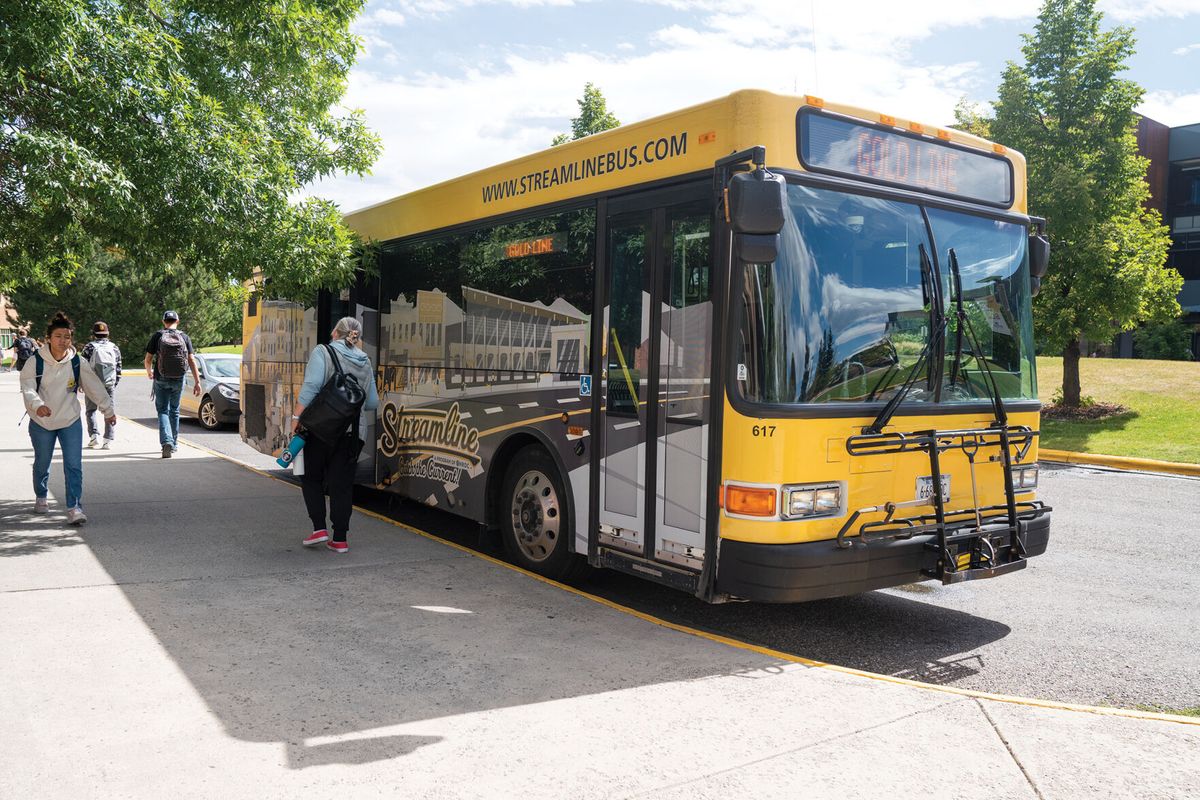
Following the 2020 census, Bozeman surpassed 50,000 residents and was redesignated as a “small urban” area, which means the Human Resource Development Council (HRDC) of Bozeman is no longer eligible for federal funds. As a result, ASMSU and the HRDC have begun circulating a petition to establish an Urban Transportation District (UTD) – a source of funding for a public transportation network– on the May 2, 2023 special election ballot.
“At this point, it’s maintaining the status quo,” said ASMSU senator Alex Musar, who is organizing the petition for the UTD. “There’s been direct responsiveness to student needs, especially with growth out south.”
Ensuring that Streamline continues to serve both students and the community effectively means establishing the UTD as a separate entity from HRDC– a crucial step, Musar said.
The HRDC is involved in every aspect of the community which makes focusing on single issues difficult, Musar said. If the UTD makes it onto the May ballot and is passed, an advisory board would be set up to focus on the Streamline service without distraction from other issues.
“Federal funding covers 60-70% of Streamline’s operating costs,” said Musar. “I have hope that the UTD will provide us the potential to get more federal funding, the idea is that this [advisory] board would be a singular focus.”
“When Streamline was originally set up in 2006, it was structured to one day become an Urban Transportation District (UTD),” said HRDC Transportation Program Manager Vanessa Palmer. “Stakeholders at that time wanted to use the UTD model because it enables strong collaboration between partners.” Considering the current high costs of gas, the bus service is crucial as free transportation to students and other members of the community.
Musar said that Missoula’s UTD has provided leverage for their local government to make 50% of their buses electric.
If the UTD doesn’t pass in May, there are three possible scenarios for where federal funds could go: to the state, to the county, or to the city of Bozeman.
If the state receives the funds, “that money would still get spent within the district but we would lose a lot of local control about how it would be spent,” said Musar. “The other side is there’s greater overhead through state agencies rather than local ones.” If Gallatin County receives the funding, that money must be leveraged throughout the county as a whole, said Musar.
If Bozeman receives the money, it must be spent in Bozeman proper. “As we’ve seen with this increased cost of living, more and more students and members of the community, especially those that participate in the service industry, are coming from further and further away,” said Musar, “that would essentially cause us not to be able to provide services out to Belgrade and Four Corners, these areas where we’re seeing massive population growth.”
“Due to COVID-19 and the reorganization of the socioeconomic situation, we haven’t been able to get Commercial Drivers License, drivers,” said Musar. The fewer drivers there are for the service, the fewer routes can be maintained. Students make up 60% of Streamline ridership; this number is expected to increase as more students opt-out of single-occupant trips to campus, said Musar.
If Streamline starts to fail due to a lack of funding, they could turn to other stakeholders– students and the university– for support.
If the UTD makes it onto the May ballot and it passes, “the implementation of the UTD and the setup of the new board is fairly quick,” said Musar, “ it costs the local taxpayers zero dollars to form.” The Streamline bus service as students knows it would continue on as usual. According to Palmer, “Once the UTD takes over fiduciary responsibility for Streamline, the new board would continue to focus on the same priorities as the existing Streamline Advisory Board, specifically looking at ways to increase ridership, how to better recruit and retain staff, and how to ensure the service levels and service areas match the population growth in our community.”
Although the path to ideal service wouldn’t be immediate– an estimated 10 years– Streamline would start to work on reducing arrival times, said Musar. Currently, Streamline runs on the hour, but half-hour to 15-minute service would be ideal according to Musar.
On September 22, the ASMSU senate passed a unanimous vote in support of the UTD. Additionally, ASMSU recognizes the importance of maintaining the Streamline bus service through the establishment of a UTD.
“It passed unanimously and I am quite pleased that ASMSU has continued the tradition of being a champion for Streamline Bus Services,” Musar said.
The HRDC has until December 10th to get 20% of voters to sign on to their petition. With 7,000 names already, the goal is 19,000 with the caveat that 30% of names will be kicked back by the county due to invalid voter registration or inaccurate residency, said Musar.


Comments ()