
Project underway to digitize Assiniboine and Sioux history
POPLAR — Before he went on to organize the first of what would become the Red Bottom Celebration, an annual powwow hosted by the Sioux and Assiniboine Tribes on the Fort Peck Reservation, Walter “Stockade” Clark was a student at Poplar Boarding School.
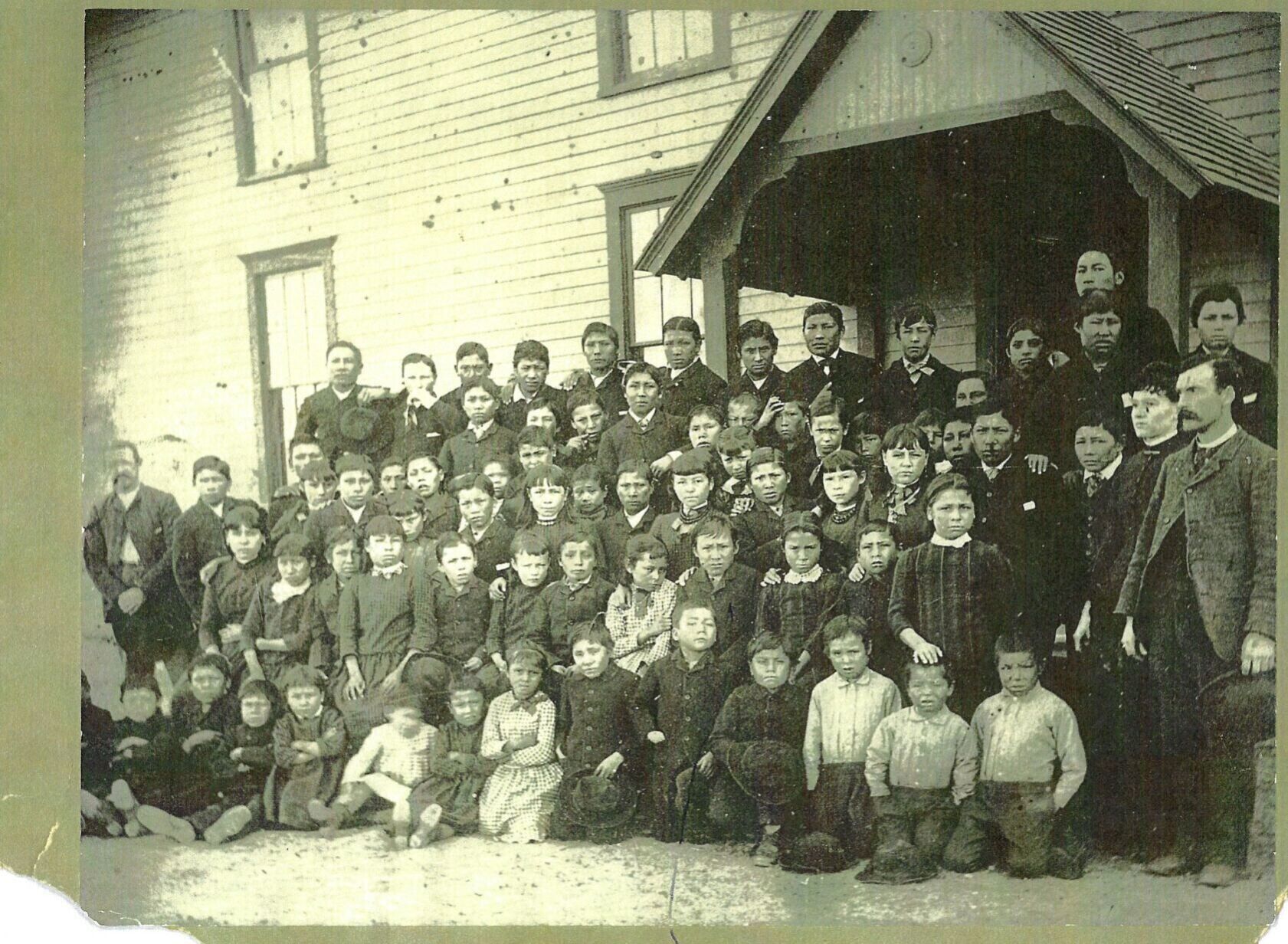
The log schoolhouse, built in in the early 1880s, had just over 200 students assigned to it by 1888. A teenage Clark was among them. In 1887, two years before Montana entered statehood, he stood with other students outside of the schoolhouse to pose for a photo. Just like the celebration he'd eventually help launch, the photo lasted into the 21st century.
Prior to silicone chips and LED screens, cameras functioned for over a century on just light, shadow and exposure. Even with the transition from silver plates to celluloid film, the concept remained the same: expose a photo-sensitive surface to whatever image you want to preserve.
Despite dozens of Sioux and Assiniboine children packing the frame of the picture, Clark still stood out. Standing in the top row, and the second kid over from the left, the camera caught him covering his mouth.
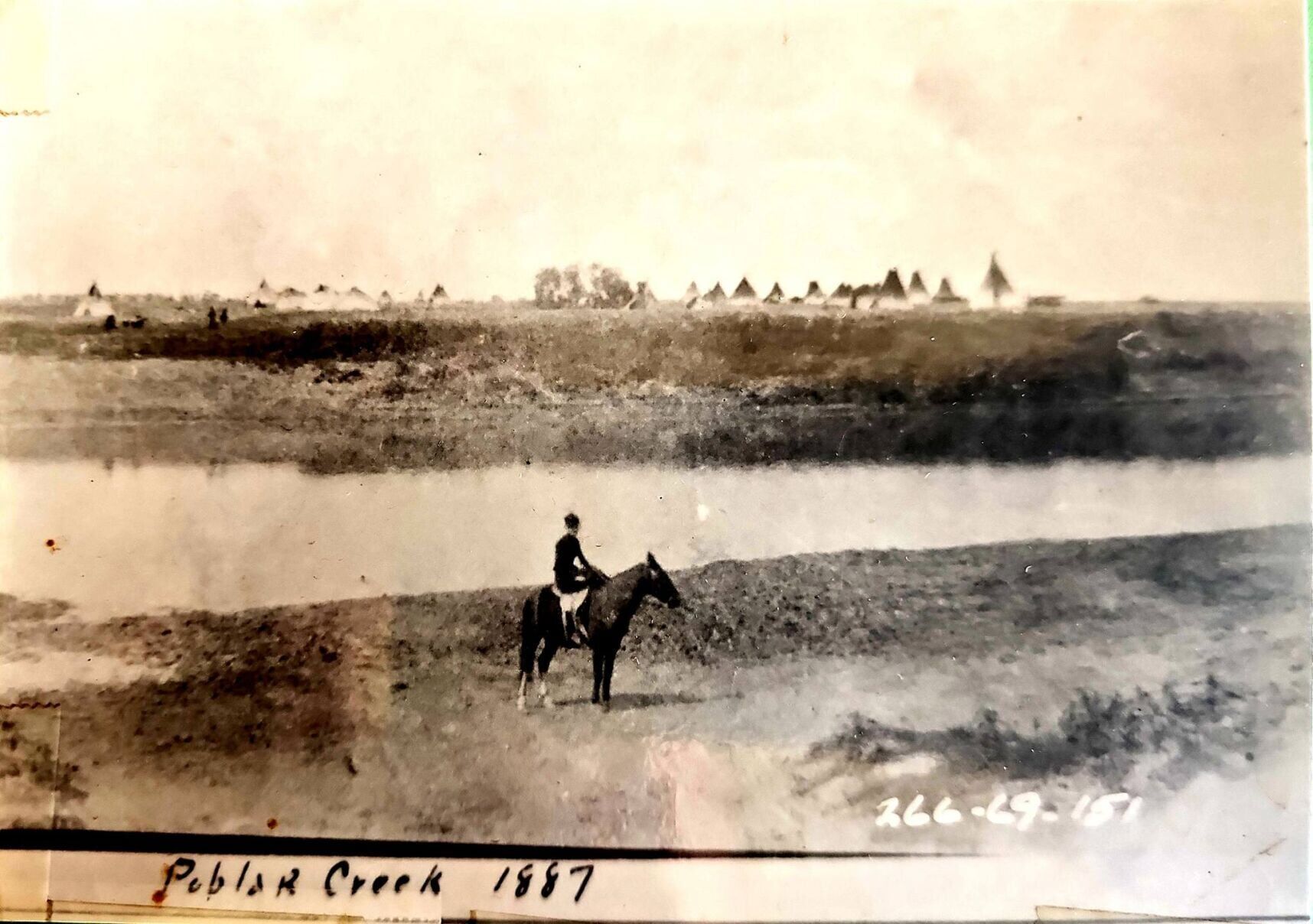
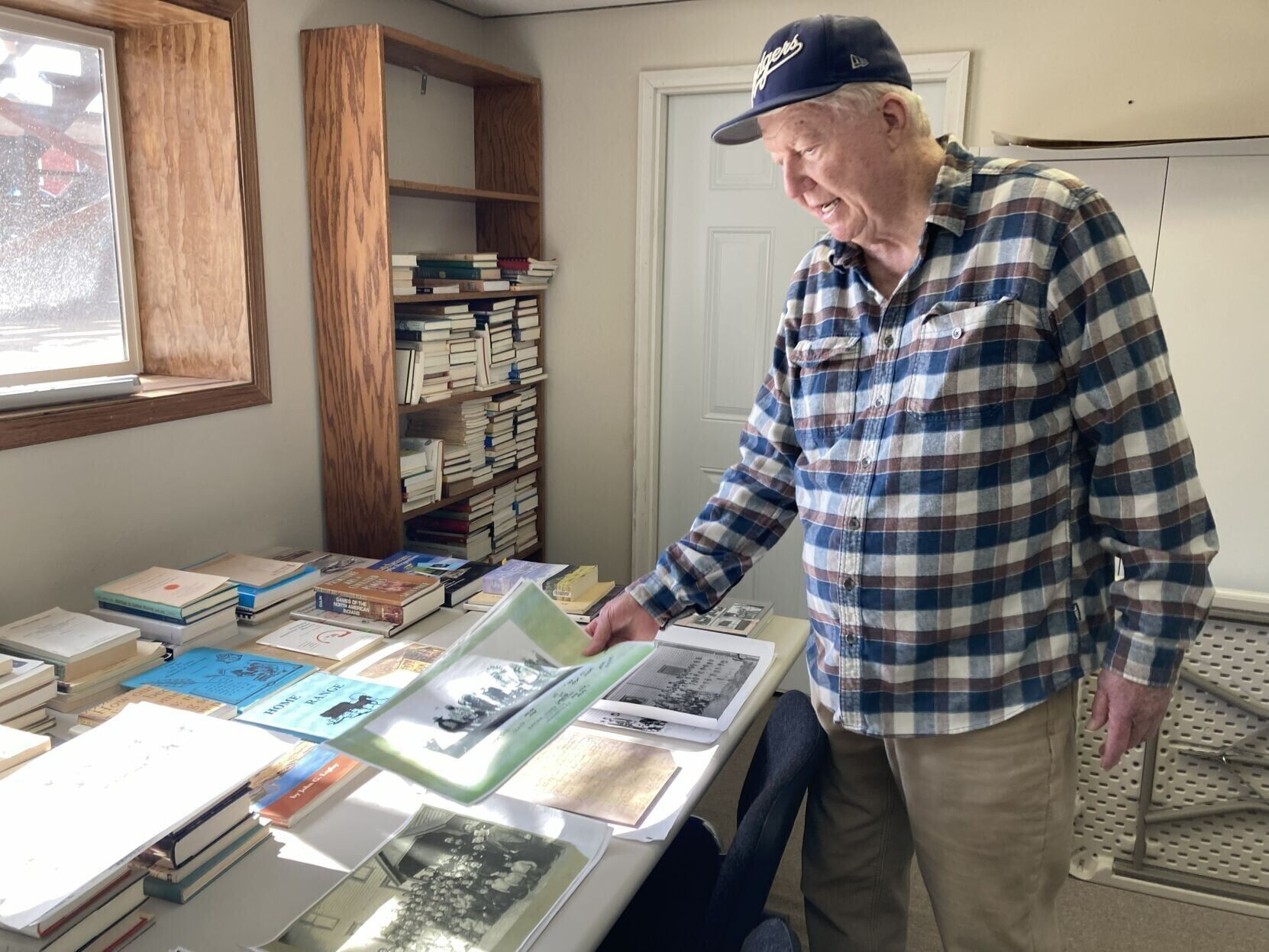
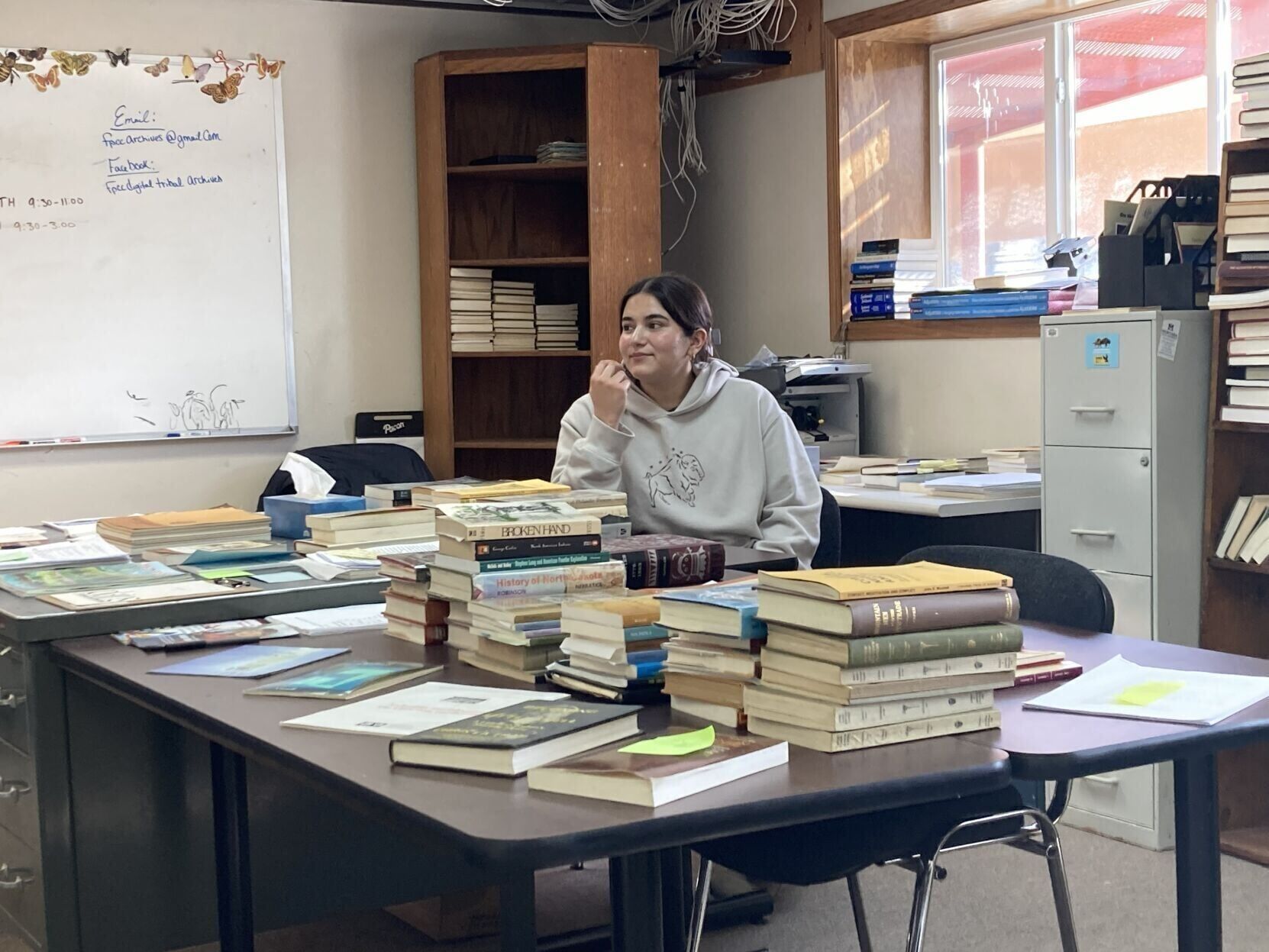
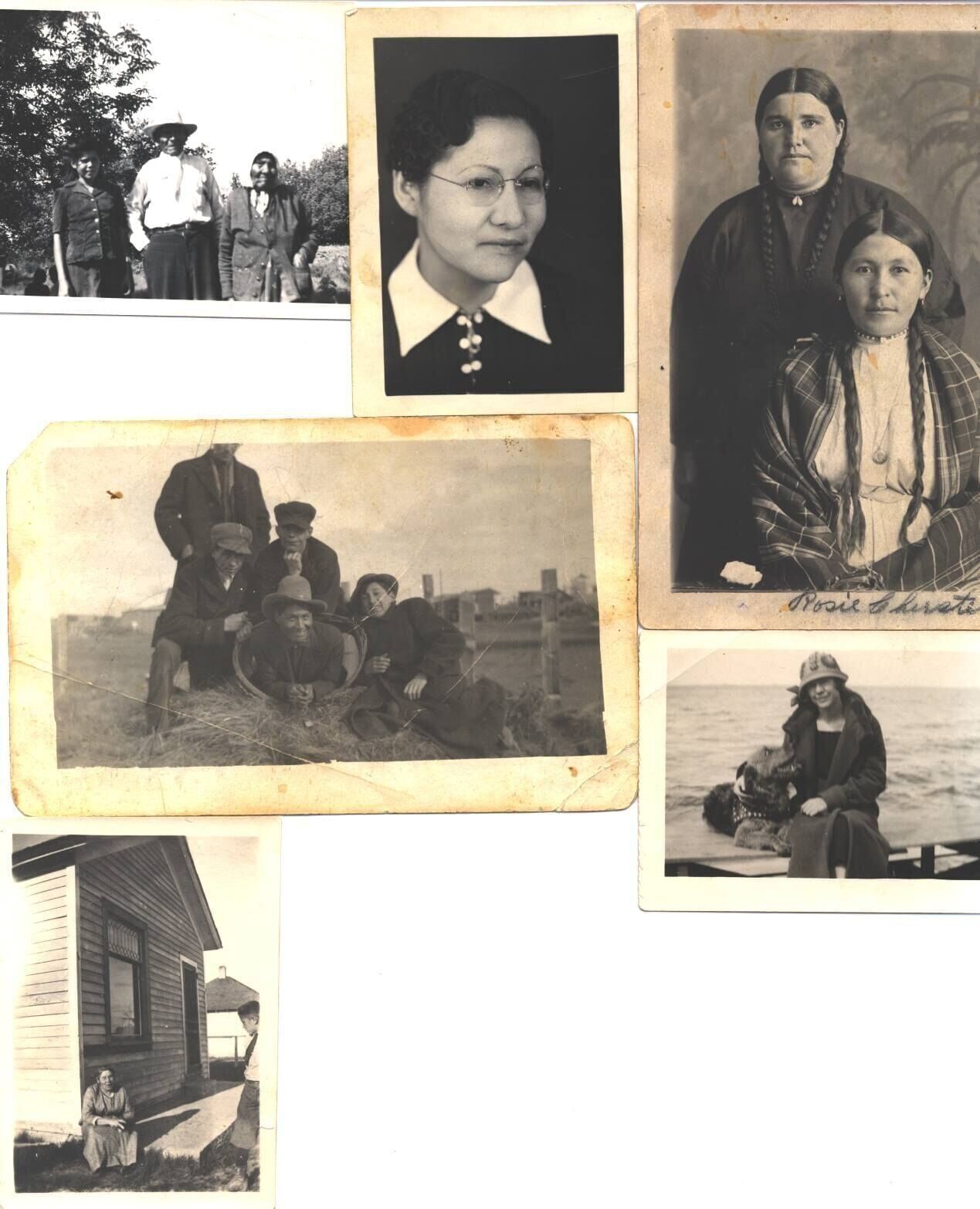
The picture taken outside of Poplar Boarding School is one of hundreds collected, scanned and catalogued as part of an exhaustive volunteer effort on the Fort Peck Indian Reservation to digitize historical photos and make them accessible online. The Fort Peck Community College Digital Archives Project is headed by Ed Broaddus, who is assisted by two interns from FPCC. They operate in a room on the ground floor of the War Eagle Vision Building, located on the college’s main campus in Poplar.
“I was given this collection from the Headdress family,” Broaddus said, motioning to a table with stacks of prints of scanned photos.
On top of one pile sat the picture of Walter Clark and his fellow students at Poplar Boarding School.
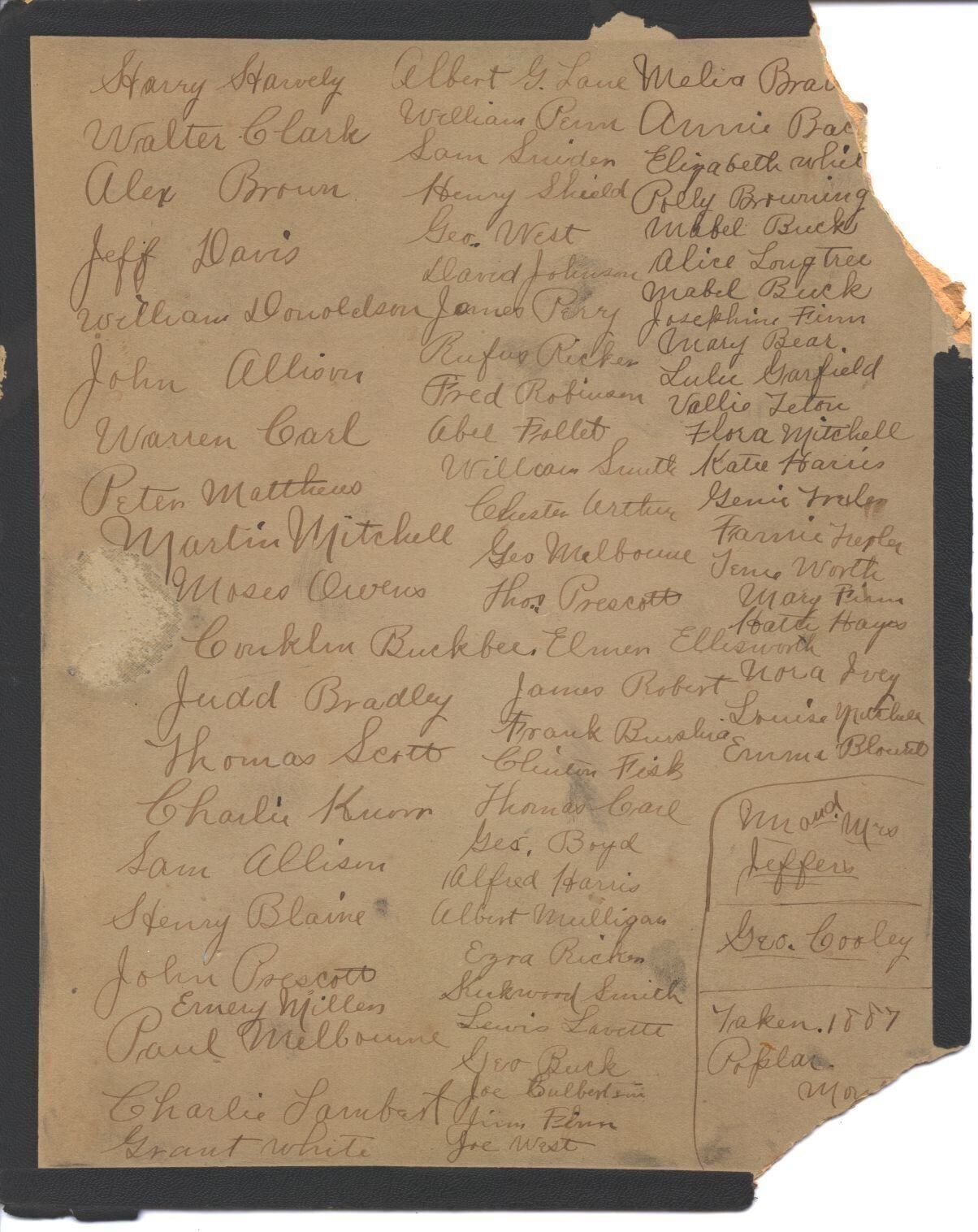
“What’s significant about this picture is that every single person in this picture is named. And almost every single person on the reservation has a relative in this picture. This is Assiniboine and Sioux. Both tribes.”
The Fort Peck Tribal Executive Board greenlit the project last year, which afforded Broaddus funds to buy a computer for scanning and got him a room at the college to work.
By then, Broaddus had gathered a personal collection media dating back to his arrival on the reservation back in the summer of 1969, when Broaddus came to the Fort Peck Reservation by way of California. For decades, he’s embedded himself in the history of the tribes, interviewing elders on reel-to-reel tape, gathering documents and collecting photographs.
"I figured some day down the road it's going to be important," Broaddus said. "And I think I was right."
His daughter, Mandy Smoker Broaddus, is a nationally renowned poet and directed the Montana Office of Public Instruction’s Indian Education for All program for nearly a decade. She was poet laureate of Montana from 2019 to 2021.
“My daughter,” Broaddus said, “saw all of this and last year said, ‘Dad, you have to get this digitized. Now.’”
Coinciding with the Tribal Executive Board giving Broaddus the go-ahead to start digitizing photos, FPCC put out an announcement offering internships to assist Broaddus. Since then, students Samantha Brunelle and Isabella Crawford have been sinking a few hours a week scanning and organizing.
“I’m going to graduate this spring with my degree in Nakota/Dakota Studies,” Brunelle said, “so I’ve already been interested in learning history, and I plan on getting my bachelor’s in Native American studies, then come back and be a Native American studies professor here.”
As the three have poured over hundreds of photographs, they’ve regularly shared the shots online via a Facebook page. The posts have drawn plenty of positive feedback, while also creating an avenue for tribal members to potentially offer context for photos with no date or names.
“It’s a chance to learn my own history,” Brunelle said, “and then to also help others learn their own history. People who bring their pictures in, they could be 50 to 100 years old and we’re just trying to keep them alive.”
Although the project is still in its infancy, it has amassed media beyond just photographs. Along with hundreds of photos, Broaddus received a trove of books from retired professor David Miller, who gave extensive scholarship toward the history of the Assiniboine. Stacked near the dozens of books from Miller’s personal library are academic publications from a variety of fields, like one article from a 1999 volume of Archaeology in Montana.
In the 1980s, a property owner discovered bones and pottery fragments in the eroded earth along a creek straddling the Daniels-Sheridan County line. They belonged to a buffalo, cracked and smashed, evidence that someone had extracted the precious grease and marrow within.
Also at the site, excavated by a team that included archeologists from Montana State University, were tools and pottery. The pottery indicated the possible presence of the Nakota people, the endonym for the Assiniboine. When archeologists dated the site, they expected it to be 150 years old at most. Carbon dating placed the age of the site at around the 1650s.
Another task for Broaddus is networking with regional and national experts in archiving, getting tips on proper equipment and drafting a long-term plan for how to maintain the database of media he’s building, all the while responding to those looking to contribute pictures. Broaddus said preservation, at least for photos, has become substantially easier in the past three decades.
“What I’m really good at is just talking to people,” Broaddus said. “There was one woman whose home I visited when I heard she might want to contribute. She wasn’t going to let me in. She thought I was a conman.”
After roughly 15 minutes, Broaddus said, he managed to convince the woman to let him inside and he scanned all of her photos with his phone.
Then there’s the audio and visual media that Broaddus plans to digitize, like his old reel-to-reel recordings and Super 8mm films. While the immediate goal for Broaddus is to digitize the photos and documents assembled in the War Eagle Vision Building, his ambition is to create an archive akin to the one at Little Big Horn College Library on the Crow Reservation.
“My big, big vision,” Broaddus said, “would be someone being able to come in, sit in front of a massive screen, punch in a few names and see an entire genealogy. All the relevant pictures, their genealogy, any news articles.”
Broaddus invited anyone looking to contribute photos relevant to the history of the Sioux and Assiniboine at Fort Peck to get reach out via the FPCC Tribal Digital Archives Project's Facebook page.

Comments ()