
Proponents of rail service through Bozeman, Livingston seek federal support
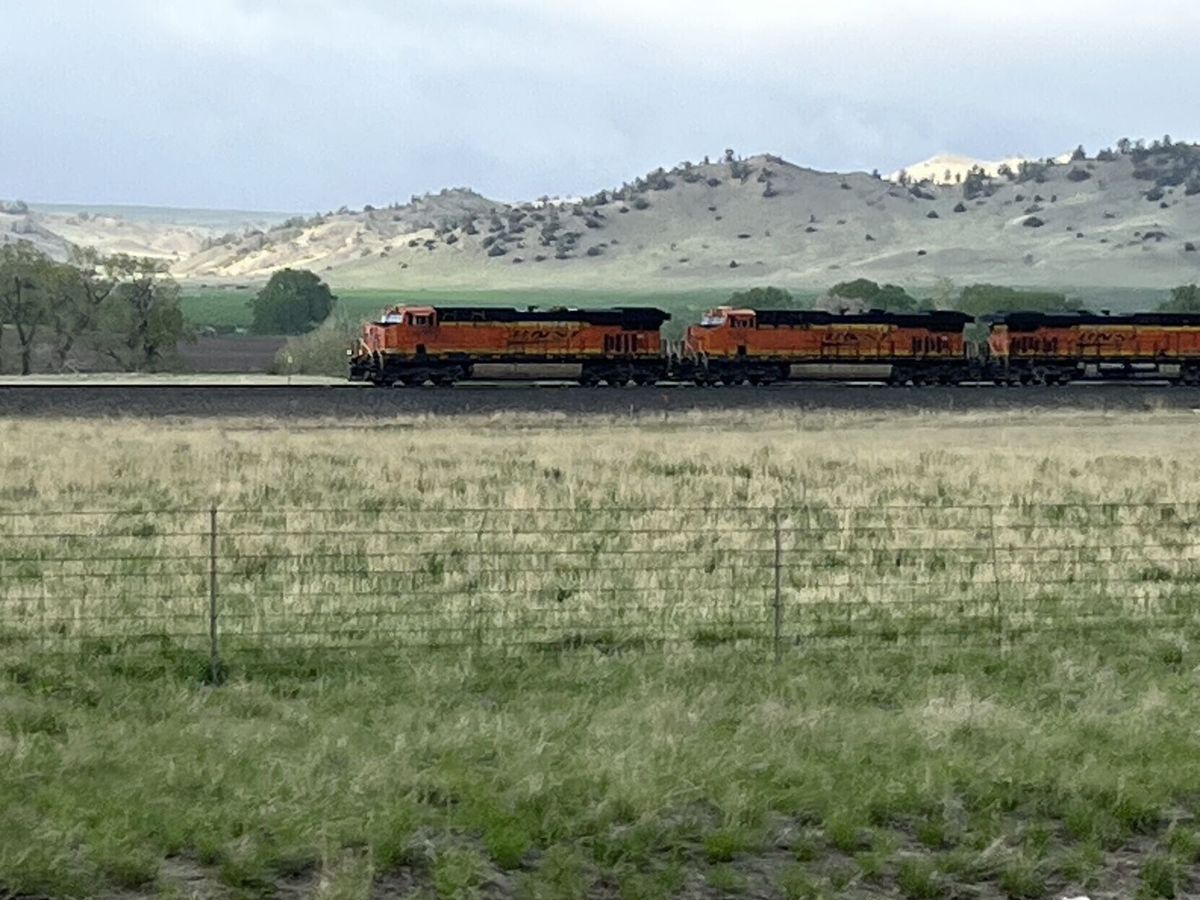
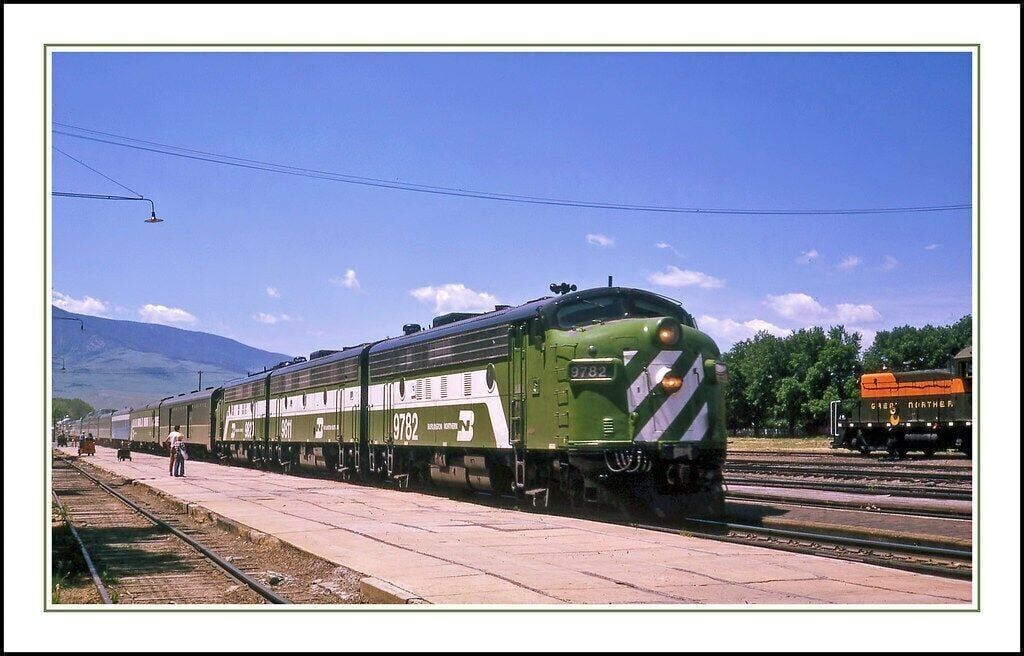
Supporters of opening a new passenger rail route from Chicago to the Pacific Northwest — including stops in Livingston and Bozeman — are hoping to get funding for the project with multiple bills in Congress this session.
U.S. Sen. Tim Sheehy introduced S. 3728 on Jan. 29, which would significantly decrease the financial burden on local governments for planning and developing the more than 2,300-mile route, called the Big Sky North Coast Corridor.
As it stands now, states would be on the hook for millions of dollars for planning the route, although the federal government would pay for most of it. S. 3728 proposes to “remove the requirement that the Secretary of Transportation consider the committed or anticipated non-Federal funding for long distance intercity passenger rail routes under the Corridor Identification and Development Program,” according to the bill text.
This means no non-federal match requirements for the proposed route’s service development plan and preliminary engineering and environmental analysis, according to David Strohmaier, who chairs the Big Sky Passenger Rail Authority.
Step one: Funded
The Big Sky North Coast Corridor is in step one of a three-step federal planning process.
“The first step that we’re in right now that the federal government funded to the tune of about $500,000 is simply to develop a scope, schedule, and budget for step two,” said Strohmaier, who also is a Missoula County commissioner.
The three-stop process is part of the federal Corridor Identification and Development Program, which is administered by the Federal Railroad Administration. The Big Sky North Coast Corridor is among 69 in the CID, but it’s the only corridor that’s long-distance, according to Strohmaier.
Step two: $11M
Step two in the CID is the service development plan.
“The service development plan will answer questions about where the stations will be, what infrastructure improvements will be necessary to accommodate both freight and passenger trains, what the mechanics of the scheduling will look like,” Strohmaier said.
The service development plan is estimated to cost about $11 million, which currently requires a non-federal match of 10%.
Step three: $40M-50M
Step three in the CID is the preliminary engineering and environmental analysis, which could cost $40 million to $50 million, according to Strohmaier.
“The Sheehy and Merkley (D-Ore.) bill will eliminate the non-federal match requirement for both steps two and three, which is a really big deal,” Strohmaier said.
S. 3728, also called the Long-Distance Corridor Relief Enhancement Act, would eliminate the need for a non-federal match for all long-distance corridors participating in the CID, not just the Big Sky North Coast Corridor. The bill “recognizes that long-distance routes operate at the national scale, connect multiple states and tribal nations, and serve communities across entire regions,” according to a BSPRA press release.
“Railroads are critical to connecting communities and growing economies across Montana, and our long-distance routes serve a vital national purpose in strengthening rural America,” Sheehy said in the release. “I’m proud to introduce the Long-Distance Corridor Relief Enhancement Act to provide the certainty and stability needed to spark a renaissance in passenger rail. Working alongside partners like the Big Sky Passenger Rail Authority, we will continue to prioritize community input and deliver commonsense results.”
The bill does not guarantee funding for the Big Sky North Coast Corridor, nor does it guarantee service or reduce FRA oversight over the project.
“It removes an early structural barrier, so long-distance corridors are evaluated on readiness and merit,” reads the BSPRA’s website.
Getting the federal government to contribute more to the effort is significant for the new route’s proponents, as support hasn’t been universal among Montana leaders, some of whom have been able to keep significant state funding from being used to operate BSPRA.
For example, a bill to set aside $2 million annually from the state’s general fund for the BSPRA failed in the Montana Senate last session. Park County Sen. John Esp (R-SD 29) was among 27 senators who voted against the bill, HB 848, in April 2025.
Park County’s two House members supported the measure as it passed their chamber. During the Senate floor debate on the bill, Esp expressed the concern that passenger rail would be worse for the environment than personal vehicles.
“And the average ridership up north in Montana (on an existing passenger rail line) is roughly not quite 200 passengers a day,” Esp said. “I don’t know what they pay for a ticket, but it’s probably not enough to pay for the diesel fuel to cross Montana. So, this idea is not workable, and I told ... the committee I could buy every family in Montana a near brand-new Subaru, and you could all drive wherever you want in your new Subaru and probably save fuel, too.”
There was strong bipartisan support in the Legislature for the BSPR’s work, according to Strohmaier.
“Even though the funding bill for the rail authority’s operation ultimately failed last session, it still had fairly strong support,” he said. “And I would point out that you got a Democrat from Oregon and Republican Sen. Sheehy from Montana teaming up on this bill. So, I think even in Congress we see bipartisan support for rail.”
S. 3728 was co-sponsored by U.S. Sen. Jeff Merkley. There hasn’t yet been debate on the bill in Congress.
Congressman Troy Downing and Sen. Steve Daines issued statements of support for the The Big Sky North Coast Corridor during BSPRA’s passenger rail conference in Livingston six months ago. Congressman Ryan Zinke has been less supportive, having expressed opposition to more funding for Amtrak.
Livingston City Manager Grant Gager sits on the BSPRA’s board. Besides the City of Livingston and Park County, other local supporters of BSPRA include the Grabow Hotel, Sage Lodge and Xanterra, the concessioner for Yellowstone National Park.
Proponents of S. 3728 argue that federal funding is appropriate in this case, because the operation, maintenance, and capital investment necessary to create the new route will be a federal responsibility.
“The argument is, why should states along this corridor, or other non-federal entities, be responsible for the planning dollars, the planning match? So that makes sense,” Strohmaier said. “So it’s a big deal. If we get this bill as a standalone bill over the finish line, it will allow us to move seamlessly from this first step of the program into step two.”
Sheehy introduced a similar bill last fall, but S. 3728 replaces that effort.
“Clarifying language was added to ensure that the bill applies to existing long-distance routes in the Corridor ID Program (which was the original intent but we realized it may not have been as clear as it needed to be),” Strohmaier wrote in an email.
Trains for the 21st century traveler
If the Big Sky North Coast Corridor comes to fruition, it may benefit from a better passenger experience, as Amtrak recently announced it will be modernizing its train fleet.
Amtrak will soon issue a formal request for suppliers to bid on a long-distance fleet replacement contract, it said in a Feb. 26 press release.
“Once a selection is made, Amtrak will work closely with the selected car builder to finalize the delivery schedule to replace our long-distance aging fleet,” reads the release.
U.S. Deputy Transportation Secretary Steve Bradbury supported replacing Amtrak’s “aging fleet” to “provide American travelers with the world class rail service they deserve.”
“These new cars won’t just benefit American train passengers, but workers too by supporting good paying domestic manufacturing jobs,” Bradbury said in the same release.
Strohmaier expects the train upgrades to include wifi — which he called “absolutely essential” for the 21st century traveler — as well as accommodations for overnight travel.
“So, I would envision observation-type cars, a cafe car or a dining car where you could grab a drink or bite to eat if you want,” he said.
One potential hurdle to overhauling the nation’s train fleet by the early 2030s is the industrial capacity of the United States.
“There is a challenge in the United States in terms of manufacturing capacity,” Strohmaier said. “And that’s another thing we’re just going to need to figure out and work out. We don’t have all of the solutions right now, but as I’ve said many times, we put a human being on the face of the moon in the 1960s, and it certainly seems like we have the ingenuity and wherewithal to figure out how to get these trains moving on planet Earth when within at least the same time horizon.”
BSPRA officials intend to raise the bar for passenger rail service, which they’ll try to do with help from the public.
“As we are going through this planning process, we’re going to be asking folks and doing stakeholder engagement with communities and groups asking the question, ‘What is it that you want in the service?’ Strohmaier said. “What amenities and features would you like on these train sets? And then from there, it’s how do we reverse-engineer our thinking about all of this to make sure that we accomplish those goals.”
The BSPRA is hoping to implement twice daily service.
“That means two trains in each direction every day on time,” Strohmaier said. “I know there have been challenges with the Empire Builder at times and other long-distance trains that might have experienced challenges related to on-time performance due to a variety of reasons. We’re looking at what’s causing those problems and how do we address them such that you can have reliable, on-time service.”
A ‘belt and suspenders approach’
As they lobby for the passage of S. 3728, BSPRA officials are working on a parallel track: The federal Surface Transportation Reauthorization bill, which is reauthorized every five years. The current bill will expire at the end of September.
“The surface transportation reauthorization is the piece of legislation through which all federal surface transportation dollars flow,” Strohmaier said. “So, if Park County is looking at a road project that depends on federal dollars, this is the bill that would address that. In our case, passenger rail dollars flow through this bill also. So, we’re busy working on language that would go into that bill and also just working on the general principles that we would like to see in that bill that would allow for not only us completing this planning phase for the Big Sky North Coast corridor, but also including dollars in that bill that would allow for project implementation.”
This “belt and suspenders approach” using both S. 3728 and the Surface Transportation Reauthorization also involves trying to include the non-federal match elimination provision in both bills, according to Strohmaier.
The next step in the CID should take about two years, and the third and final step could take another two years, he said.
“That puts us four years down the road, which is still within the next five-year authorization period,” Strohmaier said. “And what we would like to see is not just having a shovel-ready project at the end of four years, but having the dollars appropriated in the surface transportation bill that would allow us to break ground, acquire the train sets, and do everything necessary such that, by the early 2030s, we could actually see trains rolling through Park County and Livingston and points east and west from there.”

Comments ()