
QSA drag show illuminates all-inclusive artistry
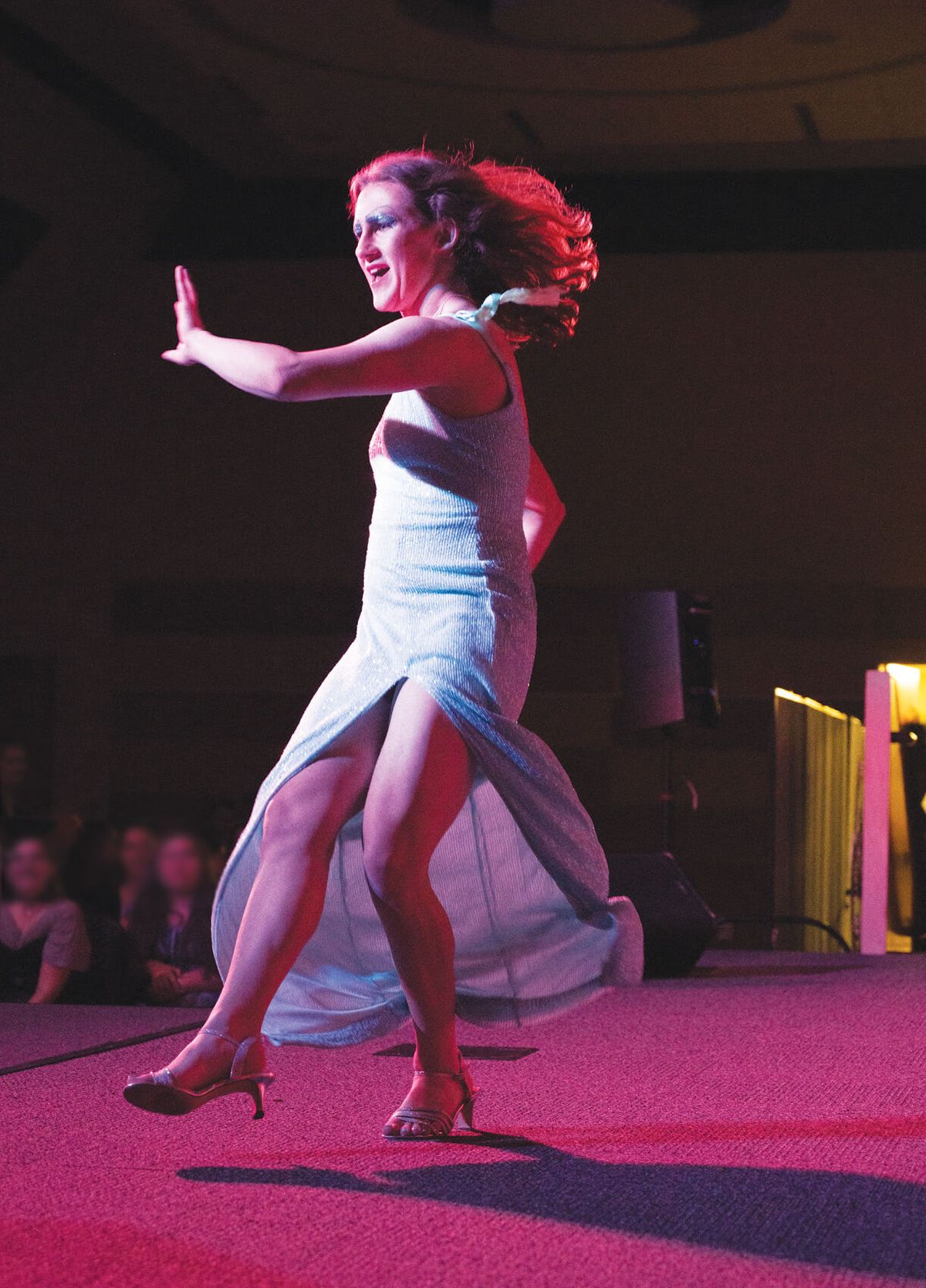
“Drag is not a crime,” performer “Alotta Hull” said at the Queer Straight Alliance (QSA)’s “Drag’s Not Dead” show this past Saturday in the SUB Ballrooms. “There’s nothing worse than being villainized for being your authentic self. Our goal is to spread a message of self-love and self-acceptance,” she said.
Hull — who uses “Alotta Hull” as the stage name for her persona — wore a red dress and fishnet stockings in the dressing room before the show. The room was buzzing with anticipation and excitement that evening. Miley Cyrus' songs were blaring and the atmosphere was full of laughter and color. Drag kings, performers who personify masculine stereotypes, and drag queens, performers who personify female gender stereotypes, were hair spraying and powdering in tandem to prepare for the stage.
At the same time, Hull shared her experiences doing drag in Montana.
For her, drag allows people to see her most authentic self. “As a trans woman, doing drag saved my life,” she said. “Once I put the pads on and got on a wig for the first time I was like oh, that’s what I see in my head.”
Hull started doing drag in 2022 with the Imperial Sovereign Court of the State of Montana — a group of advocates for the LGBTQIA+ community — and has performed regularly ever since. Her first show was at the Montana Pride Festival in Helena last year, where she performed in front of 15,000 people. “I looked ratchet, not going to lie, playtex and slutty little cop costume and all, but it didn’t matter because I was feeling myself,” Hull said.
Hull performs in drag because it allows her to create a body she loves. “It’s an appreciation of the parts of my body that I struggle to appreciate. It’s actively working through self-hate,” she said.
To Hull, drag shows are a space of intrigue and acceptance where we can all practice self-love. “People want to see who you authentically are, and drag allows us to do that,” she said.
Also performing was emcee Tierney Hula, drag chair for the QSA. A drag king who uses the stage name “Rex Pistols,” they have fun playing with masculinity in new and unconventional ways.
“A lot of the time we see masculinity as the absence of performativity, whereas femininity is performativity on top of the base standard,” Hula said. For Hula, creating a persona that wouldn’t read as too feminine was a long process. Having grown up loving the punk aesthetic, they chose to lean into that style.
“I was kind of puzzling over [the persona] until I settled on: your friend’s burned out older brother who you kind of have a crush on but you really know you shouldn’t and he’s so full of himself, but there’s something kind of hot about that,” Hula said.
Hula first started doing drag years ago on the Quest University campus in Squamish, British Columbia. It was there that they co-founded the campus’s first ever drag show in 2017 with the inception of the “Tantalus Teasers,” a performance that has been annually passed down from one drag generation to the next. Hula has since brought their cracking wit to MSU and continues to break down gender stereotypes in the states today.
“Modern drag, or at least Western drag, originates in a pretty homophobic world where things are very patriarchal and very inhospitable to queer people who didn’t really have spaces to be out and so drag itself is an inherently queer art form exploring gender, and what it means to be gendered in a body,” Hula said.
Drag is not only an artform, it’s a safe space for gender-queer or transgender people to be critiqued, according to Hula. Part of the community surrounding drag involves passing skills down from performers with less experience, or drag babies as Hula calls them. One of these skills is known as passing — or being perceived by the world as the gender the individual identifies with.
“Passing isn’t everything, but it is something that takes some skill. Passing is something that keeps us safe and drag gives us a platform to practice that on,” Hula said.
For Hula, things at the show finally came to a head after hours of running around and having everyone ask them questions. Their playful nature and punk accessories transformed them into “Rex Pistols” on stage, whose mohawk was spiked to perfection as they emceed the show.
“I’d like to introduce you to our first performer of the night: me,” they said.
Though Hula set a high bar, the other performers had no trouble measuring up. They ranged from stage names such as “Jaded Blowie,” a fierce new drag king, to “Cordelia Rose,” a gorgeous drag queen who loves to take dress inspiration from different historical periods.
Hula became a little misty-eyed as they later introduced “Aurora Nova” to the stage. Nova was a first-time performer and one of Hula’s own drag children — individuals who have learned the ins and outs of drag with their drag parent’s help. Hula taught Nova everything about drag, which is why they also announced that she will be joining the “Pistol House” of drag kings and queens who learned from Hula and will pass information on to their own drag children.
The ballroom was full of love and support the entire night thanks to the audience who kept the energy high. “I think it's super important that trans kids in the community can see something like this celebrated in a supportive environment where everyone’s here to be positive,” attendee and student Veronica Patyna said.
It’s because of the QSA that shows like this can happen. It is one of the longest-running queer-specific groups in Bozeman, according to Hula. They added that as a student-led organization, it relies on drag shows to generate internal income for funding workshops and other events around town.
Vice President for Student Success Steve Swinford was also present during the show to support the QSA and the students involved. He was not there in an official role, according to him “[I’m] just here to support the students and enjoy a drag show.”
Events such as “Drag’s Not Dead” bring underrepresented members of the community who are full of passion and talent together. “Drag shows are a safe space for people to let all their bundles down, it’s a space where you can be authentically yourself,” Hull said.
“At the very least, you’re enjoying something queer, which makes itself selectively queer-friendly,” Hula said. Students were encouraged to contribute to the QSA throughout the night, playing a part in the positive energy brought to the ballrooms. Overall, “Drag’s Not Dead” was an incredible celebration of queer culture in Bozeman, bringing love and support to MSU’s campus.

Comments ()