
Soldiers, startups and student protesters: Inside Montana State's defense hub debut
Montana State University’s Innovation Campus hosted two visions of the American military last week — one looking to supply it, and one looking to stop it.
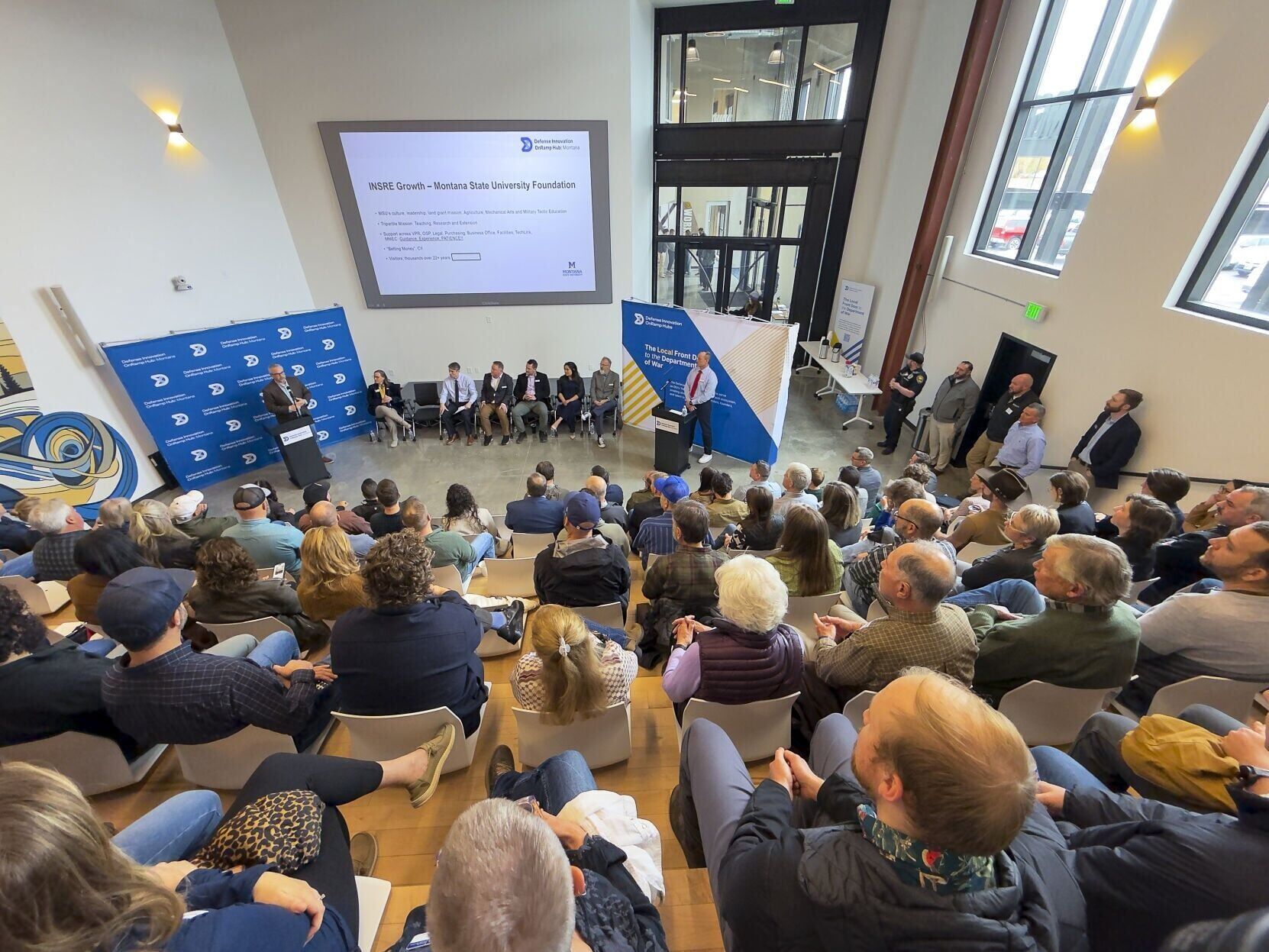
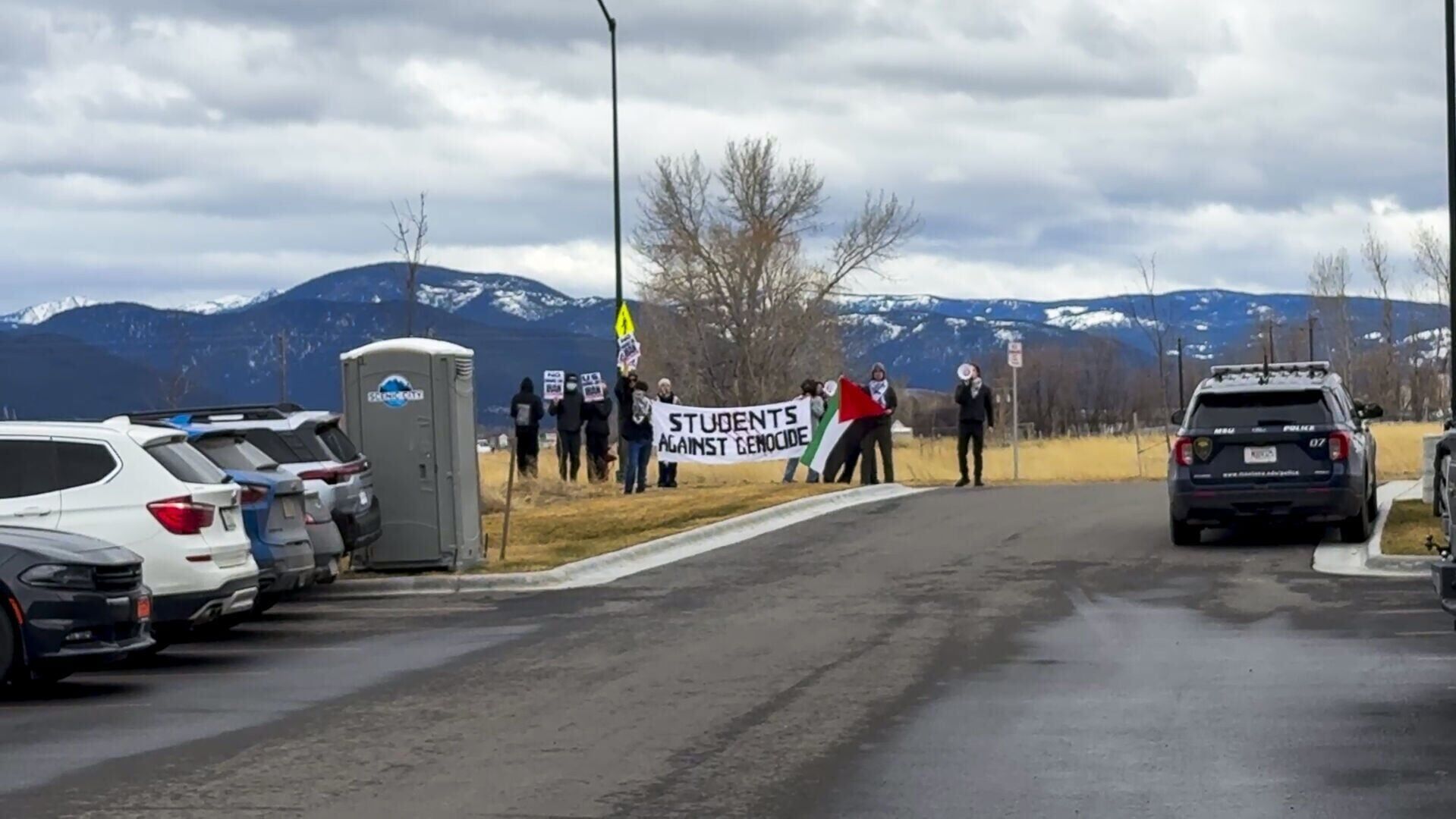
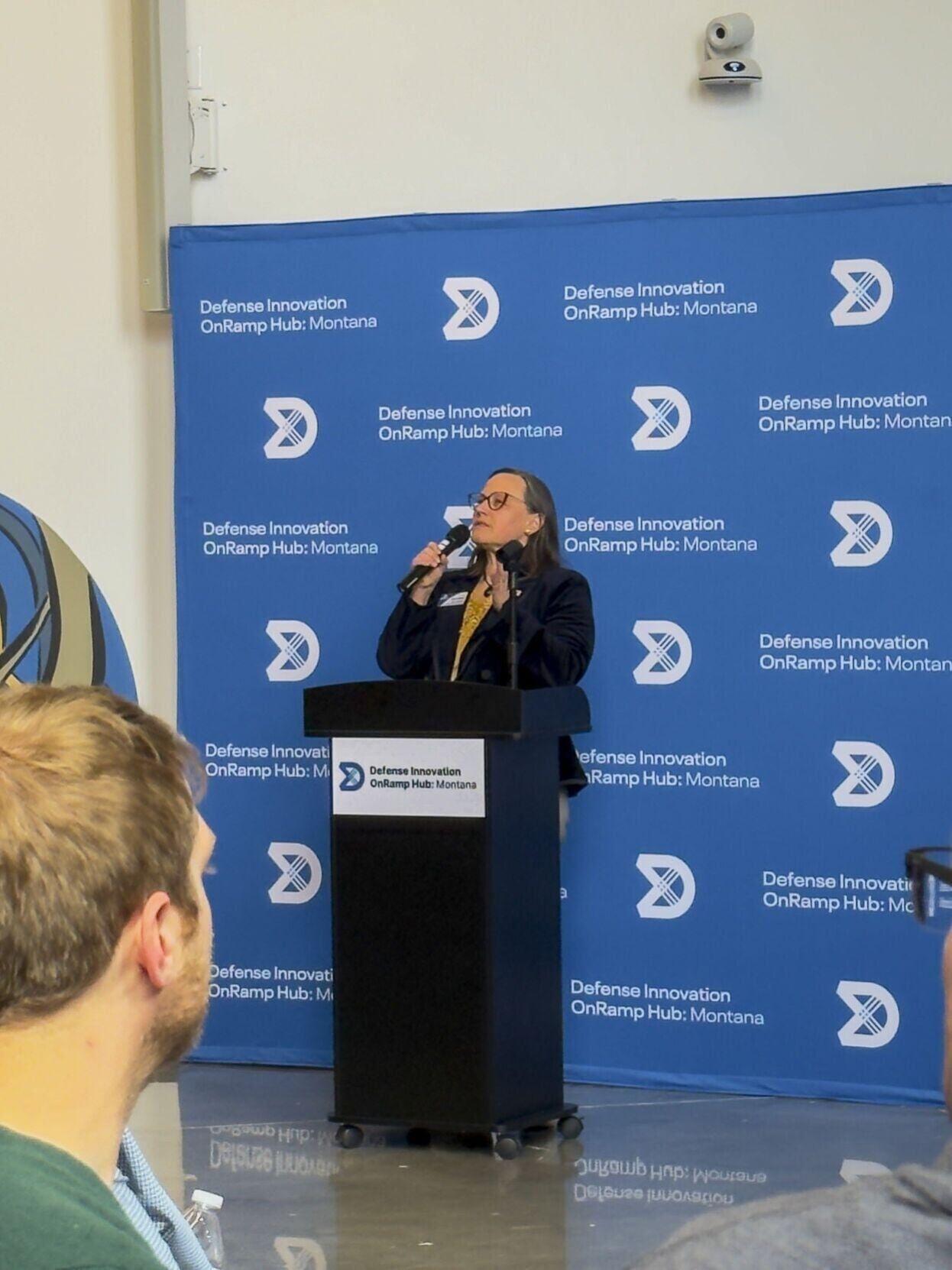
The Defense Innovation OnRamp Hub Montana held its first public open house at EngineWorks on West College Street, where a group of student protesters interrupted the event with chants and signs opposing U.S. military involvement overseas.
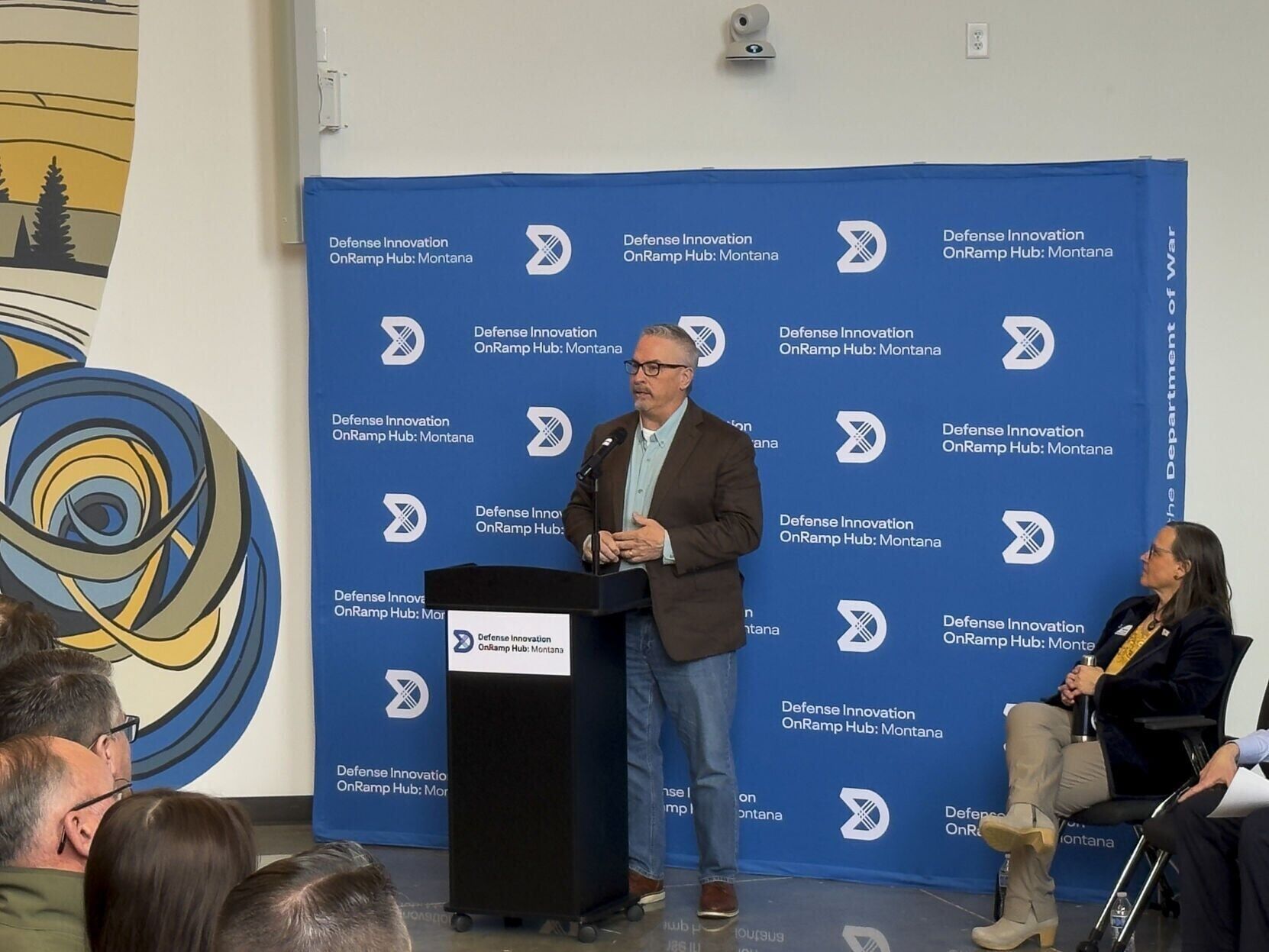
The hub bills itself as the “local front door to the Department of War.” Run through the Pentagon’s Defense Innovation Unit, it was designed to connect local startups, investors, and researchers with military contracts and funding. Managing director Leif Ibsen said the ultimate goal of the OnRamp is efficiency.
“It’s to accelerate the transition of smaller, dual-use technology,” Ibsen said. “Get the technology to the war fighters faster than has historically happened.”
Since launching in August, the OnRamp has identified 100 Montana companies with technology the Department of Defense — now dubbed the Department of War by the Trump administration — could use, Ibsen said. For the student protesters, the fast-paced development itself is the problem.
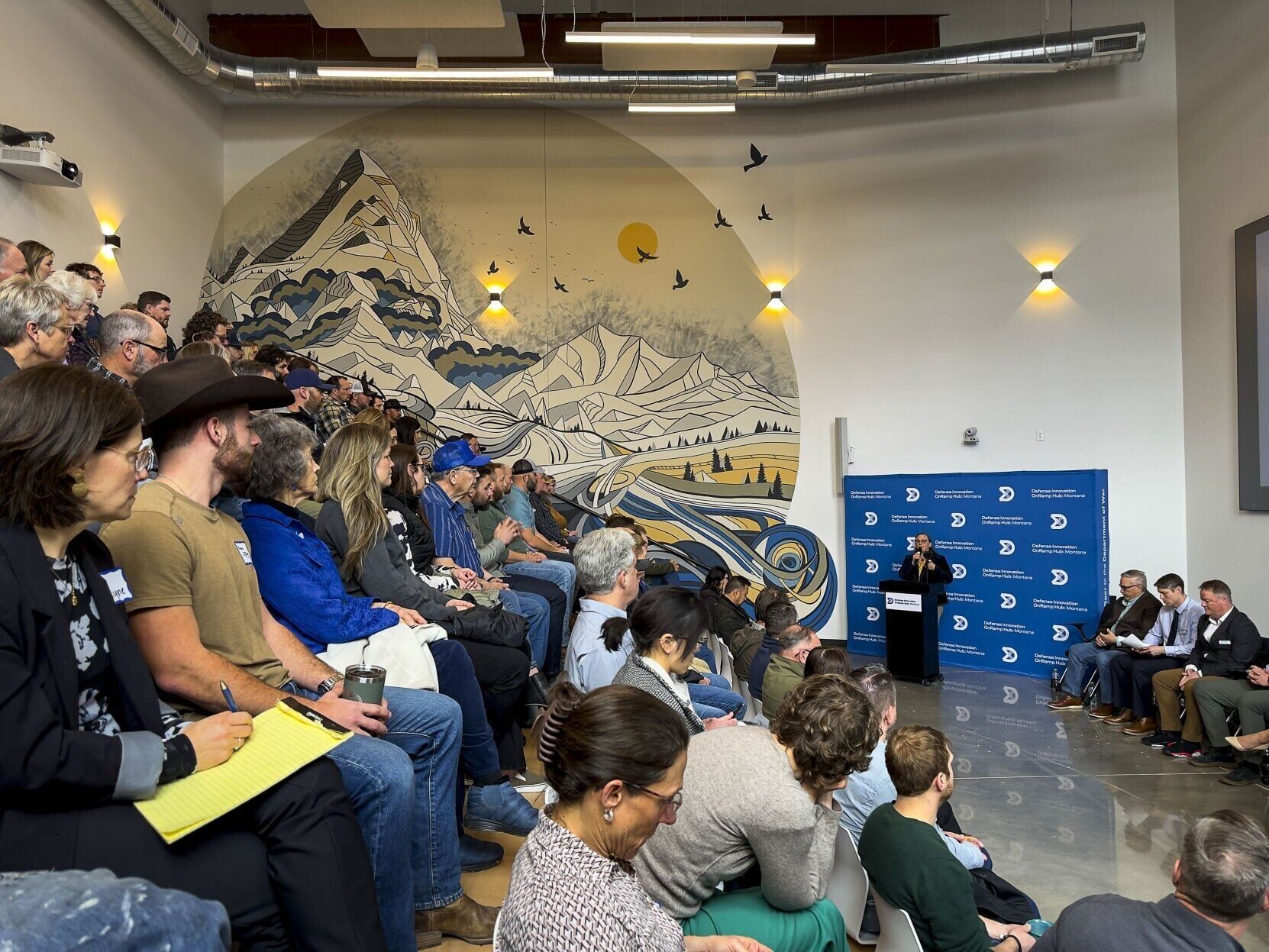
As Alison Harmon, MSU’s vice president for research and economic development, delivered opening remarks, a group of students burst through the door carrying signs and chanting against the escalating conflict with Iran and Israel’s ongoing military offensive in Gaza. An MSU police officer removed one student from the stage, and the rest followed instructions to leave.
After the disruption, the audience of about 100 attendees chuckled, and Harmon emphasized her view that the capability of the U.S. military protects free speech.
“We have very passionate students interested in expressing their views,” Harmon said. “That’s why we do this, to protect the First Amendment.”
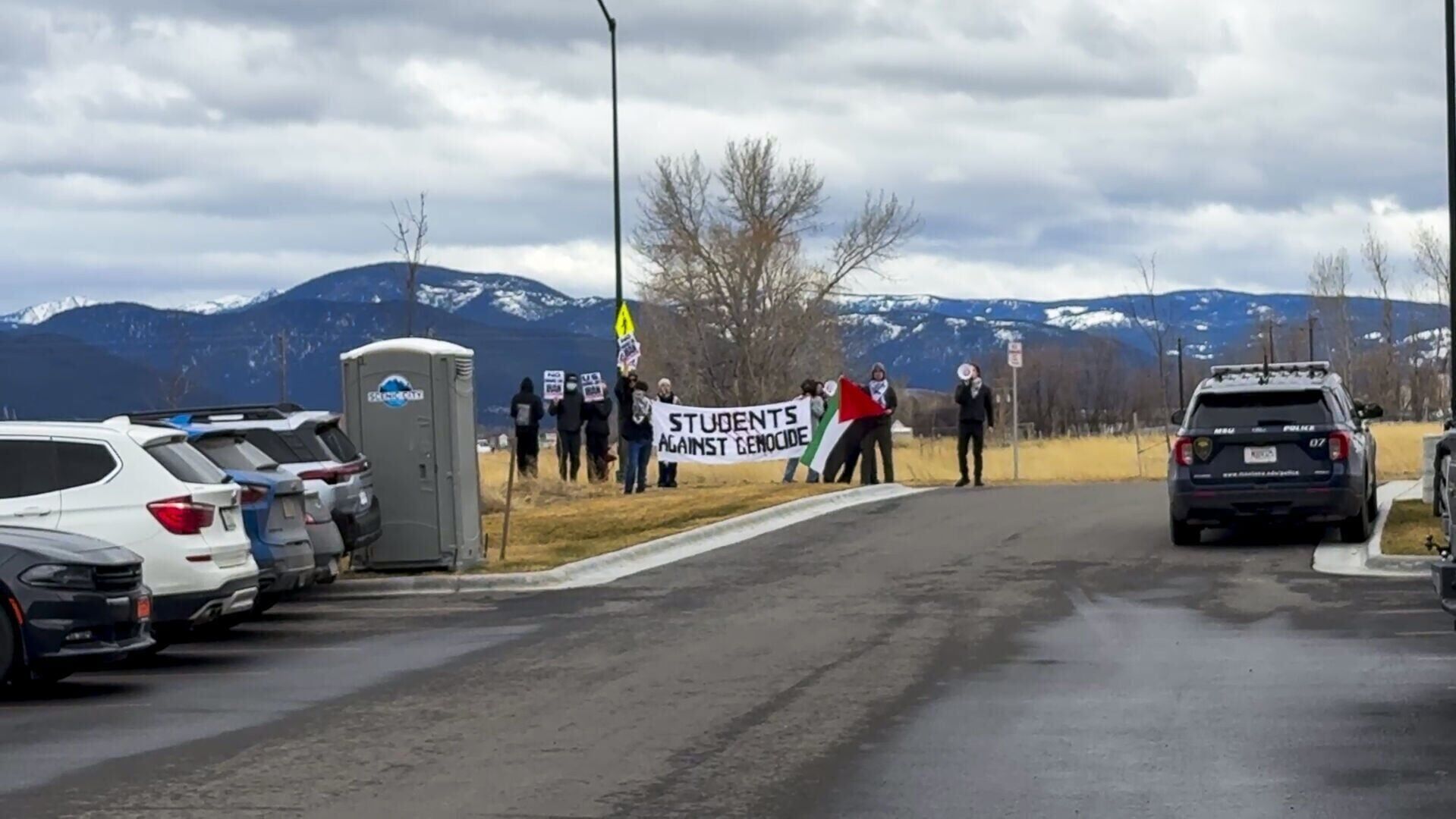
In January, the decentralized group of students launched a campaign called Students Against Genocide, calling on MSU to cut ties with the war industry. In addition to research partnerships between the university and various branches of law enforcement, the campaign highlights the Innovation Campus, a private development adjacent to campus that the MSU Alumni Foundation leases to the private sector.
Among the tenants at EngineWorks, the campus’s main building, is Reveal Technology, a Montana-based AI surveillance firm that provided its Farsight product to the Israeli military in 2024. The Defense Innovation OnRamp Hub shares the same building.
Julian Staggs, one of the students behind the campaign, said the group is not opposed to the Innovation Campus, but wants to see the development of technology for purposes other than war.
“We hope that the university can bring in sustainable companies,” Staggs said. “But we’re actively choosing to have weapons and military industrial companies present while we’ve conducted a genocide and are now conducting an illegal war.”
MSU leadership met with the students the morning of the protest, but did not respond to the Chronicle’s request for comment.
For the students, the carnage on the other side of the weapons manufacturing industry cannot be ignored. A study published in Lancet Global Health this month estimates roughly 75,200 violent deaths in Gaza, plus 16,300 deaths caused indirectly by the conflict, with women, children, and older adults accounting for more than half of casualties.
Since the joint US-Israeli strikes launched the Iran War last month, Al Jazeera English reports nearly 1,500 casualties in Iran, more than 800 in Lebanon, and dozens more across the Gulf region.
But for Ibsen, a U.S. Army veteran, there is another human cost to consider. So far, 13 U.S. soldiers have been killed in the conflict with Iran, and Ibsen said he knows firsthand what it means to be a soldier in a conflict zone with outdated or inadequate technology.
“Go back in time to when you’re 23 years old, and you just got told you’re going to an operating environment somewhere in the world,” Ibsen said. “When you land, in the back of your mind you know that there’s some tech that you’re carrying or is on your vehicle platform that’s probably not the best it can be.”
After the group was removed from the building, the students continued protesting from the sidewalk. As the dust settled, Patrick Miller, a project engineer for the OnRamp, said he was supportive of the students’ ability to exercise their First Amendment rights but that the OnRamp doesn’t decide how the Department of Defense uses the technology.
“It’s not really within the scope of my position,” Miller said.
For Bob Allen, a Navy veteran in attendance, the stated positions of the newly dubbed Department of War (legally still the Department of Defense) under Defense Secretary Pete Hegseth have changed the game. As the department’s mission has changed from defensive to offensive, Allen said the weapons providers can no longer walk away with clean hands.
“They’re complicit by default,” Allen said. “Right now, we brought war and we’re killing civilians (in Iran). It just seems a very aggressive stance for MSU, as a public institution, to be working with the Department of War.”
Part of the OnRamp’s presentation highlighted the economic potential of Gallatin County, which ranks among the top three counties in the nation on the U.S. Department of Commerce’s Innovation Index. Allen said the growth is impressive, but he finds the utilization disturbing.
“Going to kill people better is not the best use of our science,” Allen said.
Ultimately, Allen said he attended the event with the same goal in mind as the student protesters — and was happy to see a younger generation picking up the mantle.
“It made me proud,” Allen said. “They had some cojones and some logistics, that they got in both doors. I was impressed.”




Comments ()