
Speaking for the trees: At 'the end of the paved road', 81-year-old Jesse Logan advocates for ancient whitebark pine
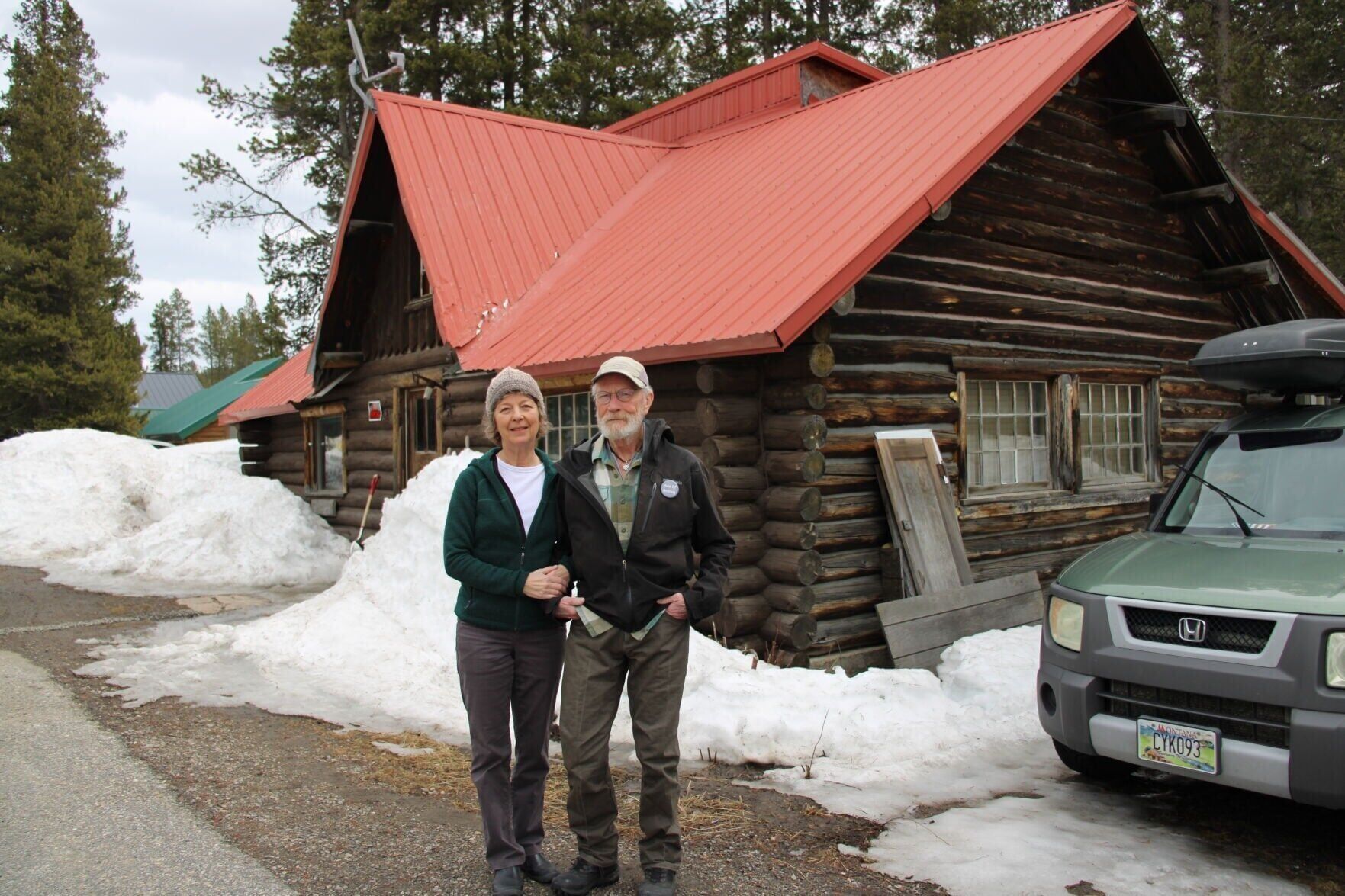
As snow falls and temperatures drop, so too does the population of Cooke City. For Jesse Logan, this transition is his cue to make his annual migration from Paradise Valley to a cabin at "the end of the paved road."
During Logan's first winter in Montana, he would drive three hours from Emigrant to Cooke City, ski, spend the night in his car, ski in the morning, and drive back.
"One night at 30 below zero made me decide to get a place in Cooke,” mused Logan, a winter resident for 21 years now.
The attraction, besides solitude and more than 100 days on cross country skis, is an ancient tree that has long flourished in the high elevations around Yellowstone National Park's Northeast Entrance: The whitebark pine.
"I enjoy skiing in any flavor, but skiing in whitebark (pines) is a special experience, and the stands here are magnificent," Logan said.
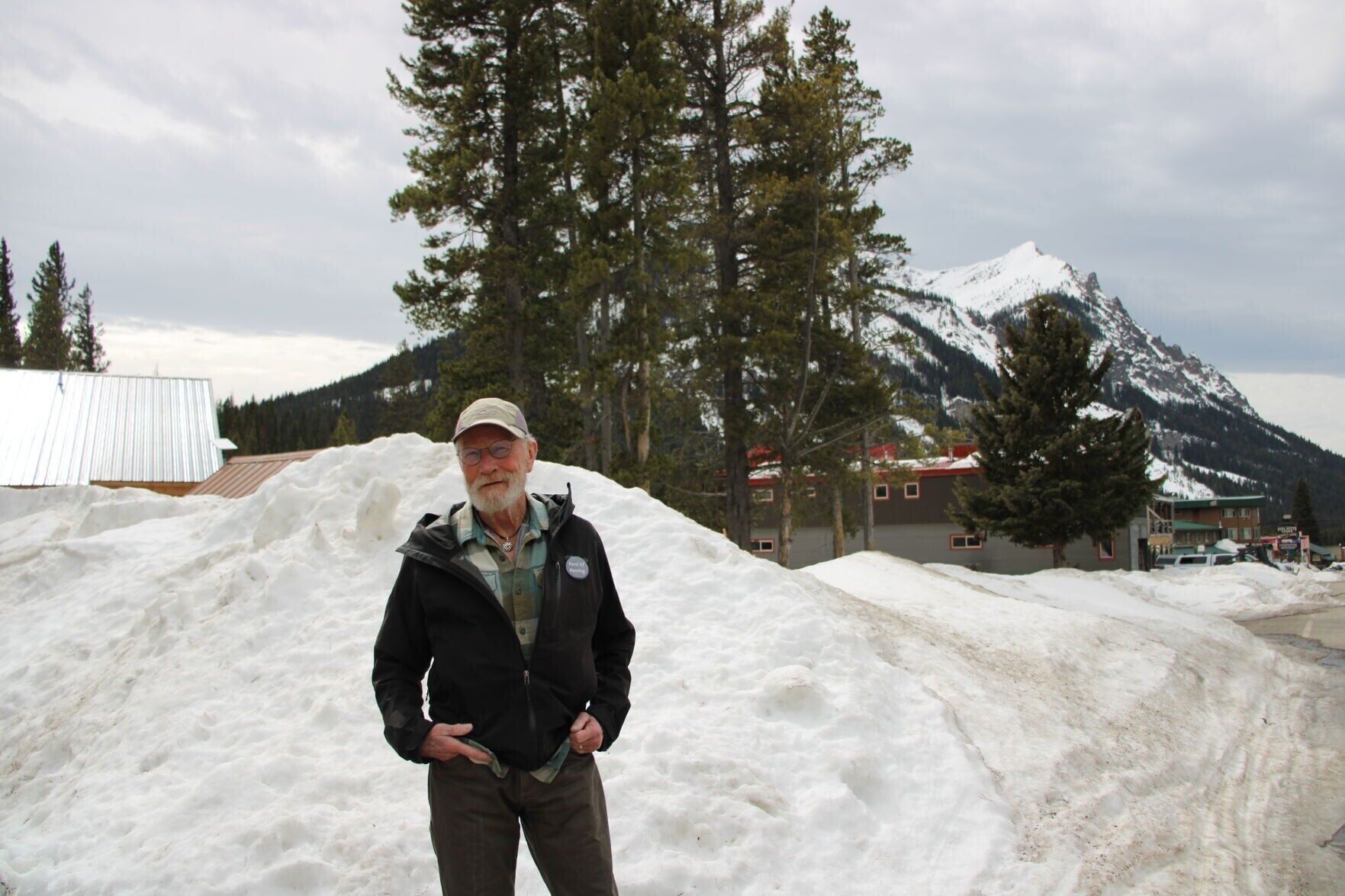
Logan, who wears a “Hard of Hearing” pin, a button-down green and blue flannel shirt, and thin wire glasses, is an 81-year-old retired United States Forest Service entomologist with a background in academia. Factual accuracy is at the heart of his beliefs and work, which today revolves around the struggling whitebark.
Logan is a co-plaintiff in a lawsuit against the U.S. Forest Service. The suit protests a December decision to permit commercial and non-commercial logging and burning on 3,128 acres on the Custer Gallatin National Forest north of Cooke City, which sits three miles from Yellowstone's Northeast Entrance.
The Cooke City Fuels and Forest Health Project aims to “reduce the fire intensity risk within the wildland urban interface surrounding Cooke City and Silver Gate while also increasing forest resiliency to insect and disease infestation,” according to the USFS website.
“It’s a mishmash. The proposal is very difficult to sort out. The primary objective, particularly for whitebark, has never been stated,” Logan said, gesturing to a series of red polygons on a computerized map he created with GIS. “These areas, which are proposed for whitebark enhancement, are in an 1988 lodgepole pine regenerated forest that contains no whitebark. And then if you challenge the Forest Service on it, they say, ‘Oh, our real objective is fuel reduction’.
"If that’s it, then why not be honest about it?”
Logan and his co-plaintiffs do not have qualms with the objective of protecting Cooke City and nearby Silver Gate, which narrowly avoided the infamous 1988 fires. But they believe the plan calls for logging well beyond the wildland urban interface, where human structures abut undeveloped wildland vegetation.
Logan said the fuel-reduction initiative seems disconnected from the whitebark enhancement project.
“It seems like a greenwash to me,” he said.
Logan first fell in love with whitebarks in 1992, when he was hired as a research scientist at the USFS Logan Ranger District in Utah. During his first summer on the job, Logan shadowed Dana Perkins, a forest ecologist studying whitebark pines in the White Cloud Mountains of central Idaho.
“There were these dead trees in this beautiful climax whitebark forest. She was doing tree-ring analysis, and dated these trees that had been killed back to the 1930s,” Logan recalled.
The whitebark, a gnarled pine related the ancient bristlecones of Nevada and the Sierras, are a highest-elevation tree — growing right to tree lines — and adapted to the harshest of conditions. The resilient conifer takes 250-300 years to fully mature, can live up to 1,000 years and grows at elevations between 5,000 and 12,000 feet.
Its cones are a vital source of protein for grizzly bears, which find them in caches left by the Clark's nutcracker. Whitebarks also provide shade for snow, extending spring runoff to the valleys below.
Whitebarks, which are listed as "threatened" under the federal Endangered Species Act, also are an indicator species for a warming climate. Higher temperatures have allowed for mountain pine beetles, blister rust and competition from lower-elevation trees such as Ponderosa and lodgepole pines.
Perkins, suspecting the White Cloud whitebarks had been killed by mountain pine beetles during a warming period, called Logan and his team, who found evidence of beetle galleries.
“That started the wheels turning, and it was my introduction to whitebark," Logan said. "I just fell in love with the system.”
Railroad Ridge in the White Clouds became his major research site during his 14-year tenure with the Forest Service. He calls himself a “quantitative ecologist.”
“I had been modeling mountain pine beetles, and the primary driver of outbreaks is weather temperature," he said. "When the first Intergovernmental Panel on Climate Change report came out in 1990, we were able to take the predictions and plug them into our existing model that indicated there could really be trouble down that road for these high elevation systems.”
Rising temperatures strengthen mountain beetle populations by accelerating their life cycles, metabolisms, and larval survival rates. It takes extended below-zero cold snaps, once more common in the Northern Rockies, to kill them.
Logan established a research plot to monitor a stand of whitebark at timberline on Railroad Ridge in 2001. As months went on, he found that the temperature conditions were becoming increasingly suitable for a mountain pine beetle outbreak, not unlike the 1930 one that killed the stand Perkins was studying.
“In 2003 things really began to fall apart," he said. "All through the southern distribution of whitebark pine, there were massive (beetle) outbreaks.”
From 2002-2003, nearly all cone-bearing whitebark in the region died. To this day, the stands are red and dead, a telltale sign of a detrimental mountain beetle infestation.
Logan relocated to Emigrant in 2006 and retired from the Forest Service, but continued his work with whitebark pines. With the help of Utah State University researcher Wally Macfarlane, he secured funding to monitor whitebark populations in the Greater Yellowstone Ecosystem.
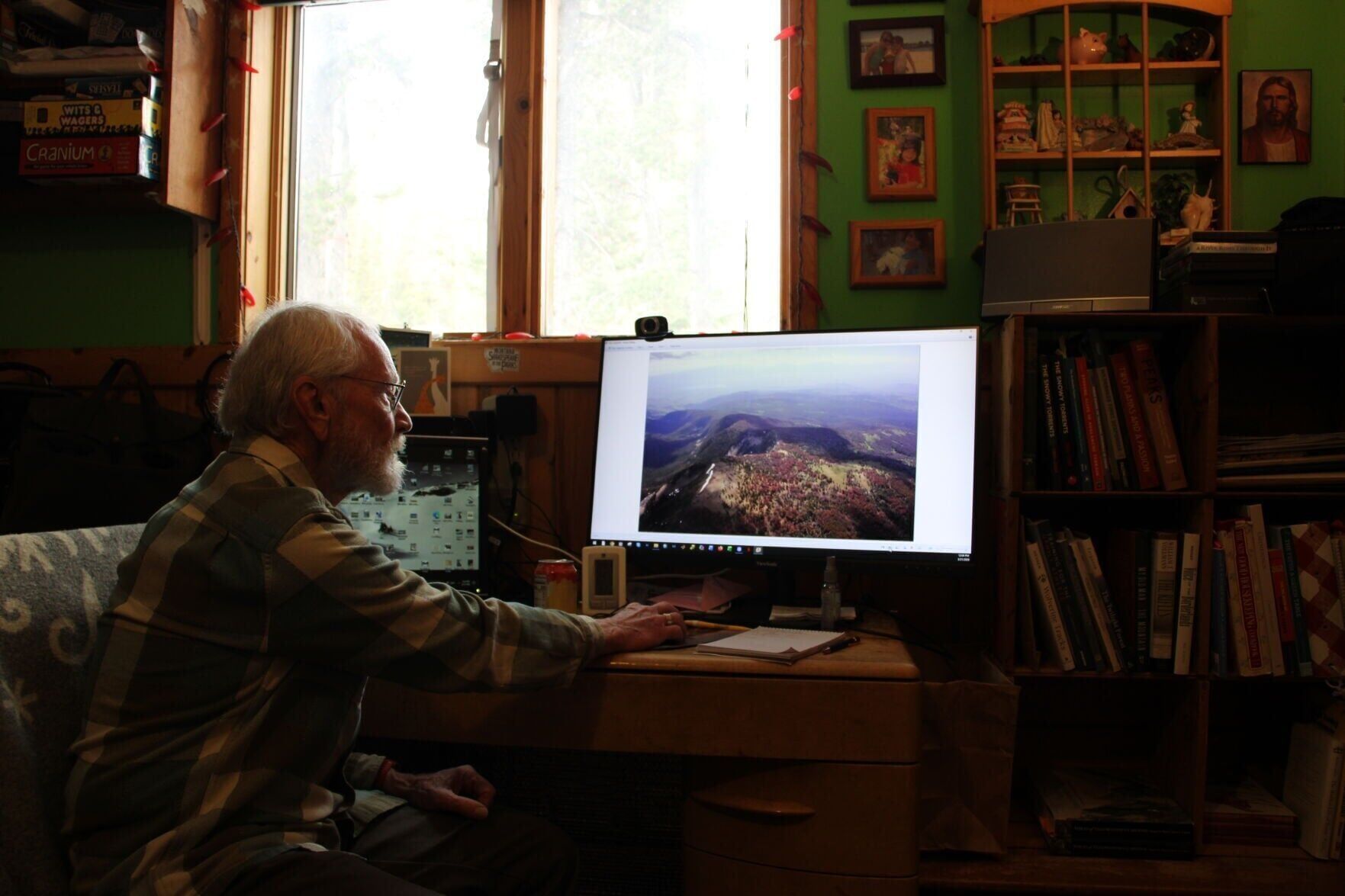
“We were able to fly and monitor (the GYE) in 2009 and document what was going on, and it was absolutely, totally shocking,” he said, turning to his computer and pulling up an image from the flight. The characteristic rust-red tree tops spread across the hillside like spilled paint. “All the red trees were killed the previous year by mountain pine beetles; they were just wiping out the whitebark.”
And then it all ended the way it began, with a fluctuation in temperature.
“That fall, there was an anomalous weather event across the GYE," he said. "Unseasonable cold temperatures, and that pretty much shut the outbreak down.”
But the damage had been done. More than 80% of the mature whitebarks across the GYE were decimated. Logan says the population has not rebounded.
“You would go into a gorgeous climax whitebark forest, and it would just be heartbreaking," he said. "The trees would be going down, would be being killed, and it was just devastating.”
Because the whitebark evolved to survive in altitudes with minimal competition, they compete poorly with lower-elevation pines. The same can be said for pine beetles.
“They have not evolved defensive chemistry in their resin compounds to defend against the beetles. They’re pretty much sitting ducks,” Logan said.
In addition to the toxic compounds, other conifers produce excessive amounts of resin that flood the beetles from their trunks. Without these adaptations, whitebark pine trees are uniquely susceptible to widespread beetle infestations.
"But even as all of this was going on ecosystem-wide, the forest around Cooke was, for the most part, healthy, spectacular, 400-year-old whitebark pine forests," Logan said. "I remember telling Catherine, 'If these forests go down, just shoot me'. It was just so heartbreaking.”
The Cooke City Fuels and Forest Health Project designated 2,013 acres of land north of Cooke City for whitebark pine enhancement. All trees under eight inches in diameter at breast height within five to 30 feet of the crown edge of whitebark pines in these areas are to be removed to “increase tree vigor and are intended to provide breathing space for existing whitebark pines to grow unimpeded”, according to the final environmental assessment released by the Forest Service.
Logan worries that this approach might not address the primary threats. Whitebark pines and subalpine pines have been co-evolving to occupy the same habitats for millennia, and removing one could throw off ecosystem balance.
“The evidence (the Forest Service) cites is either misquoted or cherry-picked. If you go back to the original literature, the results are absolutely, totally ambiguous,” Logan said. “They’re proposing a treatment that lacks substantial documentation that will involve collateral damage that has been well-documented. It’s questionable as a management approach.”
Similar qualms with the Forest Service drove Logan to take an early retirement two decades ago.
“In many respects, it was the best job I could imagine. Being out there every day was a picnic in the woods,” he said. “On the other hand, it was pretty frustrating back in the George W. Bush administration. My main research interest was the effect of climate change on outbreak potential, but in a scientific meeting, I couldn't use the terminology ‘global warming’ or ‘climate change'.”
Similarly, the Cooke City Fuels and Forest Health Project makes no mention of either term.
“When you're an agency, and you live and die on the annual appropriations bill, you’re very sensitive to what’s happening politically,” Logan said. “If you get documentation coming down from the chief’s office saying ‘you’re going to do fuel reduction, you’re going to increase timber output’, what’s somebody going to do?”
The Cooke City Fuels and Forest Health Project had three opportunities for public comment: Once in response to the scoping document, then the initial environmental assessment, and lastly at the final environmental assessment. Individuals had to establish standing by commenting on the scoping document to have their statements considered on the subsequent two assessments.
Logan participated in all three comment periods, culminating in a 52-page objection document to the Final Environmental Assessment.
“It took several hundred hours, putting together the GIS system, reading all the documents,” he said. “Supposedly they looked at it before they made their decision.”
In December 2025, USFS issued its final decision, green-lighting the project and leading Logan, Alliance for the Wild Rockies Executive Director Mike Garrity, and Native Ecosystem Council Director Sara Johnson, to mount their lawsuit.
“The only way to make substantial changes to a project like this is through the legal system," Logan said. "It’s a waste of time, talent, resources. All of that could be focused on something that really counts. It's an unfortunate sign of the times; it's not unique, but it’s intensified.”
So, at 81 and at the end of the paved road, Logan continues his mission, committing himself to facts and the best available science just as he has throughout his long career.
"Despair is not really a valid strategy, and it's easy to be overcome (by it). But, we're in this situation," Logan said. "How can we help this charismatic species occupy emerging habitats? Can we really help them? I think we can, and I think we should."



Comments ()