
Student Commons hosts zine workshop
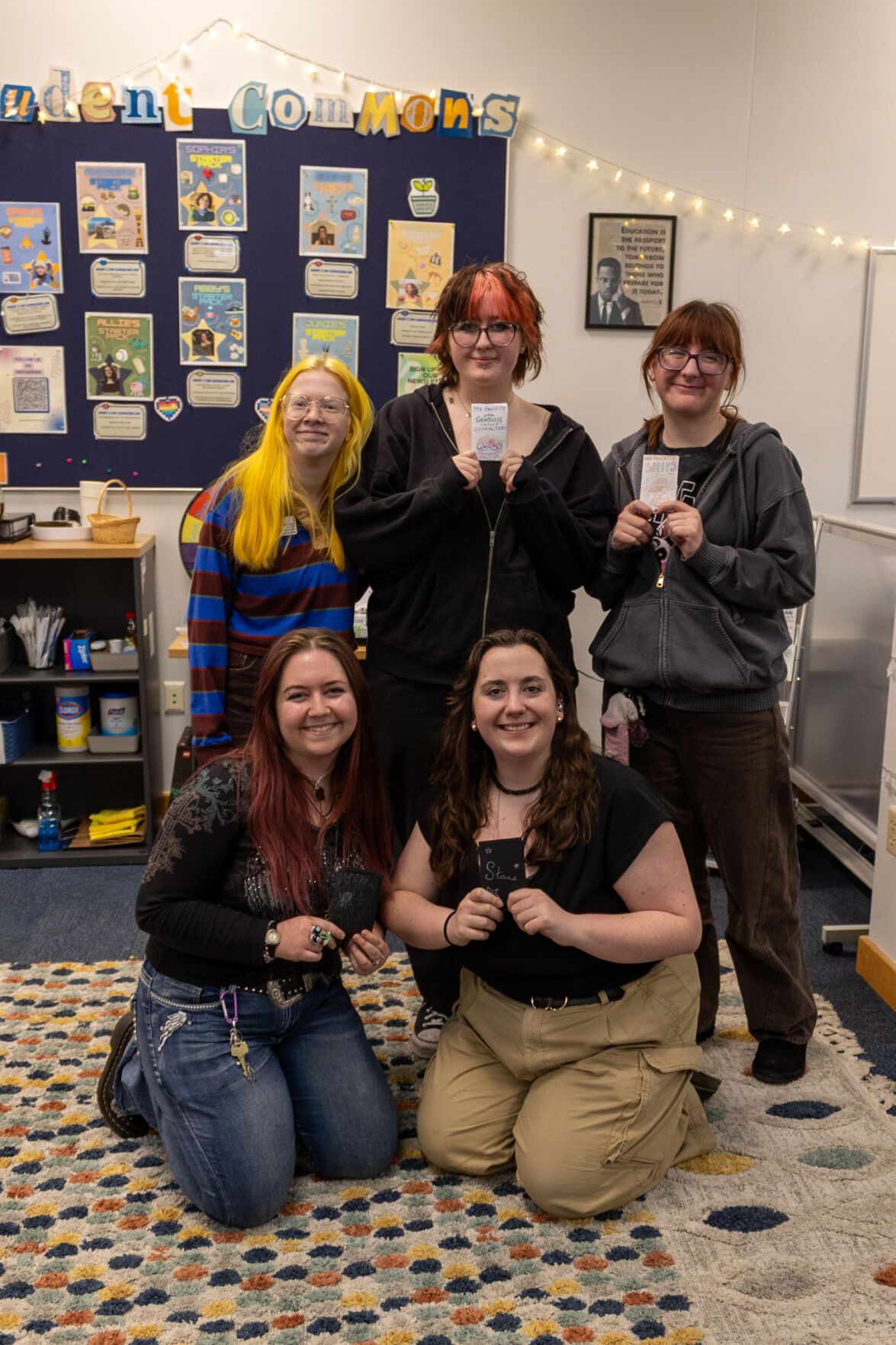
MSU students got creative in the Student Commons this past week. The craft at hand? Zines — an art form historically used as a means of resistance for marginalized communities.
Participants gathered last Friday for hands-on learning about the history and process of zine-making. According to event organizer Junie Jack, zines are self-published booklets that are typically handmade and distributed for free or at low cost.
“Anybody can make them. They can be made about anything: politics, social issues, just stuff you like,” Jack said. “You don't need to be an expert, you don't need to be an artist. You can just make a zine.”
According to Jack, the zine workshop is part of Studio Commons, a monthly event series designed to be accessible to everyone. “A lot of the art events and workshops are in the art building. I feel like that can feel intimidating,” Jack said. The goal of Studio Commons is to bring more students into the Student Commons, according to them.
“[My zine is] just little doodles of my favorite Genshin Impact characters,” attendee and art major Allis Wharton said. “I love connecting with the characters — they're so comforting to me. So this is something where I could give it to someone and be like, ‘Hey, this is something to get to know me.’”
“[Zines are] a very accessible way for people to spread the word about whatever you're passionate about,” said art and environmental science major Genoa King.
King said that she has seen powerful zines all around campus. “I had one guy in my class do one for a family in Palestine that he was in contact with, and that was very impactful,” she said.
Jack said that they first discovered zines through the Montana-based queer zine, “Transcendent Joy,” created by Forward Montana.
“I grew up [in Montana.] You don't really understand when you're younger and growing up in a small town, that there's a bunch of people around you that are also queer,” Jack said. “It's just being able to create a community and realize that you're not alone and find other people.”
“There are no rules, and I think that's what makes it so freeing and accessible,” said MSU School of Art Foundations Coordinator Jade Lowder. “You can have just a piece of paper and fold it a couple of fancy times, and there's your zine.”
Zines have long been used as a way for marginalized communities to speak out and spread information, according to Lowder. “Even something as helpful as pamphlets in the Underground Railroad could be seen today as zines,” he said.
According to Lowder, they were originally used after the rise of the Xerox machine and underground printing presses in the ‘60s and ‘70s to resist mainstream media.
“It was a big point to go counter to corporate publishing because anything that could be deemed objectionable was banned,” Lowder said. “It became a way of sharing information that was otherwise kept out of people’s reach.”
According to him, zines are still used as a counter-culture tool today. “There are a lot of marginalized communities [whose] voices are silenced on social media and whatnot. You can't silence a zine,” he said.
Lowder said that the Bozeman zine community is seeing a resurgence. “With places like Country Bookshelf who are giving shelf space to zines, it’s giving them legitimacy,” he said. “There are also a lot of student organizations on campus that are interested in zines.”
On Feb. 27, MSU will host its second annual Zine Fest in Haynes Hall from 9 a.m. to 12 p.m. At the event, artists and local organizations will have space to sell and trade zines, posters and prints.
Lowder, who is coordinating the event, said that all students are welcome to participate. “If you're interested in selling zines or posters or whatever, contact me,” he said. “It's open to everybody.”
To learn more about Zine Fest, email Lowder at jade.lowder@montana.edu.


Comments ()