
Student communities gather to showcase interests
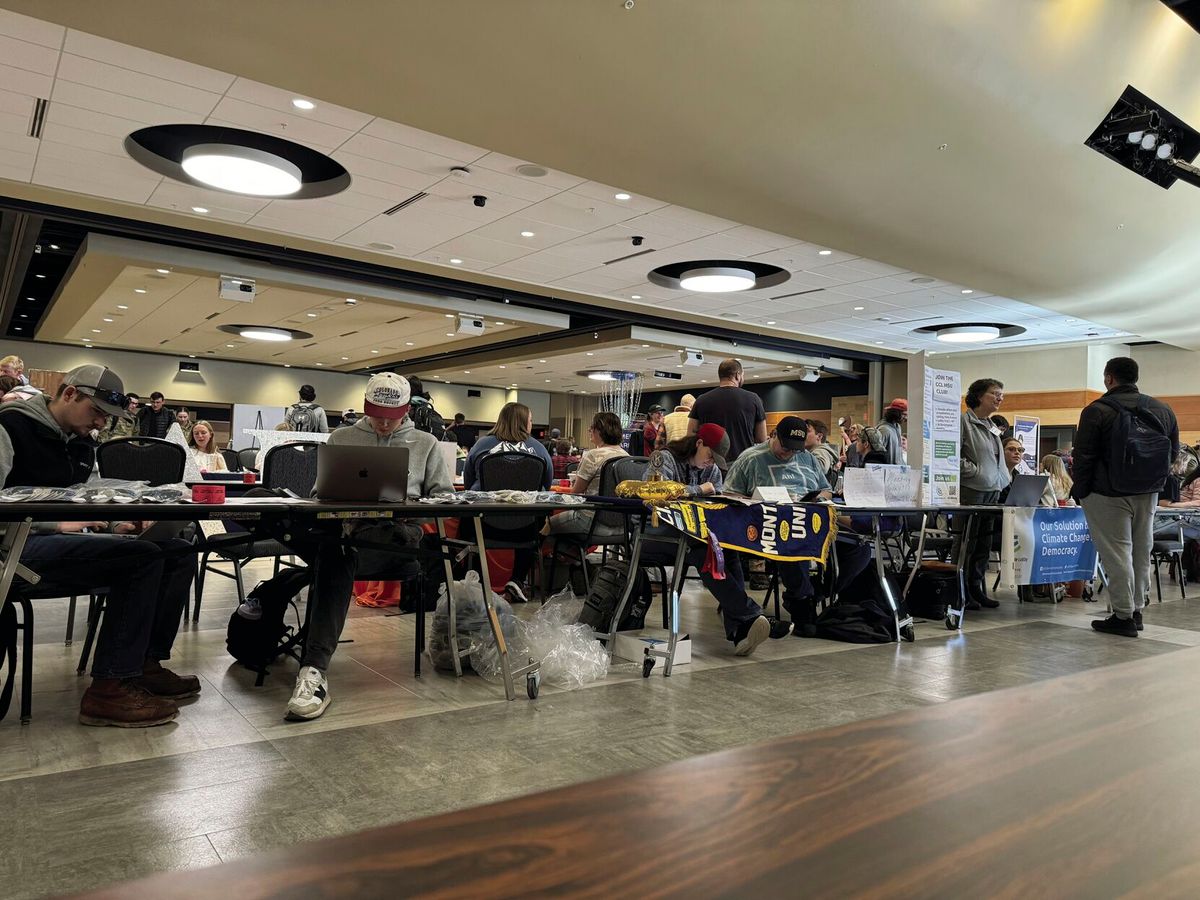
On Wednesday, Jan. 31, clubs and organizations from across the country gathered in the SUB for the Student Information Fair. The leadership staff of student organizations and clubs had decorated tables and information about the communities and the opportunities they provide. This included connections with students of similar backgrounds, extracurriculars such as debate and robotics and even some study abroad options through the university. Featured events included a raffle, stickers on many of the tables and students eager to speak about their student organizations and clubs.
One of the organizations present was the Disabled Students Association (DSA). Miller Rijfkogel, president and co-founder of the DSA, spoke about the goals of the association. “First off is [creating a] community for disabled students. Disability is very isolating, regardless of what it is, so just being able to provide a community where people can come and meet others [who] experience things similar to them. The second goal is to advocate for disability and to address any accessibility issues that there might be,” Rijfkogel said.
Rijfkogel said the DSA works with the Office of Disability to bring attention to things that are happening on campus concerning accessibility. The association was created last February by Rijfkogel and Barla Beaudoin after they had both sustained temporary injuries. Rijfkogel went on to explain that they’d “had enough” after “experiencing some access issues and some hardships in relation to our disabilities for quite a few years at that point.”
A few tables down was the Debate Club, where Vice President Hannah O’Connell explained the club’s use of the British parliamentary debate structure. “It’s four teams of two and you get the topic 15 minutes before your round. You have no access to technology or anything else so it’s very impromptu-style thinking, and then you debate about the topic,” she said.
O’Connell said that in the 15 minutes, students start to prepare their arguments and work on how they will “embolden the arguments with impacts.” The round begins immediately after the time is up.
The topics discussed can range from international relations and current news to science-related topics, and two teams are randomly assigned the “government” position, while the other two are the “opposition.”
Debate meets Mondays, Tuesdays and Wednesdays in Wilson 1-119. O’Connell added that the British parliamentary style of debate is more widely used in collegiate debate due to the “more emotional and rhetoric-based” arguments.
Another group at the event was the African Student Association (ASA). Manny Akpoto, the vice president of the ASA and a second-year biochemistry Ph.D. student, spoke about the purposes of the ASA. “I think the whole idea behind this association is to create a sense of belonging among African students who have come from different parts of Africa, knowing very well that we are far away from the southern parts of the States and this place is very white-dominated.”
The ASA meets every other Tuesday at the Alumni Legacy Lounge in the SUB. “In a typical meeting, we use that as an opportunity to link up with one another, to catch up on one or two things, to be each other’s keeper,” Akpoto said.
Akpoto added that the club invites guest speakers to speak to international students about using credit cards, navigating cultural differences and getting around campus. “Additionally, we also use it as an opportunity to encourage our members on how to be successful in grad school, and tap into the wisdom from those who have been here previously and then transferring that knowledge to those that have now come into the system,” he said.
Another group promoting their clubs was the Chinese Culture Club. Club treasurer Jay Malone spoke on the importance of the club. “It has kind of evolved to shed light on Chinese history and traditions. Especially with [the rise of] Asian hate recently, it's important to make people understand other people’s points of views,” she said.
Club President Zane Cleghorn added that the club also arranges language nights, where the Department of Languages comes together, each with “separate tables where you can practice each specific language [in the department].”
Malone was quick to add that these language nights are not high-pressure, and students can learn short phrases and connect with other students.
No matter what students are interested in or how they identify, there is a community on campus waiting to welcome them and help them have the best experience they can. To find student clubs and organizations, check out https://montanastate.campuslabs.com/engage/.


Comments ()