
Student protesters disrupt University event connected to the Department of War
“Attention. This facility is complicit in the U.S.-Israeli war on Iran and the genocide of Palestinians.”
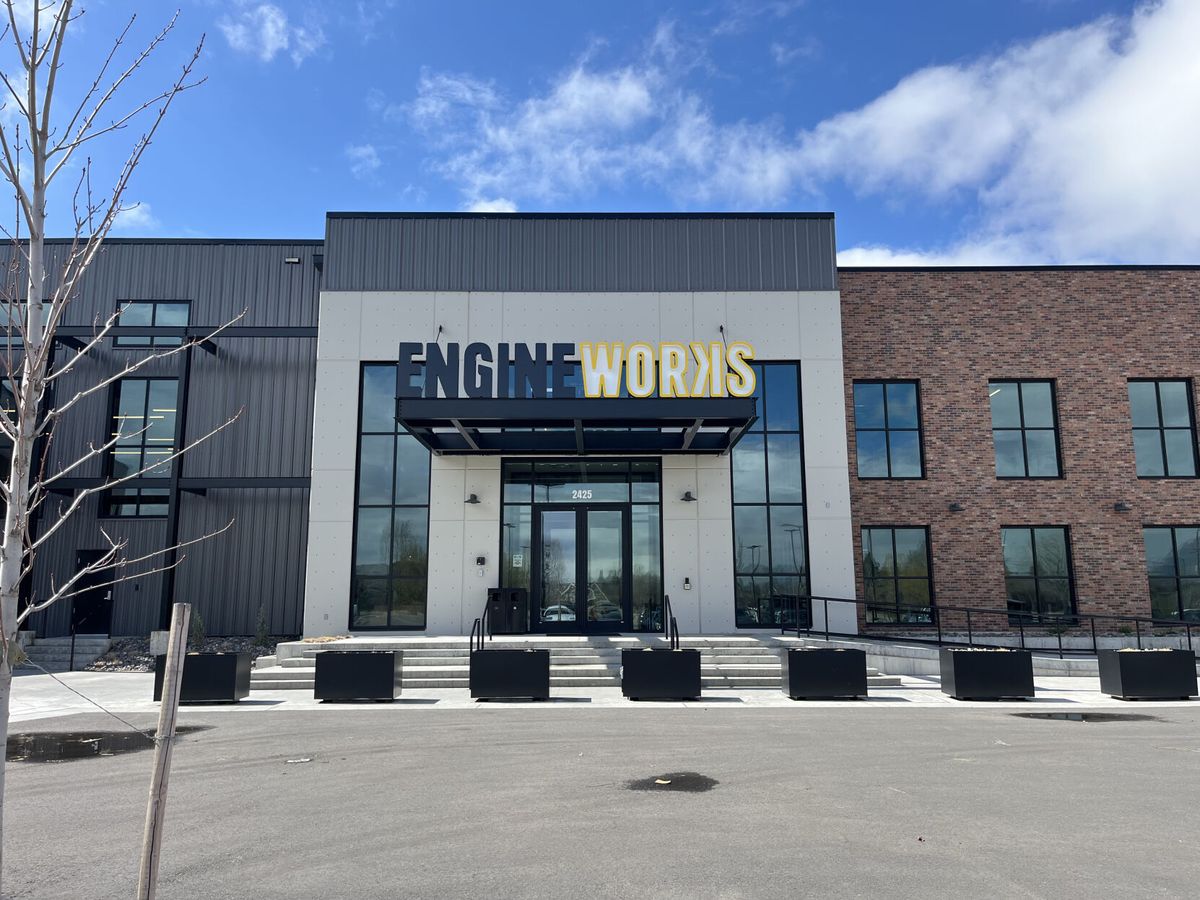
These words were shouted through a bullhorn by philosophy major Julian Staggs as he and other protesters rushed into the EngineWorks’ building on MSU’s Innovation Campus. Their mission? To disrupt an event connected to the Department of War.
The protesters were members of Students Against Genocide (SAG), a campaign currently calling on MSU to cut ties with research and technology development connected to the Israel-Palestine conflict and the ongoing war in Iran.
The March 13 event was the first public open house put on by the Defense Innovation Unit (DIU) OnRamp Hub Montana, a federal initiative designed to connect local startups, researchers and investors with military funding and contracts, according to a March 16 article from the Bozeman Daily Chronicle.
In late 2025, the DIU designated MSU’s innovation campus — a space for collaboration between the University and industry researchers — as the location for its Montana OnRamp Hub.
SAG uploaded a video to its Instagram page on March 13, the day of the incident, showing a group of protesters storming into the event while carrying signs, flags and bullhorns. Staggs can be seen leading the group and getting up on the stage while yelling through a megaphone.
The video shows a University police officer immediately removing Staggs from the stage and escorting SAG members from the building. According to Interim Vice President of University Communications Michael Becker, the group then continued protesting outside on a nearby public sidewalk.
According to Staggs, the hub actively supports the transfer of surveillance and weapons technology from private companies into militarist hands.
“This event is directly facilitating violence against people in Gaza — against people in Iran — and these connections need to be stopped in some manner,” he said.
Staggs said that on the morning of the incident, he and other SAG members met with Becker and MSU Vice President for Research and Economic Development Alison Harmon, who read off a two-page letter to the students in response to their demands. According to Staggs and SAG member Daisy Baertschi, the letter did not sufficiently address the organization’s concerns.
“They told us that they couldn’t do anything, that basically all our demands were meaningless, and that if you want to do anything, you need to talk to the Alumni Foundation. You need to talk to the people who are managing the innovation campus,” Baertschi said.
Staggs said he received a conduct charge from the University and got placed on conduct probation following the protest. According to him, no other SAG members received similar charges.
“I stand by my decision to do it,” he said. “When it comes to the U.S. and the Department of War, which has funded a genocide and is running an illegal war against Iran, I don’t think there is a limit to what is constituting free speech.”
He also argued that the incident did not warrant the charge, per the MSU Code of Student Conduct. According to him, the code applies to events that affect a substantial University Interest or occur within the University community.
He said that the March 13 open house was not publicly tied to the University, as no public information for the event mentioned MSU. According to him, the event also did not constitute a substantial University interest, as it was really designed for the Department of War to find companies selling private technologies.
“They alleged that I had disrupted a University event. I dispute the fact that this is a University event. It's a Department of War event,” he said.
However, according to Becker, the open house was officially connected to MSU. “It was a University event held off-campus at EngineWorks. That's where the DIU OnRamp Hub Montana leases office space. [It is] a University program staffed by University employees,” he said.
Moreover, the University Police Department Chief of Police Michael Stanley stated that the Code of Student Conduct is not location-specific, but rather specific to a student’s connection to MSU.
“A student, for example, can do something in their hometown on summer break as a student of MSU, and the conduct code still applies,” he said.
Stanley emphasized the importance of open discourse in the campus community, but said that student groups are sometimes too closed off to opposing viewpoints, which can lead to reckless behavior.
“I appreciate that commitment, but I think when you stay on that path too long, you end up doing things just like [what] happened at EngineWorks,” he said. “You gather up, and you go blazing through the front door of a building without any real thought about what could actually happen.”
When asked what he thinks the worst-case scenario might be regarding the actions of student organizations, Stanley expressed concern that someone could get hurt.
“Our world is changing at such a fast pace, and we seem to get even more and more aggressive about things. It will happen right here. Montana is not immune.”
According to Staggs, SAG does not advocate for violent action, but measures such as those taken on March 13 are justified.
“I would hope to see the people of Bozeman do similar things to impede business-as-usual as we did,” he said.
The members of SAG expressed strong conviction in their cause. “We're not afraid. We don't think others should be afraid to fight back,” Staggs said. “We're on the right side of history in the end, and we're going to be vindicated.”



Comments ()