
Symposium details the role of Crow at Little Bighorn and their legacy
White Swan was 26 years old when he limped away from the Battle of the Little Big Horn.
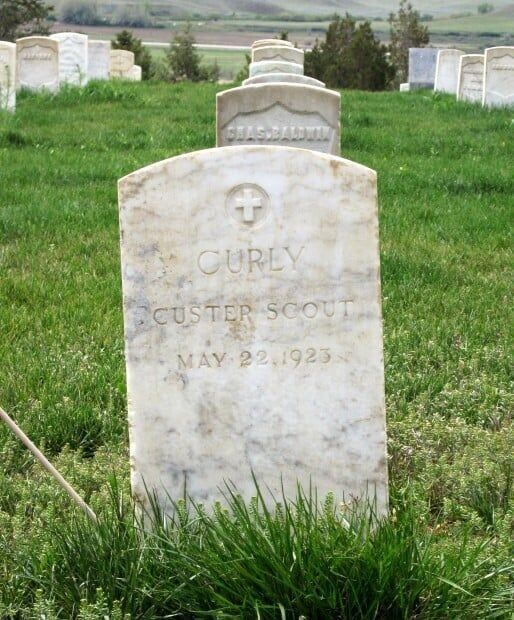
The Apsáalooke man served with Half Yellow Face, White Man Runs Him, Goes Ahead Of His Horses, Hairy Moccasin and Curley as scouts under the command Lt. Col. George Custer during the 7th Calvary’s doomed campaign in June 1876. Custer disregarded consistent warnings from the scouts and their interpreter, Mitch Boyer, of a massive encampment near the Little Bighorn River. The mistake ended with a coalition of Lakota, Cheyenne and Arapaho wiping out Custer and five of the 7th Calvary’s 12 companies.
White Swan left the fight with bullet wounds to his thigh and knee. A third shot blew off three of his fingers on his right hand. Despite the injury, White Swan, a lefty, became a painter in the years after the conflict, using his skill as an artist to share his firsthand account of the largest battle of the Great Sioux War of 1876.
Scott Russell, one of White Swan’s descendants, talked at length about his ancestor Friday. Speaking from a podium in Crow Agency, Russell was one of several guests who lineage traces back to the six Apsáalooke scouts and Boyer. They were invited as part of the two-day symposium organized by Little Big Horn College. Leading up to the 150th anniversary of the Battle of the Little Big Horn, the symposium centered on the role of the Crow Tribe in the battle. Speakers included tribal educators and elders who offered a marriage of oral and documented history.
Speakers on Thursday and Friday elaborated on the actions of the Crow scouts in assisting the U.S. Calvary, while combatting the ignorant but prevalent view that the Crow were traitors among Indigenous people.
“We were not traitors,” Russell said at the close of his presentation. “We were defending our way of life and our homeland.”
In 1876, the Apsáalooke were in a vice.
Frank Rzeckowski, who earned his doctorate from Northwestern University and has researched extensively into Native American history in the American West, supplied the contextual realities that defined life for the Crow in the latter half of the 1800s. The tribe and its bands had lived within a swath of land encompassing most of the eastern half of Montana and portions of Wyoming and the Dakotas.
Lakota and Cheyenne were migrating in from the east. To the northwest were the more numerous and better armed Blackfeet. Amid all of this, the U.S. government was bolstering the Bozeman Trail that cut through the heart of the Crow territory with troops.
By 1850, pressures from the westward expansion of the United States brought Cheyenne and Lakota into the eastern portion of the Crow’s territory. The 1851 treaty negotiated at Horse Creek near Laramie included representatives from the Crow, Cheyenne, Lakota Sioux, Arapaho, Assiniboine, Mandan, Hidatsa and Arikara. The ratified treaty resulted in the Crow ceding roughly half of their territory, Rzeckowski said, an indication that the U.S. and the Crow were far from allies. Such was the fraught environment for the Crow when, in early April 1876, the U.S. Army enlisted the tribe for scouts in the campaign to combat those Indigenous tribes who refused to adhere to their designated reservations.
The Crow assisting the U.S. didn’t make them immune to federal policy shifting from extermination to assimilation. Sharon Stewart-Peregoy, an adjunct professor at LBHC and advocate for Crow culture and language, noted that disease and the near extinction of the buffalo decimated the tribe’s population by the end of the 1800s. The Sioux, Cheyenne and Arapaho, she said, faced similar hardships.
At the close of the second day of the symposium, Noel Two Leggins took to the podium. The executive director of Crow Fair spoke about snobbish amateur historians he endured while he was a tour guide at Little Bighorn Battlefield National Monument. Worse still, he said, was an assault he faced from a group of Native American men who attacked him solely for suspecting he was Crow. That animosity between the tribes of Plains Indians almost always comes from a place of pain, he said, with a nexus of abuse or addiction, and the best way to combat it is for Indigenous people to embrace their tribal identities. History, culture, language and relationships can garner a respect for themselves, and for all Indigenous tribes, Two Leggins said.
Comments ()