
Tackling period poverty: how MSU became a forerunner in the fight
It was a Tuesday afternoon last semester that I sat down in a mostly empty conference room for a lecture on period poverty, a broad issue surrounding menstruation and lack of access to products that I knew very little about at the time. Halfway through the discussion, I remember thinking, why is there nobody here? This was a well-advertised event on a very important topic, so why was it so empty? It was a sort of revelation that day — for something that affects at least half of the population and indirectly affects the rest of it, this is a problem that is critically overlooked.
Period poverty is a serious issue, one that many groups around the world are trying to combat, and it isn’t an easy fix. The problem is that period poverty can’t be boiled down to one thing. Between a lack of access to menstrual products and education, unhygienic places for managing periods and harmful stereotypes and misrepresentations surrounding them, menstruators are constantly at a disadvantage. For context, TPR’s research on period poverty shows that approximately one in five women have or will miss class due to a lack of period products, and currently, two in five Americans have experienced period poverty. 1.25 billion menstruators around the world don’t have access to a safe, private toilet and 526 million don’t have access to a toilet at all according to the UN.
Things like the Pink Tax, which label tampons and pads as non-essential and luxury items, cost women an additional $150 million annually in the U.S. according to WBUR and in 2021, 28 states still had taxes on menstrual products. This forces menstruators to choose between paying bills, affording food or buying the products they need. Unfortunately, that means menstrual products fall to the back burner. “People don’t think its a needed item, but when you don’t have the money to buy food, you won’t have the money for period products,” Sue Irvin, director of Central Montana Family Planning, said. This leads to missed class, work and social events.
On top of expensive products and lack of affordability, menstruators face another challenge: the taboo. Girls are still taught not to talk about their periods because it's considered gross or unpleasant. The education surrounding periods for both boys and girls at a young age is limited at best, nonexistent at worst. When education is lacking, stigmas are created. Abby Bernard, co-president of Crescent Montana — a nonprofit, student-led group working to combat period poverty in and around Montana — discussed how these stigmas can negatively impact women. “People have very internalized shame about the natural process of their body… it’s a good thing, that means your body is working - but because it’s shameful and silenced, and people can’t really talk about it, it makes it a lot harder for people to share experiences with each other and know what’s normal and what's not normal,” Bernard said. “That then creates barriers to getting healthcare if you need it or knowing if something is off or wrong.”
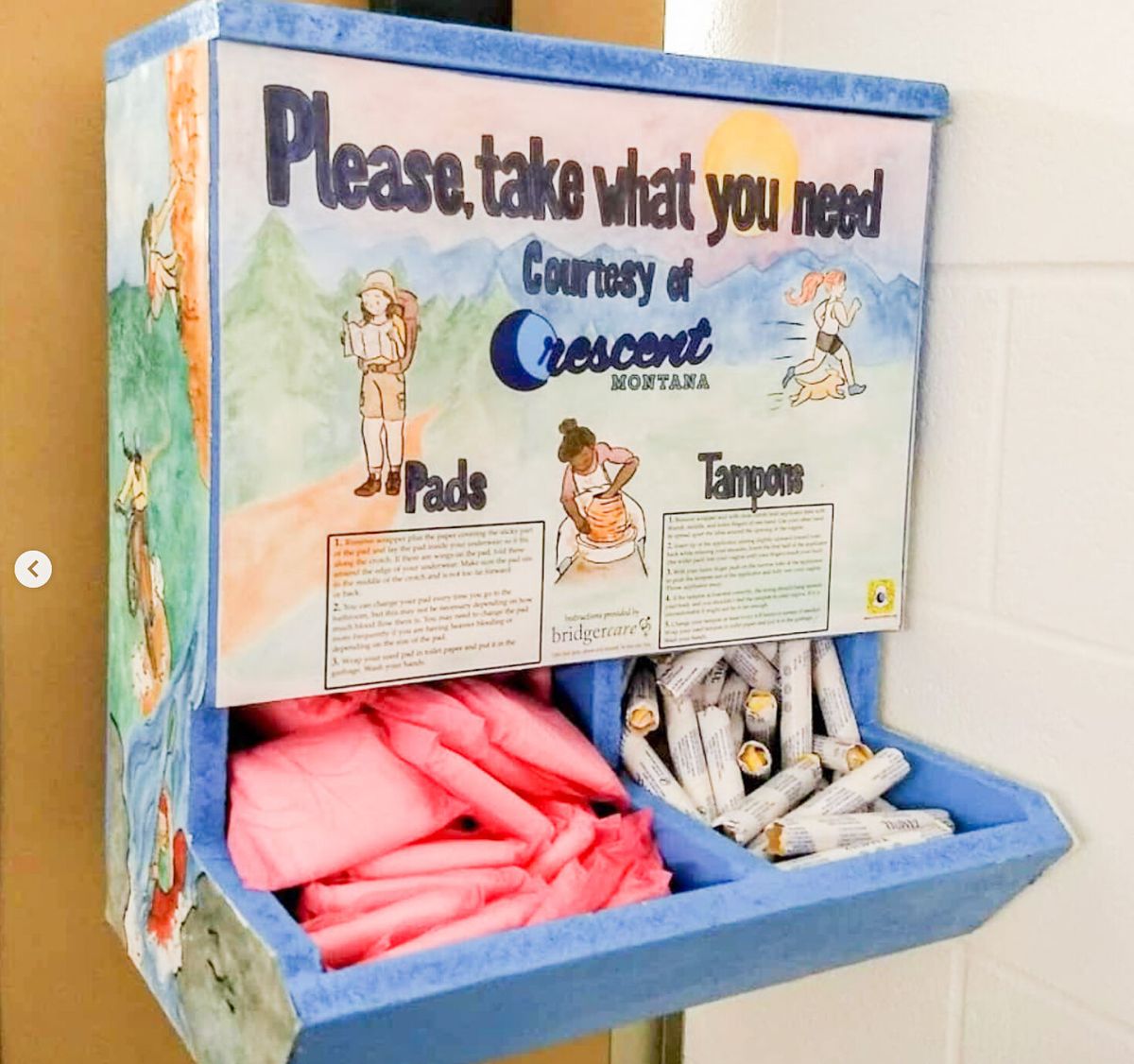
Crescent Montana has been a strong advocate against period poverty, responsible for providing free period products to nearly 20 K-12 schools around the state. “Currently we’re doing a bathroom dispenser initiative, and that’s just, we have these baskets that we can send to schools, free of charge, with tampons and pads in them, and they also have little informational posters with instructions on how to use different period products,” Bernard said. Bernard also mentioned just how important these initiatives are, not just because they’re free products, but because introducing products to bathrooms starts to normalize periods and reduce stigma.
Both Bernard and Irvin discussed how talking about periods and starting conversations around them can be one of the most important parts in reducing them. “Number one: talk about it. Find accurate sources,” Bernard said. Getting things out there in commercials, on social media and in conversations can be so helpful in normalizing it. “The younger population is a lot more open to talking about it now, we always used to want to hide it, but the stigma of menstruating is more open now because of social media and commercials,” Irvin said. “It decreases the shock value of it all.”
MSU has also followed the initiative against period poverty and decreasing the stigma, providing products in almost 100 men’s and women’s restrooms across campus. This program, introduced by ASMSU, Margaret Davies an MSU graduate, and EJ Hook, director of facilities services, hopes to relieve the stress that menstruators may feel when it comes to their period. Ellie Jackson, one of the senators working on the project, hopes their movement grows across the country. “MSU is one of very few universities [that provide products], so hopefully this starts to gain momentum across the country… and other universities can look to the model we’ve provided to kind of give them an idea of what they need to do to make products accessible on their campuses and universities,” Jackson said.
An important part of MSU’s initiative is inclusivity. This included putting products in men’s restrooms so that transgender men can also feel comfortable. Trans men often suffer from period poverty at higher rates than gender conforming women do because they typically don’t have access to products at all, might feel uneasy about buying them or might not have a safe or comfortable place to use the products. ASMSU hopes to relieve as much stress as possible. “[Trans men] might feel uncomfortable purchasing period products for themselves, so just making sure that they have access no matter where they are sort of alleviates that,” Bernard said.
There are always steps to make toward menstrual health and equality. As mentioned, opening up a conversation and reducing the stigma surrounding periods is one of the first. Secondly, donating products to women's shelters or food banks can help significantly. “Like I said, people don’t think it’s a needed item, but they’re so important,” Irvin said. Crescent Montana also takes donations to support their bathroom dispenser initiative at https://www.crescentmt.org/donate. If you’re still looking for ways to help or get involved, Crescent will be hosting a fundraising event with Give Big Gallatin Valley on Friday, May 6. Every step counts in the fight against period poverty.
“This problem doesn’t just impact women,” Bernard said. “It’s just as damaging for people who don’t menstruate because then they don’t know what half of the population is going through. When they subscribe to that myth and that misinformation, it’s damaging for menstruation, and like, how are you going to move forward as a community if half the people are struggling?”



Comments ()