
‘Tell me where to sign': Proposed Big Bend border wall hits close to home in Bozeman
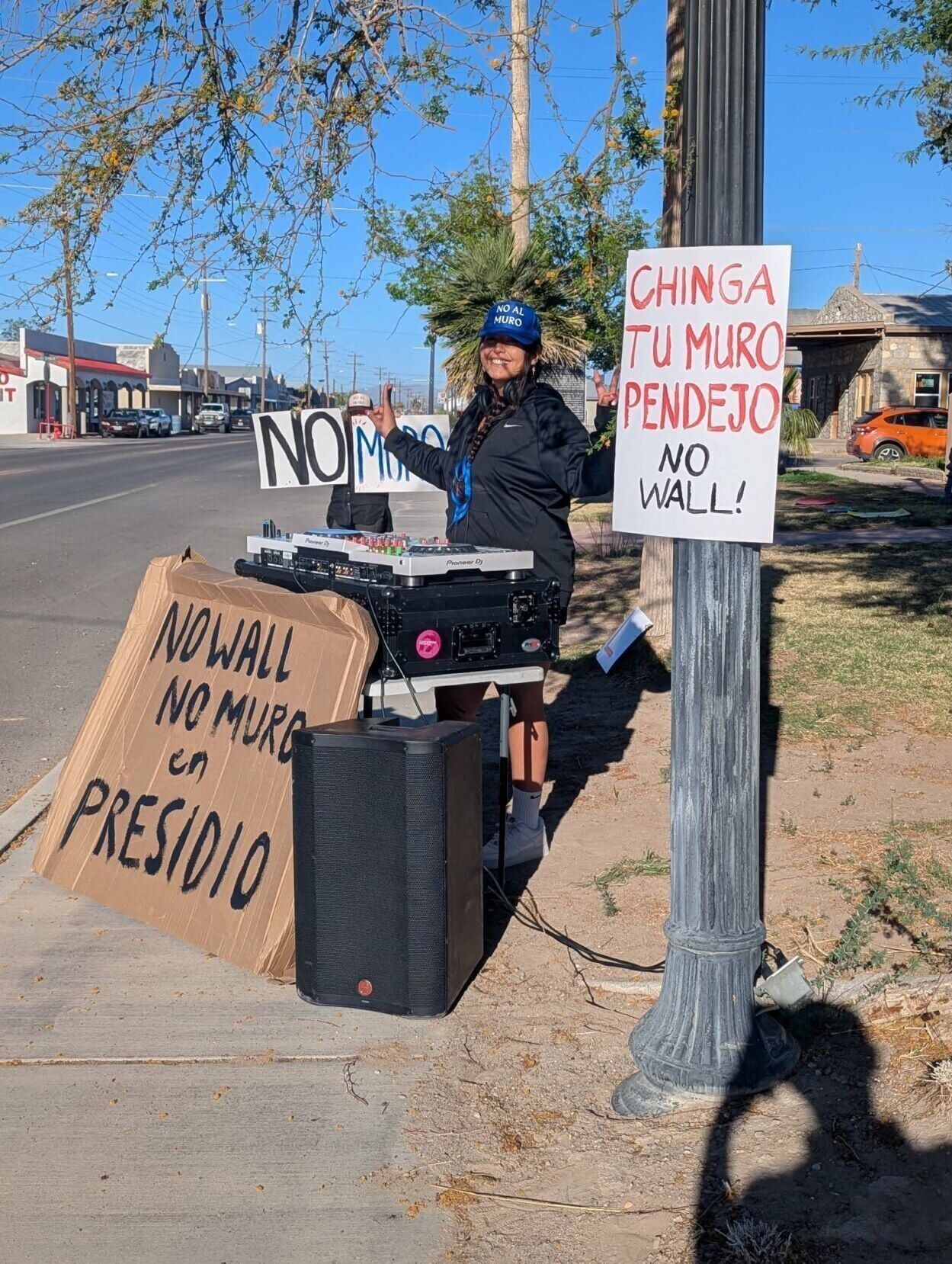
Her upcoming summer wedding isn't the only future occupying Morgan Kemp's mind. The Bozeman artist and El Paso, Texas, native is helping to organize a campaign against a border wall slated for the rugged Big Bend region of Texas — a place she fell in love with during college, and dreams of someday showing her future husband and children.
"I'm exhausted planning a wedding. I'm working a ton, several jobs,” Kemp said. “But I'm doing this for my future kids and for all the people that should have the opportunity to experience the magic that is Big Bend and that whole southern Texas area.”
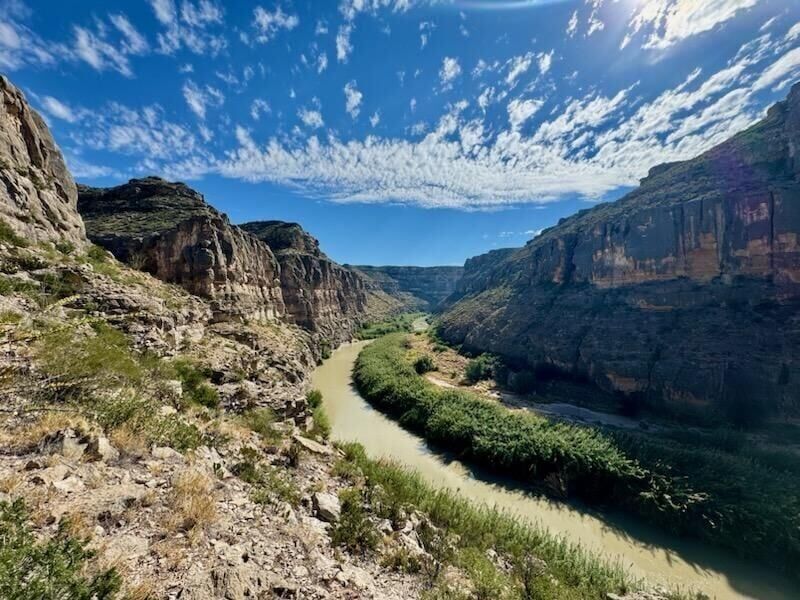
The Big Bend region of Texas is a 517-mile stretch of the U.S.-Mexico border, where deep canyons, dramatic cliffs, and the Rio Grande river cut through some of the most remote desert in North America. The region makes up nearly a quarter of the U.S.-Mexico border, but sees the fewest illegal crossings of any sector, according to Customs and Border Protection data.
That's why locals were confused when trucks and supplies started rolling in and construction of a 30-foot steel border wall was quickly underway.
Barnard Construction, a Bozeman-based company, is one of several contracted to build the wall. At the start of the month, Barnard was awarded two contracts from the Department of Homeland Security for “border barrier construction” — one for $960 million in Terilingua, Texas, and another for more than $1 billion in Hudspeth County, Texas.
Kemp said she’s been following developments with the wall for months. When her friends who are involved with the No Big Bend Border Wall campaign made her aware of Barnard’s contracts, it hit home in a different way and motivated her to rally support in Montana.
To raise local awareness, Kemp organized a screening of Ben Masters’ documentary “The River and the Wall,” which follows five friends traveling the 1,200-mile Texas-Mexico border to explore the physical and political impact of a potential wall on the environment and local communities. The screening will take place at Roly Poly Coffee at 6 p.m. April 2, followed by a panel on how Montanans can organize.
It is an effort to prove that the desert and the mountains aren't so different — and to warn that a threat to public land in Texas is a threat to the principle of public land everywhere.
“So many (Montanans) love public land, and our rivers and recreation,” Kemp said. “If this company is going to do that in a state that isn't ours, what would stop them from doing it locally?”
Barnard Construction did not respond to multiple requests for comment. But the project has drawn a wave of pushback from a nonpartisan coalition of landowners, local conservationists, and law enforcement in the Big Bend region, who all warn the wall will cause significant harm to the area while also not mitigating border crossings.
'What would it do to Yellowstone?'
For John Ferguson, mayor of the border small town of Presidio, Texas, the Big Bend region is the gem of the Lone Star State. Its ancient canyon walls, desert grasslands, and the Rio Grande River cutting through limestone bluffs are, he said, what brings together Texans of all walks of life and political ideology — and why that same nonpartisan coalition is now fighting a proposed 35-foot steel wall he says could permanently damage the land.
“I want for people to consider a wall being built along the Yellowstone River and what would it do to Yellowstone National Park,” Ferguson told the Chronicle. “People who enjoy visiting Yellowstone would say (that’s) completely unacceptable. That's how we feel here.”
The original DHS map had the wall going through Big Bend National Park and Big Bend Ranch State Park. Those plans have since been stalled, but it’s still slated to cut through the town of Presidio.
If the proposed wall comes to fruition, Ferguson said it would be “one of the most cataclysmic things” that could happen to his community. For generations, he said, Presidio and its Mexican neighbor, Ojinaga, have functioned as a single, unified town where families, commerce, and daily life flow freely across the Rio Grande.
“People have family on both sides of the river, have friends on both sides of the river. We commonly cross the border to go shopping, to eat a restaurant,” Ferguson said. “My daughter married a Mexican citizen, and they actually reside in Mexico right now.”
Not only would the wall impose a barrier for families like Ferguson’s, he said it also threatens to block wildlife that rely on the river as a water source and don’t know the difference between American and Mexican soil.
“The county line of Presidio is a long stretch of basically wild and untamed landscape,” Ferguson said. “We want to keep it that way.”
Ferguson described himself as a “flaming hot, blue Democrat,” and is proud that his county voted the same way in the last general election. But the fight against the proposed border wall is not divided by party lines.
'Never in the plans': Law enforcement responds
Thaddeus Cleveland spent 26 years as a Customs and Border Patrol agent and served in the Air Force before that. He's politically conservative, and now serves as sheriff of Terrell County, Texas.
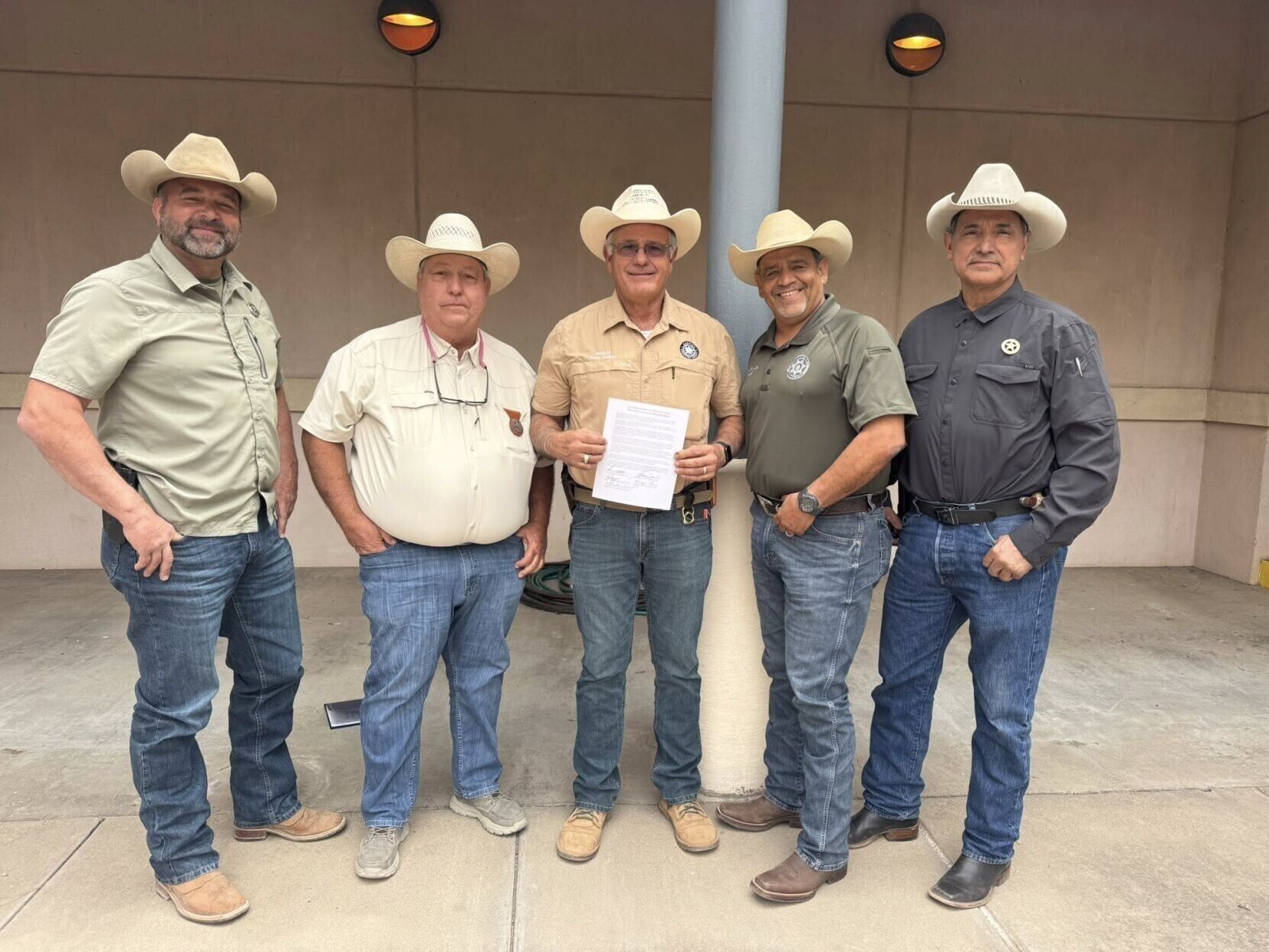
Cleveland also is one of the loudest voices opposing this portion of the wall and, along with the other four sheriffs in the region, signed a statement urging construction to stop.
“I’m pro border security, but in a way that's smart and effective,” Cleveland said. “A permanent border barrier was never in the plans for out here, just because of the lay of the land.”
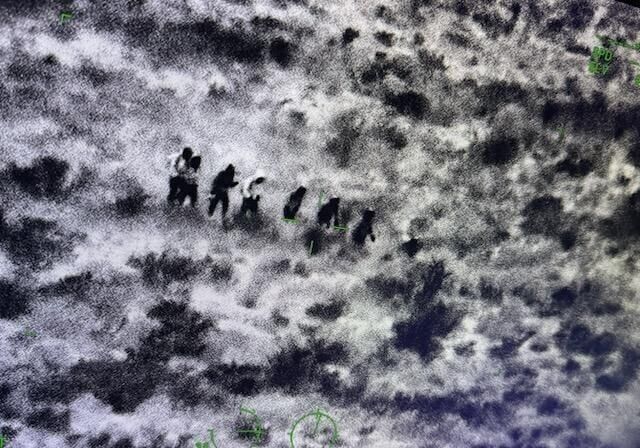
Cleveland described the landscape of the region as a natural barrier between Texas and Mexico. It’s possible for migrants to cross on foot, he said, but the dense cliffs, river, and remote stretches for miles on the other side make the region more treacherous than most.
“This specific area I'm describing, it takes illegal aliens about two days to walk that portion,” Cleveland said. “We have some other other areas that take three to four days.”
For years before President Trump campaigned on a promise to build the wall, Cleveland said he’s heard politicians on both sides of the aisle echo the point that border security is national security. It’s a sentiment he agrees with, but not one he’s seen play out on the ground.
“We've never really treated it as national security,” Cleveland said. “What I mean by that is not that we need to militarize our border or put arms or soldiers on the border, but there’s technology.”
He described the capabilities of Predator B drones and Anduril Surveillance Towers, both of which can detect distinctly human movement and send location data to CBP stations in the area. Such technology, he said, provides a mechanism to secure the border beyond what a steel wall can offer.
The two-hour drive from the border to the closest CBP station in his county, he said, makes the physical wall even less useful.
If CBP had the advanced technology, Cleveland envisions it serving as a “virtual wall,” necessary for American security and for the safety of migrants attempting to cross. While crossings are less frequent in the Big Bend region, those that do attempt face harsh, sometimes life-threatening, elements.
Cleveland said he would rather CBP be able to locate individuals crossing on foot, rather than recovering dead bodies from the desert.
“Sometimes we're able to rescue people. Sometimes, unfortunately, we find deceased individuals. I'm sure there's still a lot of remains that are out there,” Cleveland said. “I don't care if you're legal or illegal, I don't want anybody to die.”
“Imagine what granddad would have done”
Meanwhile, landowner Raymond Skiles fears what the wall could bury forever.
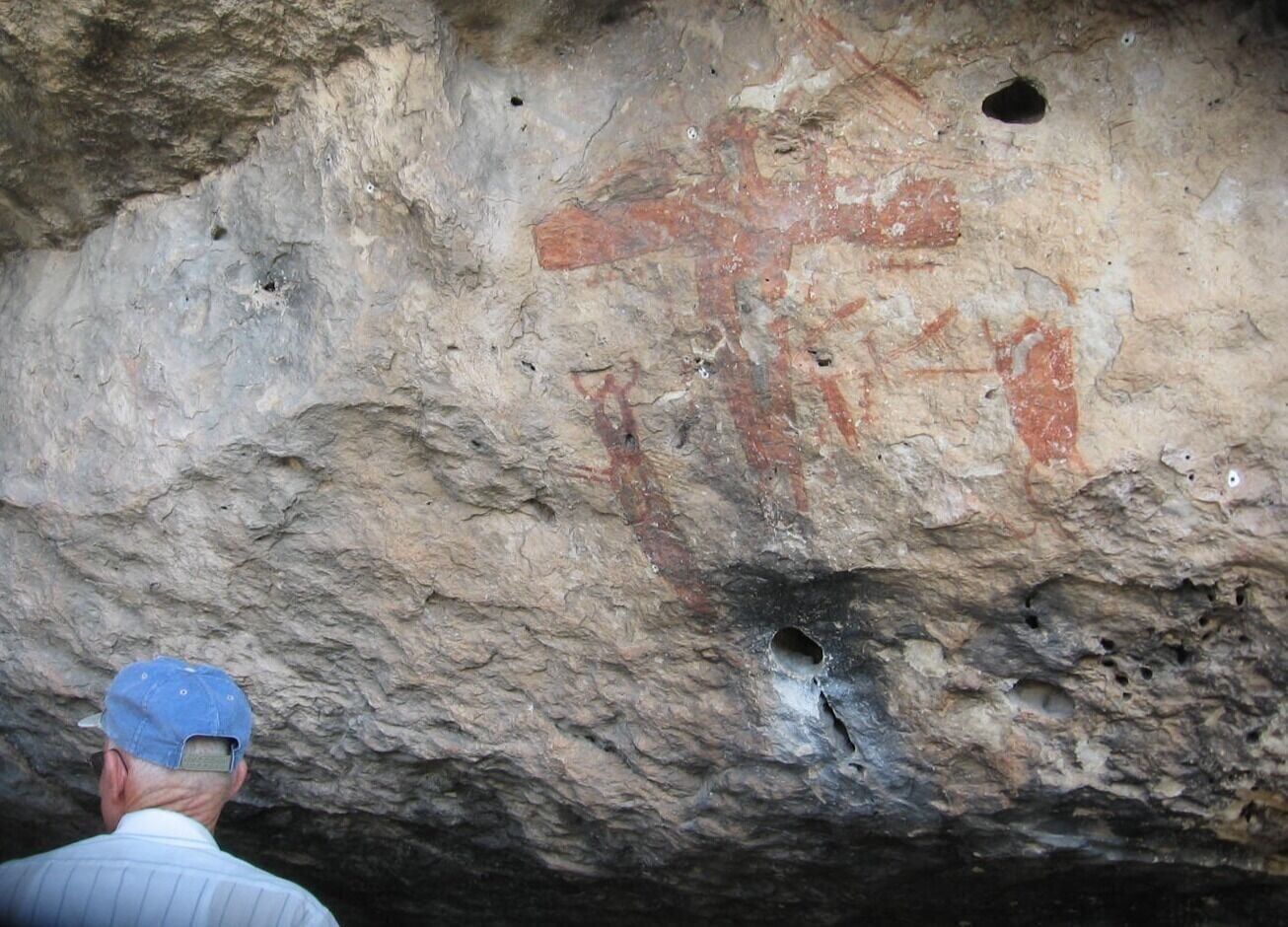
Skiles still lives part-time on the ranch he inherited from his grandparents. While the house dates to the 1940s, the land’s history reaches back much further. The acreage, he said, holds 4,000-year-old cave paintings and a bison jump site estimated to be 13,000 years old.
“Our property is one of the most significant archeological districts in Texas,” Skiles said. "I'm constantly working with people that are coming and doing research projects. We make my grandparents’ cottage, a small stone house, available for researcher housing.”
Now, that history is at risk.
On Feb. 27, Skiles received a letter from CBP and DHS, which was reviewed by the Chronicle, informing him that the departments have “tentatively identified” that his property might be impacted by the construction of the wall. The letter gave him three options: Enter into a Right-of-Entry for Construction agreement for a $5,000 payment; negotiate a purchase or easement agreement to meet construction deadlines; or face an eminent domain proceeding in federal court if no agreement is reached.
Skiles said it felt like a “slap in the face,” to think of government agents taking his family’s land, with or without their approval.
“I'm a very restrained person, but I was talking to my brother who co-owns the property. And he said, ‘Man, I could just imagine what granddad would have done here,’” Skiles said. “He was a cowboy of the old, classic style. He would say, ‘Anybody showing up to do that? They're going to meet me with my shotgun.’”
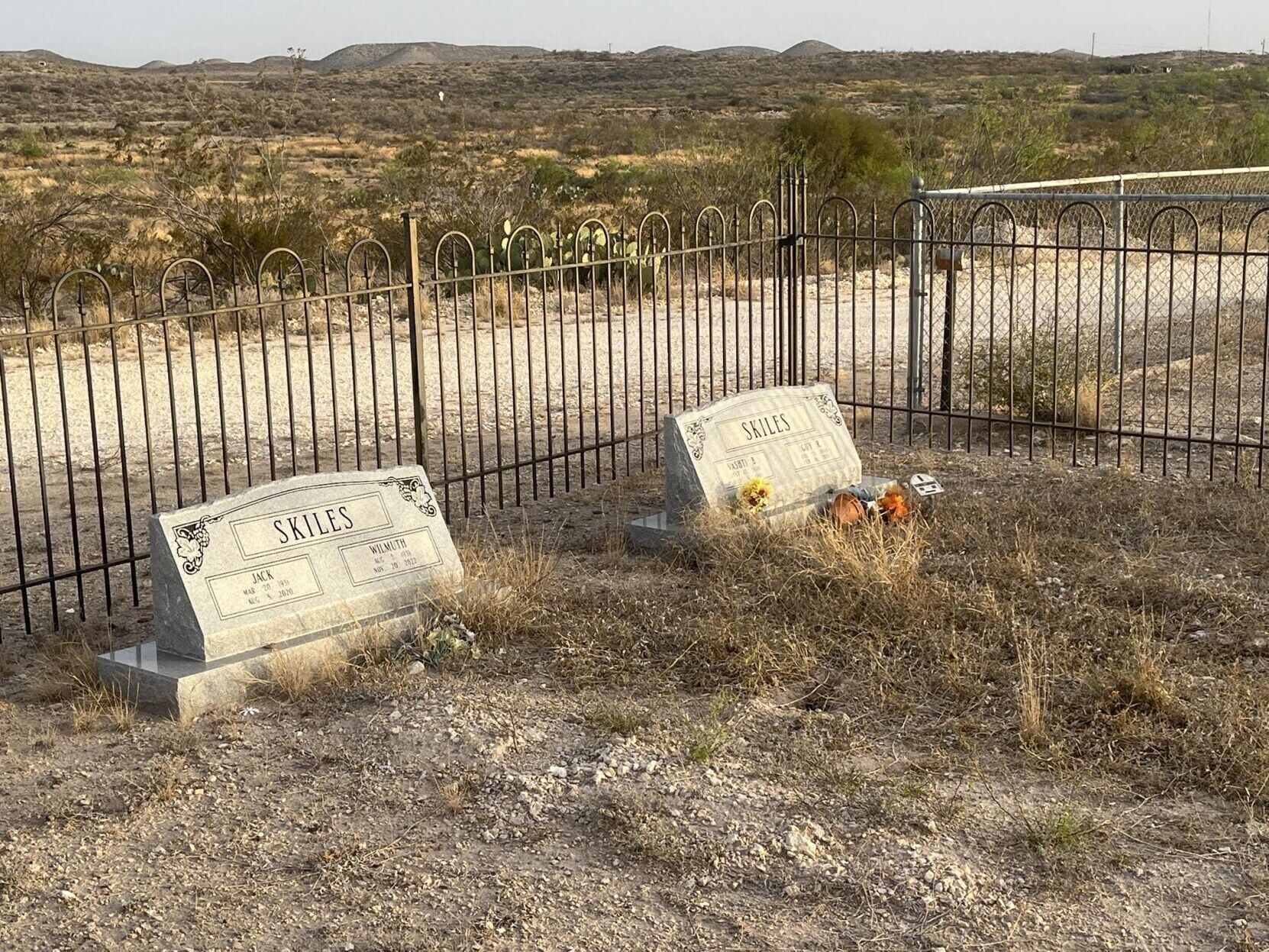
Adding insult to injury, he said, the local cemetery was also served notice. Skiles’ parents and grandparents are buried there, and their final resting places are now potentially subject to the blade of a bulldozer.
“It's devastating, and it's cruel, it's inhumane. It’ll set about an entire new episode of grieving,” Skiles said. “Makes you feel small, powerless, and insignificant.”
In an email to the Chronicle, a spokesperson from DHS said CBP is finalizing its execution plan for border barrier construction funded by the One Big Beautiful Bill Act, in accordance with the "Securing our Borders" executive order.
“CBP is currently focusing on the top operational priorities with historical rates of high illegal entry where illegal aliens regularly attempt to enter the United States,” the statement reads.
While the federal government moves forward with construction, Kemp is focused on a different kind of groundwork — ensuring that her Bozeman neighbors understand exactly what is at stake on the southern border and the connections to the Gallatin Valley.
“A lot of people don't really even know where Big Bend is, so I do have to talk it up,” Kemp said. “But once I show them pictures and tell the story, that’s when people are like, ‘Tell me where to sign'.”
Comments ()