
'The bill is coming due': Reconciling the future of Southwest Montana's iconic trout fisheries
Conservationists and fishing guides continue to express concern about the condition of Southwest Montana’s fisheries after a mild winter, unseasonably warm spring temperatures, and the prospect of a hot and dry summer.
“Water-quality parameters related to trout fisheries are in the pits; they’re circling the drain,” Guy Alsentzer, executive director of the Bozeman-based Upper Missouri Waterkeeper, told the Chronicle. “We’re approaching a crisis.”
Last week, Alsentzer presented the findings of the 2024-25 Jefferson River Basin Abiotic Monitoring report conducted by Save Wild Trout, Waterkeeper’s research branch. The study identified elevated water temperatures and diminished dissolved oxygen contents in the lower Beaverhead, upper and lower Big Hole, and Jefferson rivers.
These findings signify conditions that are injurious to aquatic life, namely trout, he said.
“The data doesn’t lie,” Alsentzer said. “If you have a season where you go out and see rivers being unnaturally dewatered, water temperatures approaching 80 degrees, and miles-long algal blooms, you could write it off as an abnormality. But statistically, when you start to see two years and then three years, you realize the exception is swallowing the rule.”
Healthy trout fisheries possess cold, clean water, connected habitat, and a diverse array of habitat requirements. Traditionally, Montana waterways have provided all three, Alsentzer said.
In a 2023 study, Montana Fish, Wildlife & Parks reported fish population counts showing recruitment levels at their lowest point in 40 years. These losses have been tied to a plethora of sources, including habitat loss, disease and increased fishing pressure, lethal water temperatures, periods of drought, and reduced streamflows.
“Streams like the Jefferson and Big Hole are ground zero for climate change. They’re the first streams affected by low stream flows, inflated water temperatures, and hoot owl restrictions,” Dale Sexton, the owner of Dan Bailey's Fly Shop in Livingston and a lifelong fly fisher, said. “They’re tremendous fisheries but unfortunately they're also very vulnerable to what we’re experiencing today.”
Each year, Montana’s outdoor recreational sector brings in nearly $4 billion. Of that, more than $1.5 billion is tied to the state’s cold-water fisheries, according to the U.S. Bureau of Economic Analysis. The outdoors sector accounts for nearly 5% of Montana’s GDP, representing the highest percentage in the lower 48 states.
“We’re anxious for what the season is going to look like, but in this business you have to be optimistic for what the weather is going to bring,” Sexton said.
Sexton's shop offers guided fly-fishing trips primarily on the Yellowstone River, the longest undammed river in the contiguous United States.
“In general, we don’t feel that there are any serious red flags around the Yellowstone as a fishery,” Sexton said. “We have the advantage of the Yellowstone being such a healthy watershed, and it’s healthy and resilient.”
While the Yellowstone is hardier than smaller waterways such as the Jefferson, Sexton said it’s not immune. Warm-water species such as smallmouth bass have been creeping farther upstream.
“There’s no question that climate change is the biggest issue that we have facing our resource right now,” Sexton said. “To not acknowledge that is to not acknowledge the reality of the situation.”
If the high-temperature, low-precipitation weather pattern that characterized the winter continues into the spring and summer, Sexton said it could negatively impact fishery health even in larger waterways.
“We’ve all experienced hoot owl restrictions on the Yellowstone, and we always cringe when it happens,” Sexton said of a regulation that prohibits fishing between 2 p.m. and midnight. “It’s regrettable, but it's a management action made to protect the fishery, and we appreciate that it’s there. For us, the resource comes first, and business comes second.”
Much like the Yellowstone, the Gallatin River has skirted some of the degradation suffered by other area waterways. FWP has documented a 35% increase in brown and rainbow trout populations in the Gallatin over the last four years.
The Gallatin's resiliency can be partially attributed to its headwaters in Yellowstone National Park, "which provides cold clean water and an intact ecosystem that supports healthy wild trout populations," Todd L. Shaw, a board member for the Gallatin River Task Force, writes in an upcoming Chronicle op-ed.
Shaw says water quality monitoring and riparian habitat restoration is critical to ensuring the Gallatin River fisheries remain healthy and sustainable.
"Protecting trout populations should be both an environmental and economic priority," Shaw wrote.
Southwest Montana’s waterways are a source of drinking water, agricultural irrigation, recreational opportunities, and revenue generation.
“Even if you’re not a trout angler, or an outdoorsman or woman, it's important to understand that our economic engine in this state is based upon our rural and outdoors economy, both of which are 100% dependent on our rivers,” Alsentzer said.
Trout thrive in waterways with dissolved oxygen levels between seven and nine mg/L. The Jefferson River Basin Abiotic Monitoring found that DO levels were dropping into the 6s, 5s, 4s, and even 3s.
“That’s when it gets close to being anoxic, which means there’s no oxygen left in the streams,” Alsentzer said.
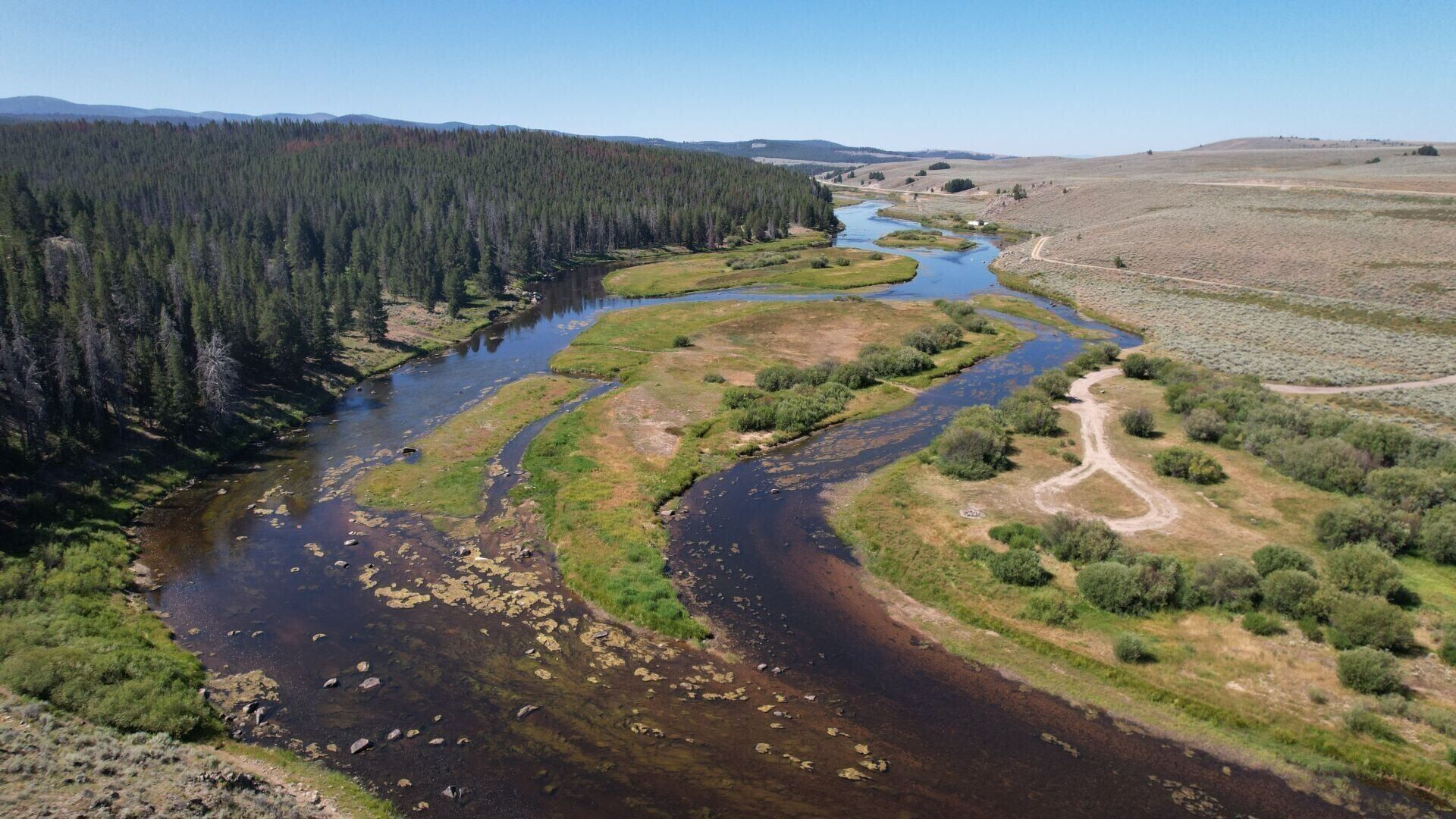
Additionally, the waterways are over-enriched with nutrients such as nitrogen and phosphorus, leading to eutrophication, which leads to algal blooms. This process has become increasingly common in late summer in the Jefferson and Gallatin rivers, where algal growth signals declining water quality.
“When you take a sample of water from a stretch covered bank to bank with algae, you’re going to find low dissolved oxygen; it won't support wildlife anymore,” Alsentzer said.
In addition to low DO levels, trout are also heavily impacted by rising water temperatures. Trout thrive in waters between 55 and 65 degrees Fahrenheit. The Jefferson River Basin Abiotic Monitoring report found that several sites exhibited temperatures over 80 degrees in 2024.
Trout are the “canary in the coal mines of river health”, Alsentzer said.
“It’s not just about the trout. They’re the bellwether of what’s to come,” he said. “We have to listen to what the science is telling us so we can build resiliency into these natural systems, both for the benefit of wildlife but also because we as humans and our communities will benefit from it.”
Alsentzer said actionable change is predicated on three things: A science-based plan for restoration, a reliable, adequate funding mechanism, and a method of enforcement.
While the Montana Constitution guarantees the right to “maintain and improve a clean and healthful environment,” it does not assign an entity to enforce the conservation necessary to uphold it, he said.
Between the Department of Natural Resources and Conservation, FWP, and the Department of Environmental Quality, Alsentzer said communication regarding maintaining river quality and restoration breaks down, making it critical that conservation groups and concerned citizens use their voices to ensure fisheries are conserved.
“Call your legislators, tell them to support bills that will create an accountability framework for developing science-based solutions and funding those solutions with enforcement for all the sectors contributing to the decline of trout fisheries,” Alsentzer said. “If we don’t do that, the consequences are very real; we will lose the economic driver of these regions. We’ll also lose the ability to use these waters in the future."
As Southwest Montana’s waterways face eutrophication, water quality and quantity degradation, pressures from rapid development, elevated recreational pressure, and climate change, Alsentzer said it’s imperative Montanans advocate for river restoration.
“We have coasted on the bounty of our outdoors heritage, and all that has benefited us for a long time, but the bill is coming due,” Alsentzer said.


Comments ()