
'The Montana way': Missoula World War II veteran honored for service in Iwo Jima
81 years ago, teenager Ron "Rondo" Scharfe piloted a troop carrier full of Marines toward the shores of Iwo Jima amid the final stages of the Pacific Theater in World War II.
But before the carrier could land, it hit an underwater obstruction, sending the ship forward. Scharfe was severely injured, and 17 of the 36 Marines died as they tried to land on the heavily fortified island.
"I couldn't breathe," Rondo, now 98, recalled to the Missoulian on Friday. "I thought to myself, I'm only 16, I can't have a heart attack. The more I kept thinking about it, the more I couldn't breathe."
Scharfe returned to action two days later, and for most of his life was dedicated to service as a firefighter in Chicago and across the Mountain West.
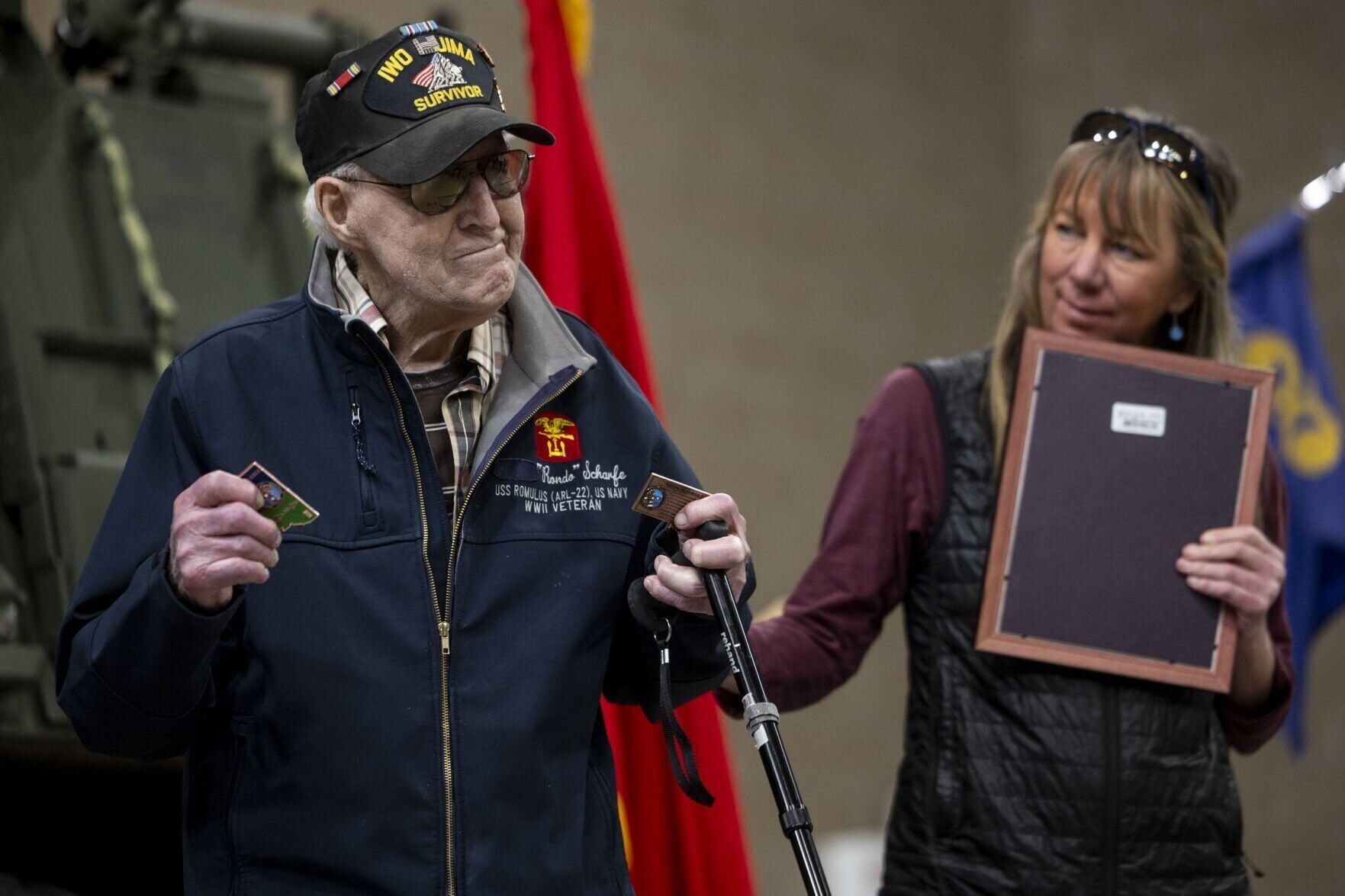
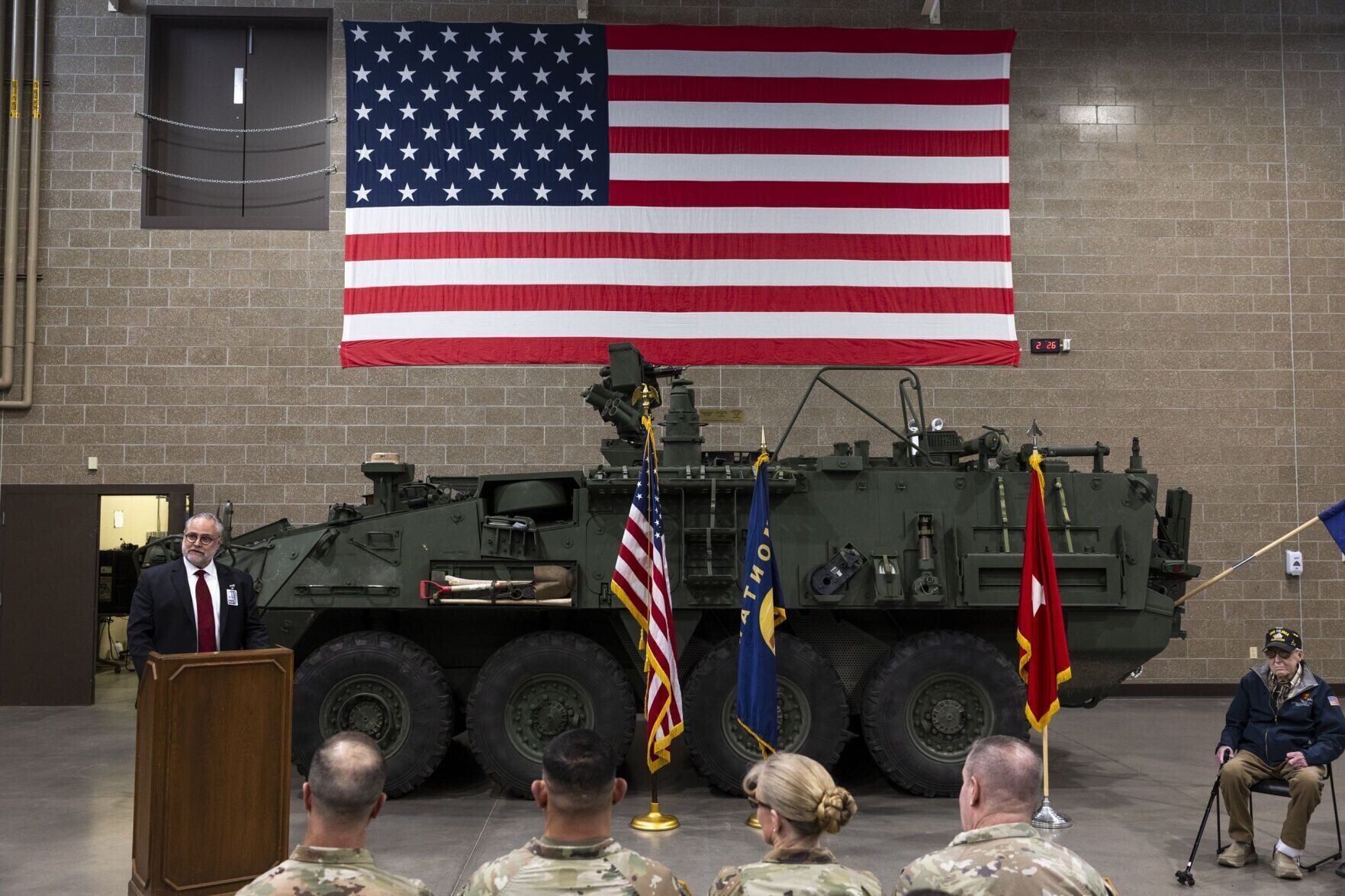
The Montana National Guard honored Scharfe on Friday in Missoula with a plaque, medals and other awards for his service during World War II, 81 years after the decisive battle of Iwo Jima.
"We often speak of the Montana way, a spirit defined by humility, resilience, service to others and neighbors standing shoulder to shoulder in times of need," Brig. Gen. Trent Gibson, adjutant general of the Montana National Guard, said at the event. "Your life and legacy embodies these virtues."
The recognition comes as the United States enters its fourth week of conflict with Iran, where 13 U.S. service members have been killed and hundreds more wounded.
On Friday, the Associated Press reported another three warships and 2,500 more Marines were bound for the Middle East, where the U.S. military has approximately 50,000 troops.
Gibson told the Missoulian the ceremony was a way to remember the importance of sacrifice made during past conflicts, and called out the courage of the "Greatest Generation" who fought in the world's largest conflict.
"Service members realize the heritage that we come from," Gibson said. "It really did start during that Greatest Generation of the folks who stood up and raised their right hand by literally the millions, and where that carries onto what we are doing today."
Scharfe grew up in Chicago, where at the young age of 16, he enlisted in the U.S. Navy in 1944.
While he technically was too young to serve, Gibson said he made his way to the Pacific to fight the Japanese as a coxswain, known as the pilot of small ship vessels.
During the landing at Iwo Jima, Scharfe broke his sternum, broke his nose and lost his four front teeth. He recalled to the Missoulian how he made it ashore while many others were dead in front of him.
"(The medics) drug me right through a guy cut in half, and I thought 'this can't be real,'" Scharfe said. "And it was."
He returned to the conflict two days later to help with the logistics of the assault. By the end of the battle on March 26, 1945, more than 7,000 Americans had died, one of the highest casualty events in the Pacific Theater.
Scharfe said he still recalls the fight in Iwo Jima vividly, a time before Post Traumatic Stress Disorder was identified for veterans in combat.
"Who would think you can have a flashback from 81 years ago," Scharfe said. "I still do."
He continued with the Navy through the end of the war and returned to Chicago to work as a structure firefighter. Later on, he worked on a Hotshot crew battling wildland fires in the West, including the historic Yellowstone fires of 1988. He then retired to be with family in Missoula.
Scharfe turns 99 later this year, with the hopes of reaching 111 years old.
"I'll do what I want to do until I check out," he said.

Comments ()