
The passing of "Notorious RBG"

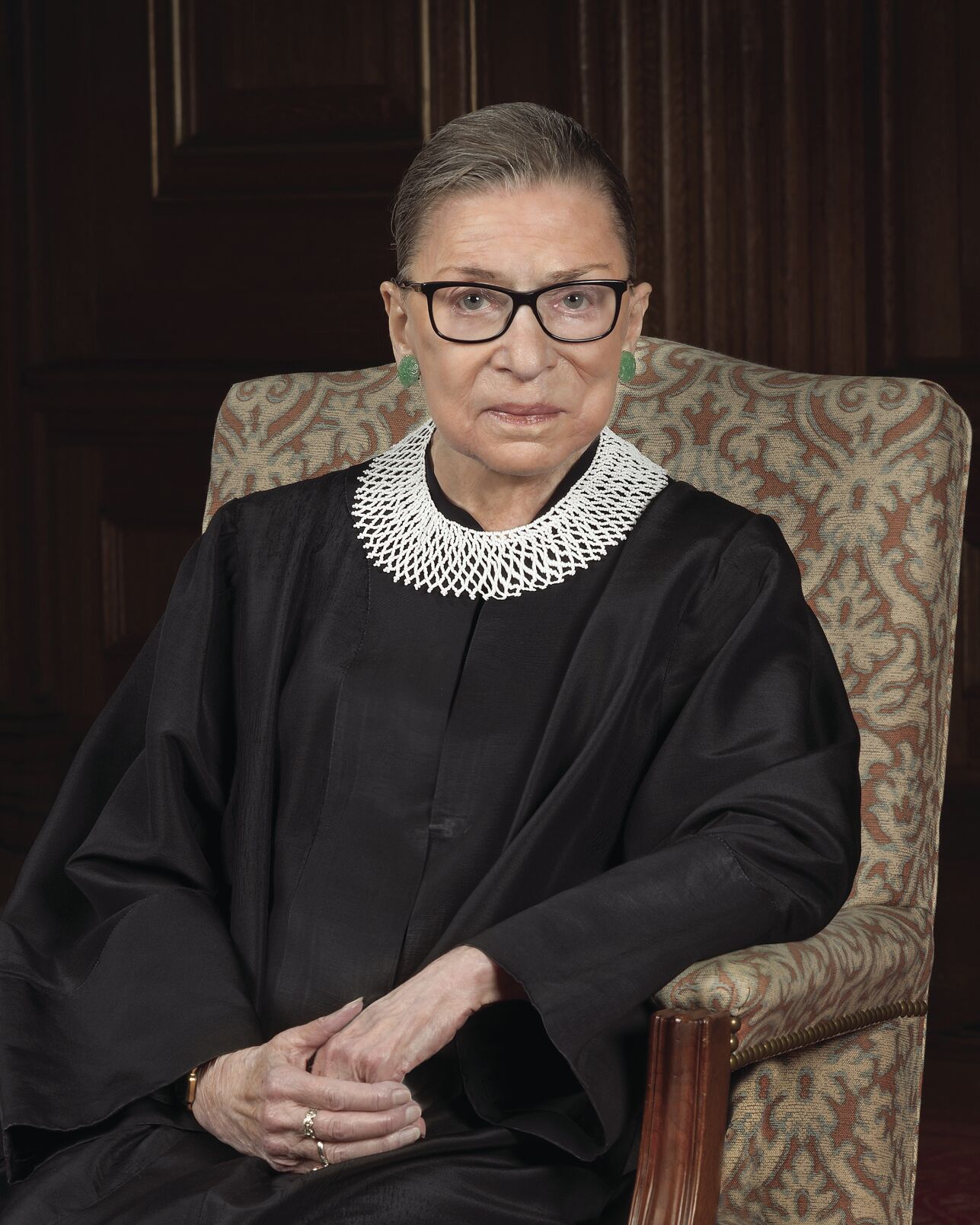
Ruth Bader Ginsburg, Associate Justice of the United States Supreme Court, died in her Washington, D.C. home on the evening of Friday, Sept. 18. Ginsburg, affectionately known as the “Notorious RBG” to her admirers, had a number of health-related ailments throughout her time on the Supreme Court bench, including bouts of lung, colon and pancreatic cancer. Her recent death was caused by complications that arose from metastatic pancreatic cancer, for which she received several rounds of treatment.
Ginsburg was born and raised in the Brooklyn borough of New York City and attended Cornell University, earning a Bachelor’s degree in government. At Cornell, she met her husband Martin Ginsburg, and the two married following her graduation. She later enrolled at Harvard Law School, where she was one of only nine women in a class of 500. Ginsburg was on the Harvard Law Review until she transferred to Columbia Law School due to changes in her husband’s career. She was also a member of the Columbia Law Review and earned her Juris Doctor degree from Columbia in 1953.
Despite her later accolades during her tenure on the Supreme Court, Ginsburg faced severe discrimination in her early legal pursuits, struggling to find clerkships and firms that would hire her because of her gender. She was on the faculty at Rutgers Law School beginning in 1963 as one of only a handful of female law professors across the U.S. at the time. She also co-founded and acted as counsel for the Women’s Rights Project at the American Civil Liberties Union. This project litigated hundreds of cases, and Ginsburg argued six gender discrimination cases before the Supreme Court, winning five.
In 1980, Ginsburg was appointed to the U.S. Court of Appeals for the District of Columbia by then-President Jimmy Carter. She served on the bench for the Court of Appeals until 1993, when she was appointed by President Bill Clinton to the Supreme Court to fill the vacancy created by the retirement of Justice Byron White. During her time on the Supreme Court, she was widely regarded as belonging to the liberal wing of the Court, yet notably created close friendships with her ideological opposites, such as Justice Antonin Scalia. Ginsburg is one of four women to have served on the United States Supreme Court alongside Sandra Day O'Connor, Elena Kagan and Sonia Sotomayor.
While sitting on the Supreme Court, Ginsburg was known for her fiery dissents, slow and measured adjudication and strong stances on gender discrimination and women’s rights. She is credited with authoring the majority opinion on several influential cases, such as United States v. Virginia, which allowed women admission to the Virginia Military Institute. Her dissents were also particularly noteworthy. One of these legendary dissents was the 2014 case of Burwell v. Hobby Lobby, Inc., where Ginsburg argued against the majority opinion, which allowed private companies to prohibit the coverage of contraception by company-provided health insurance. Ginsburg famously retorted, "Any decision to use contraceptives made by a woman covered under Hobby Lobby's or Conestoga's plan will not be propelled by the Government. It will be the woman's autonomous choice, informed by the physician she consults.”
Following the news of Ginsburg’s death, President Trump announced that he would begin the appointment process to fill the vacancy created by Ginsburg’s passing with the support of Senate majority leader Mitch McConnell. However, several Democratic and a handful of Republican lawmakers have voiced their opposition to filling this vacancy so close to the November presidential election, citing the precedent set in 2016 when the nomination of Merrick Garland, by then-President Obama, was denied because of the impending election. Republican Sen. Steve Daines said President Trump should nominate someone to the vacant seat in a tweet on Saturday, Sept. 19. Governor Steve Bullock and Democratic Sen. Jon Tester both disagreed and said the nomination should be left to the winner in November’s election in November.
The United States mourns the death of Ruth Bader Ginsburg. She was highly regarded for her legal acumen and prowess and stood as a feminist icon for U.S. citizens.



Comments ()