
The Three Cs: Christ, Candles and Crêpes
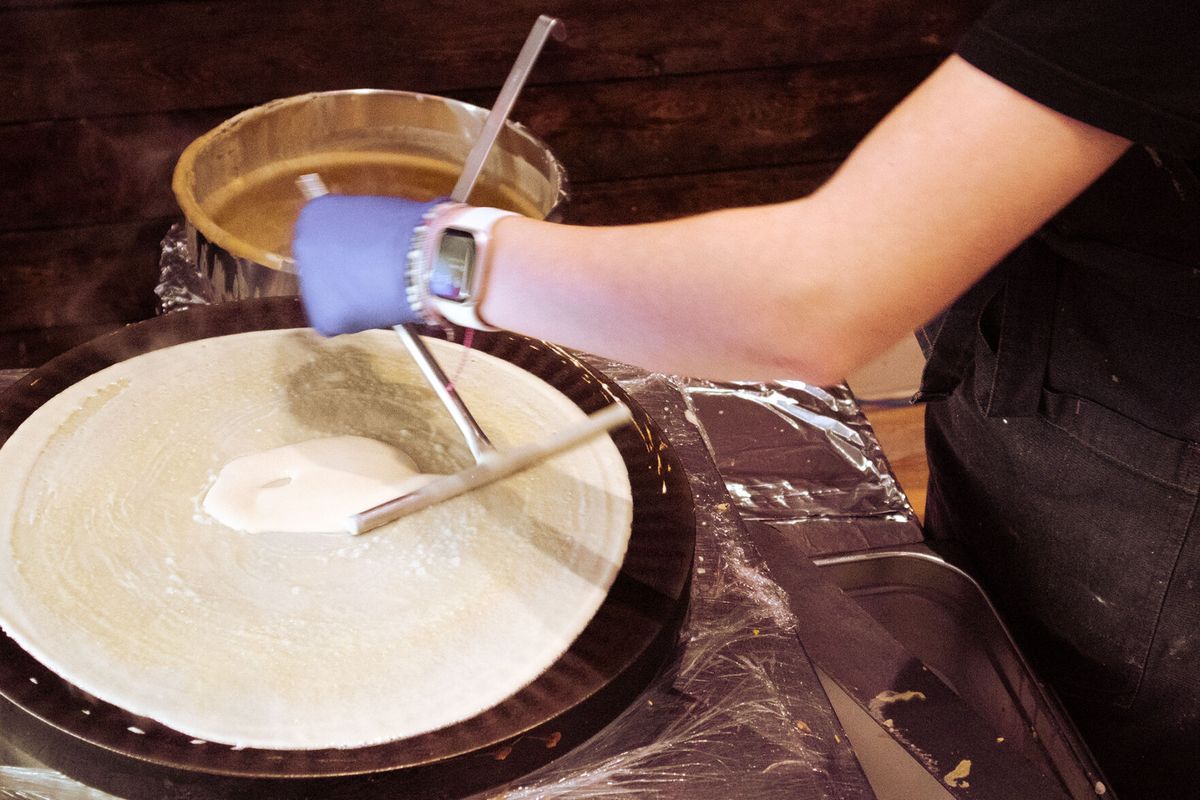
What do French people love the most? Food, of course. In France, every holiday has a delicious treat to spark holiday cheer and celebrate national traditions. Have you ever tried Foie Gras at Christmas? Or a ‘King’s Cake’ during the Epiphany? What about crêpes, which are considered one of the most versatile French pastries to exist?
In France, crêpes appeared in Brittany around the 13th century. The Britton crêpes was a thin version of Greek pancakes made of buckwheat imported from Asia. Crêpes made of buckwheat, or Galettes can be considered full meals making French crêpes one of the most versatile pastries that exist.
Every Feb. 2, during Candlemas, known in France as “la Chandeleur,” the French crêpe is eaten as a way to observe the once Pagan turned Judeo-Christian holiday.
Candlemas finds its Christian origins in the “Feast of the Purification of the Blessed Virgin Mary.” The story has it that forty days after Jesus’s birth, a celebration was held to purify Mary and present Jesus at the temple. It was in 472 AD that Candlemas became a Christian holiday, when Pope Gelasius decided that its origins - being a dedication to the god Pan and the fertility ritual associated with it - were unsuited to the Catholic faith.
Originating from the Latin phrase ‘Festa Candelarum,’ the festival dates back to Roman Parentalia. This annual celebration honored the god of fertility Pan, as well as the deceased, where Romans would wake by their ancestors’ graves using candles and torches.
La Chandeleur was celebrated in honor of the sun, without which wheat wouldn’t grow. Symbolically, if farmers did not make crêpes during Candlemas, they would have a year of poor wheat harvests. A famous French saying goes like this: "Si point ne veux de blé charbonneux, mange des crêpes à la Chandeleur." Or, in English "If you don't want charred wheat, eat crêpe on Candlemas."
Moreover, to ensure prosperity and good harvest, the first crêpe should be flipped with the right hand while holding a Louis d’or, a coin, in the left hand. The act of placing the coin in a crêpe and keeping it at the top of your closet until the following year is a ritual thought to induce good fortune in the following year.
My personal favorite filling for crêpes is homemade chocolate sauce with banana and whipped cream!
So, are you ready to celebrate La Chandeleur with the French on Feb. 2? Here are a couple of recipes for everyone’s enjoyment!
Here’s a tip: using metric measures will make your batter more accurate!
Recipe
Traditional crêpe recipe:
You will need:
3 eggs
780 ml semi-skimmed milk (3 ¼ cups)
125 grams of granulated sugar (1/2 cup)
80 grams of melted butter (approximately 6 tbsp)
325 grams of flour (2 5/8 cups)
1 tsp Vanilla extract
2 pinches of salt
In a big bowl, break the eggs. Add the flour in small portions at a time, whisking the milk alternatively in to avoid any lumps.
Add the granulated sugar and whisk. Then add the lukewarm butter (if it is too hot, it will crystallize) and whisk energetically so the butter incorporates into the batter, resulting in a homogeneous texture. Next, add the vanilla and the salt.
The batter needs to rest for about an hour in the fridge before cooking.
When you are ready to begin cooking, get the batter out about 20 minutes in advance.
In a pan, pour the batter. Wait for it to come off of the sides of the pan before flipping it.
Finally, add your favorite filling and toppings!


Comments ()