
Three Republican state legislators sue the state of Montana over major property tax reform
Critics of the 2025 Legislature's hallmark property tax relief bill made good on their promise to challenge the measure on Wednesday, filing a lawsuit in Gallatin County that seeks to undermine core tenets of the package.
Three Republican legislators sued the Montana Department of Revenue, claiming that the sea-changing property tax law enacted last year, Senate Bill 542, violates two provisions of the state’s constitution.
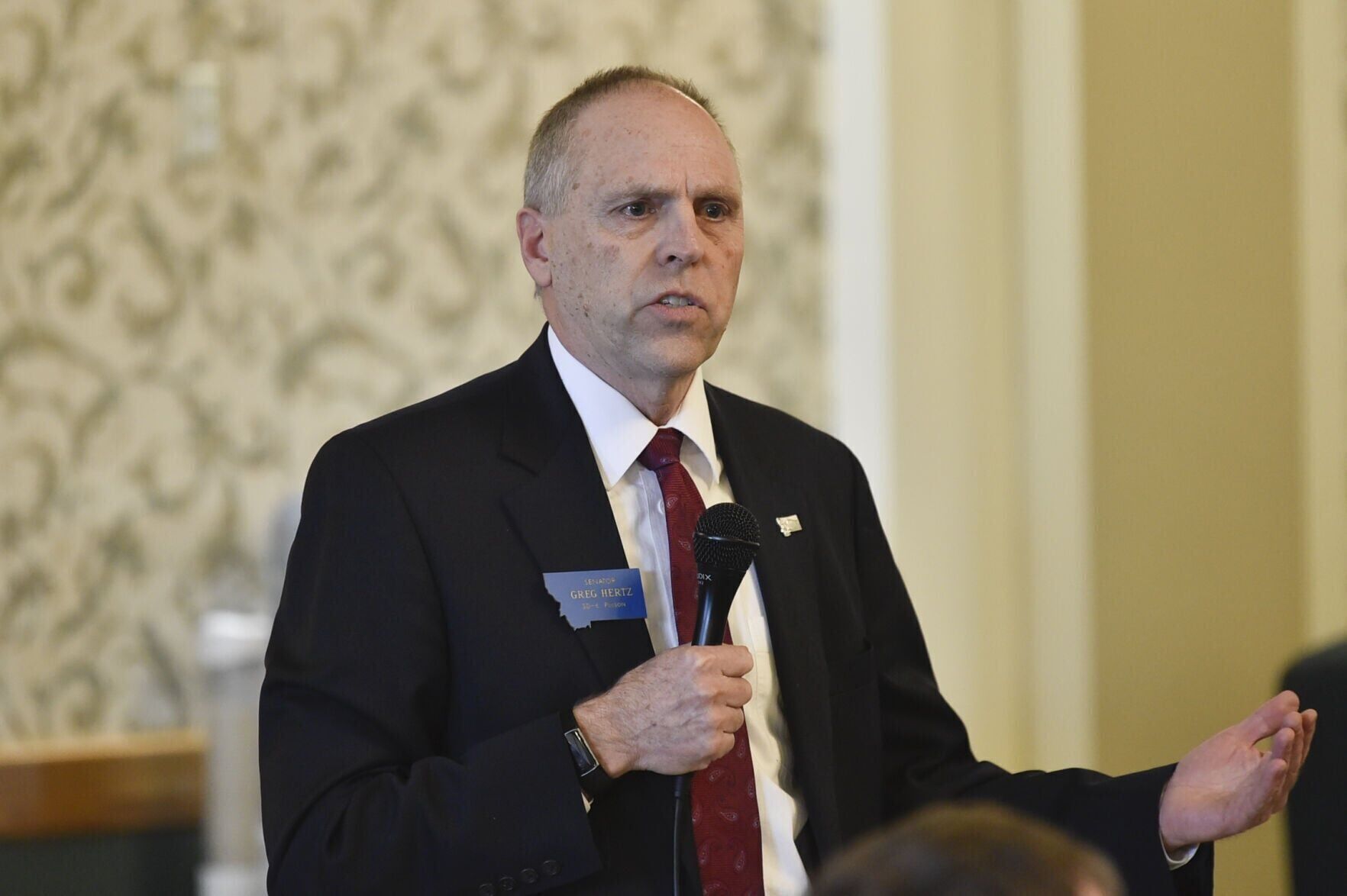
The plaintiffs are Sen. Greg Hertz, R-Polson who chairs the Senate taxation committee; Sen. Tom McGillvray, R-Billings; and former Republican Sen. Keith Regier. They argue SB 542 violates the state’s constitution not because of the substance of the policies, but because of how the new law came together.
In their complaint, the legislators contend the bill was altered too far from its original purpose during the lawmaking process, and that it combined too many “independent and incongruous” provisions into one law, both of which they say violate the Montana Constitution.
“When legislators themselves are denied the ability to vote separately on independent subjects through unconstitutional bundling, judicial enforcement is the only remaining constitutional remedy,” the lawsuit read.
The office of fellow Republican Gov. Greg Gianforte defended the law.
“While the governor's office doesn't generally comment on litigation, the governor is proud to have signed the only two property tax bills into law that reached his desk, cutting property taxes for 80% of Montana homeowners,” spokesperson Sean Southard said in an email. “If Senate Bill 542 is struck down, property taxes for Montana homeowners will increase significantly, reversing the relief that 80% of homeowners received.”
Gianforte supported much of SB 542, in part because some of its key provisions were born out of his property tax task force that met for months in 2024 and whose members included McGillvray.
SB 542 and related legislation resulted in about 8 in 10 residents seeing their property tax bills drop by more than 5% from 2024 to 2025. Under prior laws, only about 1 in 10 homeowners — roughly 13% — would have seen comparable reductions, according to state data.
But the road to achieving that relief exacerbated festering political divisions among Republicans, a feature of the 2025 legislative session that is also on display in Wednesday’s complaint.
“During the 2025 legislative session, supporters of a massive property tax restructuring bill faced a stark reality: their controversial legislation was dying. Their solution? Buy its passage with $90 million in cash rebates to Montana voters – a scheme they planned in advance and executed through legislative subterfuge,” the lawsuit starts.
While most residents saw their tax bill go down, some homeowners were left out of the relief. Those were mostly owners of high-value properties, like lakefront homes. Hertz was one of those residents: his property tax bill for his home on Flathead Lake went from $14,500 in 2024 to $21,300 in 2025.
Many of the bill's detractors, including the plaintiffs, see the new law as creating “winners and losers,” calling it a “monstrosity” and “discrimination” in the lawsuit.
How we got here
Many elected officials heard from voters on the campaign trail that soaring property taxes were their biggest frustration and the primary source of financial strain.
At the start of the 2025 legislative session, state legislators and Gianforte agreed that penning a property tax relief package was a top priority. The issues arose when lawmakers and lobbyists started debating how they would accomplish that task.
Put simply, two competing Republican philosophies on how to provide property tax relief took shape. The more hardline Republicans backed an approach that would have sent perpetual rebates to homeowners, while a coalition of moderate Republicans and some Democrats wanted to implement a tiered rate structure and an exemption for primary residents.
After four months of negotiations, lawmakers approved SB 542 in the final moments of the session.
The bill includes an exemption for primary residents that goes into effect in 2026, an overhaul of the rate structure and $400 rebates for primary residents (totaling roughly $90 million). All of those provisions were folded into SB 542 as amendments throughout the legislative process, helping to garner a reputation among some as a “Frankstein bill.”
But SB 542 did not start that way, and that’s a large part of what the plaintiffs take issue with.
“An appropriation for one-time cash rebates and permanent rate restructuring are oil and water – fundamentally incompatible substances that cannot be constitutionally combined into one bill, no matter how vigorously the Legislature shakes them together,” the lawsuit read.
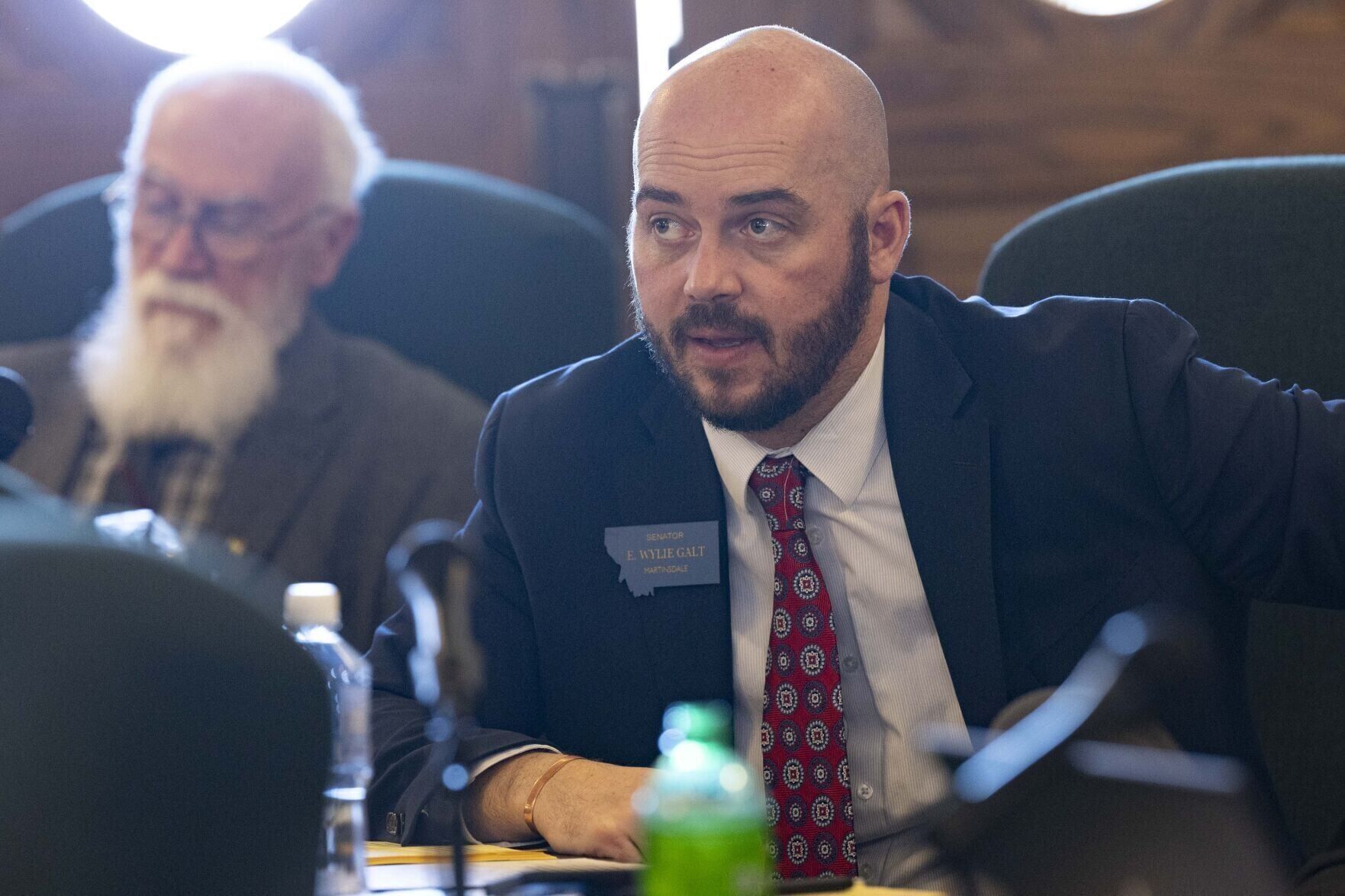
The legislation, sponsored by Sen. Wylie Galt, R-Martinsdale, was introduced with a broad title, “generally revise property tax laws,” and would have frozen all property values for two years in an effort to stave off impending increases. It was three pages when introduced, and grew to 44 pages when passed. Use of a broad title is a known strategy that allows legislators to add provisions late into the lawmaking process without running afoul of constitutional requirements that the substance of a bill not stray from its original title.
"I have enough experience around here that I knew having a wide title was a good idea," Galt said of SB 542 at the time.
The ‘architect’
Galt may have sponsored SB 542, but Rep. Llew Jones, a Conrad Republican who is the de-facto leader of the moderate GOP legislators, championed the bill.
Jones, a longtime legislator, is known by some as the lawmaker who is constantly brokering deals and planning for every outcome, but he has also become a boogeyman for the hardline faction of Republican legislators.
Jones’ name was mentioned 42 times in the lawsuit.
“SB 542 began life as a simple, three-page bill to temporarily freeze property values for two years – a measure that would benefit all Montana property owners equally,” the lawsuit read. “But by the time Representative Jones and his allies completed their bait-and-switch, every single word of the original bill had been gutted.”
The plaintiff’s attorney, Matthew Monforton, said that the lawsuit is not meant to have bearing on Jones’ political future, but said he was mentioned extensively because he was the “architect” of SB 542.
Jones said that the lawsuit was “no surprise.”
“My primary hope is that their actions do not raise taxes on 375,000 Montana residents,” he said in a text message.
SB 542’s rate restructuring was in effect for the 2025 tax year, and the law is set to change again for 2026 when the primary resident exemption will be implemented. Residents have until March 1 to apply for the exemption, and will be automatically enrolled if they received a rebate in 2025.
Monforton, who is the backer of a pair of constitutional initiatives to cap property tax increases, said he hopes that the court will void SB 542, but he expects that a judge would grant the Legislature ample time to respond to a victory as to not create property tax chaos or spikes.



Comments ()