
Updated: Gianforte, Knudsen launch probe into legality of Helena's immigration resolution
Just two weeks after the Helena City Commission declared in a resolution it wanted to keep local police out of participating in immigration enforcement, Montana Attorney General Austin Knudsen announced Wednesday he had opened an investigation into whether the measure violates a law banning sanctuary cities signed by the governor in 2021.
“I’d suggest the city of Helena concentrate on enabling their law enforcement, maybe fixing some potholes instead of trying to play national politics,” Knudsen said.
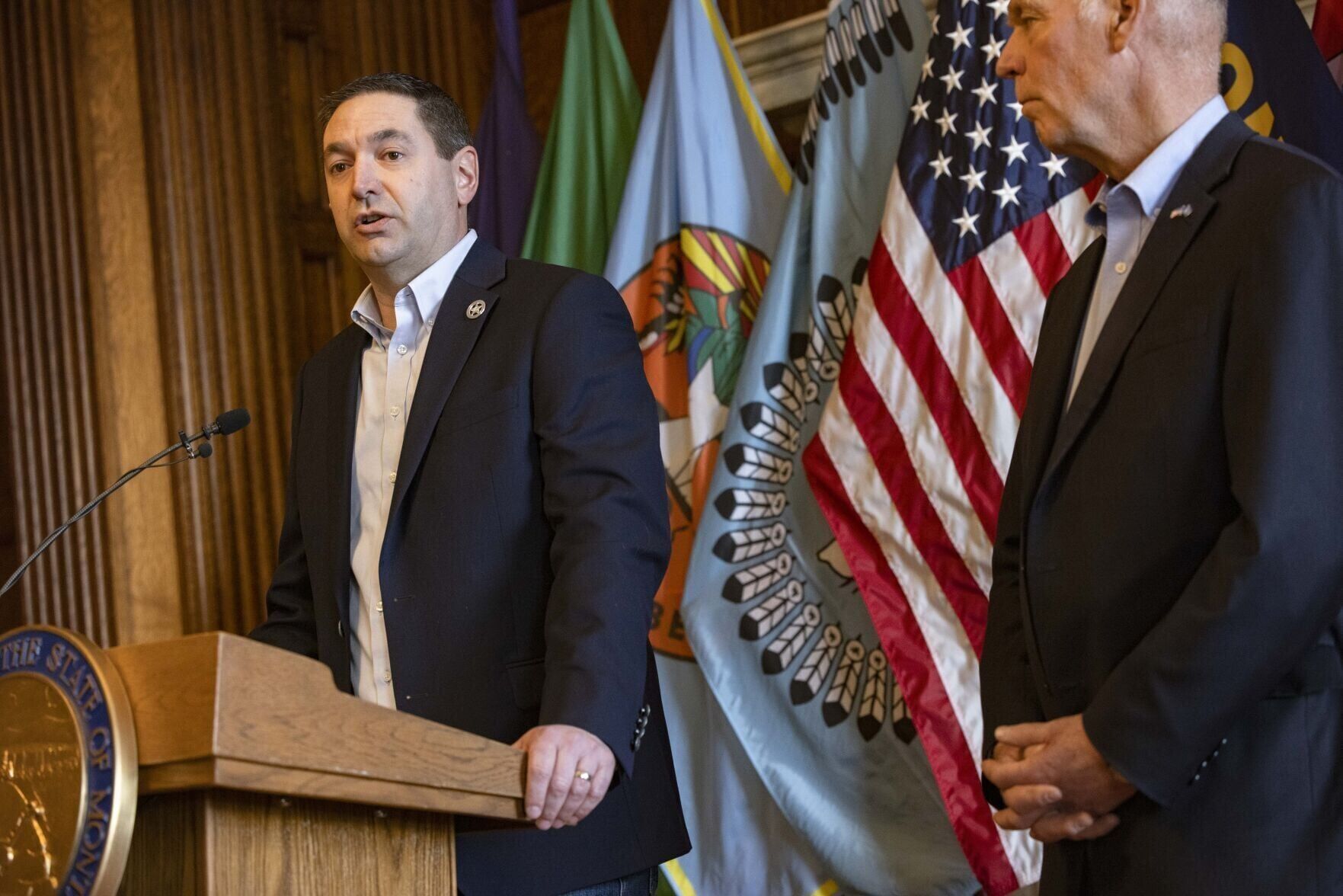
In a press conference at the Montana State Capitol, Knudsen and Gov. Greg Gianforte, both Republicans, warned Helena and any Montana city that if they are found to be in violation of law passed through House Bill 200 five years ago that they could face large fines and lose certain state funding.
In a Wednesday response, the city said it is "committed to upholding all applicable federal and state laws."
"At this time, the City has not received any official notice or formal communication from the Governor’s Office or the Montana Attorney General’s Office regarding this matter. As a general practice, the City does not provide comment on pending or potential litigation matters," the statement said. "The resolution was drafted with careful consideration of applicable local, state, and federal law, and the City believes the resolution is consistent with those legal requirements."
HB 200 prohibits Montana from having so-called "sanctuary cities," a term used for cities that have made policies blocking some federal immigration enforcement activities. Specifically, the law says local governments are not allowed to enact policies that restrict the exchange of information about someone’s immigration or citizenship status “for a lawful purpose.”
Gianforte formally requested Knudsen open the investigation on Tuesday, he said. Knudsen said at Wednesday's press conference he had yet to contact city officials.
“Today, we send a clear message to all local governments across the state: if you are found to be in violation of state law, there will be penalties," Gianforte said. "In Montana, we don’t tolerate defiance, and we support our local law enforcement.”
Though HB 200 does not specify if a resolution is a policy, Knudsen said he believed the resolution "clearly" showed that Helena's City Commission was "thumbing its nose" at state law.
“This is day one, and we’ve got to investigate this,” Knudsen said.
On Jan. 26, the City Commission passed a resolution instructing HPD to not enter a 287(g) agreement, which would allow Helena officers to be deputized to aid in specific U.S. Immigrations and Customs Enforcement tasks.
It also tells Helena employees, including law enforcement, not to disclose immigration or citizenship status to anyone outside city government unless required by law.
“The Commission supports the Helena Police Department’s policy that it will not, independently or assisting other law enforcement agencies, stop, pursue, interrogate, investigate, arrest, or otherwise detain a person based solely on their immigration status or suspected violations of immigration law,” the resolution states.
On a technical level, a resolution is not policy, and it cannot command HPD, City Attorney Rebecca Dockter previously told the Independent Record. Resolutions are typically used as a formal statement of opinion for elected officials.
HPD answers to City Manager Alana Lake, so a disagreement between the resolution's intent and HPD's actions, such as HPD entering a 287(g) agreement without Commission approval, would be handled by her.
If violations of the state law are found, any local government or state agency may be fined up to $10,000 for every five days it is deemed to be out of compliance, Knudsen said.
Much of Helena’s resolution echoes existing HPD policy, city officials said during the resolution’s approval process.
With only 54 budgeted sworn officers, HPD doesn’t have the manpower to take on any more tasks beyond its local jurisdiction, Helena Police Chief Brett Petty said in a Jan. 29 interview.
Even if ICE offered HPD a 287(g) agreement, he said he’d likely turn it down. As of Jan. 1, he temporarily withdrew HPD from the multi-jurisdictional Missouri River Drug Task Force when it officially added U.S. Border Patrol to its roster, citing concerns the task force's move would pull HPD into immigration enforcement.
Petty said it was a practical decision, not a political one.
"We work with federal law enforcement on a weekly basis," Petty said. "... We don’t have anyone task forced with federal immigration. One, immigration is not in our wheelhouse. We don’t do immigration and I don’t believe we’ve been asked."
Leaving the task force is within HPD’s rights, Knudsen said, though he said Wednesday he “thinks it's a mistake.”
Whether the resolution reflects HPD policy and whether said policy breaks sanctuary city law is up for investigation, the attorney general said.
If the investigation finds HPD policy does violate the state's sanctuary city law, which has been in place before the resolution was passed, the penalty costs could go up, he said.
"I think as of this morning they're already looking at $30,000, so we'll see how long they want to keep this in place," Knudsen said.



Comments ()