
Wading through troubled waters: As Simms brand takes a hit nationally, fishing guides still laud quality
If select Simms waders from the Bozeman production floor are still cut, stitched, hand-assembled, rigorously tested and widely praised for quality, why are some Montana fly shops dropping the brand?
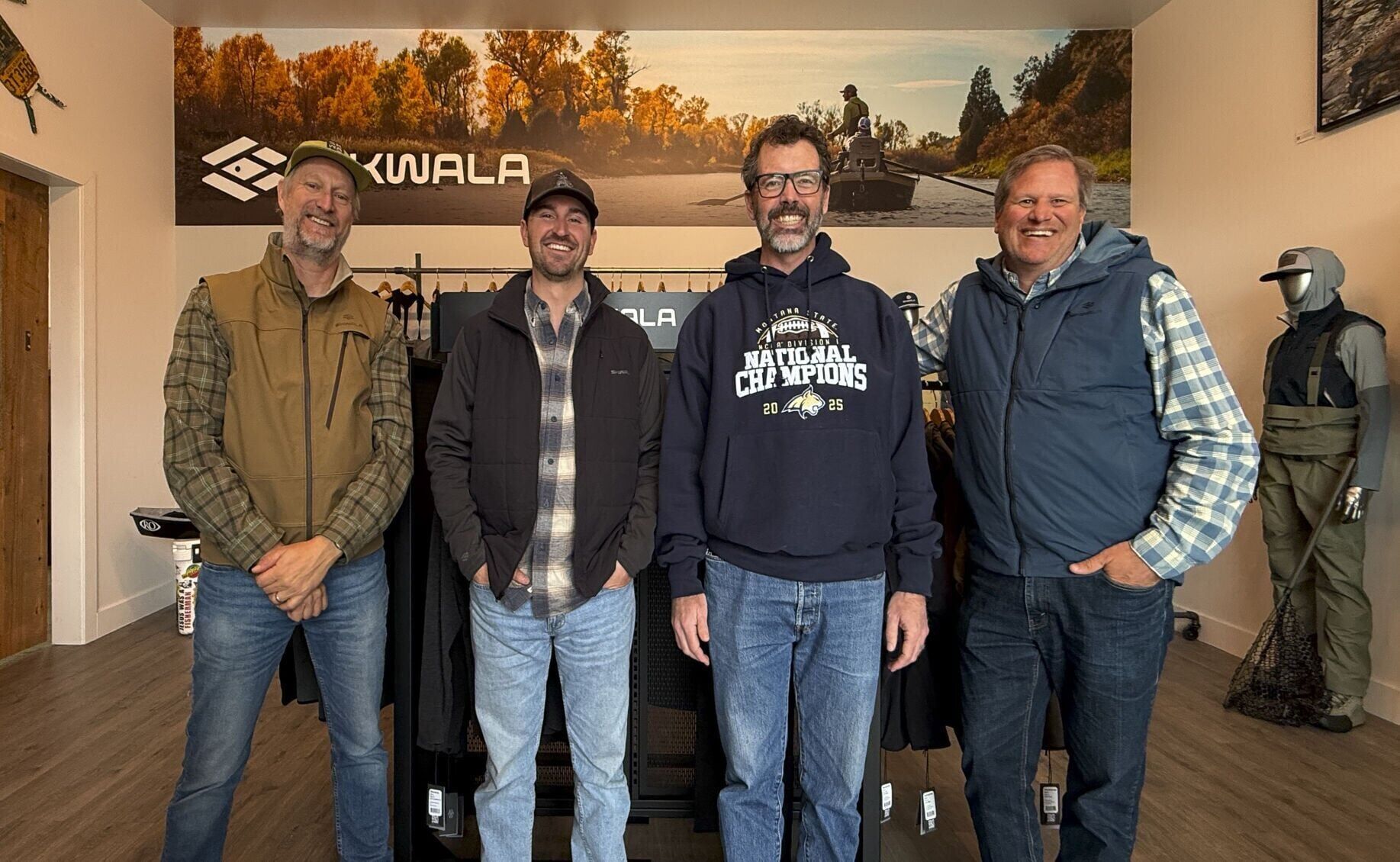
Skwala, a seven-person Bozeman company that marked its four-year anniversary in March, has in some cases literally replaced Simms Fishing Products on fly shop shelves.
"Skwala has earned its spot," captioned Missoula-based Blackfoot River Outfitters in a video posted on Instagram. The December 2025 post shows shop workers ripping down a Simms banner, replacing it with a Skwala sign.
"We’ve carried (Skwala) long enough to know it’s the real deal — quality, performance, and innovation are just a part of it. They also stand behind their warranty and provide customer service in a way that makes us proud to carry them at our shop."
The emerging David-and-Goliath narrative reveals something deeper about the fly-fishing marketplace. Even when product quality isn’t in question, the relationships some shop owners have with producers weighs more heavily in deciding what gear makes it in their stores.
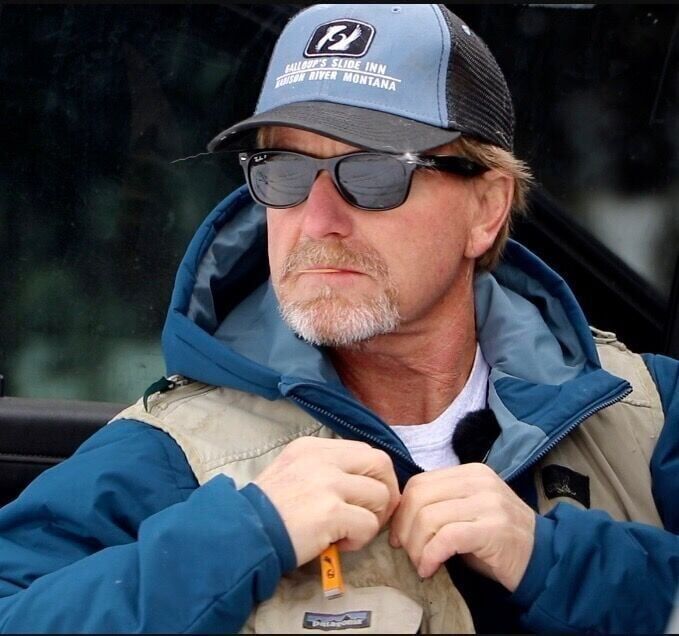
Kelly Galloup, who owns Galloup’s Slide Inn Fly Shop on the Madison River near Cameron, dropped Simms from his inventory not long before K.C. Walsh, former Simms proprietor, executive president and chairman, sold the company to conglomerate Vista Outdoor in 2022.
“The quality didn’t go down, (Simms) customer service went to s---,” Galloup said. "(I was) one of the first ones to dump them. I did it because I didn’t like the way they were doing business.”
The Chronicle attempted to contact Walsh, who moved Simms from Jackson, Wyoming, to its current Bozeman headquarters when he acquired the company in 1993.
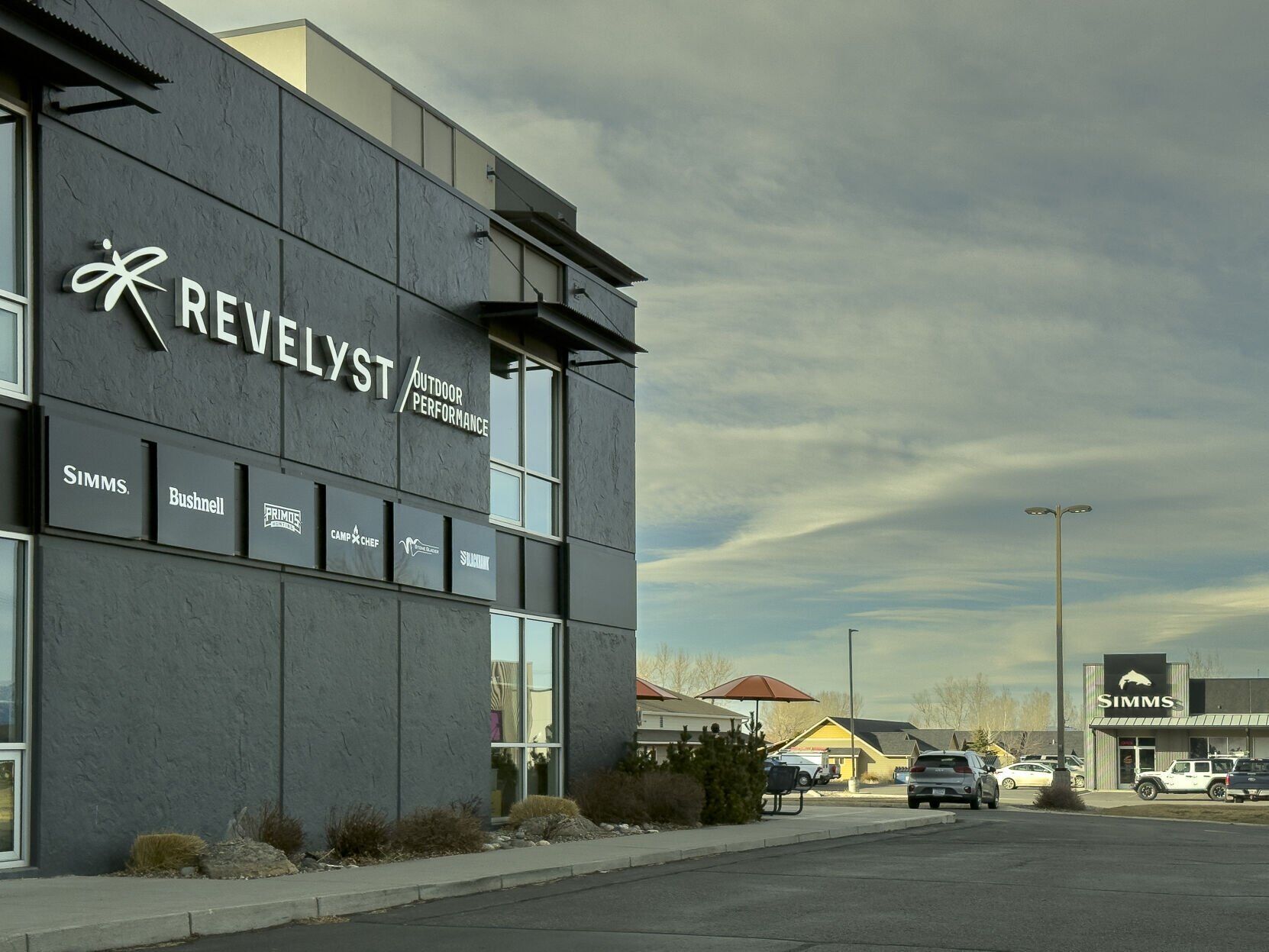
Dissolving via a split-and-sell strategy, Vista Outdoor sold Simms with other recreation brands, including CamelBak and Bushnell, in the Revelist portfolio to private equity firm Strategic Value Partners in 2024.
Galloup did not notice a change in Simms approach to merchants during the three ownership changes from John Simms to Life-Link International and eventually Walsh.
Galloup and other retailers claim Simms customer support and store relationships are declining in an increasingly direct-to-consumer industry. D2C is when a manufacturer focuses more on selling its products directly to users, sometimes deprioritizing retail partnerships in the process.
For Galloup, also now selling Skwala instead of Simms, the strength of Skwala's customer service correlates to its small staff.
“Part of the allure is you used to know the owners,” Galloup said. “The difference is basically four people are running that company (Skwala). In Simms defense, they have good products, (but they are) becoming more corporate, (and) harder to sell.”
"We call ourselves the new school brand with the old school ethic," said Rich Hohne, Skwala's chief marketing officer. "Everybody's got our phone numbers, they can call us. In a world where people feel disconnected, we've been able to connect effectively."
Simms also pushed Galloup to restock surplus inventory nearly a year in advance while orders for popular products went unfilled, he said.
“Sitting on all their inventory and (Simms) wants me to order for next year,” Galloup said. “You could buy their product online direct, but we didn’t have it.”
Galloup said manufacturers increasingly have more product availability for sale online than ‘bricks and sticks’ sellers, putting producers in competition with their greatest advocates, fly shop workers and guides who use the gear daily.
"If the guy at (the fly shop) doesn’t push the product, it doesn’t sell," Galloup said.
Galloup, who opened his first fly shop in Michigan in 1979, had a personal relationship with 1980 founder John Simms.
“In the old days with Simms, you could call John or K.C.,” he said. “It’s a strange thing, everyone thinks fly fishing is a huge industry. This industry, it’s got a big ego."
The fly-fishing apparel and accessories market size is expected to expand from $3.45 billion in 2025 to $3.64 billion in 2026, according to The Business Research Company, a global market intelligence firm providing market reports, customized research, and consulting services.
National
Simms entered the national spotlight after Bloomberg News published “Private Equity Is Ruining a Beloved Fly-Fishing Brand”, a viral article revealing once-loyal retailers across the U.S. no longer selling the once-iconic brand.
“We can’t rely on bigger companies anymore,” said Dan Gigone, co-owner of Sweetwater Fly Shop in Livingston, in the Bloomberg piece.
Gigone, the only fly shop owner the Chronicle interviewed who did not read the Bloomberg story, dropped Simms from his store in early 2025. He said he saw no decline in sales from the decision.
“The truth is I have not read the article,” Gigone said. “I don’t know that the size of the company is the biggest issue, but the level of engagement companies lose as they look for bigger pastures."
Gigone remembers a time when if his shop ran out of a Simms product, he could stop by the company’s Bozeman warehouse and pick it up the same day.
“They had everything there,” Gigone said. “I could promise the customer I would have it the next day. Everyone in the warehouse department knew me.”
Gigone sees premium gear pricing out clientele. Simms waders retail anywhere from $200 to $1,000. Skwala can cost $550 to $900. Gigone does not sell Skwala either.
“At this point (Simms) only makes the highest-end waders in Bozeman,” Gigone said. “(We are) seeing people looking for better price points than what some of the high-end brands are offering. (customers) looking for good waders at a good price (are) having sticker shock."
Outdoor recreation gear giant Patagonia is an example of how large companies can still keep retailer relationships, per Gigone.
“All the major vendors are selling online and we understand that, but I think some are better about steering their customers to a retailer. Patagonia, despite being a much larger company, they make a point of supporting independent retailers and their conservation ethic sits with my focus,” Gigone said.
The Bloomberg article did not mention fly shops still selling Simms.
‘Business as usual’
Downstream from Galloup, Joe Dilschneider, Ennis-based Trout Stalkers fly-shop owner, outfitter and head guide, notices no negative changes in Simms' product quality, customer experience or retail delivery.
“I wear Simms waders and will forever,” Dilschneider, 57, said. “I’d have a hard time getting dressed in the morning without wearing something made by (them)."
Dilschneider, also owner of the Madison River Fishing Company in Ennis for the past decade, was a Simms brand ambassador before becoming a fly shop owner.
“They are the 800-pound gorilla in fly fishing retail,” Dilschneider said. “Obviously things changed at (Simms). In (the) industry, (there is) more competition. (I) have multiple brands to consider.”
There are more than 8,500 total Simms ambassadors — experts who test, promote, and critique the company’s gear, according to the company.
“It’s business as usual,” Dilschneider said. “Other dealers (have) a different experience. (We) stand by (Simms) and the products they make. Simms still makes the best waders you can buy.”
The most noticeable Simms changes for Dilschneider are increased turnover among the company’s sales representatives who are responsible for managing and growing retailer relationships. Simms sales reps conduct in-person product training, analyze sales data, and assist shops with implementing merchandising strategies, according to the company.
“Private equity, they try to consolidate operations to make (things) more profitable or efficient,” Dilschneider said. “(This) seems to be happening with longtime sales reps, (Simms) let(s) those guys (leave). There is some hate.”
Although sales rep retention changed after the Simms acquisition, less tenured product experts had no effect on Dilschneider’s business, he said.
“We don’t need a lot of handholding from the reps,” he said. “(I am) sad to see rep(s) move on, (but I am) not negatively affected.”
Dale Sexton, owner of Dan Bailey’s Fly Shop in Livingston, is reserving judgement.
“There is no doubt the model at Simms has changed,” said Sexton, who is still selling the brand. "We are in a wait and see mode.”
The COVID-19 pandemic and tariffs damaged supply chains, straining local retail relationships with producers, per Sexton.
“The reliability of supply chains is not as consistent as is used to be,” he said. “Companies are using it as an excuse. We are hopeful Simms is going to continue to be a market leader in the fly-fishing industry, continue to adjust to new ownership. Skwala is on our radar.”
Unchanged quality
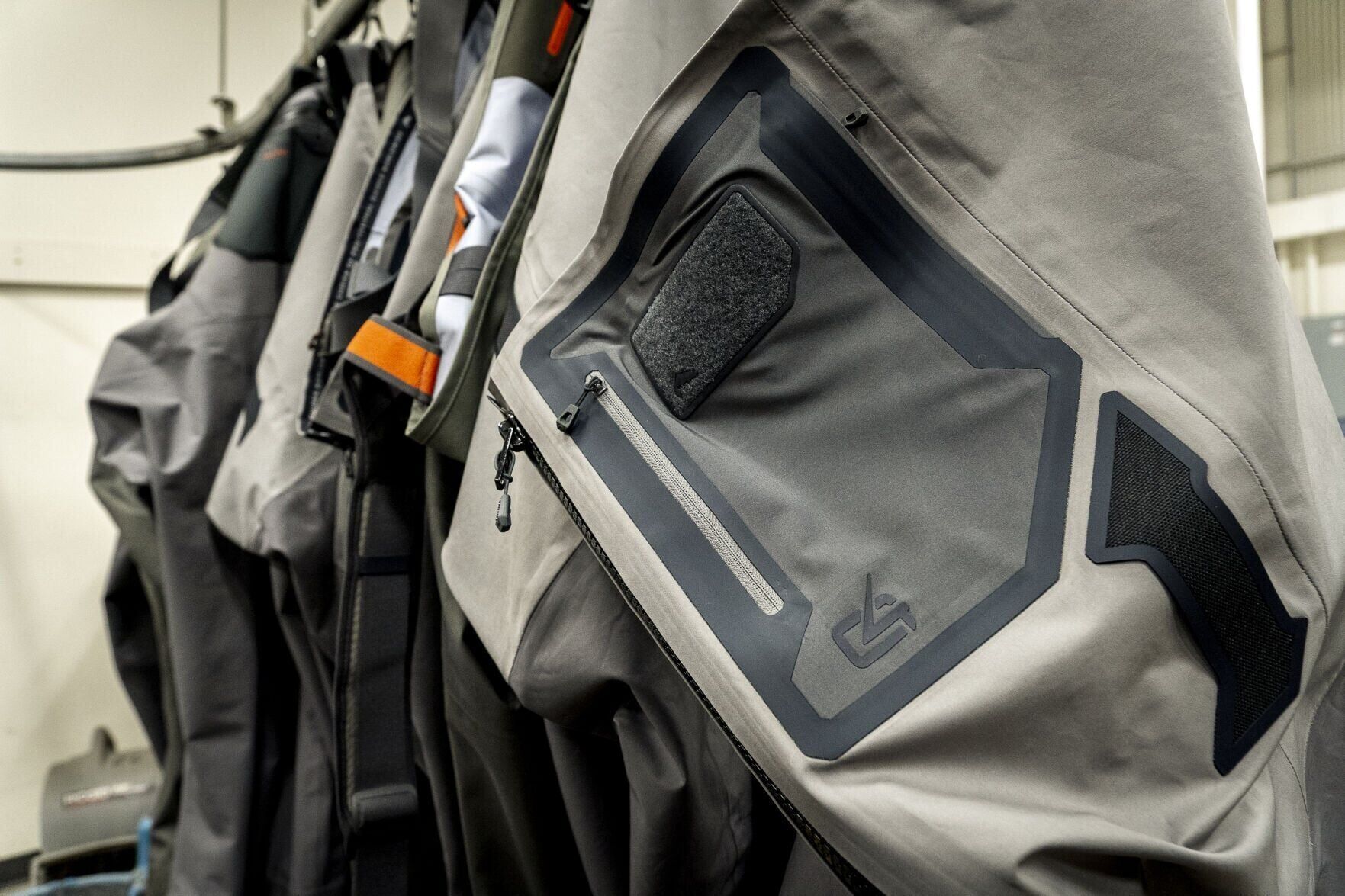
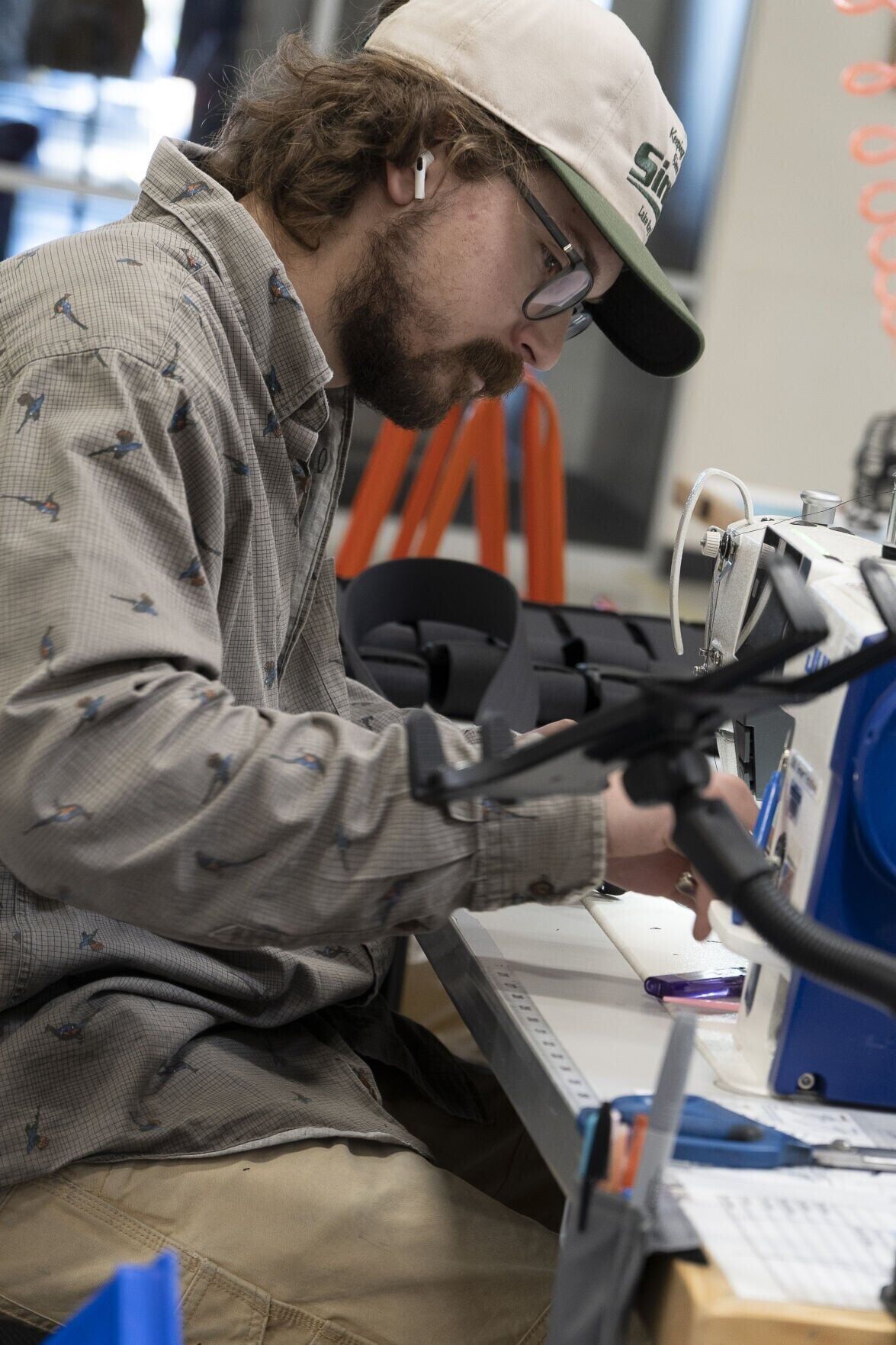
Whirring from sewing and cutting machines still emanates from the approximately 100,000-square-foot production facility and repair center at Simms Fishing Products in Four Corners west of Bozeman. There, 40 development and design personnel combine assembly-line efficiency with the meticulous craftsmanship that built Simms reputation.
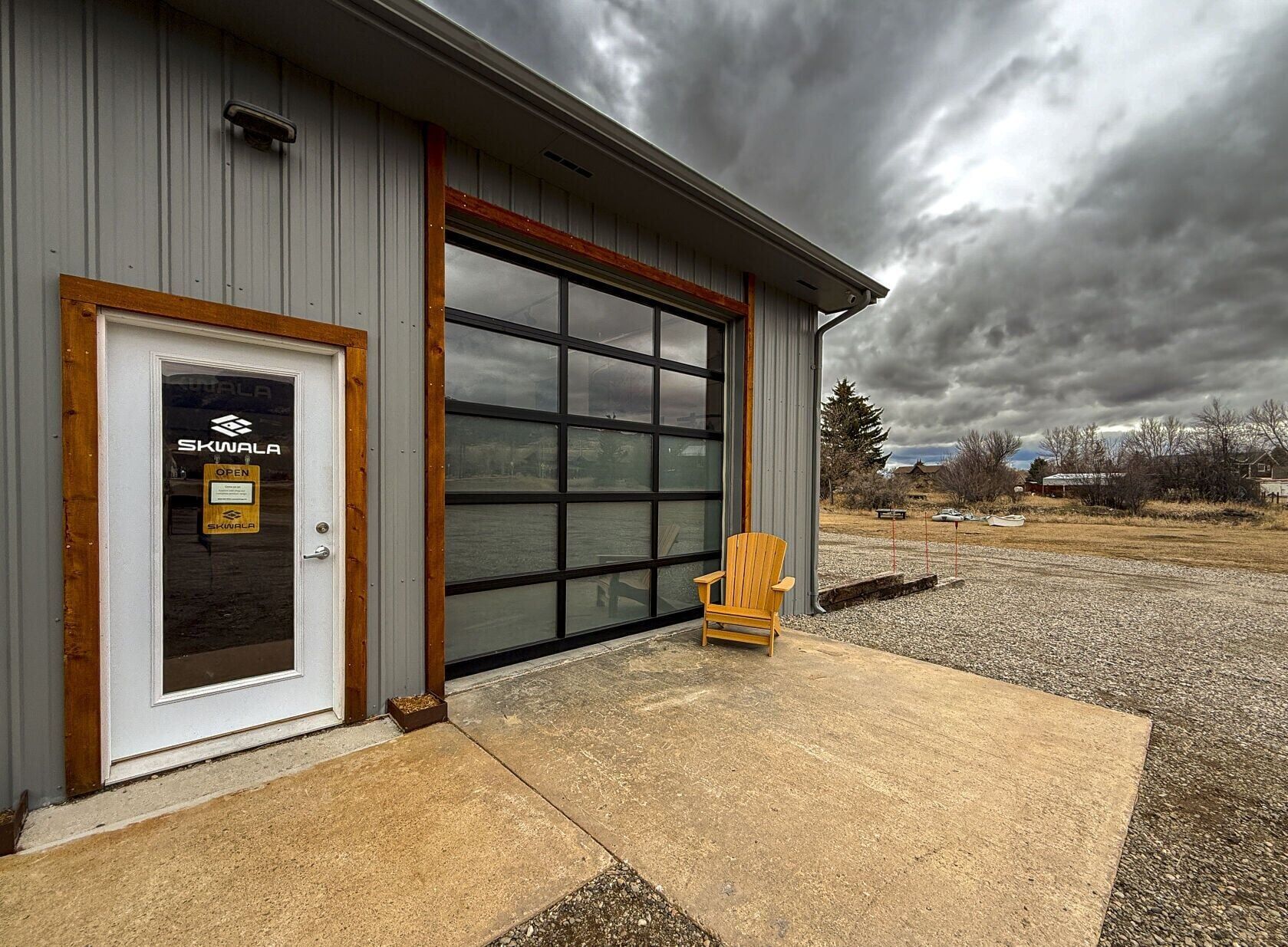
The massive building contrasts with Skwala’s 3,500-square-foot headquarters, testing facility, office and sales area on the northeast side of Bozeman. Skwala waders are made in Vietnam.
From Bozeman, Simms waders are shipped as far as Europe, Asia, South America and New Zealand.
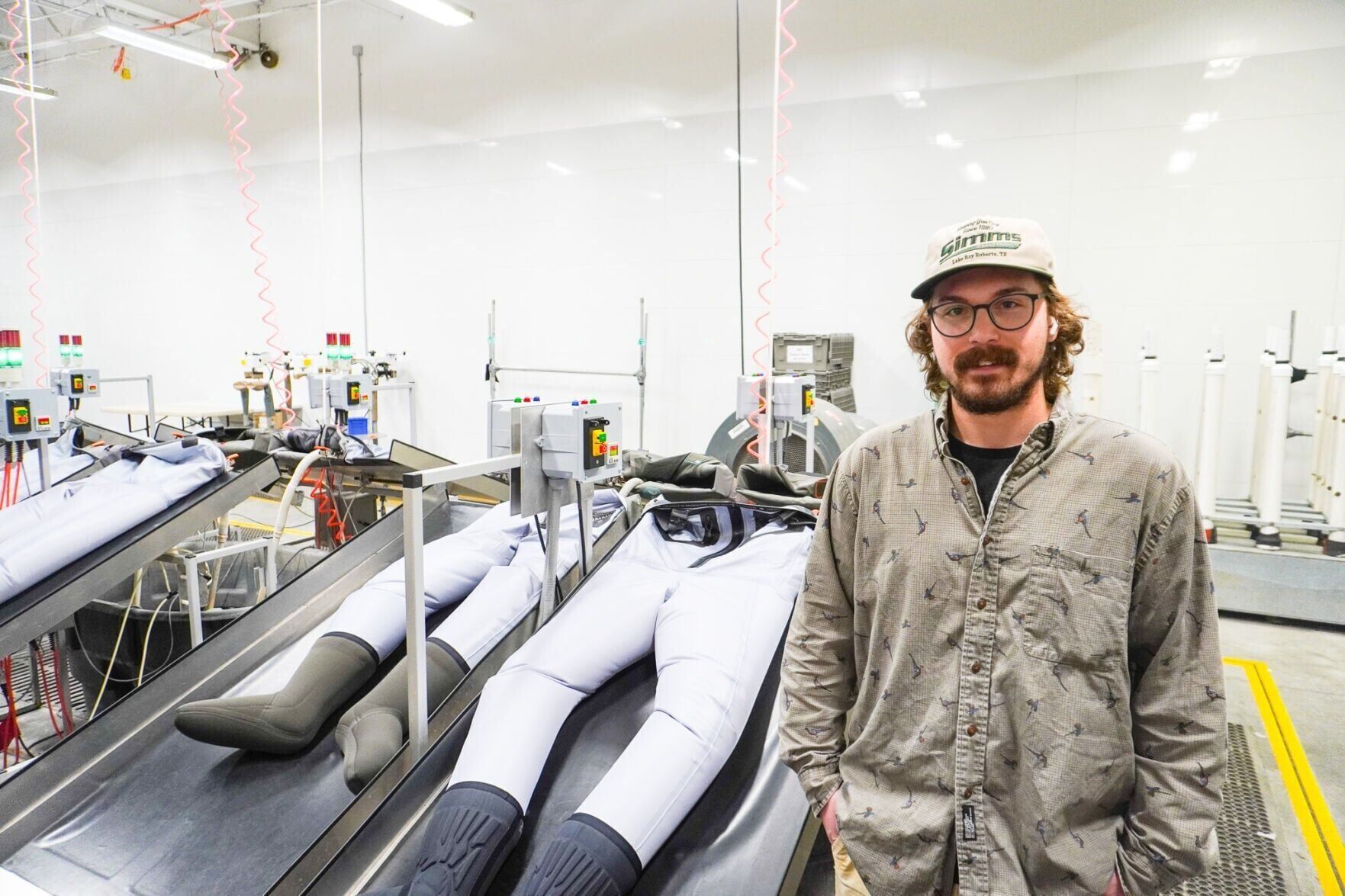
“From my world nothing has changed,” said Kyle Dresser, Simms' senior production manager and supervisor for the past four years on the factory floor.
Dresser said he first became introduced to Simms waders as a fisheries technician and Gallatin Valley fly guide.
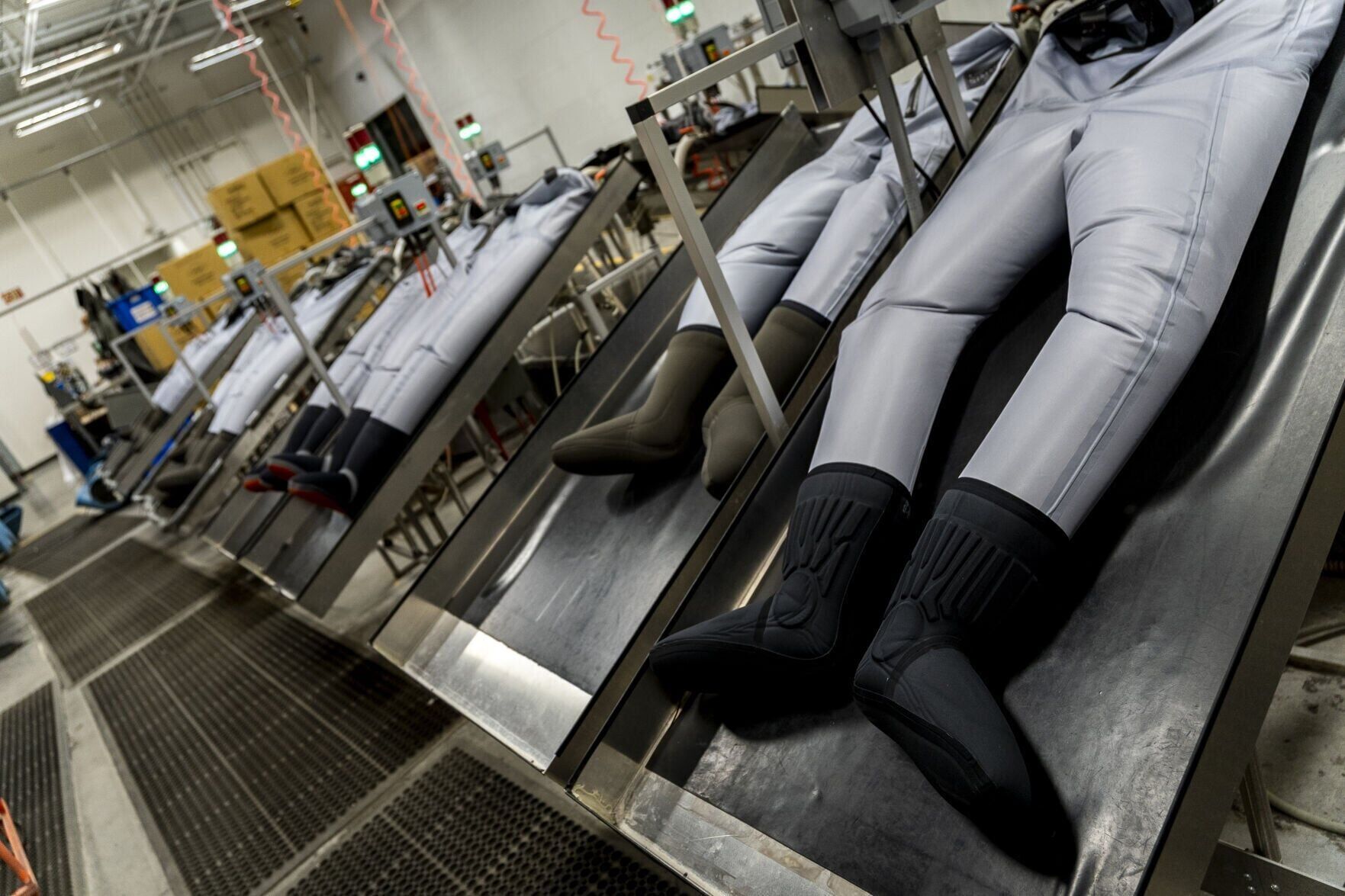
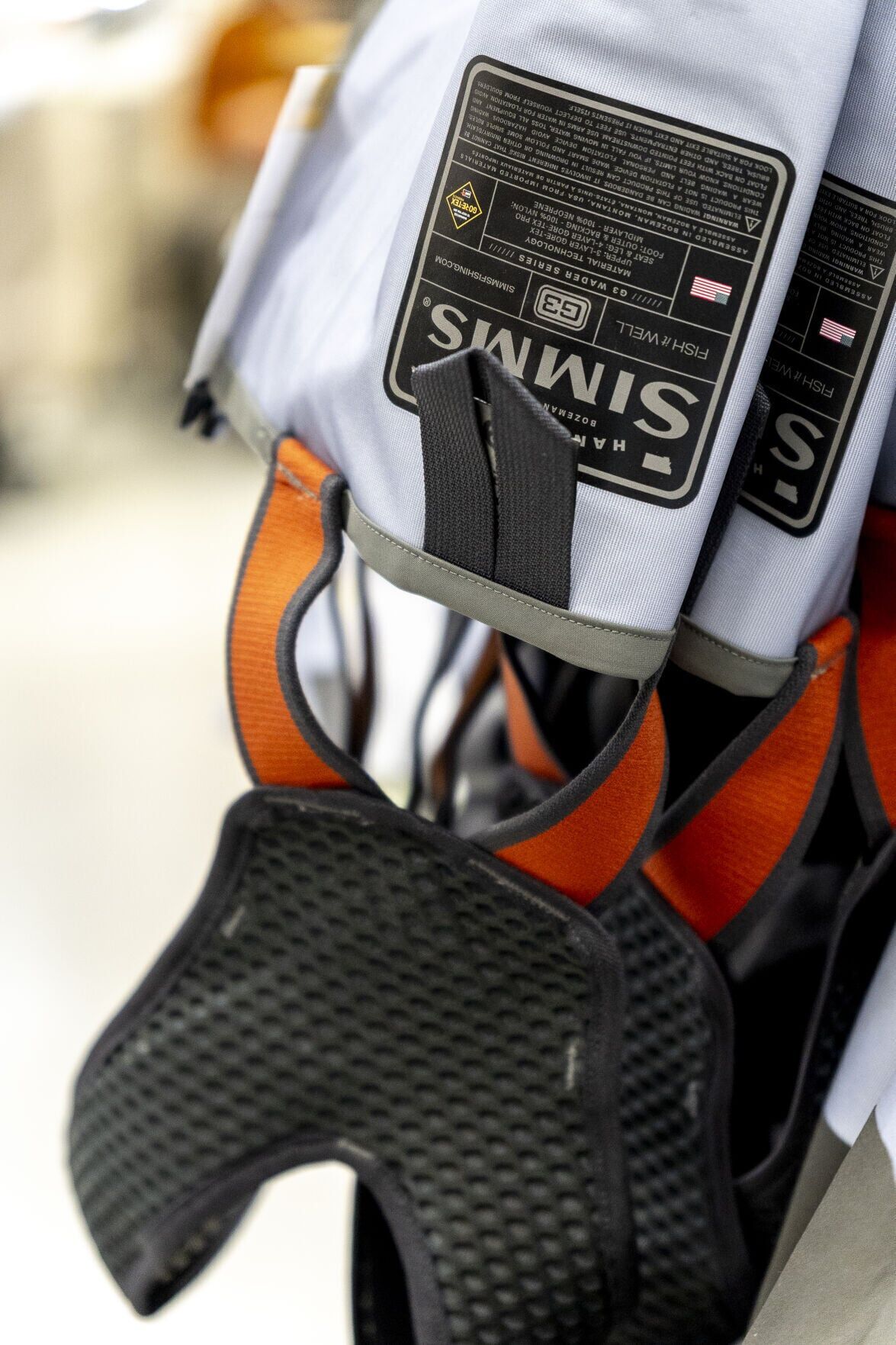
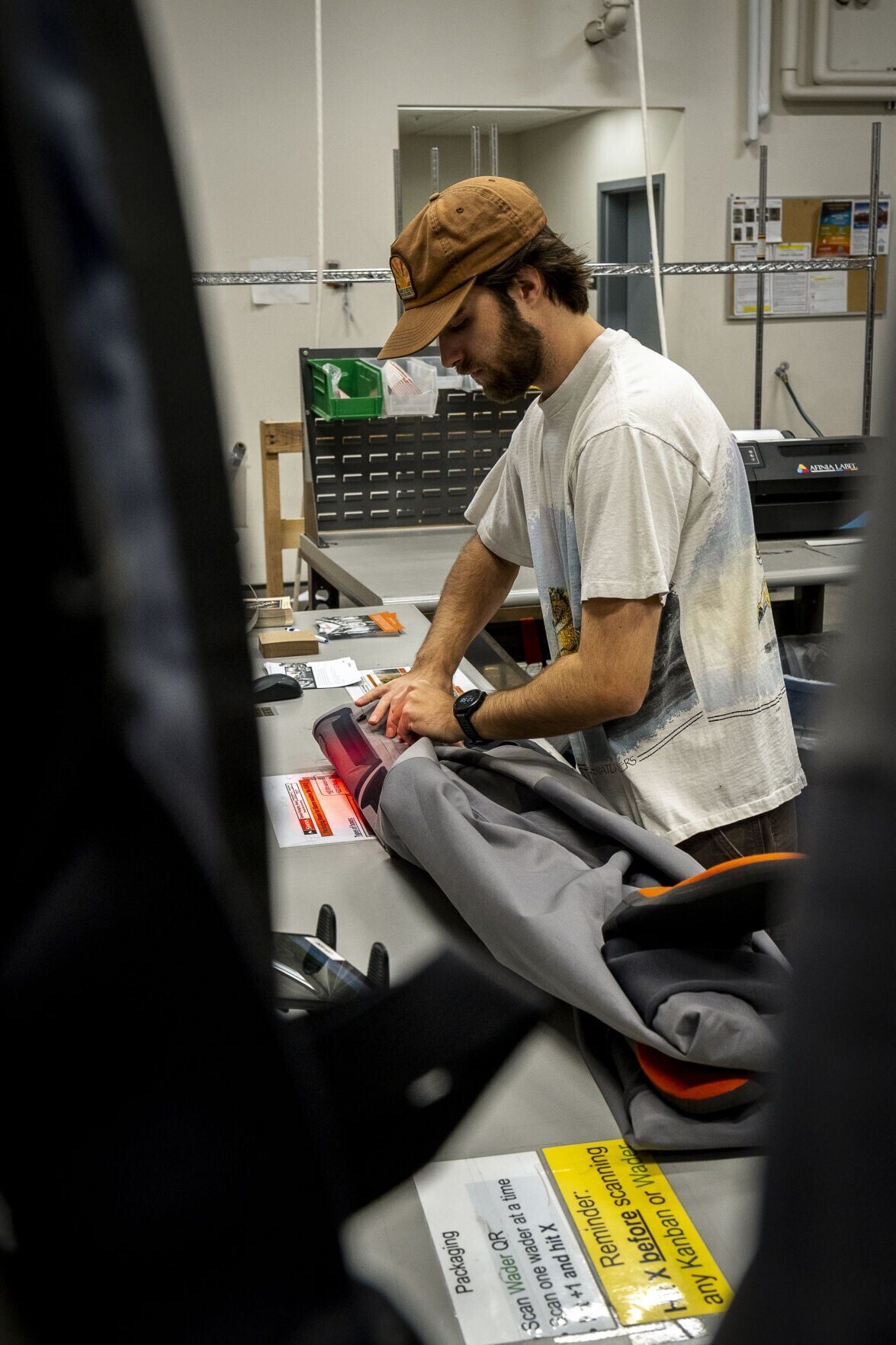
Fabric still arrives at the Bozeman facility in rolls before it is auto-cut, lasered pressed, hemmed, and glued into a variety of different-sized and styled waders. All waders are then quality checked and tested within 115-130 minutes by the time they are boxed and ready for shipping.
Heating elements blow air at approximately 900 degrees activating adhesive. Attachment machines built in partnership with Montana State University professors use an adhesive that can be reheated, enabling boots on Simms waders to be easily replaced. Forced air then seals and sets the bond between the boot and the wader.
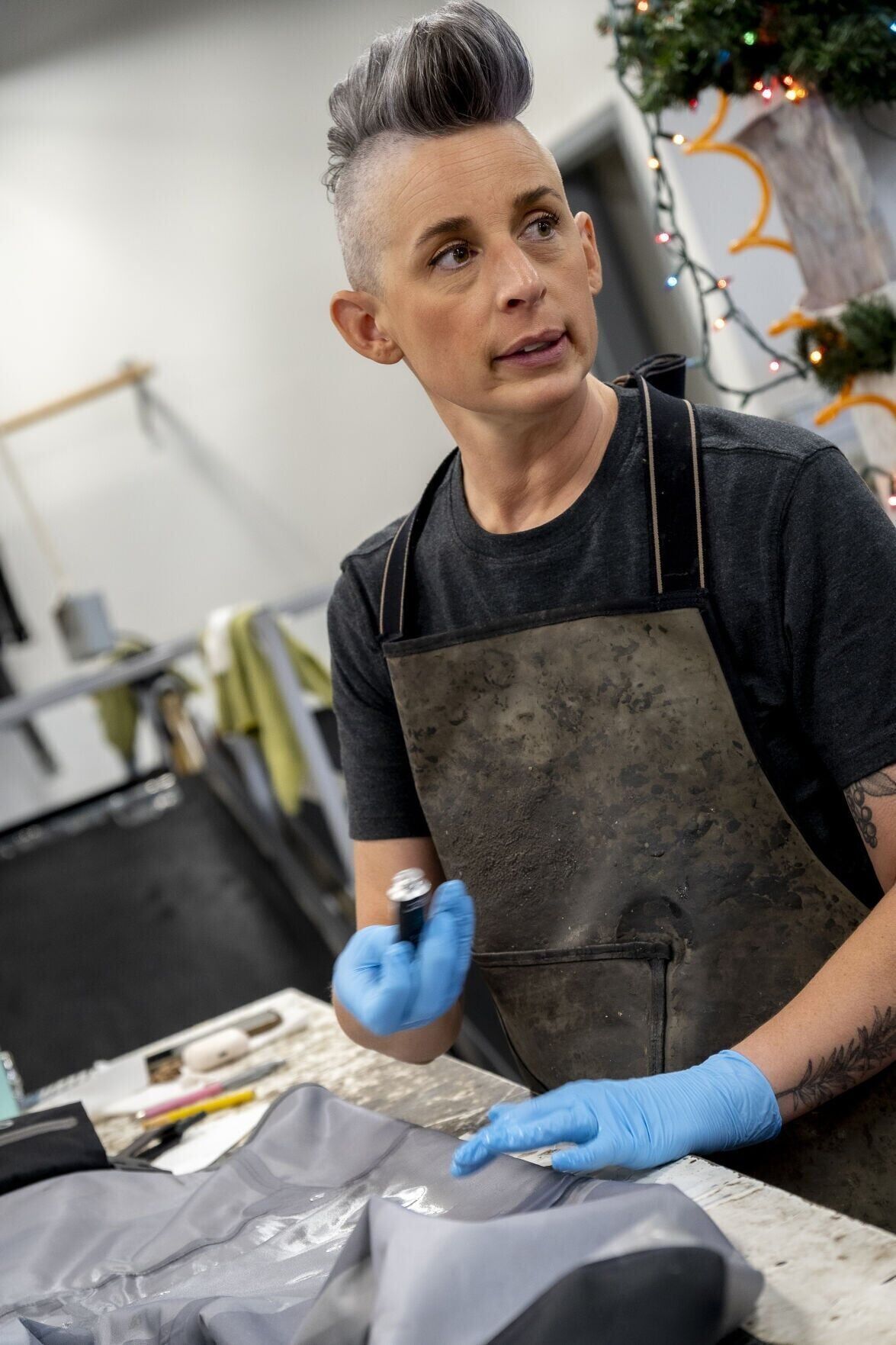
On-site pumps balloon all waders with pressurized water for 15 minutes apiece to detect leaks. Simms workers say Montana water from the testing process christens every wader built on-site. Waders that fail testing re-enter the production floor before retesting.
Using demand forecasting, waders at the Bozeman facility are built as far as six months in advance.
“We are doing the same thing that we’ve done here ever since we’ve had our doors open for business,” Dresser said. "We’re making that best waders that we possibly can and we are getting them out the door as fast as we can. When someone opens that Simms box, that person that just spent $700 on that wader knows someone like me put the time and effort into the quality and making sure it looks good.”
Avery Paganl, a 2024 MSU graduate with a Geographic Information Systems Degree, has been working on Simms' factory floor for more than seven years.
“To be able to have hands on the things I use in my free time is the coolest thing,” Pagani said. “It's always been this way. Working here through college there was no job where I could get as many or as few hours as I needed.”
Workers can get more than 50% price reductions on Simms gear. G3 Waders that retail at approximately $750 can be procured during twice annual employees-only sales for $30, Dresser said.
"People making it actually use this equipment," he said. "I don’t know that our competitors (manufacturing) overseas are using this equipment the way our folks are using it.”
Simms is responding to the flack in part by bringing back Matt Millette, now the company's head of marketing. That Millette most recently worked for Patagonia suggests that Simms is attempting to emulate the successful tightrope act the outdoor-brand giant walks with users and retailers.
Millette came back to Simms in 2025 for a second time after leaving the company in 2017.
"It’s no secret Simms has been in a transitionary period but the dust has settled," he said.
Staying committed to anglers, leading with product, and being immersed in the fly-fishing community are Millette's top goals going forward.
"A lot of brands lost that core (guiding) star," he said.



Comments ()