
Weed warriors: Groups focus on stopping spread of invasive plants in county
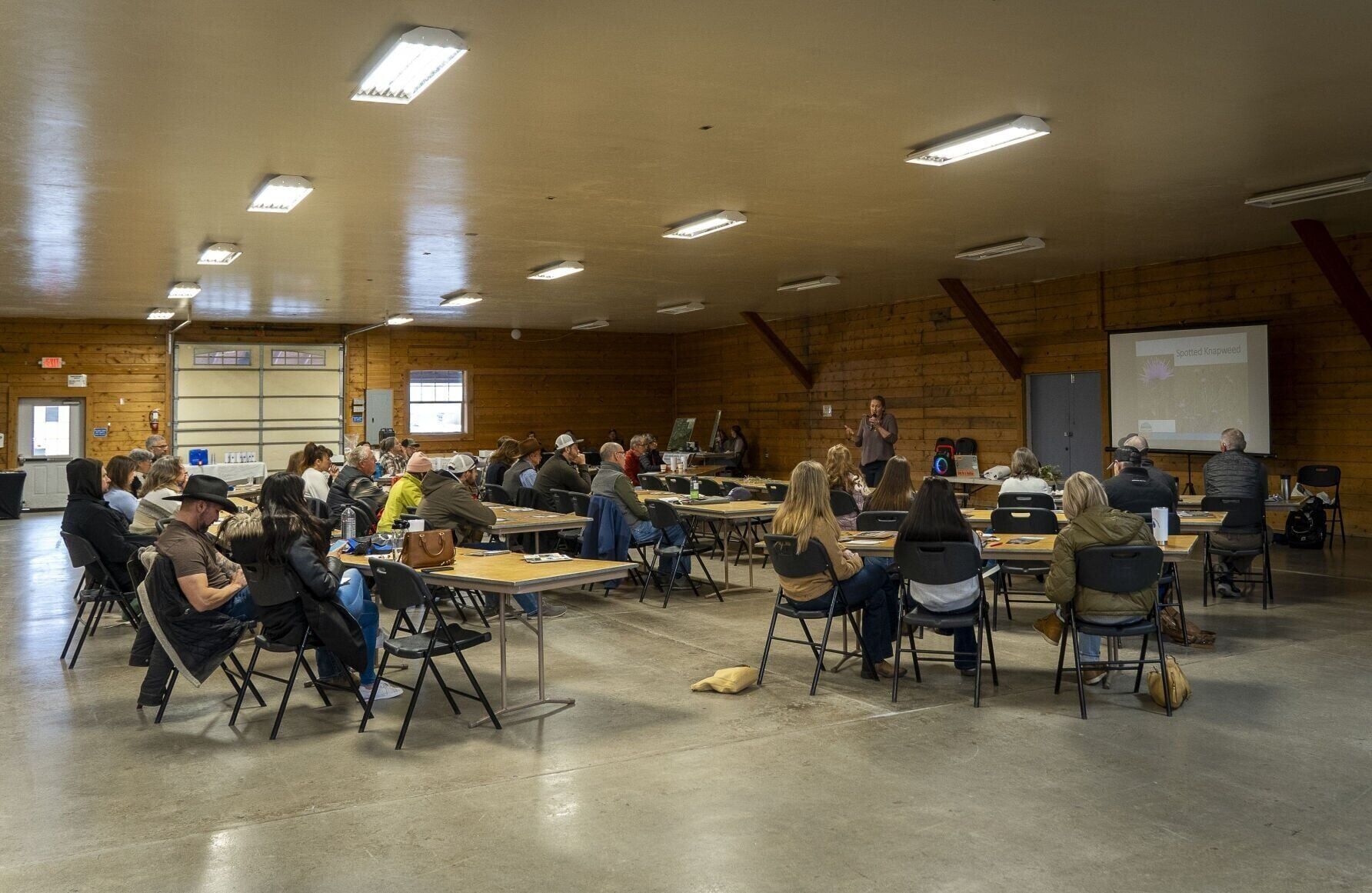
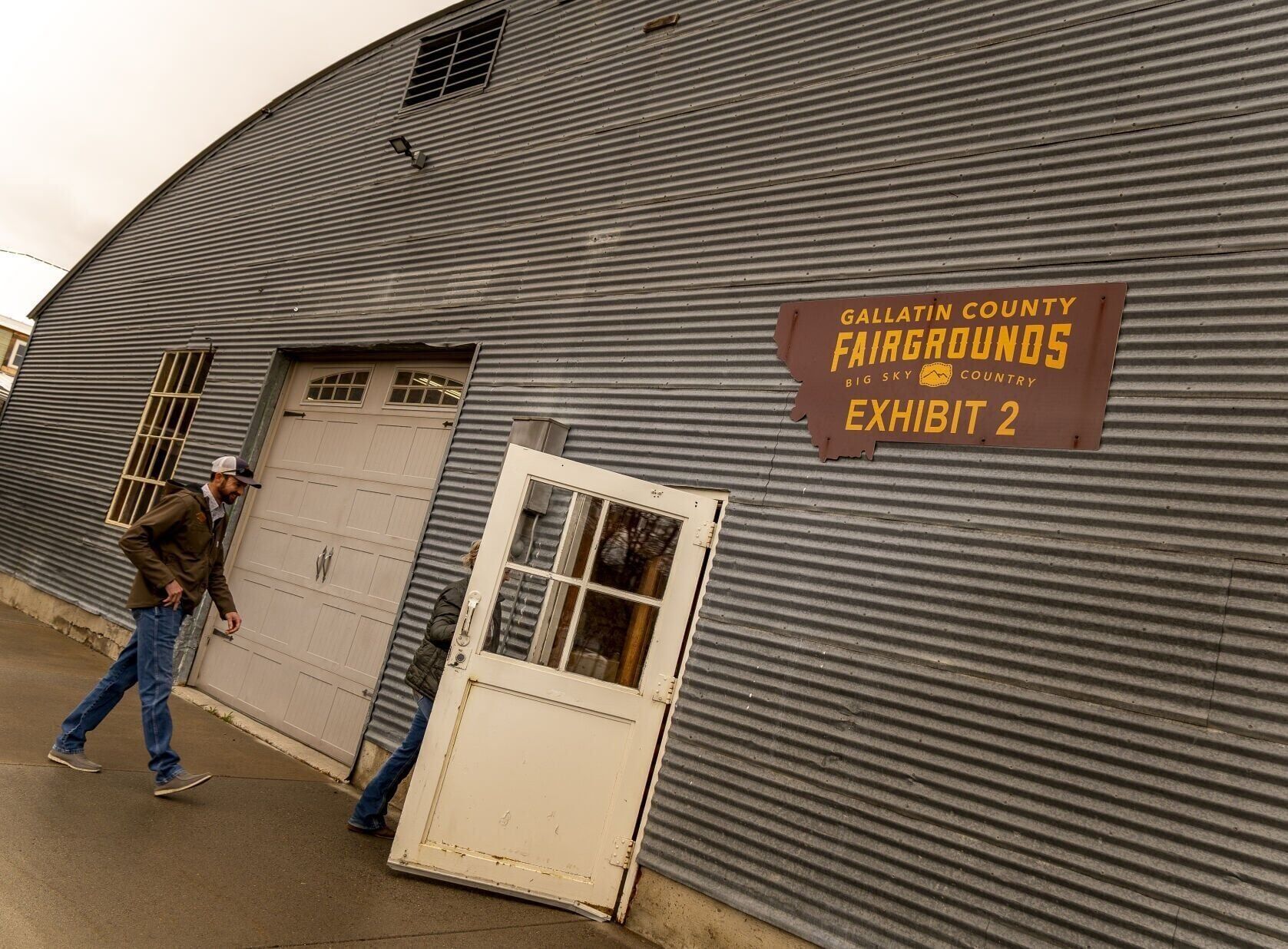
Megan Hoyer, who is dressed in a grey hat covered in plant stems and flowers and a white coat featuring “early detection, rapid response” and “weed warrior” patches, looked out over a crowd of nearly three dozen community members at the Gallatin Valley Fairgrounds.
“Emergency alert, emergency alert. Aliens have been sighted in Montana,” Hoyer, the Invasive Species Education Coordinator for the Montana Department of Agriculture, said. “While you were going about your daily life, these lifeforms have invaded our mountains, our cities, our towns, and our prairie. Citizens of Montana, Realtors of Gallatin County, I’m asking you to be alert. I’m not talking about aliens from outer space; I’m talking about something introduced to a new environment that completely changes it.”
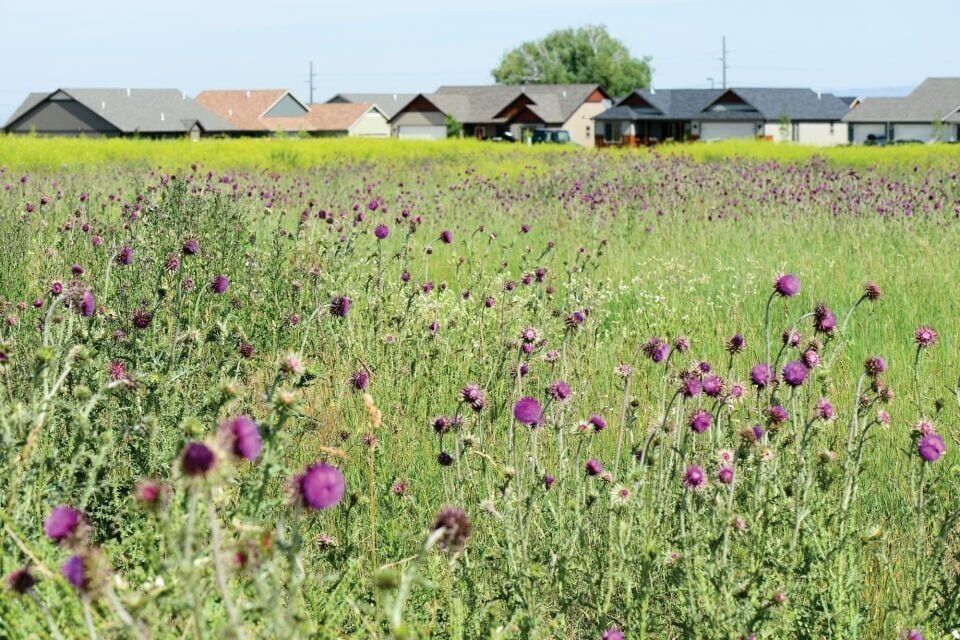
Aggressive, nonnative plant species classified as noxious weeds are becoming increasingly prevalent across the West, including Montana, Hoyer said.
The Gallatin Conservation District hosted a land and water stewardship workshop for local landowners and realtors with the goal of providing education and resources to attendees, Bea McNamara, GCD’s Education and Outreach Director, said.
The workshop is the final piece of a winter series GCD hosted, educating landowners and realtors about topics ranging from starting in agriculture to forestry and wildlife mitigation.
More than half of the attendees of the managing native and noxious plants session were Realtors, largely due to the incentive of two containing education realtor credits.
“As Realtors, we’re required to have 12 continuing education credits a year,” Dillon Binstock, with Clearwater Properties, said. “We’re required to continually grow our repertoire of knowledge, and I felt this course was good to take.”
The two-hour seminar covered topics ranging from identifying and removing noxious weeds to understanding the laws surrounding weeds and relevant responsibilities as relators and landowners.
“This is the first time that we’ve had a conservation district, an industry extension, the Montana Department of Agriculture, and a weed district all together, not to mention all the conservation groups,” Hoyer said. “Noxious weeds, like any other invasive species, are going to require partnerships (to manage).”
In Montana, there are 36 state-listed noxious weed species, according to the Montana Department of Agriculture. Some of the most widespread and damaging include spotted knapweed, leafy spurge, Canada thistle and yellow toadflax.
These non-native, aggressive plants often adversely affect native habitats and can be hazardous to humans and livestock through ingestion, Hoyer said. Noxious weeds are spread by vectors, including vehicles, contaminated materials, and waterways.
“When you go to a property, and you want to see if there are weeds, check out the vector areas,” Hoyer said. “Ditches and driveways can be hotbeds for weed movement.”
If a Realtor or landowner suspects a noxious weed on their property, Hoyer said they should report it to their County Weed District or Extension Office. If noxious weeds are present, a weed management plan must be created with their county weed district, according to the Montana County Weed Act.
The MCA of 1985 establishes mandatory weed control and county weed management districts to oversee the development of management plans and create funding to control the spread of noxious weeds.
Additionally, the MCA holds landowners legally responsible for stopping the propagation and spread of noxious weeds on their property. If a landowner sells their property, the MCA requires sellers to disclose any existing noxious weed infestations.
“Oftentimes, Realtors are the first connection between someone coming to Montana, and they don’t have a clue about what’s going on here,” Hoyer said. “It’s your responsibility to identify these weeds.”
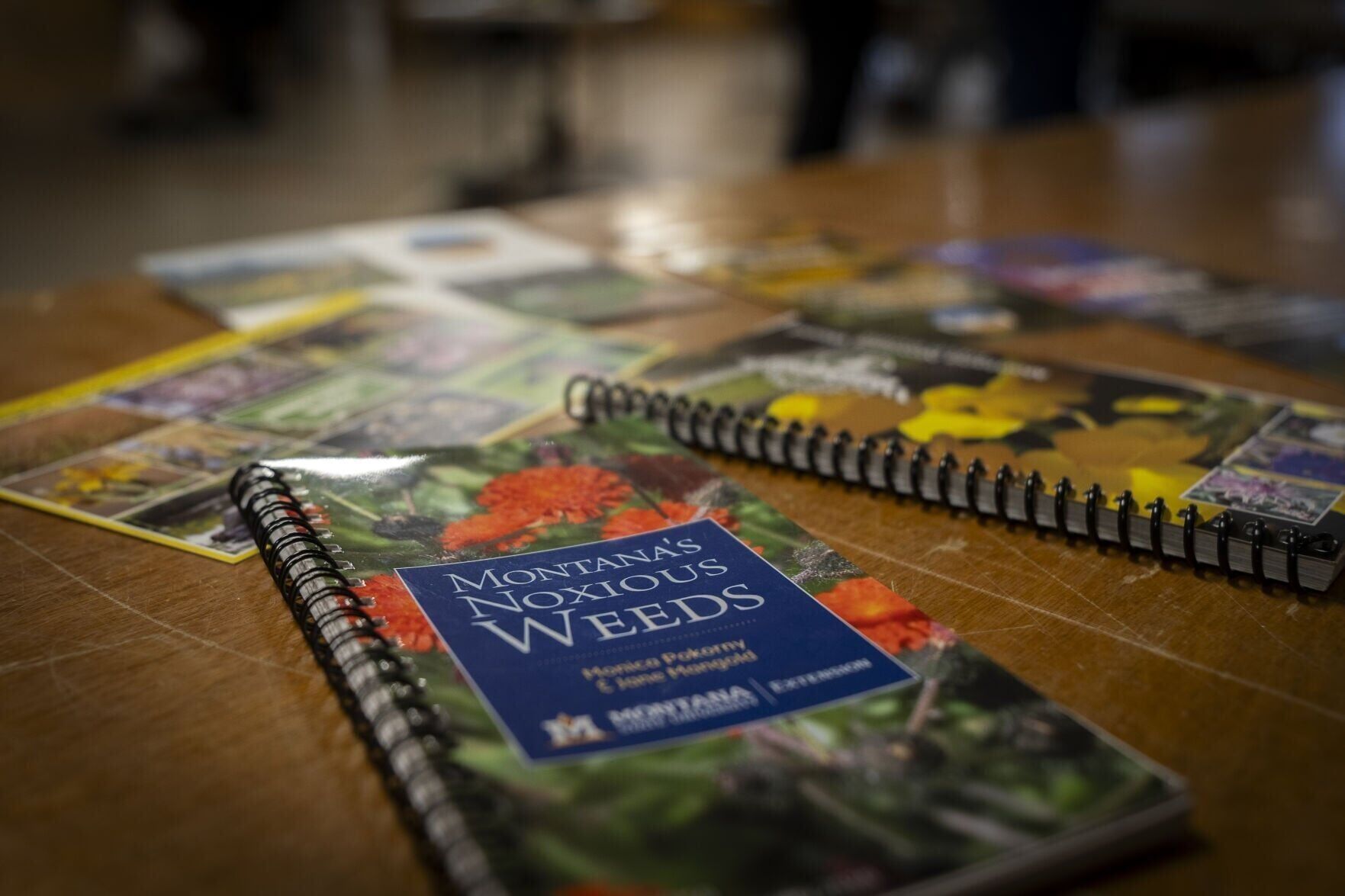
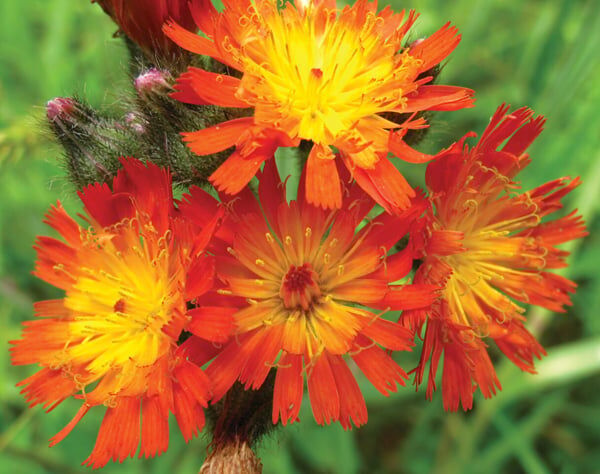
Workshop attendees were given pocket-sized Montana noxious weed field guides organized by color. The guides included photos and descriptions of their life cycles, root types, leaves, stems, flowers, seeds, and integrated weed management options.
IWM is the use of two or more techniques — including herbicides, biocontrol, mowing, pulling, and revegetation — to manage noxious weeds, according to a Montana Weed Control Association pamphlet titled, “Why Should You Care About Noxious Weeds?”.
However, weed management can only be performed once the weed itself has been properly identified.
“You don’t have to know your A-B-Cs, your 1-2-3s, you just need to know your colors,” Hoyer said.
If anyone suspects a noxious weed, they can photograph it or bring samples to their County Weed District or Extension Office. In Bozeman, both offices are located near the Gallatin County Fairgrounds, on North Black Avenue.
The Gallatin County Weed District has resources to manage noxious weeds on county properties, assist residents with weed control, review management plans, enforce noxious weed law, participate in education and outreach, administer weed inspections on properties, and map and survey noxious weeds throughout the county.
Because many noxious weeds have native lookalikes, Hoyer said it’s important to correctly identify plants before pulling or spraying them.
“Plants are hard to talk about when we don’t talk about plants on a daily basis,” Hoyer said. “They’re never going to make fun of you for calling in a plant and not knowing.”
Additionally, photos of plants can be uploaded to iNaturalist, an app that integrates community biodiversity observations to collect and track biodiversity data.
The scope of noxious weed management extends beyond landowner’s responsibility on their own land.
As weeds outcompete native plants for resources, biodiversity and soil quality can degrade, changing the complexion of the natural landscapes that many people celebrate in Montana, according to the Montana Weed Control Association pamphlet.
“I take myself and my family out on trails and in the mountains and (my) little kids like to pick flowers,” Binstock said. “It’s important to give them a good foundation of knowledge, identifying different species, and also knowing not to pick noxious weeds and carry them down the trail.”



Comments ()