
What to know about Montana’s new sex definition bill
Nearly a year after it passed the Legislature, Gov. Greg Gianforte signed a bill Tuesday defining sex as binary, based on a person’s reproductive system. The move officially amends wide ranging sections of Montana law to include new definitions of “male,” “female,” “sex,” and “gender.”
Senate Bill 437 is largely similar to a 2023 law that was declared unconstitutional twice — first in June 2024, because its subject wasn’t clear in its title, and second in February 2025 because a judge found it violated the equal protections clause of the Montana Constitution.
So, how is this new law different? What does it mean for Montanans? Why did it take so long to be signed? Let’s break it down.
What does Senate Bill 437 say?
The bill defines sex as whether someone is male or female, as distinguished by their reproductive system. Specifically, the legislation defines those categories based on a person’s “primary sexual anatomy.”
It defines a female as an individual who “naturally has, had, will have or would have but for a congenital anomaly or intentional or unintentional disruption” a reproductive system that uses the ova (or egg cell) for fertilization. In the same way, the law defines a male as someone with a reproductive system that uses sperm for fertilization.
While the definitions are largely similar to the 2023 bill, SB 437 removes references to sex markers in a person’s chromosomes.
It also adds definitions of man, woman, father and mother based on the definitions of male and female.
The bill states that the term “gender” must be considered a synonym for sex — as defined in the new legislation — and may not be considered synonymous with a person’s gender identity, experienced gender, gender expression or gender role. The term “gender identity,” if used in state law or rules, may not be considered a substitute for sex or gender.
In essence, supporters of the new law say they want categories of male and female to be cemented and consistent — not evolving or subjective based on how a person identifies.
These new definitions apply anywhere in Montana law that mentions the words sex, gender, male, female, man, woman, father or mother — more than 60 sections governing a wide range of topics.
What concretely does it change and for whom?
The bill’s wide reach changes laws that govern driver’s licenses, marriage licenses and the state’s anti-discrimination protections, which apply, among other arenas, to workforce and labor disputes. It also touches less obvious laws, including those that govern the representation of men and women on certain state boards and commissions and local precinct committees.
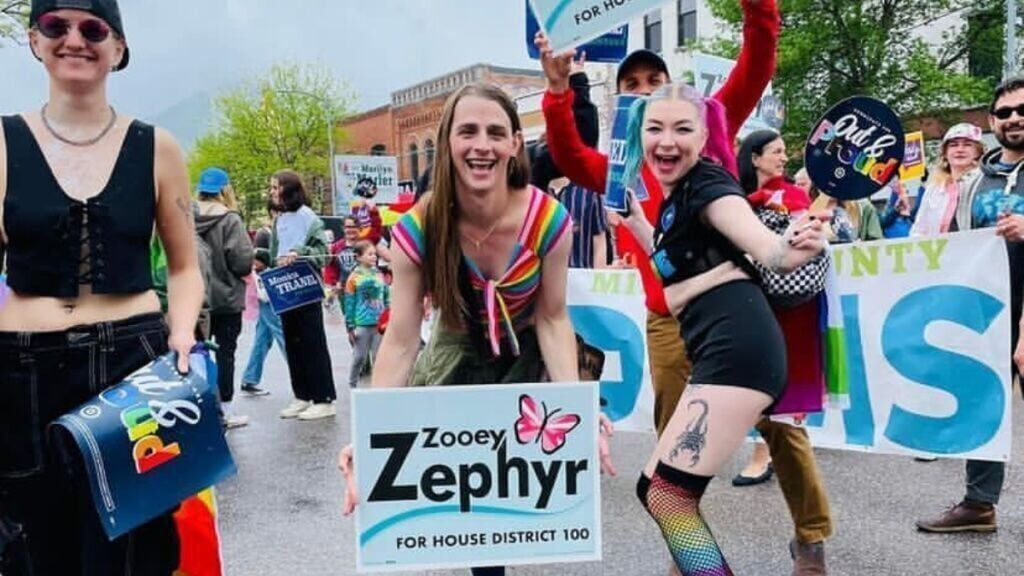
Missoula Democrat Rep. Zooey Zephyr, a transgender woman, told MTFP Friday the law discriminates against every aspect of trans peoples’ lives. It also erases intersex, nonbinary and Two Spirit people “from cradle to grave,” she said.
Plaintiffs in the lawsuit challenging the similar law passed in 2023 argued the legislation deprived them and other Montanans of legal recognition and protection from discrimination. Among other examples, plaintiffs said they would be put at risk every time they had to produce a drivers license where the listed sex did not match their appearance — whether applying for housing or being carded at a bar. Zephyr said the 2025 bill is “essentially the same.”
Residents applying for driver’s licenses or marriage licenses are now required to include their sex as defined by the new state law. For people who do not identify with their sex assigned at birth, opponents have argued the legislation would require Montanans to misgender themselves or disclose private information.
Changing identity documents to align with a person’s gender identity used to be easier in Montana under the administration of former Democratic Gov. Steve Bullock. But many of those policies have shifted since the governor’s office changed parties in 2021. In recent years, there have been multiple Montana court cases related to how the state treats sex designations in identity documents — such as drivers licenses. Another recent case has challenged a law restricting transgender residents’ access to public bathrooms and locker rooms.
Who supports and opposes it?
The bill passed the Montana Senate and House in April of last year largely on party lines, with almost all Republicans in support and all Democrats opposed.
While introducing the bill on the Senate floor last March, Sen. Carl Glimm, R-Kila, the bill’s sponsor, said the definitions are similar to those President Donald Trump proposed at the federal level. In February 2025, the U.S. Department of Health and Human Services issued guidance defining sex as binary and defining male and female based on reproductive systems.
Glimm told MTFP the bill is a “common-sense” measure that Montanans support because it has become necessary to have a definition for male and female in state law.
“In our culture, it’s gotten to where that is not clear,” he said. “It becomes a fuzzy line for some, so we just need to have clear definitions in law so that it’s clear what we’re talking about when we talk about a male or female.”
Other supporters of the bill included the conservative advocacy organization Montana Family Foundation, whose representative Derek Oestreicher said the definitions were needed to ensure consistency across legal and medical documents and government records.
Opponents said the bill is unnecessary, discriminates against transgender, nonbinary, intersex and other gender non-confirming people and requires people to misgender themselves or risk penalties.
Zephyr told MTFP the bill will contribute to a systemic erasure of trans, nonbinary, intersex and Two-Spirit people from public life.
“The Republicans design bills like this to do two things,” Zephyr said. “Make life hard for trans people in their continued crusade to make it hard to exist as an LGBTQ person in the state of Montana.” The other impact, Zephyr continued, “is to bring up the boogeyman of trans people as a distraction to the growing resentment of Republican policies in this state and this country.”

Comments ()