
Where Montana cities stand on ICE and immigration enforcement
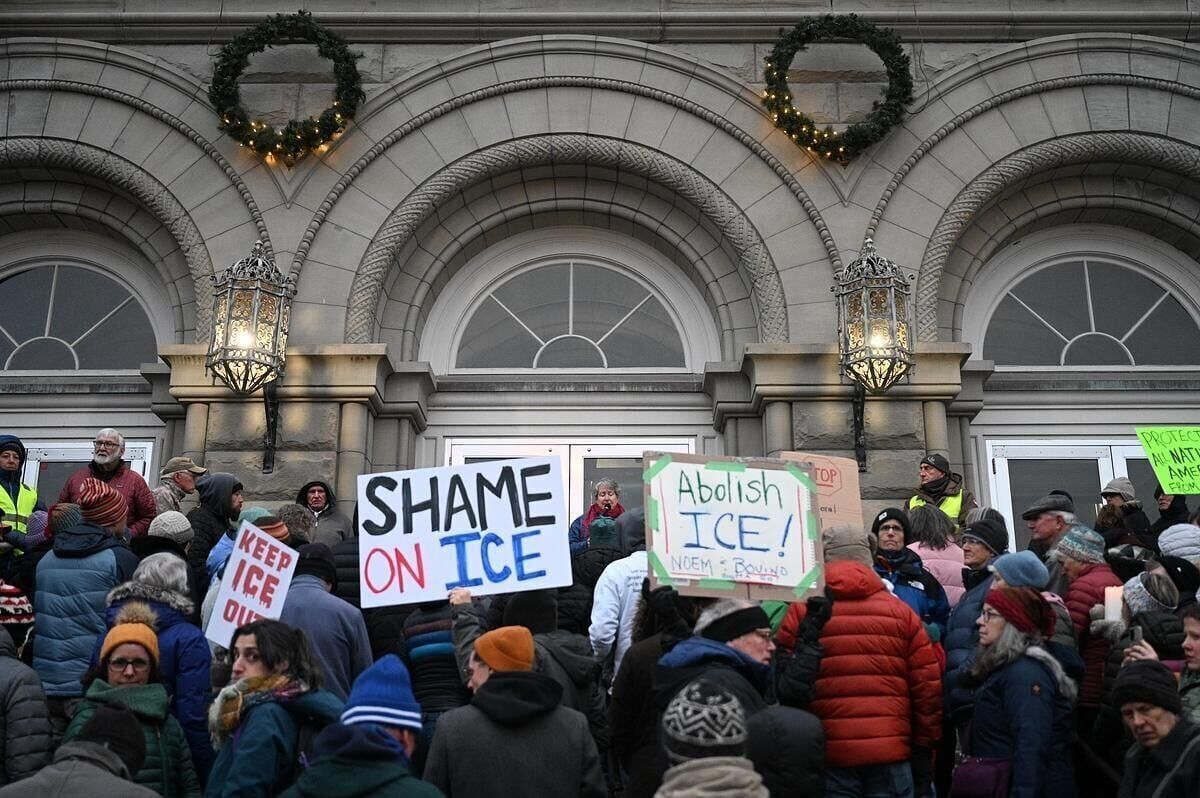
Montana attorney general Austin Knudsen announced last week that he is investigating the city of Helena after local officials approved a resolution in late January directing police to avoid assisting federal immigration enforcement, a hallmark of so-called sanctuary-city policies that restrict local law enforcement cooperation with federal immigration officials.
Knudsen’s announcement tees up potential legal clashes between state and municipal governments over immigration policies, and could influence whether other localities in Montana adopt similar policies. It also raises questions about local immigration enforcement policies across the state.
A report from the Migration Policy Institute estimated that in 2023, the latest year for which estimates are available, Montana was home to about 6,000 unauthorized residents, representing the lowest per capita population of undocumented immigrants of any state.
According to a 2009 Congressional Research Service report, historical authority for state and local law enforcement to enforce immigration law has been limited to certain criminal provisions in the Immigration and Nationality Act of 1952. That changed when Congress passed the Illegal Immigration Reform and Immigrant Responsibility Act of 1996, which substantially modified U.S. immigration law, including establishment of the 287(g) program, which allows for voluntary partnerships with federal immigration authorities that let local officers perform certain federal functions.
After President Donald Trump took office in 2025, his administration began aggressively expanding the number of 287(g) agreements with local police departments. Congress allocated $75 billion to Immigration and Customs Enforcement over four years through the “One Big Beautiful Bill Act,” tripling ICE funding over the prior fiscal year and giving it the largest budget of any federal law enforcement agency.
Montana Free Press reached out to law enforcement and elected officials across the state to learn about their policies. We found that each jurisdiction handles immigration enforcement a bit differently, but all agreed that the roles played by local law enforcement are limited.
Only Helena has a city resolution specifying local law enforcement’s role in enforcing immigration law.
Helena: Police will work with ICE only under court order
Knudsen said his office is reviewing whether Helena’s Jan. 26 resolution violates House Bill 200, a law signed by Republican Gov. Greg Gianforte that prohibits state and local governments from adopting policies that restrict cooperation with federal immigration authorities. The law requires local governments to share immigration-status information with federal agents and to comply with lawful requests from the U.S. Department of Homeland Security, including certain detention requests.
Knudsen said Helena’s policy appears to conflict with the state law, and warned the city could face financial penalties of $10,000 for every five days of noncompliance, in addition to the potential loss of state grant funding. As of Feb. 18, Knudsen has not yet filed a civil action against the city alleging noncompliance.
Helena’s resolution — a formal statement of city policy directing how municipal resources may be used — states that city police will avoid committing resources to federal immigration enforcement and will not enter into a 287(g) agreement. The policy also prohibits the city from disclosing a resident’s place of birth, immigration status or national origin unless required by law or court order.
In a Feb. 11 statement, city officials said the resolution was legally vetted prior to approval and complies with applicable state and federal law. City representatives declined to comment further, citing the pending investigation.
In January, Helena Police Chief Brett Petty withdrew from the Missouri River Drug Task Force over the task force’s cooperation with U.S. Customs and Border Protection, telling Helena city commissioners, “ I decided to, for Helena PD, to temporarily withdraw from MRDTF because I want to make sure and keep our focus here for Helena PD [on] the policing and the drug activity.”
East Helena, a separate municipality, said it will continue to be part of the MRDTF, which also includes law enforcement from Lewis and Clark, Gallatin, Park, Meagher, Madison, Broadwater, and Sweet Grass counties. The East Helena Police Department has not responded to MTFP’s request for additional comment.
Great Falls: Local law enforcement doesn’t have jurisdiction on immigration
In Great Falls, citizens have recently urged the City Commission to act in response to ICE activity, with some public commenters calling for a resolution to bar local law enforcement from cooperating with the federal agency, as Helena’s resolution does.
In a phone interview with MTFP, Mayor Cory Reeves said the city has no plans to consider such a resolution. In an email shared with MTFP, the Great Falls Police Department referred to Montana Code 2-1-601 through 605, the 2021 statute that prohibits restricting municipal cooperation with federal immigration authorities for “lawful purposes.”
Cascade County, which contains Great Falls, was listed in 2025 as having a “pending” 287(g) agreement with ICE, but does not appear on ICE’s public list of 287(g) partners. The 287(g) agreement allows local officials to conduct immigration enforcement action, as long as local law enforcement officers “receive appropriate training and function under the supervision of ICE.”
In a phone interview with MTFP, Cascade County Sheriff Jesse Slaughter said that, regarding immigration law, local law enforcement personnel don’t “have jurisdiction, our role is rather limited.” Slaughter said the sheriff’s office works with federal immigration authorities only when addressing criminal matters within the county’s authority.
Missoula: Local police don’t enforce federal immigration law
Missoula Mayor Andrea Davis and Police Chief Michael Colyer recently posted an online explanation of the city’s policies, stating that local officers do not ask about immigration status during routine public interactions and do not enforce federal immigration law.
City Council member Kristen Jordan said in an interview with MTFP last week that she is drafting a resolution she believes would affirm local independence from federal immigration enforcement and codify existing police practices, including a provision that the city will not enter into a 287(g) agreement allowing local police to enforce federal immigration law, and plans to submit it this week. Jordan said she believes Helena’s resolution “doesn’t violate HB 200” and described Knudsen’s investigation as “yet another attempt to take away local control.”
Bozeman: Immigration enforcement is not a local police duty
Bozeman police chief Jim Veltkamp told MTFP in a phone interview last week that his department’s focus is on public safety and investigating crimes, and that immigration enforcement is not “something that falls within our duties, at all.” Veltkamp also noted that the city of Bozeman does not have a 287(g) agreement with the U.S. Immigration and Customs Enforcement.
According to ICE’s list of 287(g) participants, Gallatin County does participate in a 287(g) under the “Warrant Service Officer” model, a limited cooperation agreement that allows specially trained local officers to serve ICE administrative warrants for people already in local custody, but not carry out broader immigration enforcement in the community.
Local limits, federal responsibility
While officials in Billings, Butte-Silver Bow and Kalispell have not responded to MTFP requests for comment, ICE’s public list of 287(g) agreements indicates they do not participate in the 287(g) program. That list shows that the sheriff’s office in Flathead County, which includes Kalispell, does participate in the program under the “Warrant Service Officer” model.
Yellowstone County, which contains Billings, has no agreement with ICE at all.
Matt Hudson, JoVonne Wagner and Katie Fairbanks of Montana Free Press contributed reporting.


Comments ()