
Women’s History Month kicks off with a discussion on RBG’s legacy
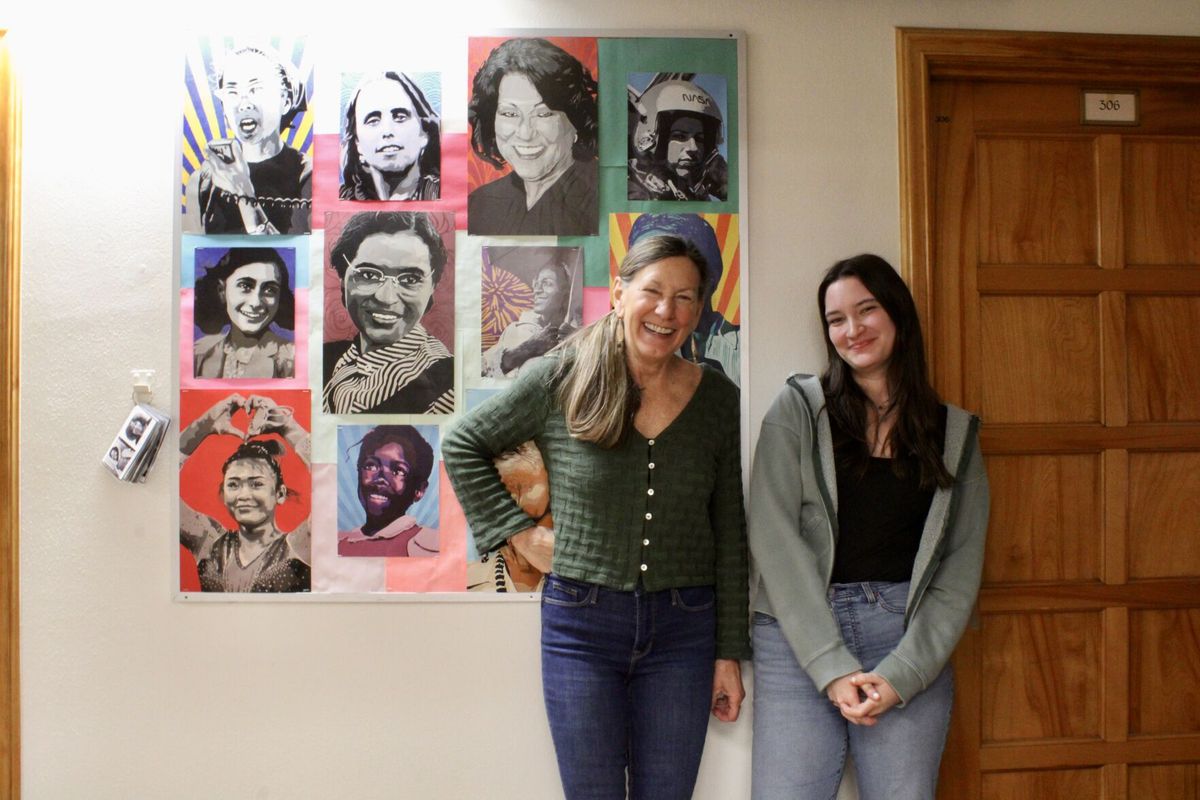
The MSU Women’s Center kicked off Women’s History Month with a discussion moderated by the Pre-Law Club about the life and legacy of the late U.S. Supreme Court Justice Ruth Bader Ginsburg (RBG). The event was the first in the Center’s month-long series celebrating women’s contributions to history.
Students came together on Wednesday, March 4 to discuss RBG’s legacy as the second female Supreme Court justice, appointed in 1993.
“It's important for women to see other women in such high positions, seeing that they're able to go that far,” said event moderator Suzie Foster. “And besides her career as a Supreme Court justice, she brought women to the place that they are today.”
Students discussed RBG’s advocacy for women’s rights as an important but demanding part of her legacy.
“It kind of seems like [RBG]’s job is to be a Supreme Court justice and also the person that's setting up all these fields for women to get into,” said Apryl Little, a student assistant for the Women’s Center. “Which is obviously a noble pursuit, but it also just requires more from her than it requires from a man in the exact same position.”
The discussion was meant to not only educate students about the importance of RBG in history, but also raise awareness about the Women’s Center, Little said.
The Women’s Center, which is located on the third floor of the SUB, is dedicated to creating an equitable environment for people of all genders, according to its website.
“I hope it helps them find a community,” Little said. “That’s my favorite part of working at the Women's Center — it's a good way to make connections to people that maybe you never would have made connections with.”
According to her, before it gained federal recognition, Women’s History Month began as an unofficial showcase of women’s historical contributions.
“Women’s contributions weren’t viewed as important as men’s. They just weren’t often documented,” Little said. “So it’s not even that we weren’t teaching it, it’s that we really didn’t have a lot of material to teach from.”
Siena Quesada, a Women's Center assistant, said she grew up thinking that many of science’s most important discoveries were made by men. Through celebrations of Women’s History Month, she learned that some of these men had taken credit for women’s work.
“We have this month because we want to learn more about different female icons and all the stories that normally get ignored,” Quesada said in an interview after the event.
According to her, the many untold stories of women in history, science and politics are just one reason the celebration should last for a month.
“There are so many reasons why this should be a whole month, and I think there are so many reasons why it's sad that this has to be a whole month,” Quesada said during the discussion.
“There are still so many positions that [women] are going to have to work hard for just to be the first,” she said.
For discussion moderator Mey Palomino, Women’s Day, which took place on March 8, is an especially important part of the month because of her Mexican heritage. In Mexico City, an enormous celebration takes place to commemorate the international holiday.
“It’s not only to advocate for women’s rights, but it’s also to call attention to another critical issue — femicide, which is the intentional killing of women,” she said in an interview after the March 4 discussion.
Little said Women’s History Month reminds her of the ongoing need to advocate for women’s rights.
“Rights that we thought we had are not guaranteed without continuous pushing and advocating for those things,” she said in an interview after the event.
“I view my job now — and the job of our generation — is just to keep that moving and not to let it slip back, because it's entirely too easy for that to happen if you're not continuously pushing for it,” Little said.
To learn more about the Women’s Center, visit https://www.montana.edu/women/.



Comments ()