
Wyoming company's proposal shows 645-mile pipeline coming for Eastern Montana
A Wyoming-based pipeline company recently filed a proposal with Montana regulators to move over half a million barrels of oil a day across Eastern Montana in what is being called a revival of the long-controversial Keystone XL pipeline.
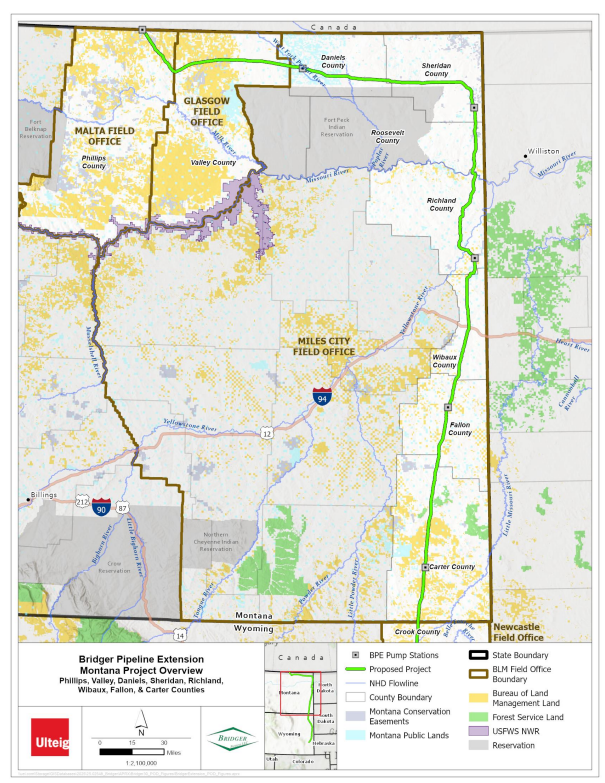
Late last month, Bridger Pipeline of Casper filed the proposal with the Montana Department of Environmental Quality for a 645-mile pipeline beginning near the Canadian border in Phillips County north of Malta.
According to the map included in the project overview document, the pipeline would then take a hard eastward turn, running just above the bounds of the Fort Peck Indian Reservation, and then travel south along the border between Montana and the Dakotas before it ends in Guernsey, Wyoming.
The proposed route is 80% private land, 10% is owned by the U.S. Bureau of Land Management and 10% is on state land, explained Bill Salvin, spokesperson for Bridger Pipeline.
It is set to have the capacity to transport approximately 550,000 barrels per day of Canadian crude oil.
"It's a very big deal," said Anne Hedges, executive director of the Montana Environmental Information Center.
Is this another Keystone?
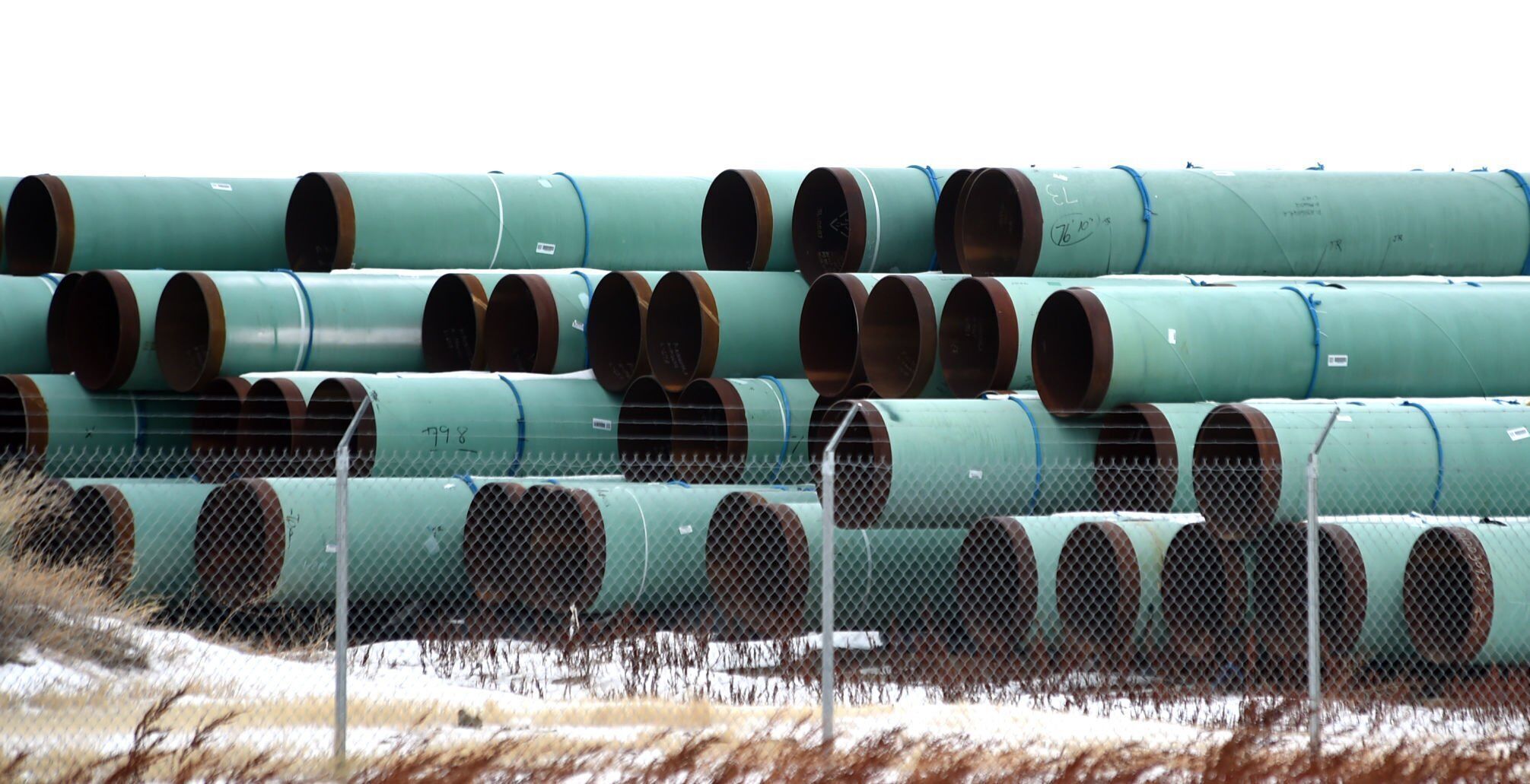
The path of the pipeline does not mirror the proposed one for Keystone XL, but it does appear to originate in the same place at the U.S.-Canada border, use a 36-inch diameter pipe — the same size as the Keystone XL's design — and bring in crude oil from Canada.
Salvin was quick to note that, while the plan involves a large pipeline carrying Canadian crude oil through Eastern Montana, it's a different project than that which occupied the narrative for nearly two decades.
“I think people tend to default to things they understand and that pipeline got so much play over a number of years," he said. "I understand where that comes from but I don't think that's accurate in this case”
The initial Keystone XL proposal, which has been in political crosshairs since it was first unveiled in 2008, was originally set to take a far more direct route diagonally east across Montana from Canada to South Dakota.
The filing with Montana DEQ states that the route was selected "to minimize new disturbance" by prioritizing a route that uses existing pipeline infrastructure and rights of way. The hundreds of miles of pipeline itself will be entirely new construction, Salvin explained.
"This [route] is, for unknown reasons, takes that hard right turn and follows the border all the way down," Hedges said. "It's a weird route. It is not the most economic, it is not the most practical."
Bridger said in its filing that it rejected two other route options because those would have crossed tribal land "which would introduce significant permitting challenges and potential delays." One option also would have intersected with national wildlife refuges.
The path selected by Bridger also crosses over the West Fork of the Poplar River, the Missouri River and the Yellowstone River.
"Environmental resources potentially affected by the Project include landforms, surface water and groundwater resources, air quality, native vegetation, wildlife and associated habitats, and paleontological, cultural, and historical resources," the proposal reads. "In general terms, Bridger intends to balance construction efficiency with environmental stewardship and regulatory compliance."
Bridger Pipeline has a checkered environmental past in in the Treasure State. In 2015, one of the company's pipelines spilled at least 30,000 gallons of crude oil into the Yellowstone River. According to reporting at the time, only about 2,500 gallons of crude were recovered from the river.
"Their history is really indicative of what their future could hold," Hedges said. "If they've had accidents in the past, we need to be very careful. These pipelines are going to be in the ground for decades."
She added that in the last couple days MEIC has gotten two calls from private landowners concerned about the implications of this pipeline traversing their land.
Salvin was working for Bridger Pipeline at the time of the spill, and he called it "unfortunate," but he added that it was "neither predictable or preventable" and that they were proud of how they responded to the incident.
Salvin also pointed out that the pipeline in that case was 8-feet deep, whereas the upcoming project will be far deeper.
What's been submitted to DEQ?
The proposal is not yet an official application, rather a document describing the project to enable DEQ to contract a third party to conduct an environmental impact statement, DEQ spokesperson Madison McGeffers explained.
Before construction can begin, the project needs to receive be approved under Montana's Major Facility Siting Act (MFSA), along with a number of other regulatory hurdles, including a presidential permit.
The proposal Bridger has submitted with DEQ does not specifically state that this pipeline will be utilizing oil sands. However, much of the concern around the almost two decades-old original proposal for the Keystone expansion was its ferrying of oil sands, the properties of which can be more difficult to clean up than other types of oil. Salvin declined to confirm that this project will be transporting oil sands.
How did this go last time?
The Keystone XL proposal was originally made in 2008, but it was blocked by then-President Barack Obama. President Donald Trump resurrected the project during his first term, but former President Joe Biden withdrew a permit for the project in 2021 after construction had begun in Canada.
This matter has yet to come before the state's land board, which is staffed by Montana's top elected officials, including Republican Gov. Greg Gianforte, who has long supported the presence of the Keystone XL pipeline in Montana and criticized Biden for thwarting the project.
"After Joe Biden's disastrous decision to shut down the Keystone XL Pipeline project, the governor is encouraged by any opportunity for a new pipeline which will create thousands of good-paying American jobs, hundreds of millions of dollars in revenue to support our local communities and schools, and strengthen America’s energy security," Kaitlin Timken, a spokesperson for the governor, said in a statement for this story.
Early last year, President Donald Trump in a social media post criticized Biden, and wrote that the Keystone XL should get built "NOW!"
“I know they were treated very badly by Sleepy Joe Biden, but the Trump Administration is very different — Easy approvals, almost immediate start! If not them, perhaps another Pipeline Company," he wrote at the time. "We want the Keystone XL Pipeline built!”
Bridger said in its proposal that more technical information and mapping will be submitted to Montana DEQ in March. The pipeline company wrote that construction will begin in July 2027 once it secures all the needed regulatory approvals, and that it anticipates completing roughly 20 miles of pipeline per month.



Comments ()