
A preview with the presidents
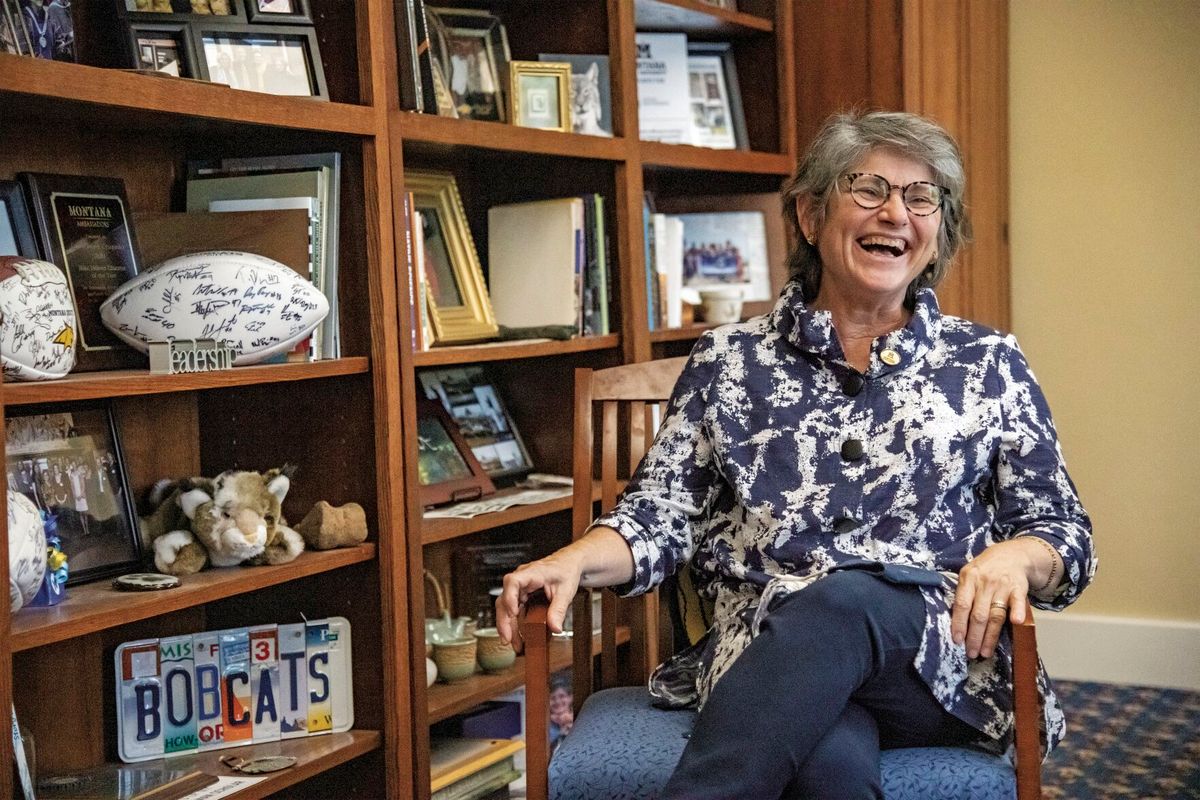
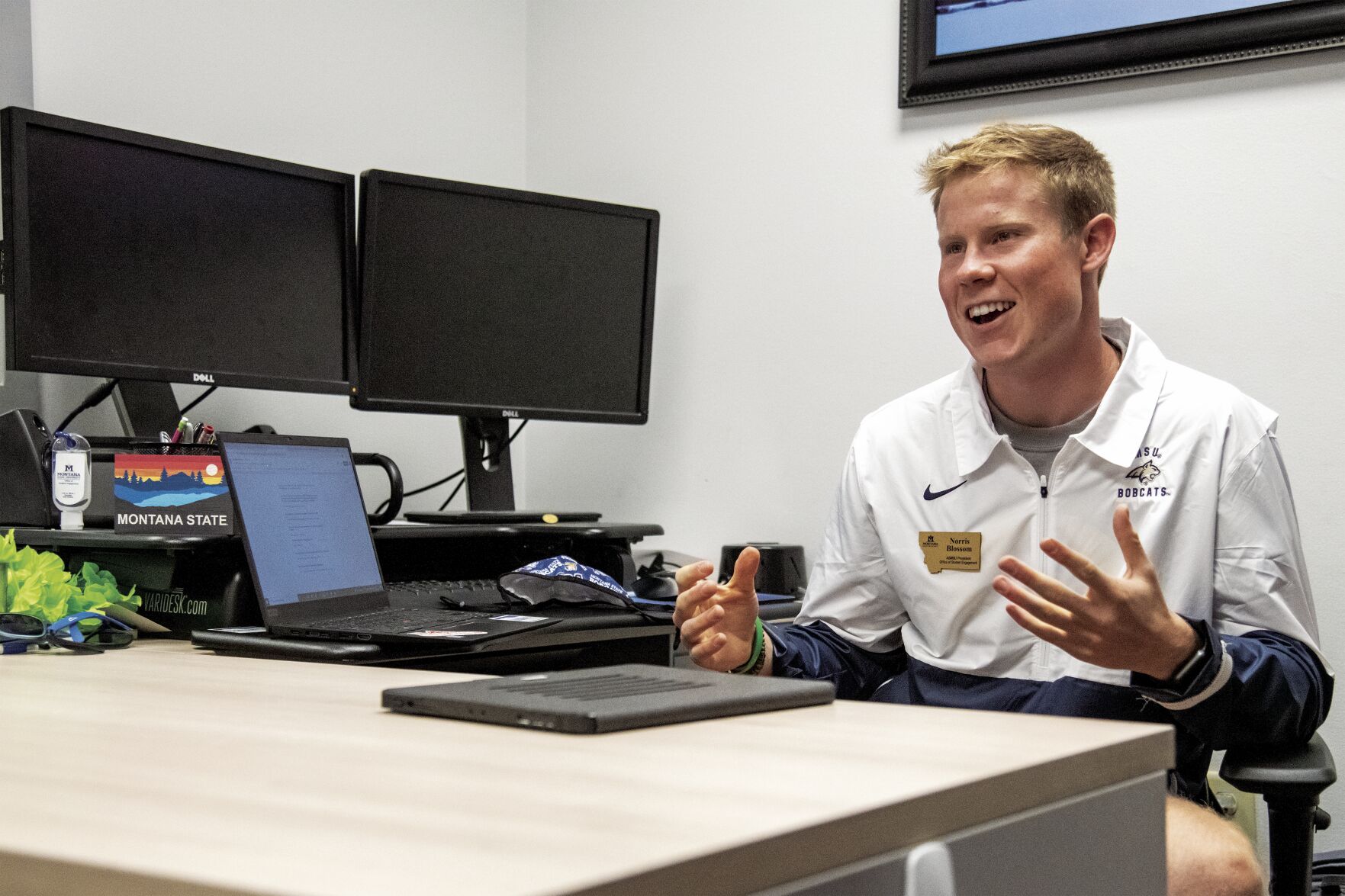
As The Exponent geared up for its first edition, we wanted to hear from leaders on the MSU campus about how they were approaching the school year. We sat down with MSU President Waded Cruzado and Student Body President Norris Blossom before the start of classes to ask about a variety of topics related to the fall semester.
Q&A with WADED CRUZADO
What are the events you are most looking forward to this school year?
Well first of all I’m looking forward to this week, right, when students come back, our move-in weekend, Catapalooza and just the excitement of the first week of classes. It’s always filled with anticipation but particularly after a year of not having school in person in normal ways. Yes, some here, some there, but the full experience that we’re expecting to have. I’m also looking forward to some of our events that are marked by some of our new buildings. For example, September the eleventh, in addition to being an important day in our U.S. history, that’s also the the day when we are going to be dedicating our Bobcat Athletic complex. The new home for our football team after all these years, great players that we have had, and now thanks to the generosity of so many donors they will be able to have their own building. It is also the day where we’re going to have Gold Rush which, it’s an important day for us, everybody dressed in gold coming back together. Our student section will be brimming with energy and a lot of Bobcat cheers so I’m looking forward to that. And then after that when you start thinking we have an inauguration of a building every month of this semester. We open with September, then in October we have Saturday, October 16, we have the inauguration of our American Indian Hall. A building that was 15 years in the making, if you will. And again thanks to the generosity of many people who came to the table will allow us to have this beautiful place on campus, you know, home to our Native American Students and also a place of encounter for non-indigenous students to come and to learn more about indigenous societies. And I hope you agree with me, it is one of the most beautiful buildings on campus and it looks like it has always been there, right? That was September and October and then move forward to November, November the twelfth we have the inauguration of Romney Hall. So after 10 years also of asking the legislature for support for us to rededicate this building that was built in 1922, imagine that. Then a hundred years later we’re going to shed that skin of it being a gym and now it’s going to be rededicated for classroom space and also for it to be the home of our Writing Center, the Math Learning Center, and very importantly our Veteran Student Center as well. And then I’m going to cap that semester by thinking about what a wonderful thing it will be to have commencement. Friday, December the 17th we’re going to congregate again together to have our wonderful fall ceremony.
After the interview was conducted, the dedication date for the Bobcat Athletic Complex was moved to Friday, Oct. 8.
Are there any other general items of interest on your mind that you want students to know about heading into the fall semester?
We are so proud to have our students back on campus. Let me just tell you how impressed I have been with our students throughout the pandemic, and before, but the pandemic gave us an opportunity for us to come together and to understand how we can operate with a strong sentiment of being a community. How we do this together, how we have a commonality of purposes and goals that we’re going to get this done together because it’s important for us, right? It’s important for us to be together, in-person, on campus. It’s important for us to make sure that we take good care of each other, that people don’t get sick unnecessarily, and that we help each other realize their dreams. So I’m very happy to see our students coming back. I heard time and time again from them how important it was for them to be here on campus, that they were good troopers when we had to suddenly change many of our classes online…. We all, faculty, students, and staff, we have come out with a reaffirmed conviction about the importance of being here as a community. The Bobcat experience is not just limited to what we learn in the classroom or in the lab, or in the studio, it’s also what happens when we’re in the dining halls, when we’re walking around campus, when we are exercising together, when we are hiking. Doing the great things that make this place the extraordinary campus it is. So, finally, what do I want my students to hear? Welcome back home, we’re so happy to have you.
How does the atmosphere on campus change with students vs. without students?
The difference is night and day. The students are the life of this campus, they are the energy, the light. It’s a totally different feel when students are around and we see them walking and when they’re just sitting around studying or talking to each other, it reminds us this is why we exist as a university. As I always like to say when I recite the land-grant mission, we’re here to educate the sons and daughters of the working families of America, and having them here is just a great reminder of again our mission and our goals in life and in society.
The university experienced many changes during the COVID-19 pandemic. Are there any changes that are here to stay this year? For example, how might new modes of online learning be mixed with traditional in-person instruction?
I think we were forced to learn quickly with the pandemic and there were good lessons that we want to incorporate about things that work, and there are other lessons that we think we don’t want to do that again, right? So what have we learned? In addition to some online courses we also learned that we just cannot paint all courses with the same brush. Some courses, because of their countenance or because of their nature, lend themselves better to an online modality. But we also learned that it doesn’t have to be 100% one way or another, that we can mix it and continue to work on what’s that right balance, I think it will take us a few more years. I don’t think we’re there yet it’s still in the process. I think that we have learned better hygiene habits, right? Washing our hands more frequently. I think our bobcat stations to clean your paws will stay with us, why not? We’re walking around campus so it’s good for us to just clean our hands. But the most important thing is, as I said before, is this profound sense of how important our sense of community is. And that is something that we don’t want to give up. We want to make sure that we help each other, that students know there are many services available for them. One good lesson I learned was about the importance of our Swingle Health Center. The different services that we offer and how versatile, how flexible they were, right? Almost overnight they equipped themselves to do testing, for example, and then later on now they’re ready to do vaccinations, to do quarantine and isolation. To reaching out to students to make sure that they’re doing well. So all those lessons I think that have served us well for when we build our new student wellness center, which is our next big project. Where under one in the same roof, we’re going to have the best of our fitness centers but also combined with the best for our health centers, including also mental health and the whole aspect of wellness. That this is not just one thing or the other, we just have this holistic mentality and the lessons that we have learned from COVID and living on a campus that cares about their students will be integrated in that new, wonderful student wellness center.
In what ways is MSU encouraging students to get the COVID-19 vaccine?
First of all, last February, that was amazing. Last February, we had the first Bobcat vaccination clinic, which meant that we invited our Nursing students, our WAME? Students, our students from Gallatin College, our faculty, our staff, all of them came together and in one Saturday we served 807 people. Think about that, 807 people in 8 hours. Then, what I really like and not too many people know, is that we also had students from our industrial engineering program working with our faculty members at the graduate level and they were observing the process. So you know what happened? Three weeks later, for the second vaccination clinic, when those individuals came back we were so efficient by implementing those recommendations from our students in industrial engineering, that we were able to serve those individuals in half the time. So it’s this interprofessional approach that we learned, that we can learn from each other. We have been offering the vaccine for faculty, students, staff - still available. This week we have little tents out there for faculty, students, staff. Please come get your vaccination. After that they are moving indoors to Swingle but please call Swingle Health Center for an appointment. And last but not least we have our Bobcat Sweepstakes program, where we have some incentives to make it fun. We’re just giving out anything and everything, from Yeti coolers to a 5,000 scholarship throughout the semester. So lucky students will have that money applied to their account and what a great way to recognize and to celebrate students who have received their vaccine.
Have there been any new avenues of growth for the university made apparent through the turbulence of the pandemic? How will the university take advantage of those opportunities?
I think, for me, the pandemic gave us an incredible opportunity for personal growth. To confront our fears, to go inside ourselves, to see how we cope with adversity, with limitations. To see how resilient we are when our routines are cut off suddenly, abruptly. So I think the pandemic has allowed us an opportunity for personal growth, and quite honestly, for a lot of appreciation about how important our social network is. Our family, our friends, our neighbors. I would not change that for the world. It’s been difficult but it’s been a growing opportunity. The university also as a whole is experiencing growth. First of all, I mentioned these three buildings, did you notice that we did not stop construction during the pandemic? These are important buildings, we want to make sure they are ready for the enjoyment of our students. The last thing I will mention is the growth in our academic programs. What fills my heart with joy and satisfaction is that programs like nursing, like pre-med, our programs related with health professions, with education, they are experiencing incredible numbers of applications. So that tells me that our wonderful young people out there, they know that we have incredible needs in our society and they want to do their part. Rather than shy away because it might be a lot of work, they’re saying ‘I’m gonna raise my hand I want to do this part to solve this problem,’ so I’m very very proud.
What challenges does the university face this coming school year?
Like any other university, we need to keep our eye vigilant about first of all our health and safety. COVID is still with us, the delta variant has continued to challenge our assumptions. If you remember last May, June, July, we thought ‘Ok, we think we’re leaving this pandemic behind’ and we were wrong. I think it’s important for us to, without being fearful, to remain vigilant about COVID and to do everything we can, that’s why we’re asking ‘please it’s important for us we need to wear face masks when we are indoors.’ I know, we’re tired, we don’t like face masks, but I don’t want for us to disagree on things of consequence such as health and life. Let’s disagree about other less consequential things. But on this particular thing, let’s err on the side of being extra cautious. It’s just indoors, so if you’re enrolled in 15 hours what we’re asking you is for 15 hours of your week let’s do this together. So that I think is the most important challenge that we have ahead of us in this semester.
MSU’s American Indian Hall is planned to open this fall. Can you describe what role this space will serve in the community?
The purpose of the American Indian Hall is multifaceted. First of all, we need additional classrooms. Secondly, for decades our American Indian students have told us that they wanted a place to be, to engage with their peers. We have had a Native American student center in the basement of Wilson Hall, but remember our American Indian student population has been growing by leaps and bounds. And that space has remained the same, so they were ready to move into a more ample space where they could congregate, where they could be together. But then imagine what a wonderful opportunity it will be for non-indigenous students to be able to take a class in that hall, to be able to appreciate the culture, the artwork, which is going to be fantastic, just to expand our horizons in a new way. The constitution of the state of Montana has a very innovative program that is known as Indian education for all. Which means that every citizen of the state of Montana is invited, is encouraged, to learn more about indigenous societies and indigenous culture. So it will be great for our American Indian Students, it will be fantastic for our non-indigenous students to be there together. Bozeman, the City of Bozeman, the land that we occupy now, was traditionally a place of encounter for many native tribes as they were walking and transporting themselves through the region. What a wonderful metaphor that will be for our American Indian Hall to be that place of encounter for every student at Montana State.
What role will the repurposed Romney Hall serve on campus?
Here you have one of the hero buildings on campus which is absolutely gorgeous, right? Sitting in the heart of campus, and it was hardly used. It was almost like an obstacle right there, you could not go through, people were walking around it, and when you walked inside in reality we were just using a few offices for faculty members and for classroom space, because it was so severely limiting, we only could teach about 41 students per hour. That was in the past. Now in the future we will be able to teach a thousand students every hour. And in addition to that we will have an opportunity to offer more space for our veteran’s center, more space for our math learning center, and more space for our writing center. And not only additional space but also an expanded schedule so that students can go and meet in Romney when they need it the most. Sunday afternoon, Sunday evenings before that calculus test we will be able to go there, or help you with your composition course. So it is also very convenient because it is very close to the residence halls in that area, so there were many reasons why it made sense to repurpose Romney Hall. One more thing. To me, it’s very meaningful that that building was built by the hands of Montana men. And it was so well built, the foundation is so strong, that building has such good bones, that even when we started, and we brought heavy machinery to open some hallways and things, you cannot believe how difficult for that machinery it was. And that to me is a symbol of the quality, of the care with which we do everything at Montana State University. And that to me is another great message for the future. Words of wisdom let’s do things right, let’s put all our heart and energy behind every little thing that we do so that generations into the future they will get to enjoy the many wonderful things that we have to offer.
Is there any particular research going on at MSU right now that you are extra proud of?
I am so proud of our research in every field. One indicator of course is this indicator that we have of research expenditures every year, which means how much do we spend out of the grants. It is not how much money we receive in a grant it’s how much you spend. It gives you a measure of accountability, making sure that those dollars that we’ve received from agencies or from foundations that they’re actually being spent in what we said that it was going to be spent. So for a number of years, for the last 10 years, our research expenditures have exceeded 100 million. Last year, we broke the 167 million dollar mark. And for this year, where the numbers are not still out, I expect that we will be able to meet and exceed that mark. Which means that our faculty members, in addition to being great in the classroom, they are at the forefront of creativity, of scholarship, of developing new knowledge. And this is what is important to me, but it’s more important, even more important than the funding, it’s the fact that our faculty members are making great discoveries, creating great pieces of art, but also that students are the direct beneficiaries of that. There is a reason why Montana State University just this past year had 84 Goldwater Scholars. That is one of the top universities in the nation in terms of the most prestigious scholarship in math, science and technology. And it’s because those students, when you look at them, all of them have been working on the faculty members’ research. So, when our faculty members are creating, are innovating, are asking, are confronting challenges with their research project, our students are there with them. And learning from them and I think that is amazing. I am very excited because the research that we’re working on is relevant, is innovative, is helping our communities. It is just amazing the number of projects, for example, that are helping our local communities. Our rural communities, our indigenous peoples, right? It is incredible. Just to give you one indicator, just because it’s the most recent one so that I don’t get in trouble with the rest of the faculty, but last week we just received notice of a 20 million dollar grant from the National Science Foundation for something that is known as ‘accelerating the quantum leap’. So these are quantum foundries in new materials science, information, and engineering. Now, here’s the thing: How many universities in the U.S have one of those grants? Remember we have over 4,500 colleges and universities. Only Santa Barbara and Montana State University. So kudos to the department of physics and to all the graduate students and the undergraduate students, the faculty, the researchers, the technicians who made it happen.
After the interview was conducted, MSU announced in a press release that university research expenditures exceeded $193 million for the recently-concluded fiscal year.
Do you have any words of wisdom for freshmen and new students on campus this fall?
Stay positive. We’re gonna get this done. We’re Bobcats. That’s the word of wisdom is we’re Bobcats, we know how to do this, let’s work together, let’s have a fantastic semester, and go Cats!
We’re looking to give students a glimpse into the day-to-day activities of university officials. What does an average day of your life look like?
It’s a blur, it’s very busy. What I think is most interesting is that no two days are exactly alike, and actually not two hours are the same. I have an opportunity to, for example right now, to meet with my wonderful students and then afterwards I need to meet with faculty or with some individuals in the community that need something from Montana State University or talking about the future. Twenty years from now what are we going to be working on? We need to start making those plans now. At the same time sometimes it’s just putting out fires, the occasional fire that we always have to say ‘well what can I say, this machinery doesn’t work’ or whatever it is. So it’s very varied, very exciting, and I feel blessed to have an opportunity to serve, what can I say. I never get bored and I always go to bed tired so that’s always a blessing.
What does your collaboration with Student Body President Norris Blossom and Vice President Tal Rogers look like?
I have been incredibly fortunate to have extraordinary student leaders. I have been here now 11 and a half years and when I look back every year I have been amazed by what each student leader is able to bring to the table. So I want for you to think about the student leaders and our executive team as members of the same team. So Norris and Tal join us for some regular meetings with well-organized bodies like the University Council, like the President’s Executive Committee. But also Norris and Tal along with the provost we meet on a regular basis and we use each other as sounding boards. For example last week when we were talking about face masks. So before writing that I was asking them ‘what’s your opinion, what should we do?’ and it was absolutely wonderful because they can be candid and I need for them to be candid, I need to hear the voice of the students through their voice, and they do such a great job representing our students. So I never make assumptions about the things that I should be doing before touching base with our student leaders. Last but not least, it’s great because this is Tal’s second year, so there’s less of a learning curve for him. And it’s also fantastic because Norris, of course, comes from an incredible student leader with Taylor Blossom, so I kid him I tell him that this is a dynasty now. But both Norris and Tal are incredibly thoughtful, they’re very bold about their thinking, they’re not shy about sharing their opinion. They push back if that’s what is needed, but at the end of the day we will come together and we say ‘ok we’re committed to having explored the different opportunities for a decision that we may have, we come together, we arrive at a decision, we stand by it, and then we communicate it amply. So they are amazing student leaders.
What is your score prediction for the Gold Rush football game?
31-7, Bobcats.
Q&A with NORRIS BLOOM
So you ran for as MSU president in the middle of the COVID pandemic. What challenges did you face during your campaign and what do you think made you stand out during such a non-traditional election?
I think one of the biggest challenges was having to do a lot of the campaigning virtually. So, we had a lot of club meetings and Greek Life meetings that we went to that we had to do over zoom, and it's always a little bit more difficult to connect with people on and show your passion over Zoom or Webex as opposed to in person, so that was definitely a challenge for us. But I think there's a lot of ways that we were able to overcome that. I kind of attribute our success to three different things that we did. First of all, I think we worked extremely hard, and I think in student government elections, the person who works the hardest and cares the most will usually win and I think we really put it all on the line. And then we really did some creative endeavors that I think worked really well for us, like a bunch of really bright outfits, we made some massive signs we hung around on campus and just [sic] got really creative with it. But I think the most important thing was the team that we had. We had 20 or so extremely dedicated volunteers that helped us with everything we did. We could not have done it without the team we had, they were immense contributors to everything from our social media to helping us put up yard signs to designing our graphics, being on the mall passing out stuff for us, advocating for us in our club meetings like it was, it was really our team that I think was the biggest help for us so we're extremely thankful for them.
How would you describe your role as ASMSU president and what does your average day look like on the job?
I think I kind of have two roles. So the first is being the liaison between students and university administration, so I really try to be on the ground with students and learn what's most important to them and then communicate that to the decision makers of MSU to make sure that everything happening at the university is always targeted towards enhancing the student experience. So just being that connector is, I think, a really big part of it and then kind of the second half of that is managing the Office of Student Engagement. So I work with a really amazing, talented team to manage our entire office. We have about 75 student employees that do all of our student services, which is everything from creating events on campus, and marketing those events and managing all of the clubs on campus, advocating for diversity and inclusion around the university, managing the procrastinator theater, the rest of our student government, like our Senate, our Supreme Court... I can go on and on, but we have a lot of really cool things that happened in the office and I get to work with the rest of the team to keep that as a well oiled machine and running smoothly. So yeah, that's kind of the office half of it.
What are your top priorities as president this year?
Great question. We are focused on community, accessibility and sustainability. So, for community, our goal this year is to make sure that every student feels like MSU is a great place for them [and that] they feel welcomed and excited to be on campus. We really want to emphasize trying to reach out to students who are traditionally not as engaged and making sure that we're looking out for every student regardless of their background. So really, just working on that whole community, bringing everyone together.
Next, for accessibility, we want to increase the awareness that students have of student government so that they know what programs we provide, [sic] who we are, so that when they have a need or a desire on campus, they know who to come to and kind of have an idea of what we already do. So just making ourselves easier to access for students so that we can be better public servants. So we're really excited about that accessibility portion.
And then lastly, we are excited to hopefully enhance sustainability on campus. There's kind of two parts of that. The first part is working with partners, like the Office of Sustainability, that already do amazing work on campus and just helping them network and have access to resources to be able to do the amazing job that we know that they will do. And then the next part of that is making sure that our operations in the services that we provide and the events that we put on are sustainable in themselves... we're being a little ambitious with it but I'm confident.
What would you say is the most important project that you’re working on right now?
We are working towards finding a way to centralize resources for students, relating to off campus housing. I think one of the most difficult things that students face right now is trying to navigate the really tough housing market in Bozeman. So we already provide a lot of cool resources for students on that, but they're really scattered about, so [sic] right now we offer legal services for an extremely cheap price if students have tenant-landlord conflicts, we offer emergency housing, we offer food insecurity help and we have resources to help students find roommates and find housing, but they're all over the place, and we want to find a way to centralize them in one spot so it's really easy for students to find them and to use them because we think it's really important to put students in the best position possible to navigate the really tough Bozeman housing market.
Are there three specific things that you want students to know going into fall semester?
Yes, I think that it's going to be. There's three characteristics that categorized this semester as being full of [sic]. The first one is going to be a semester full of energy. We have the biggest freshman class that MSU has ever seen and freshmen bring so much energy to campus. They attend campus events a ton, they're really just excited to be here. And so I think with that huge class, there's going to be such a buzz around campus. Also, we're able to do a lot of events that we couldn't last year, and I think that being able to return to some of those traditional events has students super excited too. So between all that, it's going to be a semester really full of energy. Next I think it's going to be a semester full of change. We have a ton of new facilities coming online this semester, so Romney Hall, the American Indian Hall, the new Student Memorial [and] Bobcat Athletic Complex are all opening this semester. In addition to that, the groundbreaking for the Student Wellness Center is happening this semester. So just the, the amount of changing space around campus is going to be incredible. So we're excited for that but it is going to be a semester of change so we want to be, we have to be, dynamic ourselves in adapting to that.
Let's see. Lastly, it's going to be a semester full of opportunity. We see a big window right now where we can really work to improve this campus, so we just want to keep asking the questions of how can we improve inclusion and equity on campus, how can we improve sustainability, how can we improve retail food options on campus, how can we improve student mental health. We're really working on thinking of how can we, as students, use the power that we have to improve this campus. And I think that this semester is full of opportunities for that.
What do you think the biggest challenges are for the university coming up this school year?
I think I like to kind of think of it as an opportunity more than a challenge, but I think that we have the opportunity to show that we can all work together really effectively. The only way that we're going to be able to tackle some of the really tough challenges that come our way is by keeping everyone at the table, and working with everyone involved to make sure that the solutions that we come up with really fit everyone's needs. So I think that we have the opportunity to show that that's possible. And we can be a leader in that realm.
What strategies do you plan to use to communicate with students about new policies on campus?
We have a couple planned methods that we're going to use for that. The first of which is, we want to use our student radio KGLT. We're going to have a student senator that aggregates all of the cool stuff we're doing from around the office, and then reports the highlights of that to the radio, so students see [sic] a broad overview in that. We're also going to really continue to use social media in describing what we're up to. So we're going to use both our Office of Student Engagement social media, as well as our executive team social media to make that happen. We're branching out into some new social medias[sic] that have not previously been used to try to keep up the time so we're really excited on that front as well. And then lastly, we want to keep attending club meetings and revised meetings to make sure that we're really meeting students where they are naturally and taking that initiative to meet them instead of expecting them to come to us, because that's really important, so try to have a little bit of boots on the ground as well.
What strategies do you use to reflect the voice of students and administration and be the bridge between students and administration?
First of all we're really going to use our Senate as a consulting body. They're made up of students that are elected from their respective colleges so they're hopefully a really representative group of our canvas, and we want to use them to bounce around ideas and brainstorm how we can be successful and how we can make this university as good as it can be. Beyond that we, this year, want to go to the dining halls, a lot, and just have meals with students, which is like a great way to communicate with students from from all around the school so we're hoping to kind of partner with arrays and ResLife to potentially make Hall Council events where students come and, like, eat dinner with us, and we can hear from them about what things are most important to them and how we can be serving them best. And then we're also going to use, when we go to those club meetings, we're going to use that opportunity as well to get input from students and make sure that we're really using that in all the work that we do.
What is your favourite part of it being part of ASMSU so far?
The team. Oh man, We have an incredible team here. I've been so impressed with everyone in the office. Everyone from our front desk staff to our marketing staff to our events, doctoral program directors, just have so much passion and energy for the work that we do. And that really makes a great work environment that's a joy every day to be a part of, so I'm really blessed with the team that I get to work with.
Do you have any words of wisdom for new students on campus this fall?
I think, get involved as much as you can. There is so many cool things happening around campus, and there's so many opportunities to get involved, there's clubs around campus there's opportunities to research and there's so many people to meet, and we want to make sure that students are getting involved and that's kind of our overall goal is to keep students involved and engaged. So any way that we can provide that service we're happy to but my main recommendation to freshmen would be get involved and it will really make your experience a great one.
What is your score prediction for the Gold Rush football game?
Alright 70-3. Now let me tell you why.
So 10 touchdowns minimum, it's gonna happen quick, but, you know, we're animals on the field but we got some respect for their team so we're gonna let him get a field goal at the end. So feel okay about the experience and we'll come back for round two later, but 70-3 is the prediction on gold.



Comments ()