
‘We're at a stalemate’: Student group and MSU clash on University free speech policy
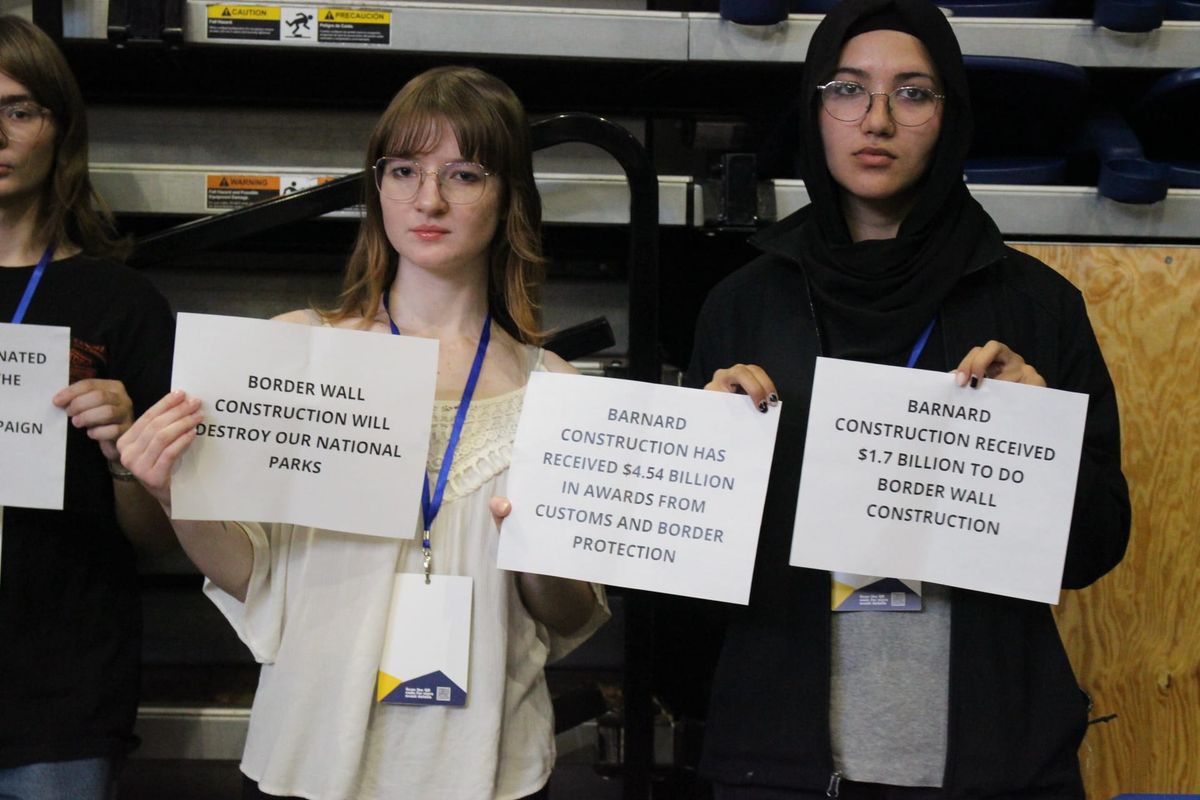
On Sept. 30, MSU’s chapter of Students for a Democratic Society (SDS) staged a protest inside the 2026 Fall Career Fair at the Brick Breeden Fieldhouse. The demonstration targeted Barnard Construction, a Bozeman-based company that was contracted by President Donald Trump’s Administration to construct a portion of the southern border wall in the Big Bend region of Texas.
The protest was part of a broader campaign by SDS that included a Sept. 25 protest on the Malone Mall and a petition calling for the University to remove Barnard from the fair, according to SDS President Homa Masood.
Meeting Before the Protest
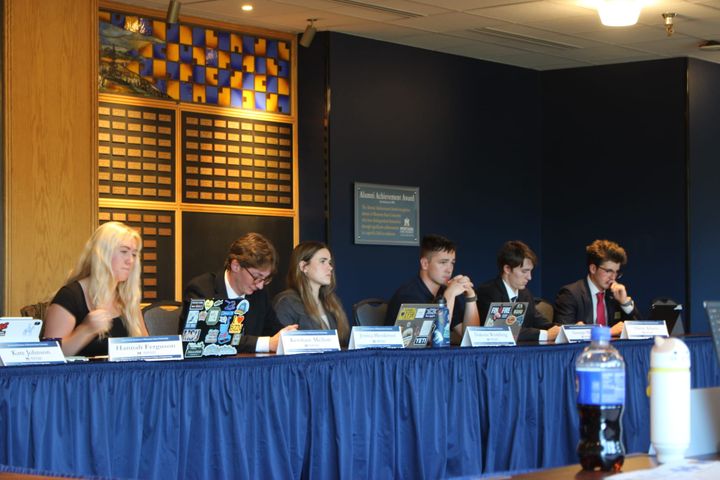
The day before the career fair, Masood and other SDS leadership members were called into a meeting with University officials. With the officials' consent, SDS recorded the meeting and later provided the audio to the Exponent. Present at the meeting were Dean of Students Matt Caires, Clubs and Involvement Program Coordinator Clara Commons, Event and Guest Services Manager Kelly Williams and Director of Events Services and Sports Facilities Chris Hayden.
According to Michael Becker, vice president of MSU communications, the purpose of the meeting was to advise SDS that any disruptive behavior inside the career fair may result in conduct charges and to recommend SDS take the protest outside.
Masood disputes that characterization. She told the Exponent that SDS explained the protest would be peaceful and non-disruptive and according to her, even after offering that explanation, Caires “threatened” the group with conduct charges and discouraged SDS from carrying out the protest.
“This is not a public forum. This is not a place for you to express your opinions. This is a career fair,” Caires said in the meeting.
Despite the University's recommendations, SDS protested inside the Brick Breeden next to Barnard's booth. Exponent reporters on site witnessed the group protest silently — holding various pieces of paper that had printed claims about Barnard.
On Sept. 30, a few hours after the career fair, SDS released a statement on Instagram claiming Caires threatened them with student conduct violation charges. On Sept. 30, Caires denied these allegations.
In the days following, the Exponent asked both parties to provide comment and clarification regarding the claims made in the Instagram post and the meeting that took place before the career fair.
SDS’s Account
In a statement to the Exponent on Oct. 5, Masood said the Instagram statement was a condensed account of a lengthy meeting. She said the Instagram post was “supported by direct quotes from the audio recording, alongside our own analysis.” According to her, SDS selected quotations that represented the central issue in the meeting.
SDS also acknowledges that the decision on whether they received a student code of conduct violation would be determined by the disruption caused at the career fair. However, they condemned the methods that the University used to communicate the potential conduct code violation.
“Our disagreement was with the standard being communicated to us, and with the fact that administration appeared to have reached a conclusion about the likely disruptive nature of ‘social activism’ before seeing the conduct in question and without specifying what specifically about the demonstration would be disruptive,” Masood said. According to her, "Our takeaway from the meeting is that MSU tried to intimidate us out of our peaceful protest inside the career fair through the threat of receiving conduct charges.”
According to her, the original Instagram post advertising the protest did not specify the type of protest. She said the organizers always intended to host a silent, non-disruptive protest at the career fair.
“Typically, when a student who is not an SDS member joins a protest that we host, they simply arrive at the specified time and engage in the activity others are engaging in,” she said. “Our intent was to showcase that there would be a protest at the specified place and for any student who wished to join to show up, see what was occurring and join the structured activity.”
Masood stated that SDS had clearly explained to administration that they would silently hold signs next to the Barnard booth rather than use a megaphone or lead chants.
“We told administration that we were willing to conduct the protest silently and that we would not obstruct entrances, pedestrian traffic, students' access to the career fair or students' ability to engage with Barnard. That was the protest we ultimately conducted,” she said.
When asked why SDS did not move the protest outside as the University advised, Masood said they decided to protest inside because they have the right to and that the campaign was specifically directed at MSU’s decision to provide Barnard with a recruitment space despite Barnard’s connection to the Trump administration.
“We believe that in order to make our statement most effectively, it was important that we have as close physical proximity to Barnard Construction itself,” she said.
Further, Masood emphasized that the choice to keep the protest indoors was not just about proximity to Barnard, but a larger objection to what SDS perceived as the administration attempting to limit student expression.
“We think it is important that this issue not be reduced to a disagreement over wording in an Instagram post. At its core, this was a confrontation over whether student activists would allow the threat of disciplinary action to determine what they were willing to say, and where they were willing to say it,” she said.
Background
According to Becker, the University’s initial concern was the possible disruption of the career fair. He said the meeting was called to inform SDS of the possible consequences of disruptive conduct, not to indicate that the decisions about conduct were already made.
“The main goal of the meeting was to find a path for SDS’s protest to happen without it interfering with the career fair itself or other students' access to the career fair,” Becker said in a statement to the Exponent.
In 2026, a member of SDS was involved in a protest against an open house put on by the Defense Innovation Unit OnRamp Hub Montana, a federal initiative designed to connect local startups, researchers and investors with military funding and contracts, according to an April 2 Exponent article.
In the aftermath of this event the SDS member received a conduct charge.
“I'm warning you. I'm asking you. Please don't do it. Because I don't want to have to go down this road again with SDS members and use the conduct code to help teach a lesson,” Caires said in the Sept. 29 meeting.
In the meeting, Caires and Masood’s disagreement over what MSU’s freedom of expression policy and code of conduct outlines became a point of contention. In 2025, SDS protested at a Career Services event. There, the group protested inside the building of the event, but not the room it was being held in.
Caires said that it is the event coordinator’s decision whether or not conduct is considered disruptive, and that this was not an example of the conduct code being inconsistently applied, but that the organizer of the previous event had not deemed the protest disruptive.
Masood disagreed, saying that “we can’t host protests if the freedom of expression policy is just whatever you decide at the moment,” she said in the meeting.
In the meeting, a resolution about the policy could not be reached between the parties. “Again, we're at a stalemate, and I appreciate that. I knew this stalemate would come,” Caires said.
MSU’s Account
In respect to the Oct. 1 SDS Instagram post where SDS stated the MSU administration tried to “intimidate student free speech,” the University said that student code of conduct violations would only be charged based on the scope of the protest impacting the career fair.
“The [Oct.1] SDS Instagram post omits important context. Dean Caires referred to activity we understood SDS to be planning based on the group’s social media posts, which did not specifically describe their plans as a silent protest,” Becker said. “During the meeting, MSU staff said the University would need to evaluate the students' actual conduct and its effect on the career fair.
“At the same time, we recognize that some of the wording MSU staff used was too categorical and could have given the impression that decisions had already been made,” he said.
According to Becker, MSU also offered outdoor locations to help in organizing logistics and expedited assistance obtaining an Outdoor Program Request form.
Further, Becker said outdoor spaces on campus that are available for expression generally receive the strongest free-speech protection. Indoor spaces may be dedicated to particular purposes, allowing MSU to apply additional reasonable and viewpoint-neutral restrictions necessary to preserve those purposes.
In this case, Becker said the Fieldhouse was being used for a specific University program, so Dean Caires recommended an outdoor location where the group could demonstrate and use amplified sound with less risk of interfering with the career fair.
Becker said once the protest began, the career fair organizers could evaluate the actual conduct that was happening. Director of Career Services Elizabeth Feary spoke with the Barnard reps, who said the protest was not interfering with their ability to participate, and Feary received no complaints from attendees that day about the protest. Staff saw no obstruction or substantial interference happening. The actual conduct was not disruptive, so the University didn’t intervene.
Becker said MSU asked for the meeting after Dean Caires received screenshots of SDS’s announcements for a planned protest at the Barnard table inside the career fair. Becker said It’s not unusual for MSU to meet with groups that plan demonstrations and protests to make sure everyone involved is aware of pertinent policies.
“As I said before, Dean Caires repeatedly said the outcome would depend on the actual conduct at the fair and the event organizer’s assessment of its impact on the fair,” Becker said. “In hindsight, the difference between protected expression and disruptive conduct could have been stated more precisely and consistently.”

Comments ()