
April Craighead: Urban deer conflicts in Gallatin County and the spread of CWD
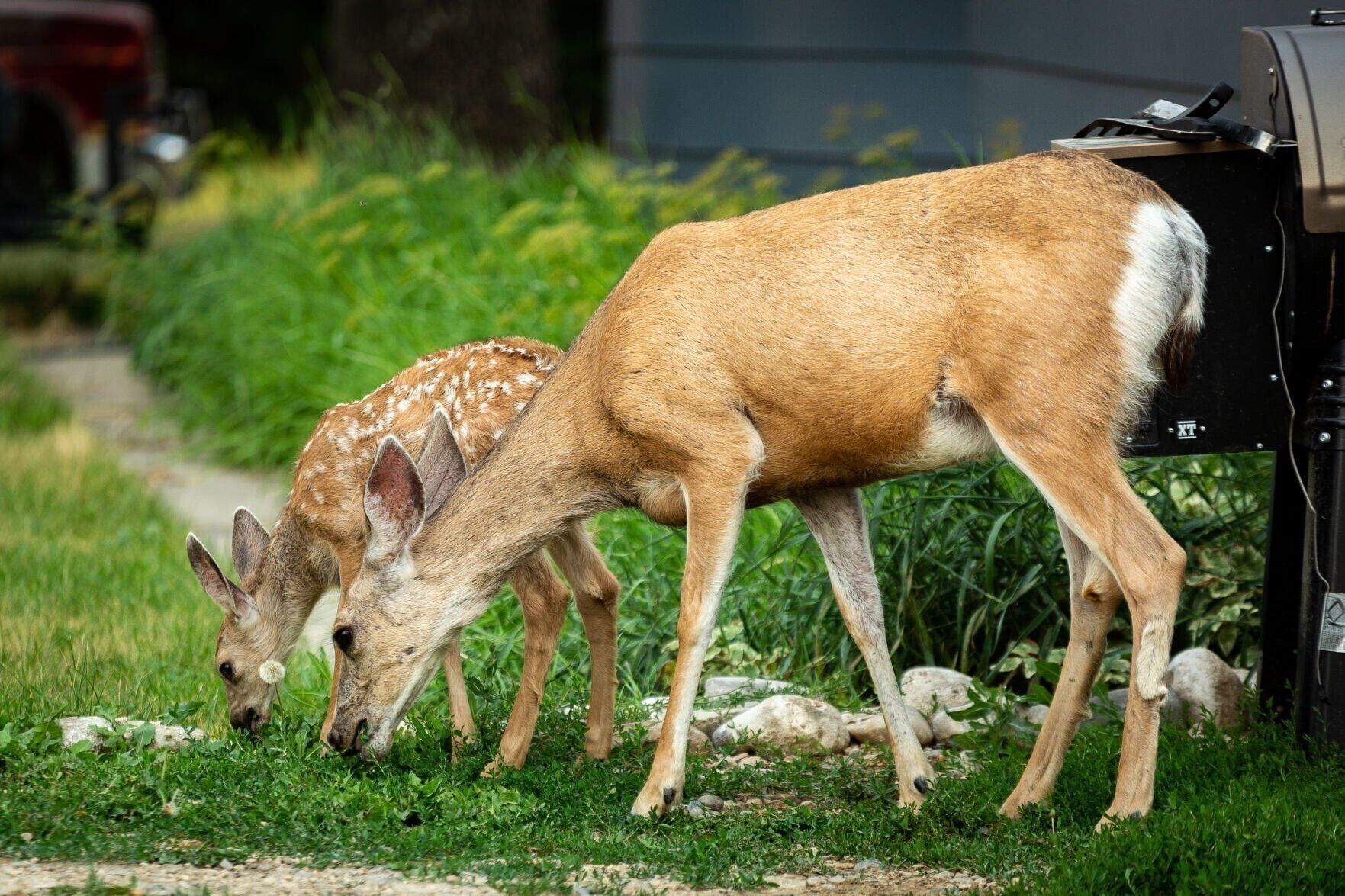
They’re ubiquitous on the landscape, in fields, backyards and many places you don’t want them. I’m talking about our urban wildlife, mainly white-tailed deer.
If you live on the east or south side of Bozeman, you also see many of them maimed or dead along the road. They are an extremely adaptable species and our continued expansion into their habitat makes it easy for them to cohabit with us. They are right at home eating our green lawns and luscious plants that we provide for them.
While they are beautiful animals, they are also serious pests, damaging trees, eating plants, and when concentrated in large numbers, they create large amounts of waste, and attract unwanted predators into town. But more important, they also transmit disease, namely Chronic Wasting Disease.
CWD was first detected in wild deer populations in Montana in 2017 and has moved through portions of the state quickly, it was first detected in Gallatin County in 2020.
Recent sampling of deer during the 2025 hunting season found an increased number of positive CWD cases for white-tailed deer along the Gallatin River corridor and just south of town. This has the Montana Department of Fish, Wildlife & Parks very concerned that if concentrations reach a certain level, CWD will be transmitted from white-tailed deer to the general populations of mule deer, elk and moose in and around Bozeman.
This will be a big problem for the city, county, wildlife enthusiasts and hunters, not to mention countless animals. This increase can happen very quickly as biologists have seen in the Ruby River Valley, where CWD was first detected in 2019 and its prevalence is now approximately 39% in white-tailed deer and has spread to other species.
Currently there is no cure for CWD and it is 100% fatal to deer, elk and moose. It is transmitted by a prion: A very stable protein that can remain infectious for many years just lying on the ground or attached to plants where it was deposited.
It can be spread through urine, feces, saliva and close bodily contact. Think of all those white-tailed deer bedded down in your backyard. These are the perfect conditions for CWD to spread.
It can take several years for symptoms to manifest in CWD-positive animals, but in the final stages animals become emaciated, lethargic, confused and lose their fear of humans. It is a slow and painful death.
In states where CWD is prevalent, wildlife managers have recorded overall declines in deer populations, as well as skewed age structures because older animals tend to die sooner. It is also theorized that high levels of CWD can suppress population growth.
If CWD spreads to other populations, such as mule deer, it could have drastic impacts on populations especially because mule deer populations are declining in this area.
Before CWD reaches those levels in the Bozeman area and surrounding hunting districts, both the city and county should work with FWP biologists to develop a comprehensive urban deer plan that addresses roadkill in the city, managing deer populations and the threat of CWD.
It won’t be long before CWD is in your backyard if it isn’t already there.



Comments ()