
Candidate Questionnaire: MT Supreme Court Seat 2
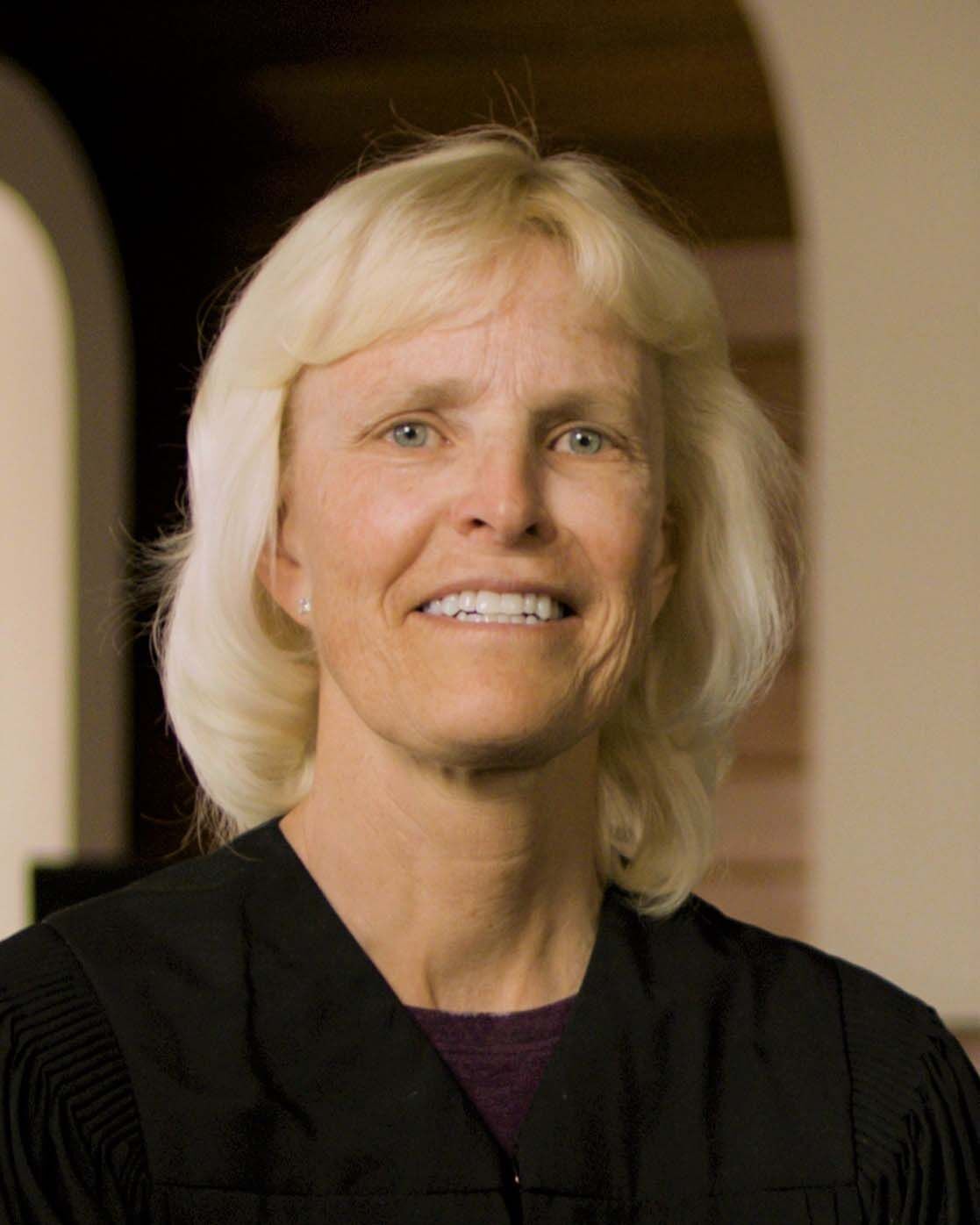
Ingrid Gustafson -Montana Supreme Court Seat Two
James Brown-Montana Supreme Court Seat Two
Why are you running for a seat on the Supreme Court?
Gustafson: Montanans learned long ago during the time of the Copper Kings what it meant to have a judiciary bought and controlled by partisan politicians. Montanans know they deserve an impartial, independent, non-partisan judiciary. A fair and independent judiciary is a cornerstone to preserving our democracy. To provide justice for everyone, maintain our rule of law, and assure our three branches of government work as our Constitution provides, judges must be able to act free of the pressures of partisan politics, special-interest groups, and the other branches of government. Having served as a judge for nearly 20 years, the last five on the Montana Supreme Court, I understand the gravity of judicial decisions, the significant impact those decisions have on the individuals involved, and the necessity of the courts operating independent of our partisan politics.
I am a Justice, not a politician, and I take very seriously the responsibility and trust voters placed in me and fully understand the Montana Supreme Court’s responsibility to provide clear, consistent guidance to trial courts, attorneys, and Montanans. I will continue to work hard, study the law, and strive to make impartial, well-reasoned decisions, and maintain the high professional standards of the Court.
Brown: As a 4th generation Montanan, I am running for this important office because I love the Treasure State and want to protect the legal rights of all Montanans. I am a small business owner and have been a private practice attorney for over 15 years. I was truly humbled to hear from farmers, ranchers, small business owners, and other attorneys from across Montana who asked me to step-up and run for the Court. These folks indicated they want a Supreme Court Justice, like me, who will abide by the Constitution and follow the law – not make law from the bench.
When it comes to the judicial branch, there has been an unprecedented attack on law enforcement and first responders, on parental rights, private property, on individual liberty, on Second Amendments Rights, and on our small businesses. Just this year, the Court issued a decision that greatly restricts the ability of college students to exercise constitutionally protected rights on campuses. Montanans are rightly concerned about this kind of judicial overreach.
Thus, I am running to restore balance and accountability to the judicial branch. I’m the only candidate in this race who will always follow the Constitution and the rule of law.
What would you identify as the single most important principle that should guide a justice when deciding how to apply Montana law to a case?
Gustafson: Independent fidelity to the Constitution and the rule of law is the most important principle that should guide a justice. As a justice, I took an oath to uphold our Constitution. I’ve devoted my nearly 20-year judicial career to protecting Montana’s Constitution and its unique rights. Judicial elections in Montana are, by law, nonpartisan. Despite this, we are currently seeing efforts of extreme partisan politicians to, with assistance of out-of-state dark money, buy my seat on the Montana Supreme Court. The agenda they seek is not one that embraces diversity, equal opportunity, free speech, or robust debate and compromise in problem-solving but rather one demanding fidelity to the “brand.” This “brand” has its sights set on some of the very unique rights contained in our Montana constitution—most particularly the rights to privacy, equality of education, access to public lands and water, and a clean and healthy environment. While my opponent proclaims he will uphold Montana’s Constitution, he accepts endorsements, money, and benefits from individuals who characterize our Constitution as a “socialist rag” and actively seek to replace it. Montanans deserve and should expect an independent judiciary comprised of justices committed to safeguarding our constitutional rights, not partisan idealogues.
Brown: Judicial restraint is the legal theory that judges should not inject their own political preferences or leanings into legal proceedings. Further, judges are said to exercise judicial restraint if they are hesitant to strike down laws that are not obviously unconstitutional, merely apply the law as written, and recognize the limited nature of judicial powers.
As the law and order candidate, I will practice judicial restraint by always following the Constitution and never legislating from the bench. I will serve as an impartial judge who brings balance to and restores accountability to the judicial branch. As I have strived to do each day of my legal career and as President of the Montana Public Service Commission (PSC), I will protect and defend the freedoms, liberties, and livelihoods of every Montanan by delivering narrowly tailored decisions, and by avoiding making broad policy decisions.
At a time when there is talk on the national level of packing the United States Supreme Court in order to achieve political goals, my aim is to serve Montanans in a way that keeps public faith in the fairness of the Montana court system and to apply the law as it is written and passed by the Legislature.
One stated goal of Montana’s judicial branch is to build the public’s trust and confidence in the state’s courts. What do you think is the best way for a Supreme Court justice to help build that trust?
Gustafson: Contrary to a false narrative being promoted by some, Montanans have great trust in the work of Montana’s Supreme Court (MTSC). During my tenure on the MTSC, performance surveys show the Court earned a 90% approval rating for consistency, efficiency, and effective application of the law. The MTSC has constitutionally functioned as an independent check and balance to the other government branches. The Court has issued timely opinions setting forth the issues, facts, and law along with analysis of how our constitution and law apply to those facts and issues. Although public trust in Montana’s judiciary remains high, justices can continue to engender trust in and respect for the judiciary in a number of ways. We can continue evaluate our court performance to assure opinions are issued timely and meet the high-quality standards of the Court in terms of consistency, efficiency, and effective application of law. We can continue to educate judges in judicial best practices and engage with the Montana State Bar and our colleges and universities to bring oral arguments to educational campuses and the public to better inform our citizens about the work of our courts. From an individual standpoint, I intend to continue to engender trust in and respect for Montana’s judicial system by continuing to be an impartial, independent jurist committed to upholding the unique rights of our Constitution among them the right to privacy, public land and water access, equality of education, and a clean and healthy environment.
Brown: Montana Supreme Court’s decisions are being subject to a higher level of scrutiny than federal court or Montana district court decisions. This is because Montana’s Supreme Court has a well-earned reputation from legal academics and from court litigants for issuing decisions that: (1) lack clarity; (2) too-often overturn its own established precedent; (3) being anti-business; and (4) improperly substitute the Court’s own judgement for that of the executive and legislative branches of government.
Further, the Court has too often issued decisions that directly violate the United States Constitution, including a completely incomprehensible decision that sought to exempt Montanans from 1st Amendment protections recognized by the United States Supreme Court. The Court can immunize itself from such scrutiny by following the law as written, and by not making law or policy from the bench.
I view my role as a judge as a neutral decision maker. And application of the concept of judicial restraint will help engender trust in the Courts. Further, though the Montana Constitution accords all Montanans, including college students, the right to a speedy remedy at law. Yet, some cases have been languishing for up to five years. Timely resolution of cases will maintain trust in the judiciary.
Why are you the best candidate to be a Supreme Court justice?
Gustafson: I graduated with a BS in Business from MSU where I was an NCAA All-American and am a member of the Bobcat Athletics Hall of Fame for alpine ski racing. I then graduated from the University of Montana law school and practiced law for 16 years representing ordinary Montanans—farmers and ranchers, teachers, accountants, business owners, doctors, firefighters, etc. From this, I understand how overwhelming the legal system can be. In 2004 I was appointed as a District Court judge where I served for 14 years before being appointed as a Justice to the Montana Supreme Court where I have served over the last five years. Unlike my opponent, I am a Justice, not a politician. By the time I finished practicing law for 16 years and took the bench—my opponent had not yet finished law school. While I handled nearly 15,000 cases as a district court judge and participated in another 1,100 cases at the Supreme Court, my opponent was counsel of record in only 74 state district court cases and had only a handful of contested matters, mostly writ issues, before the Montana Supreme Court. I have nearly 20 years judicial experience while my opponent has none.
Brown: I grew up in Montana and attended college in Montana and know the importance of having judges who understand Montana values.
Right now, the Montana Supreme Court currently lacks a judge that has recently owned their own business and/or that has primarily represented Montana’s agriculture producers – even though agriculture is Montana’s top economic driver. I’m running to bring that vital ag and business background and experience to the Court.
I also proudly stand with our Montana small businesses and workers. Contrast that with my opponent who received a “F Rating” from the Montana Chamber of Commerce when it comes to protecting Montana jobs and small businesses. Further, my opponent has made decisions that have been bad for Montana businesses, bad for law enforcement, and bad for college students who desire to exercise their constitutional rights.
I will bring to the Court a much-needed diverse knowledge of the law, the experience gained from earning a living by operating a small business, and by growing up in rural Montana. I’m also proud to bring much-needed professional management experience having successfully managed an important state agency with a roughly $5 million budget and 31 employees.


Comments ()