
'Facing headwinds': Finalist for UM president says he's ready to tackle higher ed challenges
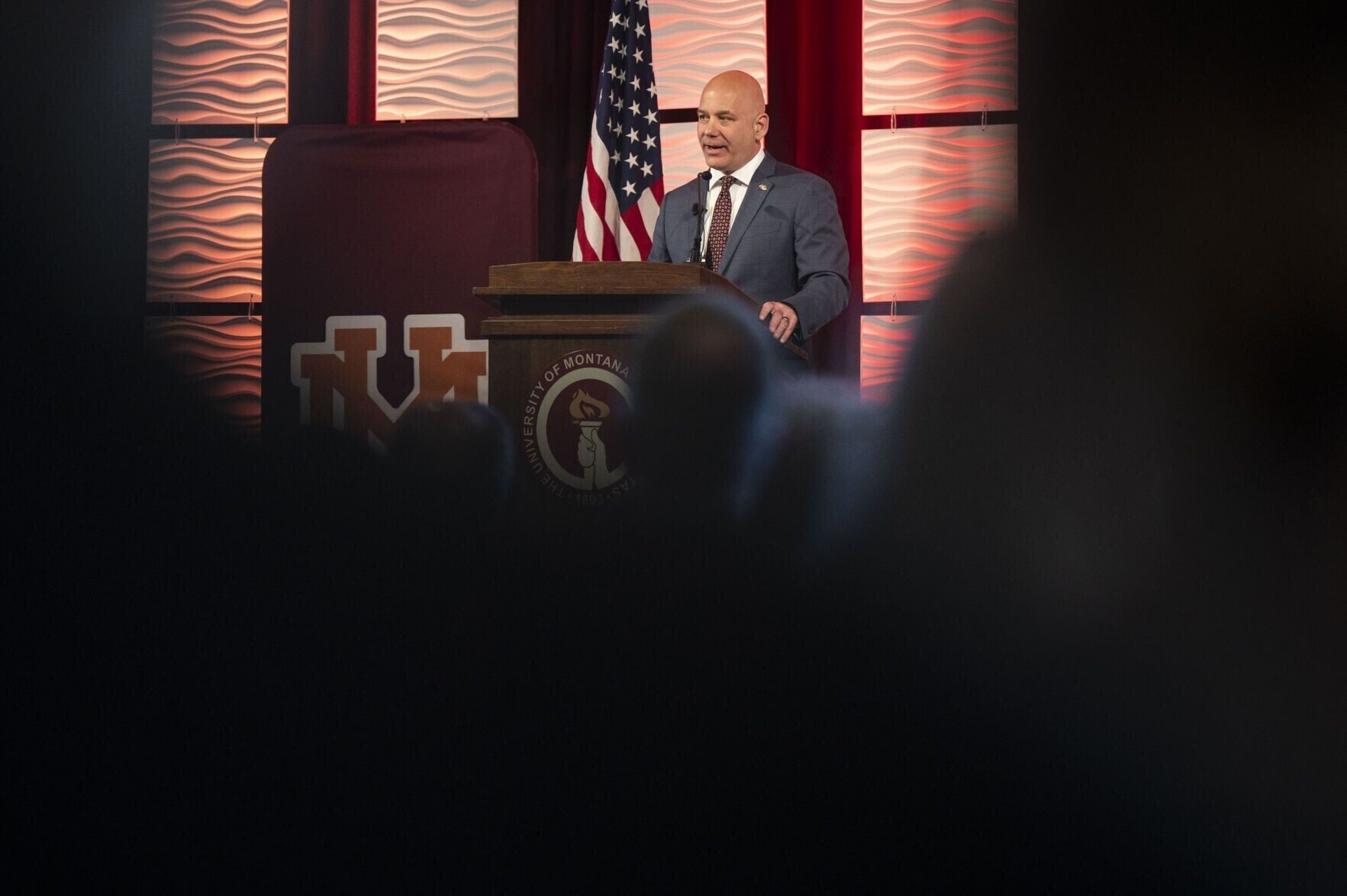
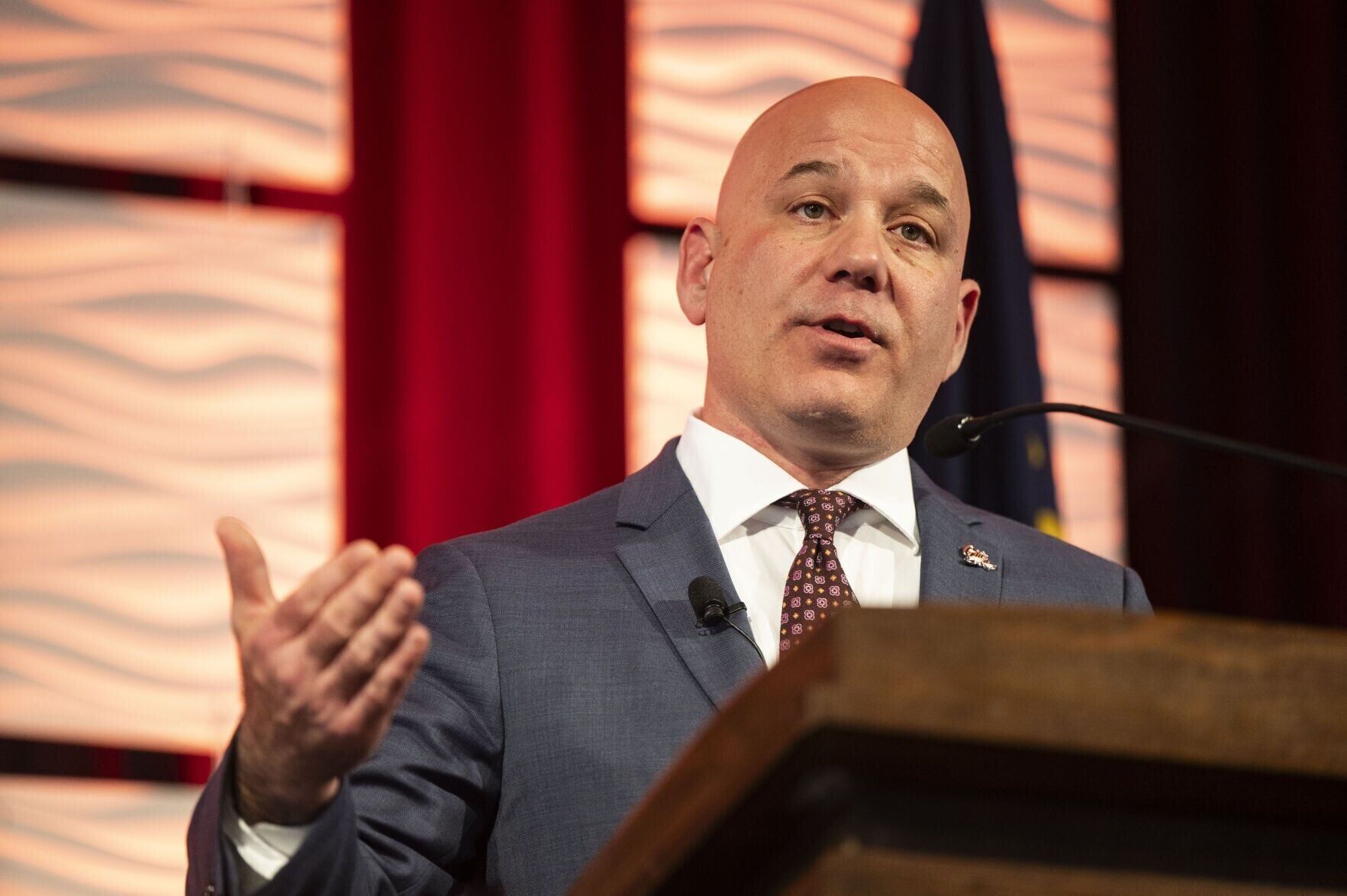
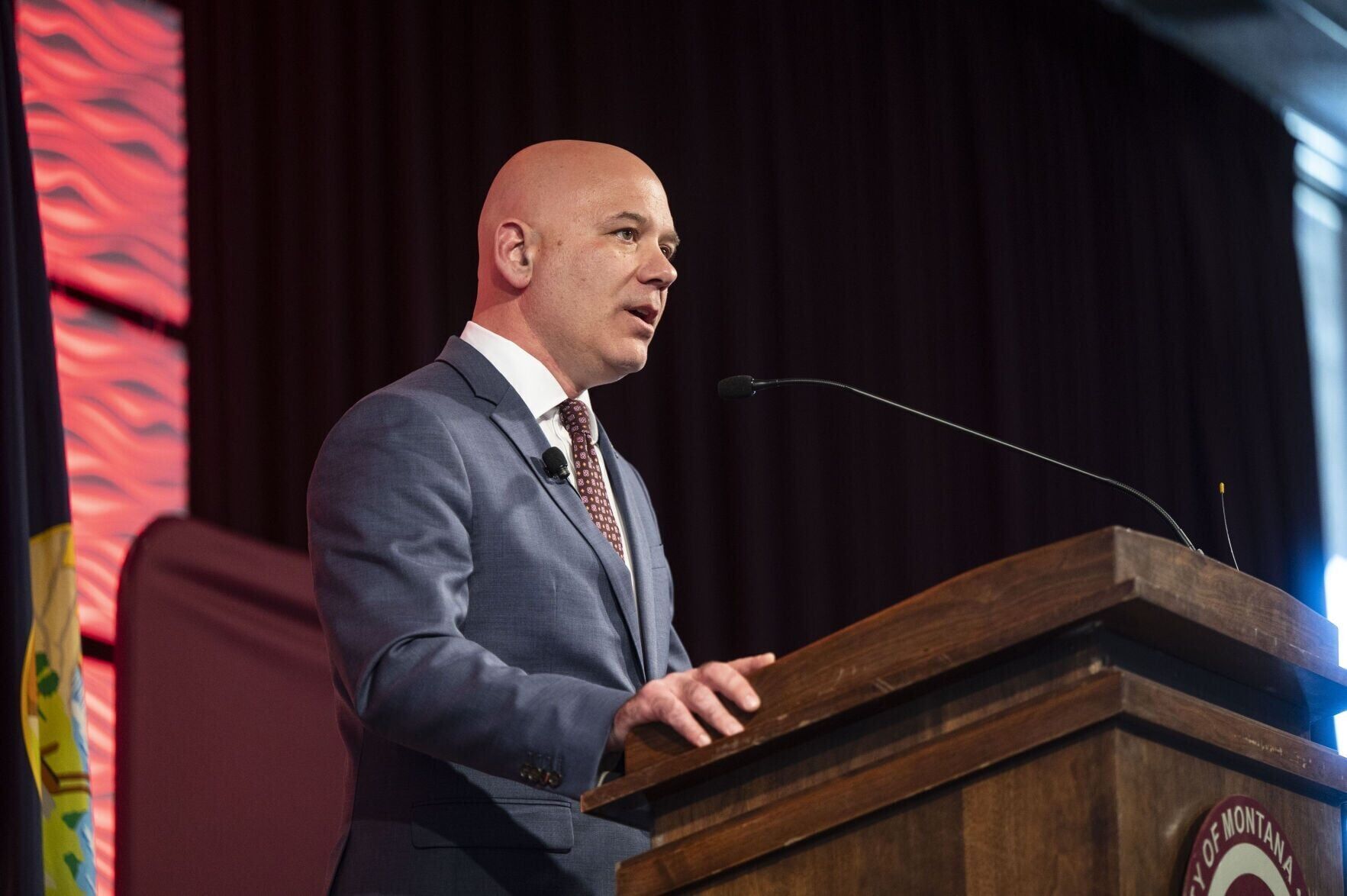
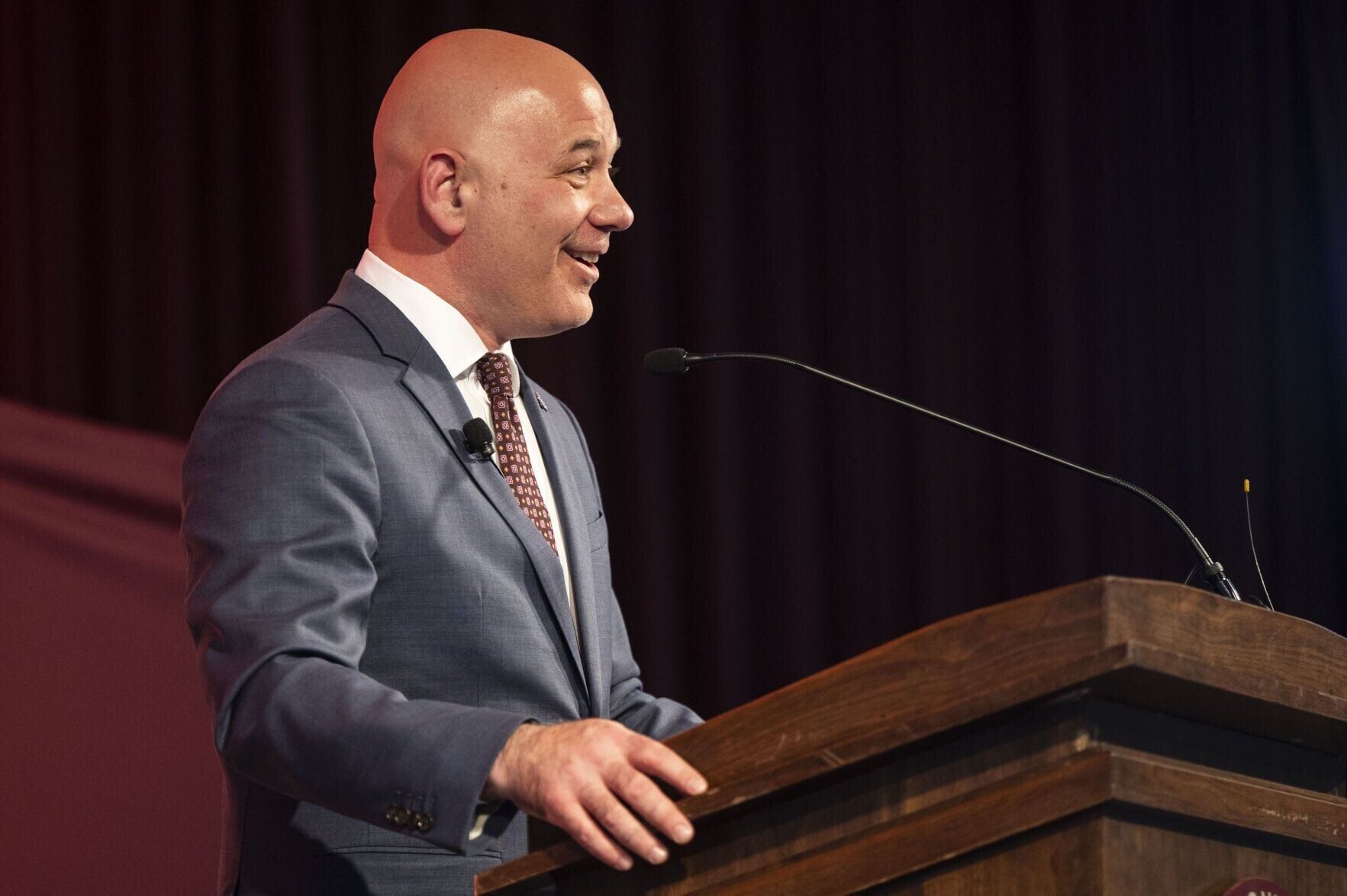
Jeremiah Shinn, a finalist candidate to be the University of Montana’s next president, told community and faculty members he is ready to tackle the challenges of higher education leadership at a Q&A style discussion on Monday on campus.
Shinn, who is currently the interim university president at Boise State University, said he would work on recruiting and retaining students, act as a partner with unions and local governments, and focus on common ground with state legislators if he were ultimately selected for the position.
“Higher education nationally is facing significant headwinds — a decline in public trust, an affordability crisis for our students, and also the expectation that we're far more workforce-aligned than ever before,” Shinn told community members. “I believe that when we are creating value for our students, when we are workforce-aligned, I believe that public trust increases, and I think that we're positioned to do that here at the University of Montana.”
Montana Commissioner of Higher Education Clayton Christian said on Monday Shinn was one of more than 70 applicants and nine total interviewed to replace former UM president Seth Bodnar in what he described as an "expedited" search.
Bodnar announced he would be stepping down as UM president in January amid rumors he was planning to run for U.S. Senate, and later filed as an independent in the race in March.
Bodnar’s last day on the payroll was Feb. 2 and his salary as posted by the Board of Regents in May of 2025 was nearly $456,000. Christian is serving as interim president until the Board of Regents selects a successor.
An unprecedented six interviewed candidates for the position were either current university presidents or had university president experience, including Shinn, Christian told reporters. All the candidates interviewed were from out of state.
There are several university leadership searches ongoing in the region including North Dakota, Wyoming and California, he said.
“If it was real estate, you would say it's a buyer's market,” Christian said. “In hiring, it's a candidate's market.”
Normally the process would take eight months to a year to complete, but Christian said it wasn’t in the best health of the university to have a drawn-out process. And many candidates, not including Shinn, don’t want months-long public scrutiny as a candidate, he said.
“They're not interested right now in this environment of taking six or eight months with their name being made public,” Christian said. “They sort of have that reputational risk and harm for their own institution, especially sitting presidents.”
Fielding questions from the community
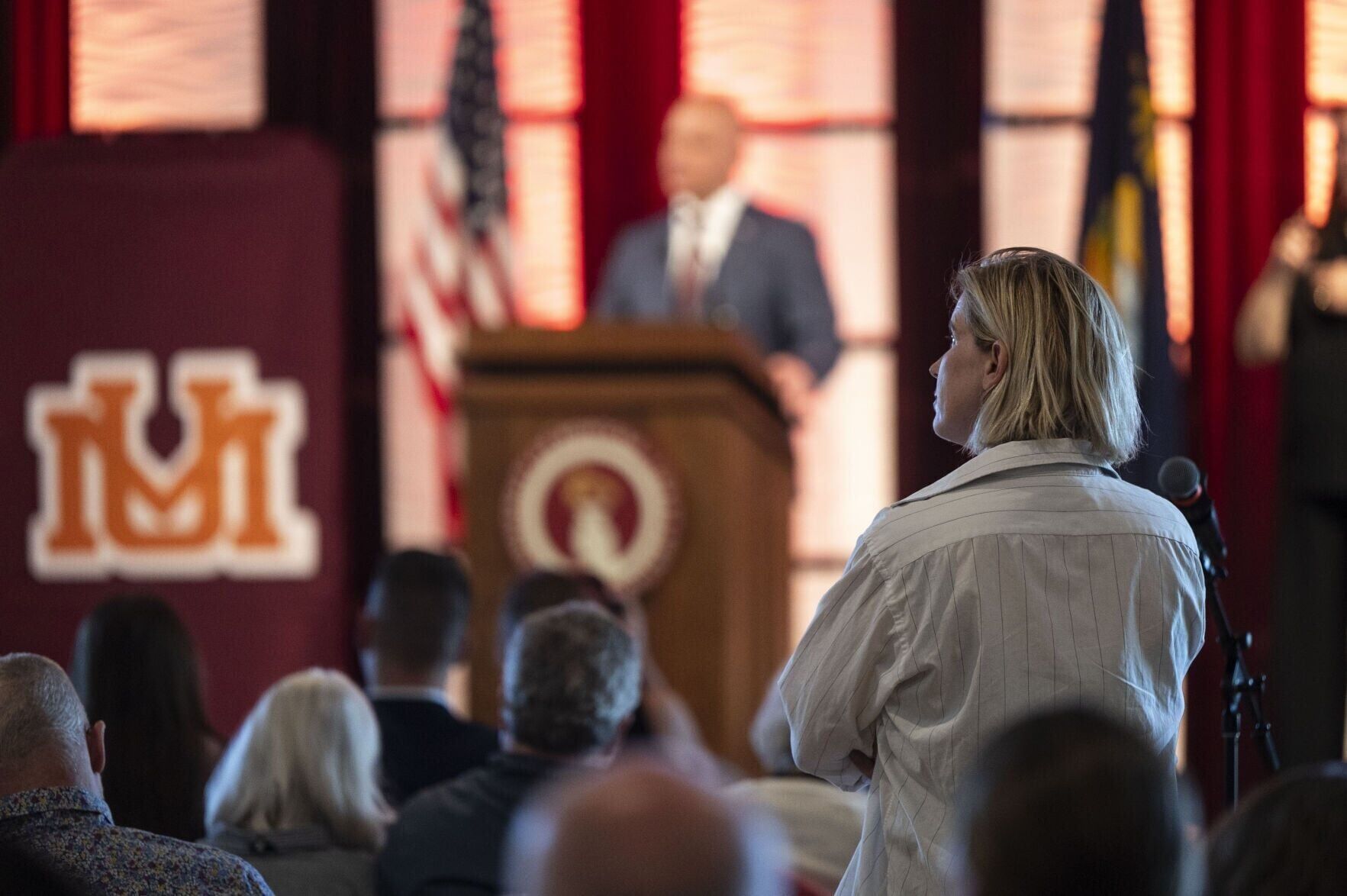
Out the gate, the first question to Shinn from the seated crowd in the University Center ballroom on campus was about his stance on transgender rights and Diversity, Equity and Inclusion (DEI).
Shinn said in his previous roles he’s told staff to focus on what they could do to serve students and not on what they can’t do.
“Sometimes we have to get creative in terms of how we approach the work,” he said. “Our mission to be sure that everybody can be successful here does not change, even in the face of some of the turmoil that we've seen in higher education.”
“Public means for everyone, and it's our mission to serve every student that we have.”
Responding to a question about his relationship to unions at BSU, Shinn said Boise State didn’t have the unions in the same way UM does. But he said he appreciates the “clarity” union contracts bring in outlining how organizations work together.
Missoula City Councilwoman Gwen Jones asked Shinn how he would foster relationships with the community and with organizations like the city, referencing the daily meetings the university, health professionals and local government leaders had during the pandemic.
Shinn said universities serve as “community anchors” and don’t exist separately from the communities they are in.
“Essentially, we're in this together,” Shinn said.
A retired faculty member said she’d heard a rumor the university was considering removing the philosophy major.
“In times of financial exigency, very strange things happen,” she said. “Do you believe there are cornerstone courses, even though there isn't perhaps the student demand, that should always be offered by a university that is truly a university?”
Shinn said it’s less about what students are minoring or majoring in, but what the university is preparing them for, and said the university has opportunities for “interdisciplinary thinking.”
“I do think that there are certain cornerstone programs,” he said. “Will those programs look the same in 10 years as they did 10 years ago? Maybe not.”
UM spokesperson Dave Kuntz confirmed the university is not looking to eliminate the philosophy major and said that is just a rumor.
UM recently recommended master’s degree programs in literature and economics be terminated and recommended a “pause” for both their Chinese and Irish studies minors for the coming academic year, citing declining enrollment.
At the Q&A, a junior faculty member in physics and astronomy said the College of Science has seen a cut of five full-time employees, which impacts their capacity as a department. She said the “pie is too small,” and asked how Shinn would make the pie bigger, “and enable us to have enough budget to actually run the programs we want.”
Shinn said UM needs to look at both increasing the enrollment pipeline but also retaining the students already at the university through programs like online education, graduate education and summer education.
Enrollment has increased at BSU in recent years in part due to increasing online education offerings, with 500 additional students added last August and online courses making up 38% of course offerings in the 2024-25 school year, Boise State Public Radio reported in August.
Shinn cited the school's creation of a $150 million endowment for 3,000 low-income students who qualify to receive $2,000, as reported by Idaho Ed News.
“It's still not a lot, but that $2,000 makes all the difference in the world for those 3,000 students,” he said. “Two thousand dollars can be the difference between a student going to college and not.”
Shinn described himself as a first-generation college graduate who didn’t get help navigating the world of higher education, so access for first-generation students is really important to him, he said.
UM faculty member Patrice Halverson told Shinn Missoula is more left-leaning compared to the rest of the state and asked how he would bring in opposing beliefs to arrive at the best solutions for the school.
Shinn assumed his role as interim president when the school had a “less than ideal” relationship with the Idaho legislature, he said. But he tends to focus on the common ground between them and “grow from there.”
“I don't believe I have all the answers, and I don't believe any of us has all of them,” he said. “I think we all have things to learn from one another, and the more that we're in conversation together, especially a conversation around difference, the greater our understanding is, and the more success that we have together.”
Shinn said his relationship with UM began when a former Griz football player moved in across the street from him.
“I don't think I've ever known somebody in my entire life who loved their alma mater more than he loved his and that told me everything that I needed to know about this amazing place,” he said.
Christian is collecting feedback from the community from the open forum as well as online submissions before making his recommendation to the Board of Regents, which will ultimately decide who Bodnar’s successor will be. Christian said the decision could potentially come in the next few weeks.
Resume for UM presidential candidate Jeremiah Shinn


Comments ()