
Give a duck, don’t be a quack
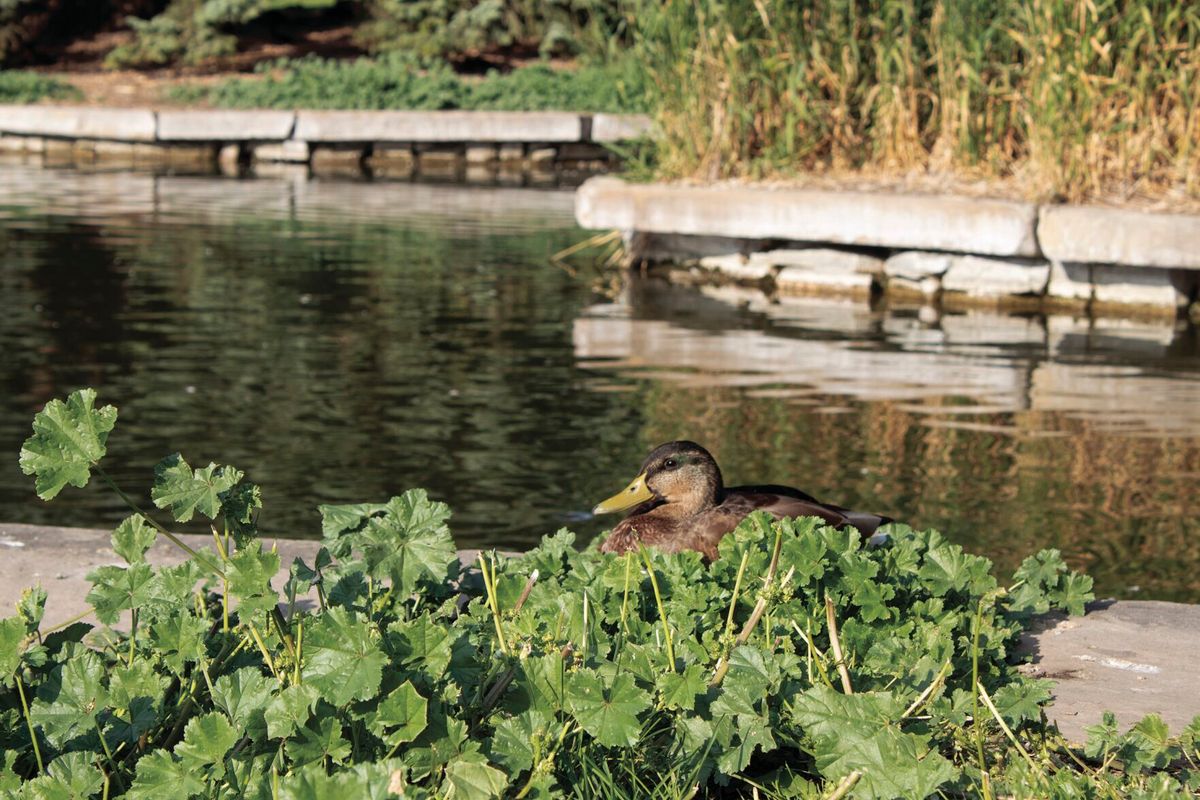
With summer coming to a close, the fall season will bring new and returning students, colored leaves and the southern migration of birds. Well, not all birds migrate south for the winter — MSU’s very own duck pond boasts ducks of various shapes and sizes all year round.
The duck pond — originally the frog pond and then the fish pond — has existed at least as long as the University itself. In an Exponent article from 2023, a photo from 1935 features the duck pond 42 years after the founding of MSU. According to the same article, a restorative plan in 2008 installed new rubber liner, large stones around the shore and an integrated water flow system that cost $256,000. Before this, the pond was fueled only by a natural spring — meaning the water was often stagnant, which led to unhealthy conditions for the ducks.
Matthew McGraw, a sophomore at MSU and a duck enthusiast who runs the @msuduckpond account on Instagram, fell in love with the duck pond when he was a freshman. When life gets busy, McGraw explained he chooses the ducks as a peaceful way to escape.
“I think a big point of that is people who live in the cities; it's chaotic, it's noisy,” McGraw said. “People just want to come somewhere where it's peaceful and simple. I think everyone, no matter who, has a little bit of that in them. Everyone, whether or not it's a big deal for them, wants something simple.”
Nature has served to ground people for a very long time, even leading to Gen Z coining the phrase “touch grass” as a way to voice the need to spend time in nature rather than on the internet.
The duck pond even inspires students in art and photography classes at MSU. Students use the ducks as muses for projects, pictures and paintings. McGraw said that one semester, the School of Film and Photography put an informal ban on ducks as subject matter for art, citing too many ducks as the reason. Whether it be for academic assignments or a need to experience nature, the duck pond has worked its way into a special part of MSU culture and students have long embraced the ducks as part of the MSU community.
Since its inception, the duck pond has garnered its own following of duck-loving people. McGraw has seen the congenial duck pond community in a small capacity.
“I've met this woman, I don't remember her name. She feeds them out there, and she gets grain for the ducks. There's some grain place here on campus and she takes all the extra grain and she feeds them at least once a day — and she's been doing it for almost a decade,” McGraw said.
As previously mentioned, McGraw’s love for ducks led him to create the Instagram page @msuduckpond to gather a community of duck lovers.
“The reason I started [the Instagram page] is because, last year, especially during the start of mating season, people would just post photos of the ducks on the class of 2027 and 2026 Snapchat story,” McGraw said. “I really appreciated the love for the ducks. I haven't gotten to this point yet because obviously I started the Instagram account last year and have much time for it to grow. My goal is to somehow get in contact with, whether it be like the animal science department or the agriculture department, to be able to track the different ducks that go around campus.”
Ducks, typically migrational birds, usually fly south for the winter. The Smithsonian’s National Zoo tracks avian migration in four phases. The birds start at the breeding ground where babies are born and then they migrate away from these breeding grounds. Next, the birds experience a stationary period between fall and early spring called “overwintering” in warmer climates and then they eventually return back to their original breeding grounds.
Migration is a vital process for how ducks live and reproduce, so why do MSU’s ducks stay year-round? According to the 2023 Exponent article, the spring that feeds into the duck pond keeps them comfortable during the winter because it produces warm water. However, McGraw wondered what responsibilities the university, the staff and the students have regarding the ducks.
“I mean, cleaning up would be the first step,” McGraw said. “Also, making sure a lot of these ducks are healthy, because in domestic situations like this, there is a lot of inbreeding. There's [also] a lot of people who might think they might have good intentions, but they don't know what to feed the ducks.”
For example, ducks should never be fed bread, according to Wild Birds Unlimited. Bread has little to no nutritional value and can harm a duck’s growth. If people want to feed ducks, they should provide the birds with snacks such as oats, peas and other healthy options.
With his Instagram account, McGraw said he hopes to show students and staff that the ducks in the duck pond aren't simply for the University’s aesthetic, they are living creatures that deserve care and attention. The Duck Pond isn’t a commodity, it's a community, and we should ensure our very own MSU ducks are cherished and protected.
Whether you have any duck-related questions or want to submit a fun picture of the duck pond, you can direct message McGraw’s account @msuduckpond and follow the page to see updates on our favorite avian friends.



Comments ()