
The duck life chose us: A retrospective on the Duck Pond
“Yo-HEAVE! Yo-HEAVE! Yo-HEAVE! This deep toned, rhythmatic order issuing from the throats of entreating classmates and led by two lusty lunged yell leaders, inspired the straining sophomores to new endeavors, and found response in systematic and clock-work action.”
This is the opening to an Exponent article from just over 110 years ago, published in October 1916. The reporter was describing an annual game of tug-of-war traditionally held between incoming MSU freshmen and sophomores at the frog pond, now fondly known as the Duck Pond.
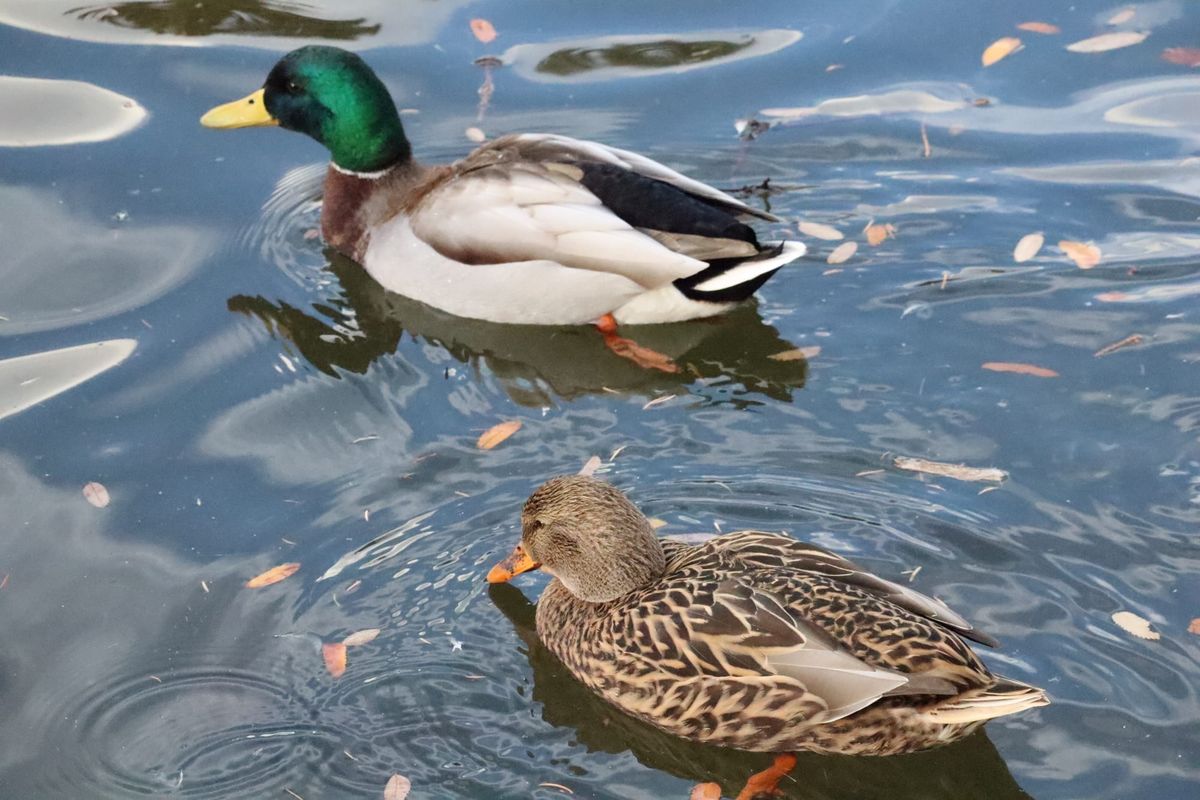
The Duck Pond hosts dozens of feathered tenants year-round and is one of MSU’s most iconic landmarks, even being featured on some items in MSU’s Julia Gash merchandise collection.
Before the Duck Pond became what it is today, according to a 2023 Exponent article, written by MSU alum Angela Cateora, it was previously called the fish pond, and before that it was called the frog pond, or “froggery.”
The campus-wide sense of camaraderie surrounding the Duck Pond goes as far back as 1907 when the tradition of holding a tug-of-war competition originated, according to a September 1916 article.
“Since then it has been the custom for the sophomores to issue a challenge to the [freshmen] inviting them to settle their differences over the icy waters of the froggery,” the 1916 article wrote.
Another Exponent article detailing the tradition was written in October 1914, where the match attracted a large crowd.
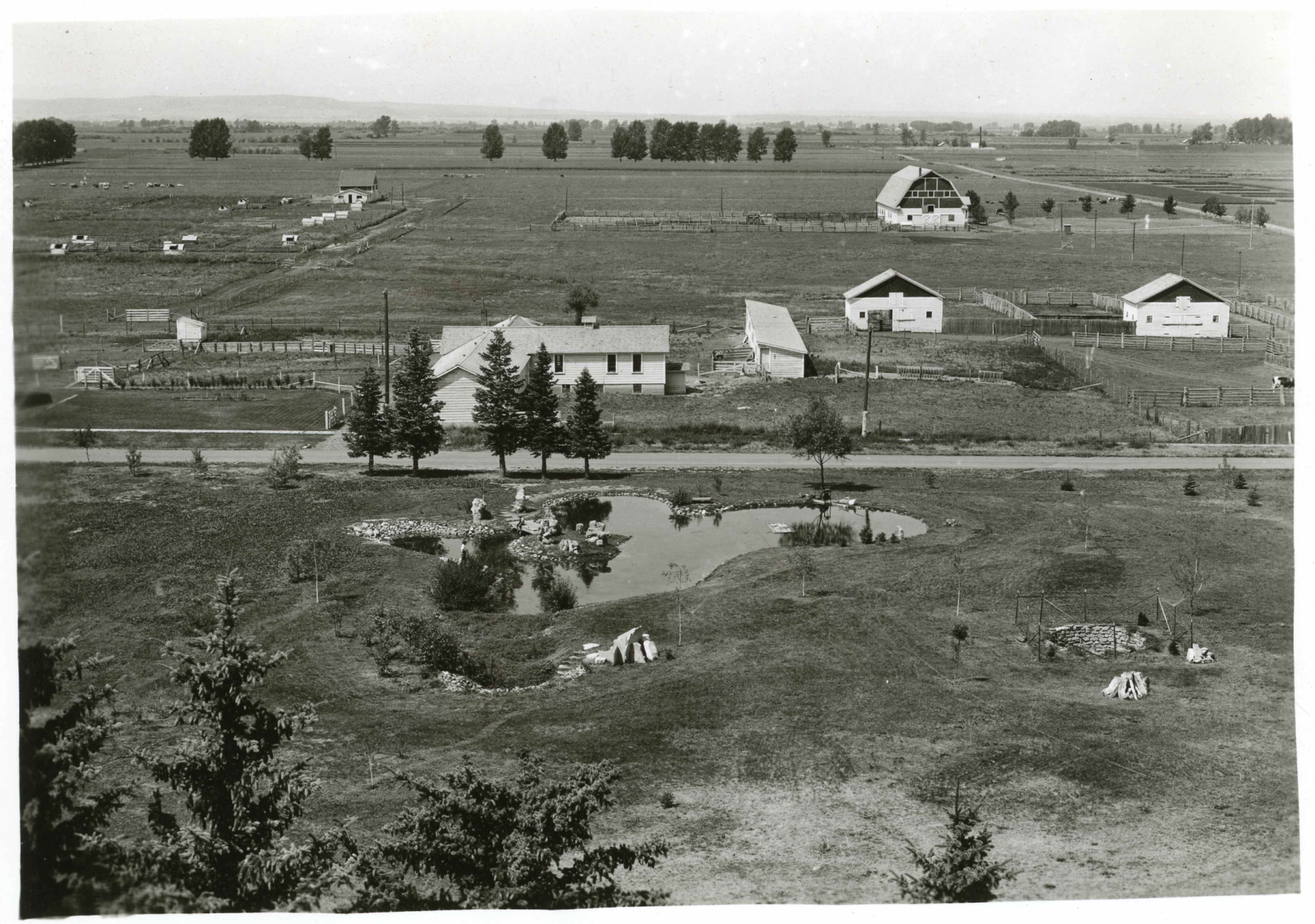
“The contest was bitterly fought and at its completion both teams were completely exhausted,” the author wrote. “Between 400 and 500 college and townspeople witnessed the affair.”
The Duck Pond clearly had an immense cultural impact on once-young students who are now long deceased, but it still inspires MSU students to this day.
Jim Waterman, MSU’s landscape and grounds manager, agreed with this sentiment.
“I believe the Duck Pond is significant in MSU’s history and culture as it is one of the original, and probably best-known, non-building landmarks on campus. New students and visitors alike may take quite some time to figure out where each building is on campus, but within a day or two, the Duck Pond is an easily recognizable and locatable landmark for all,” he said.
Along with its recognizability, the Duck Pond continues to inspire students creatively.
For example, Montana Shakespeare in the Parks (MSIP), an outreach program housed in MSU’s College of Arts and Architecture, performs Shakespeare across Montana and beyond, according to its website. MSIP has hosted its first shows of the season at the Duck Pond since its founding.
For the 2026 season, MSIP spent the first 10 days there, performing for families sitting on blankets and toting picnic baskets.
Since MSIP performs during duckling season, it’s not uncommon for ducklings to waddle onto the stage, hoping to perform alongside the actors. These performances are also completely free to the public, so anyone can attend and meet the ducklings — and the actors, too.
According to an MSU News Service article published by Frankie Beer last year, MSIP is also one of the nation’s oldest and largest Shakespeare companies in the U.S., landing the Duck Pond a special place in Shakespearean history.
Cateora, who is now MSIP’s costume manager and stitcher, also reported that the pond is frequently used for film and photography projects.
“The Duck Pond as a subject for films and photographs was, at one time, so prevalent that the School of Film and Photography placed an informal ban on using Duck Pond imagery for projects,” she said.
Beyond just film and photography, students of all majors and ages often sit by the pond to study, catch up on homework, hang out with a friend or simply have a moment of peace.
Parents, MSU students or otherwise, also frequently take their children to see the ducks, even deep into the winter. Children run around the pond, shout about ducks and laugh while their parents watch on the surrounding benches.
I hear and see this happen almost every time I pass by the pond, and it’s one of my favorite parts about MSU’s campus. That and, obviously, the ducks.
“I feel bad for all the engineers and scientists that don’t get to see them regularly all the way on the other side of campus,” Cateora said.
According to a 2022 MSU News article written by Carol Schmidt, music student Austin Whisler composed a song while standing at the Duck Pond, called “I Saw a Cloud.”
“The piece follows the cloud as I imagined it, descending upon the Bridger ridgeline and into the Gallatin Valley where it becomes a fierce, if short-lived, snowstorm,” Whisler said in the article.
Whisler’s composition led him to be accepted into soundSCAPE festival in Italy in the summer of 2022, which inspired him to pursue a music career.
“While [Whisler] previously was a double major in both music and neuroscience, he has decided to focus on just a music major, with an eventual plan to audition for graduate school in music,” music professor Greg Young said in the 2022 article.
While the Duck Pond has its cultural and historical connotations, MSU and the City of Bozeman also use the spring for practical purposes.
The pond is fueled by a natural spring, which can be found about 20 feet behind the pond, occupied by several large fish. A plaque next to the spring details its history and usage.
“In 1910, this same spring was connected to the Story Mansion to provide pressurized water to all three floors,” the plaque reads.
As for the pond, in 2008, MSU installed a new rubber liner, changed the shape of the pond to encourage water flow and replaced the muddy banks with flagstone — all of which are detailed in a 2008 MSU News article.
According to Cateora’s 2023 article, the renovation also diverts sump pump water from Sherrick Hall and uses the spring to improve water quality and flow.
Low water flow allowed duck poop to build up and muddy the water, so, as an added bonus to the renovations, the pond is now relatively clean and clear — duck poop is often still everywhere, though.
Because of these renovations, the water is constantly flowing, so it never goes stagnant, grows scummy or attracts mosquitoes. It doesn’t freeze, either, so ducks are always hanging around — even deep into Montana’s harsh winters.
Waterman and MSU’s Grounds Department also drain and clean out the pond once a year.
“Cleaning day brings a special connection and excitement around the Duck Pond amongst the entire team involved in the annual event,” he said.
As for the ducks themselves, MSU goes by a “live and let live” policy, according to Cateora.
“The University does not directly support the duck population. They are wild ducks who come and go as they please, and survive off bugs and the occasional human snack,” Cateora wrote.
The Duck Pond has been vital to MSU’s history and culture for almost 120 years, only becoming a traditional gathering space for students 14 years after MSU was founded in 1893.
The pond is a calm and quiet place for students to channel their inner creativity, for parents to take their children to play and for plays to be performed each summer, maybe with ducklings playing side roles.
Generations of Bozemanites have come to the Duck Pond to feel a sense of connection and camaraderie; students have arrived at the pond in their youth, then have aged and grown old as the pond remains mostly unchanged.
Many generations of ducks have come and gone living around this pond — all the while, they watch us come and go, as they have for decades.
“If you haven’t taken time to enjoy the ducks lately, it's a great way to temporarily lift your spirits out of the late winter doldrums,” Cateora wrote.



Comments ()