
Guest Columnist: Introducing the Exponent’s newest column “Ask a Political Scientist"
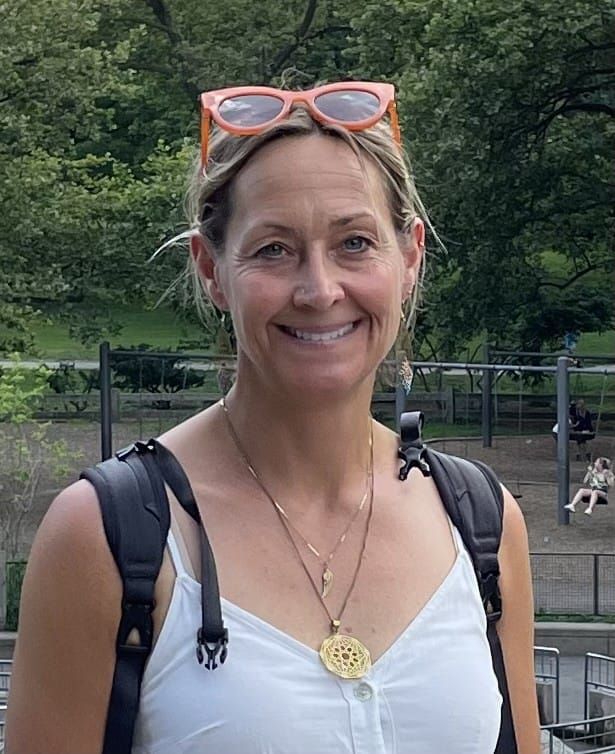
Hello Fellow Citizens of MSU-land (this is a broad and inclusive category, so if you’re reading this, you’re included!)
My name is Sara Rushing, and I am lucky to be a professor in the department of Political Science. I’ve been at MSU since 2008, teaching the more philosophical side of politics — the history of political thought, ethics, feminist theory and democratic theory. It’s a pretty great way to spend my days.
Political Science is a major, yes. But “politics” is a way of life! And I believe we all move through the world every day with some element of what I call “citizen-subjectivity” — being-and-seeing in the world through the lens of what is right and wrong, fair or unfair, effective and efficient, oppressive or liberating, hostile or harmonious. Whether you recognize it or not, I bet you often find yourself assessing power structures (Who’s in charge here? How are decisions made?), evaluating your own agency (Can I do anything about what is happening here? Will anyone listen, and if they do will they actually respond?), or navigating social differences and hierarchies (Why does that group get more? How is that group defined? Why and how does gender/race/class/sexuality/gender identity/dis-ability/body size/religion matter for this claim or that project or the distribution of resources?).
If you start to pay attention, I bet you’ll find that you, my friend, are moving through the world like a political theorist!
You may also find that this isn’t as glamorous or enjoyable as it sounds. Because moving through the world this way often provokes way more questions than answers. And we live in pretty complicated times, when the security of straightforward answers would honestly feel amazing, and we could all sleep better at night.
If only it was clear how to address the polarizing, hyper-partisanship of electoral politics today. If only there was a cut and dried answer to the question of how to tackle climate change. If only there was a perfect equation for how to justly balance the protection of privacy and the provision of security. If only we all agreed on what should be taxed, and how much, and for what purpose.
Spoiler alert: these are the kinds of contested questions that we’ll likely never really “answer.” Hopefully we can contest them productively, respectfully, with some impulse toward the public good, and — call me crazy — a sense of humor when appropriate. That doesn’t come easily, but information and understanding helps!
To that end, I am excited to announce a new bi-weekly Exponent column called “Ask a Political Scientist.” Yes, the world is complicated, and politics is messy, but you don’t have to do it alone!
Send me your questions, big and small. Send me the very clearly political ones (How did Montana draw its congressional districts when it got a second representative a few years ago? Why do we have to put our birth year on our Montana ballots now before we mail them in at election time? Is Russia a democracy? What IS democracy? What does “dark money” mean?). And send me the ones you think might be political but you’re not sure (to be clear, I think everything has a political dimension! The family? Political! Fashion? You bet. Dog poop in Cooper Park? Um, yes. Bike-pedestrian negotiations on campus? Certainly. Doctor-patient negotiations in healthcare? Hell yeah. The gender gap in exclamation point overuse in professional digital communications? TOTALLY!!!!!!).
I can’t wait to hear what’s on your mind! And I promise to seek help from “the experts” when I don’t know the answer to something, which will undoubtedly happen a lot. I too, am always learning about politics and the world we live in, and I wouldn’t have it any other way. One reason I love being a professor is that I get to learn every day from you all, with all your hopes and fears, curiosities, frustrations and a universe of experiences I could only imagine without students willing to tell me about them.
So, ask a Political Scientist! Let’s see what we learn. For, as they say: knowledge is power, knowledge is pleasure, and collaborative knowledge-seeking is potent.
Comments ()