
Humbug Spires: Butte's climbing and hiking destination
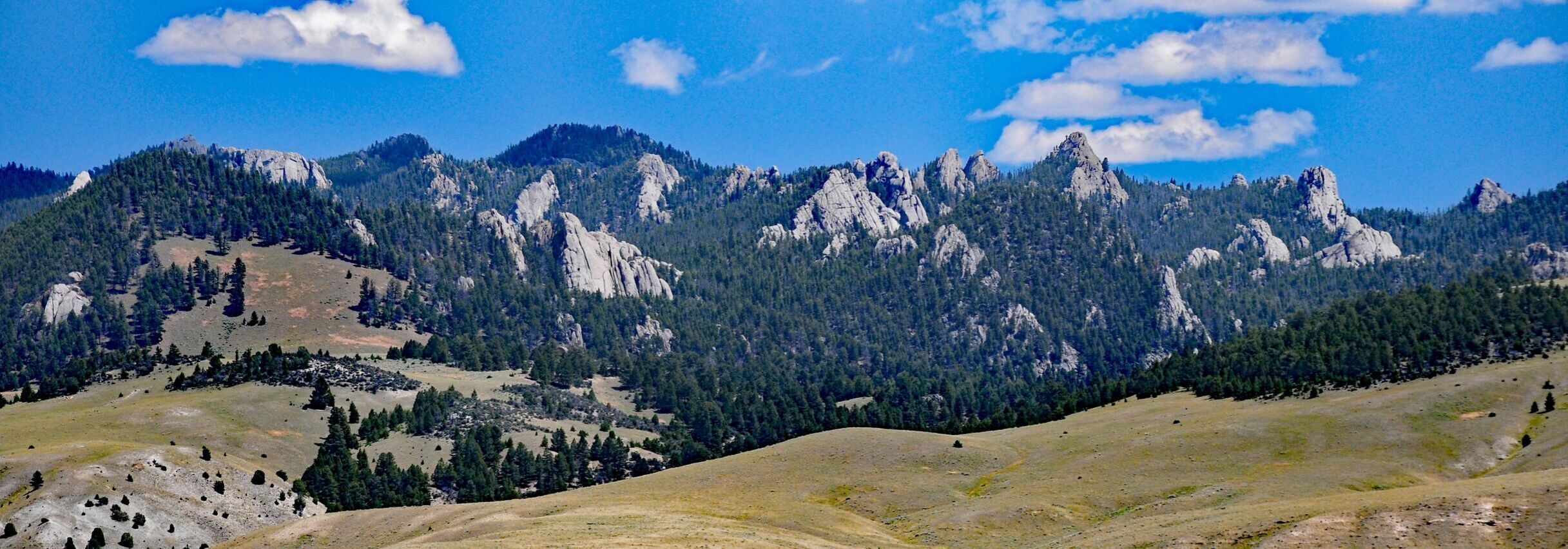
South of Butte in the western reaches of the Highland Mountain range, the Humbug Spires rise to a height of more than 600 feet above the landscape’s trees and boulders.
These rock formations are part of an igneous or granitic intrusion. Magma rose from the depths, intruding into the original sedimentary rocks. In geologic terms, it is part of a batholith. The Spires are quartz-monzonite, somewhat related to granite but containing far less quartz.
Now managed by the Bureau of Land Management, in 1976, through an act of Congress, they were designated a Wilderness Study Area (WSA).
In the 1960s, as the “back to the earth” movement took hold, the area became a well-known, actively used climbing area. In 1971, a group known as “the Dirty Sox Club” brought significant attention to the area, helping establish it as a popular climbing destination.
Rock climbing of varying difficulty levels is a popular use of the area, but hikers and horseback riders enjoy it as well, owing to its wilderness aspects and opportunities for solitude.
For climbers, the difficulty ratings for many of the routes range from 5.5 to 5.7. Weathering and erosion have created very smooth rock surfaces, but have also left cracks for ascents. There are plenty of opportunities for beginners to learn the sport.
Perhaps the best-known spire, and one of the more prominent ones, is called the Wedge, with about a 500–600-foot elevation gain, depending upon which face is climbed, from its base. More than 10 Spires range from 300 feet to 600 feet in height above the forest floor. And there are an estimated 50 of these stone towers throughout.
The highest summit in this primitive area is Mount Humbug at 8,265 feet.
Access is easy from the west side and Interstate 15. Take the Moose Creek exit, just beyond the town of Divide exit, and follow the gravel road for 3.3 miles to the trailhead. The main trail into the heart of the area is about 3.6 miles long, and there are marked side passages. In places, it passes through an old-growth forest.
Most of Montana’s big game species use these Highland Mountains as habitat, and fishing, especially in Moose Creek, which the primary trail follows, offers good fishing for trout.
Camping is primitive with no designated sites. Most visitors — hikers and horseback riders — day hike the Humbug Spires region. Late April until October is usually the best time to visit this Wilderness Study Area.
Butte, Montana, is the best starting place for a visit to the Humbug Spires. The road into then is only about 26 miles south of town. For a several-day stay in Butte, this is a great day journey.
Editor’s note: This story was in part funded by a grant from Visit Southwest Montana. The University of Montana’s Office of Research & Creative Scholarship along with the Davidson Honors College have produced a series of stories called the “This Is Montana Community Vitality Program.” In partnership with the program, Lee Newspapers will be regularly running their Treasure State treasure trove of stories.



Comments ()