
MSU Joins the International Climate Strike, March on Main
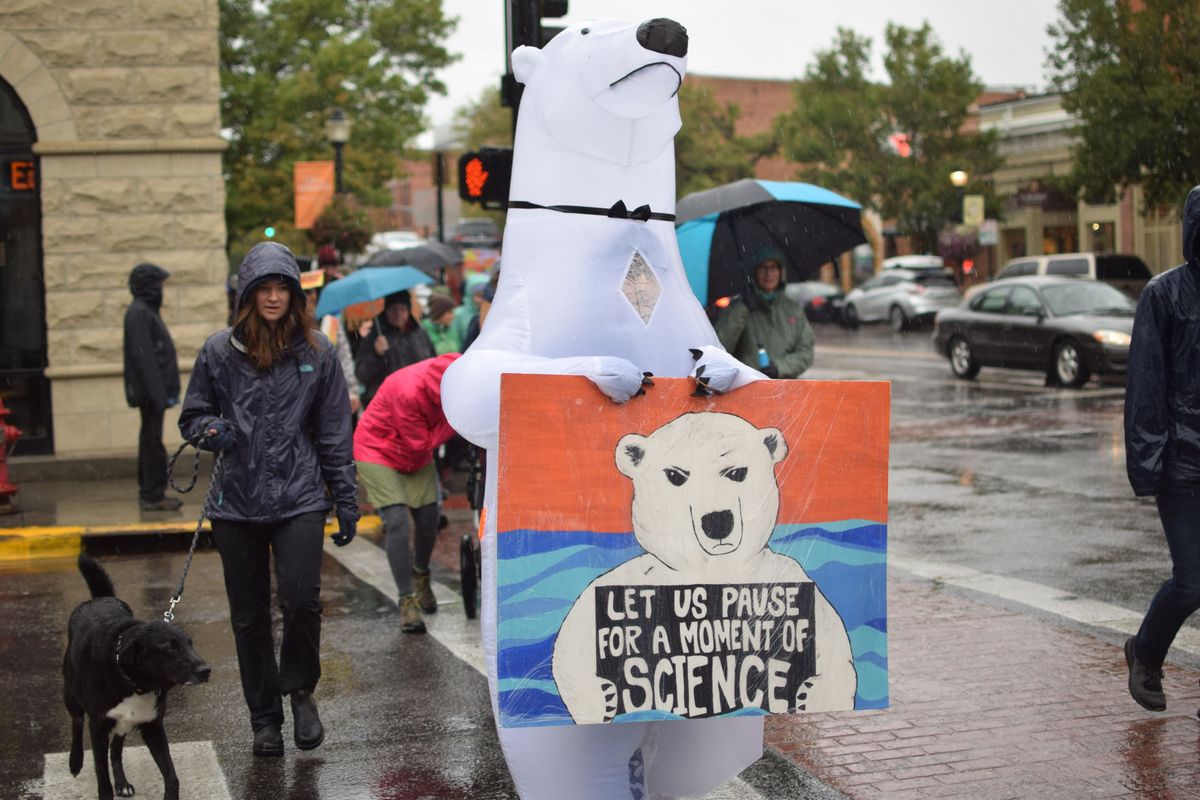
The voices of hundreds of Bozemanites echoed down Main Street on Friday, combined as part of a global movement demanding action on climate change by world governments. Despite a cold downpour of rain, groups of protesters gathered at Montana Hall, Bozeman High School and Cooper Park before converging downtown on a march to Bogert Park.
The procession of people chanted phrases such as “Like water, we rise” and “hey ho, hey ho, fossil fuels have got to go” while displaying homemade signs expressing frustration with the current status of climate change policy.
Gallatin Valley’s local Sunrise Movement chapter, together with the Montana Sierra Club, organized the march. Live music sounded from the amphitheatre as protesters arrived at Bogert Park, followed messages from a variety of speakers both young and old.
“As a 22-year-old, I have a lot to lose to the climate crisis, as do we all. It means so much to me to see all of you here standing up for my future like I am standing up for yours,” Sarah Blessing, leader of the local Sunrise Movement chapter and organizer of the march, said. “We are all in this together. We are all fighting for each other and our right to a livable planet. We are not alone.”
Students from local elementary schools also joined in on the line to the microphone.“The principal of my school decided not to support this march and told the students that we would get an unexcused absence if we decided to go,” A 12-year-old said. “But me and a lot of my friends came anyway because saving our planet is more important than getting a tardy.”
Adult speakers focused on the roots of the climate strike as a youth movement, emphasizing a need to listen to the growing voices of young people in the community.“We need to start listening to youth around the world, and we need to start listening to youth in the United States, and we need to start listening to youth in Montana and maybe we need to listen really closely to the youth in Bozeman,” MSU Community Development professor Paul Lachapelle said.
The climate strike coincided with Swedish climate activist Greta Thunberg’s Fridays for Future campaign, a student movement initiated when the 16-year-old began skipping school to sit outside the Swedish Parliament building, to protest the inaction of politicians regarding the issue of global warming. In preparation for a gathering of world leaders at the United Nations Climate Action Summit starting Sept. 23, Thunberg sailed to New York City in a zero-emissions boat to join Friday’s international climate strikes and testify in front of congress.
“Today, you are standing with Greta and climate activists around the globe demanding urgent action,” Episcopal priest Valerie Webster, a member of the Gallatin Valley Interfaith Association, stated. “You are also, appropriately, calling adults out for putting our present before your future. You are right, the climate crisis is indisputably here now.”
Montana is no exception to the impact of climate change. According to the Montana Climate Assessment, composed of work by students and faculty members of both MSU and the University of Montana, average annual temperatures in the state have risen 1.1 to 1.7 degrees Celsius, while average temperatures in winter and spring have risen 2.2 degrees Celsius. While these alterations in temperature may have a concentrated positive impact on Montana ecosystems in the short term, the authors of the report predict a net-negative impact in the long run. In summary, forested areas will likely decline while the state sees a decrease in average snowpack, shrinking access to water; damaging environments that state economy depends on.
Speakers from the Sunrise Movement shared a list of actions they argue are vital to preventing these trends from becoming more severe. Among them were demands for the country to become carbon neutral by 2030 and to recognize the right of nature in law. They emphasized the need for individuals to make a difference by altering daily habits.
Ayonna Lindsey, a sophomore at MSU who attended the climate strike, reduces her carbon footprint by adhering to a vegan diet. She emphasized the need for students to educate themselves on the issue. “My children and my children’s grandchildren will not have a world to live in and there’s a lot of challenges to overcome for future generations,” Lindsey pointed out. “This generation is the one that can change things, that kind of has to, it’s been put on our shoulders.”
Each speaker concluded with a positive message for the crowd.
“The essence of democracy is all around us on this lawn and in over five thousand marches in 150 countries across this planet. It’s not about leaving these crucial decisions up to politicians in their insulated government buildings or agreeing on every detail before we start, or having the answers to getting where we’re going,” Sarah Blessing said. “A livable future is about knowing what’s necessary, what’s possible, and what’s right. It’s about letting go of the failures that got us here, recognizing that we can be the force to drive the change we must create, and demanding it of the people who ask the privilege of representing us."




Comments ()