
“Sorting Out Race” exhibit educates about racial depictions through thrifted items
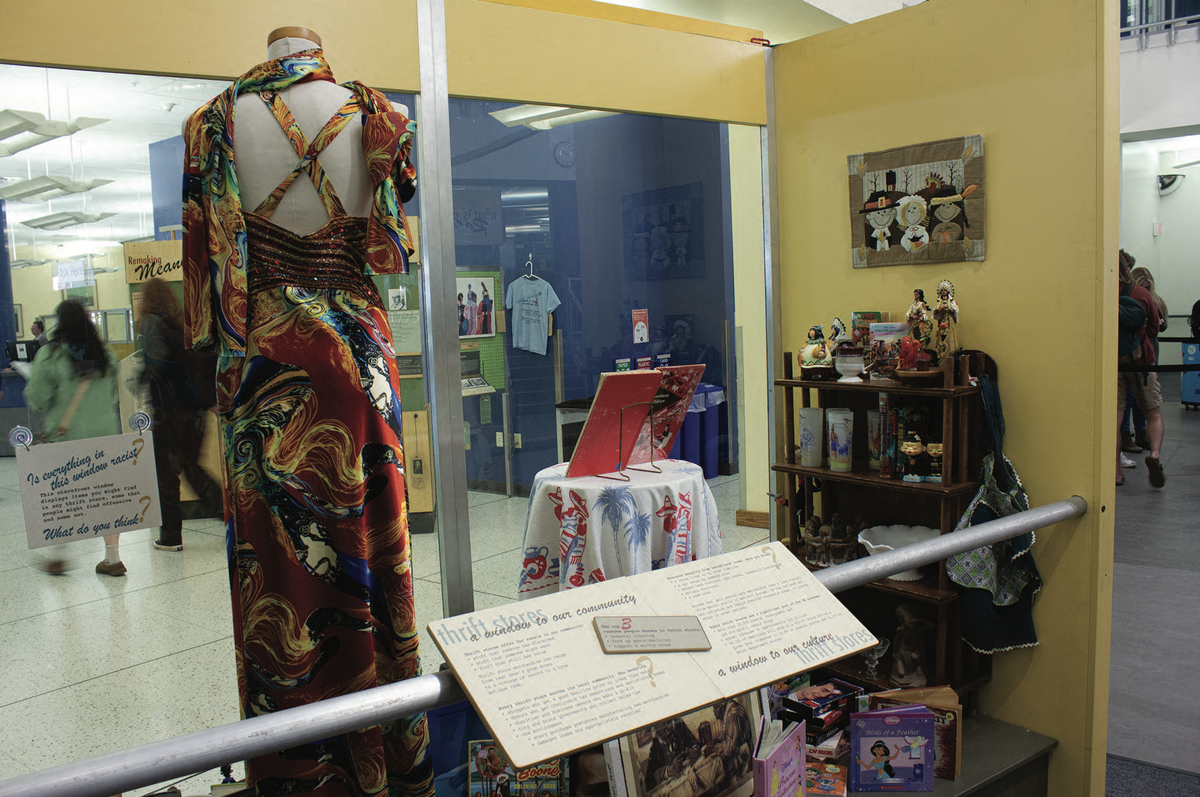
Walking into the library for a cup of coffee or a study session, you may have noticed a new addition to the first floor. Presented as a mock thrift store entryway, “Sorting Out Race” is a traveling exhibit curated by the Kauffman Museum at Bethel College in Kansas. The exhibit consists of donated items from thrift stores that depict racial imagery. The exhibit was installed on June 6 and will be on display until Sept. 28.
“In 2010, a local thrift store manager approached Kauffman Museum's director about items donated to their store that displayed racial imagery ranging from insensitive banality, to hurtful disrespect to the intensely offensive,” David Kreider, a staff member at the Kauffman Museum and the transporter of the exhibit said on Sept. 14. “She suggested that a museum could collect these items rather than perpetuating racial stereotypes by reselling them.”
Over five years, volunteers and thrift store staff sorted out items with racial imagery, donating them to the Kauffman Museum’s Thrift Store Collection, Kreider said. The exhibit first debuted at the museum in 2015 and became a traveling exhibit in 2016.
The inspiration behind the project came from a small town thrift store that wanted to divert items depicting racial imagery towards a more educational use, Kreider said.
For the task of curating the exhibit items, museum staff were challenged to research and select items from the Thrift Store Collection that would clearly exemplify concepts of race, racial identity, stereotype and racism, as well as reveal the continuities and changes in American popular culture over the last 125 years, Kreider said.
From a collection of over 500 items, 130 were selected for the Sorting Out Race exhibit, he said.
“Kauffman Museum exhibit projects are always a team effort, with input from the curator, designer, educator, builder and exhibit developer as well as scholarly and community consultants,” Kreider said.
Now in its seventh year of existence, the “Sorting Out Race” exhibit has been displayed in museums, libraries, a church and a thrift store across nine states, Kreider said. It is scheduled to appear in public libraries and museums for the next three years.
Some notable locations the exhibit has visited include California State University-Fresno, University of Arizona, Arkansas State University-Jonesboro and the University of Montana earlier this spring, Kreider said.
“Many host sites create their own ‘companion exhibit' with objects and stories from their community,” he said. In Washington state, for example, a museum location featured artifacts depicting Japanese American caricatures, Kreider said.
The exhibit’s next stop is Arizona at the Chandler Museum for the remainder of the year, Kreider said. After that, it will travel to Mills Station Arts and Culture Center in Rio Rancho, California for the beginning of 2024.
“Visitors to the exhibition have responded to "Sorting Out Race" by donating objects they no longer wanted to have in their homes, such as a tea towel set with embroidered ‘mammy’ figures doing servant tasks,” Kreider said.
According to the Jim Crow Museum’s website, ‘mammy’ figures are caricatures of African American women and present racial stereotypes.
"Sorting Out Race" was also the recipient of the Leadership in History Award in 2018 from the American Association for State and Local History
To learn more about the “Sorting Out Race” exhibit, take a look the next time you pop into the library, or visit https://kauffmanmuseum.org/exhibitions/travelingexhibits/sortingoutrace/.



Comments ()