
Sustainability Summit’s Keynote Speaker Inspires Rethinking the Environmentalist Movement.
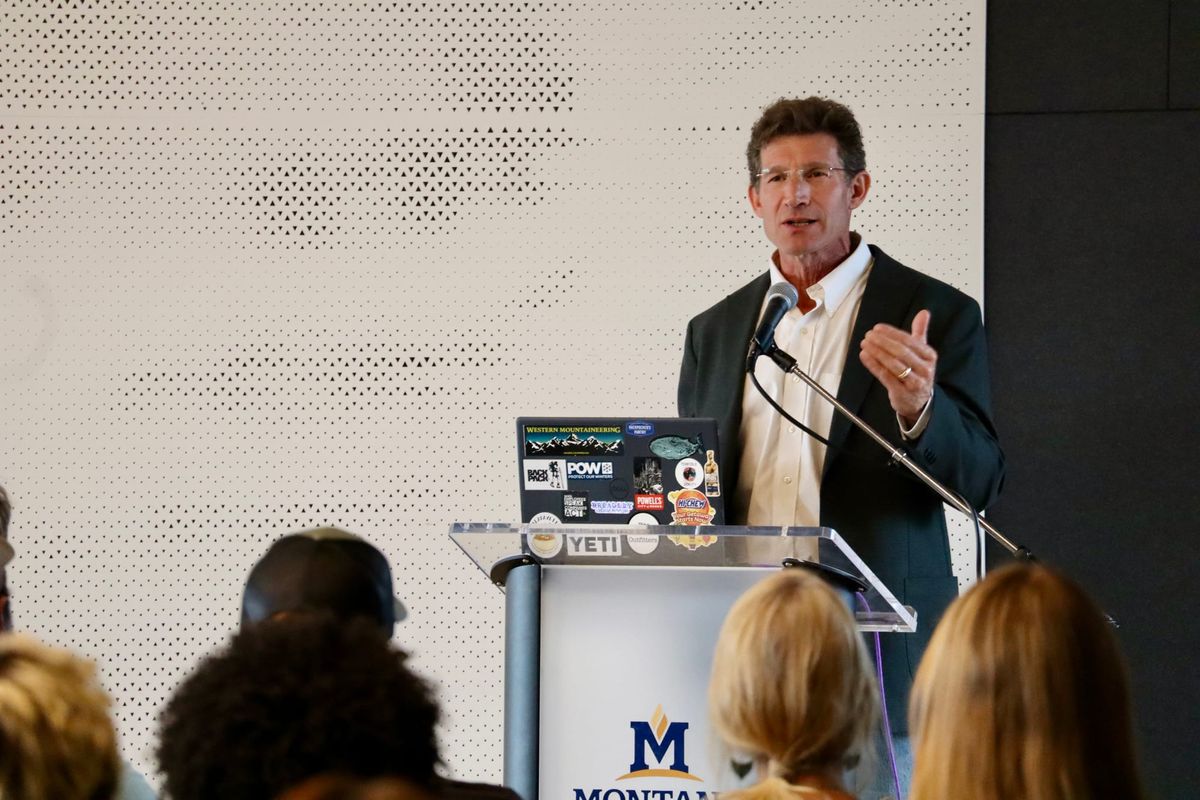
On Sept. 24, The Office of Sustainability hosted its annual Sustainability Summit. The keynote lecture by Auden Schendler concluded the day of conversations and meetings regarding sustainability practices at MSU.
Around 100 people including professors and administrators, students and members of the public were in attendance. Schendler is the former sustainability director for Aspen Snowmass, a luxury resort known for its expansive offering of ski terrain. He is an author, climate activist and skier.
Schendler led the presentation around his new book, “Terrible Beauty: Reckoning with Climate Complicity and Rediscovering Our Soul.” In his presentation, Schendler criticized the modern environmentalism movement for its misguided efforts and lack of effort towards driving systemic change. Schendler offered a solution to the root causes of the stagnated movement by shifting blame away from the consumer. He also advocated for the power in appreciating the world's beauty despite the current conditions.
He said that politicians, corporations and institutions have been reluctant to embrace the practical and sustainable changes. According to him, the current model of voluntary adoption does not work effectively enough for the results that are desperately needed.
As a director of sustainability for Aspen Snowmass, Schendler successfully implemented asymmetric warfare strategies against powerful senators and corporations to change their vote and develop better methods of production.
Schendler expressed the importance of your mindset when fighting hard battles. He urged the audience to find gratification in their resistance, hard work and connections made — not the results. Karin Kirk, a science journalist with Yale Climate Connections was in attendance at this year's summit. She said, the normalization of the difficulties associated with climate work helps emphasize its importance.
“To hear someone like Auden talk about why it's important and why it's okay to lose, and that you will eventually win. Those are really important messages,” she said.
“If you want to build the safe career and never accomplish anything, I guess that's fine — but how do you reflect on yourself when things are going so wrong? When the world really needs help, are you proud of that? I don't know, I wouldn't be,” Kirk said.
In an interview with the Exponent on Sept. 25, Schendler said that universities should be going beyond emissions reductions to drive positive change. According to him, university curriculum should be designed to prepare students in how they challenge systems that harm the environment. Additionally, he said students and university administrators alike can use their roles in the community as a voice for change.
He gave the example of a university president using their voice for change. “If the president or the unified governance of the organization says to your local utility, ‘Hey, we want 100 percent clean power,’ or weighs in at the state level saying, ‘Yeah, we support this bill that would require a renewable energy standard in the state,’ — those types of power-wielding political efforts; those are both powerful, norm-changing in society, but they're not really problematic.” he said, clarifying that these asks are usually bipartisan.
Shendler said that effective advocacy and activism is often more accessible than one might believe. “Buck up, little campers,” he said. “You know, the United States didn't arrive at where it was just by hanging back. It took enormous courage, but also kind of grunt, workmanlike effort on coalitions and agencies like, town council, planning and zoning, state and local government to get things done.”
Paul Lachapelle, a professor of political science, was in attendance at the summit. Lachapelle said that because of MSU's status as an R1 research university and land-grant institution the University has a responsibility to talk about the most consequential issues facing the people now. Furthermore Lachappelle said, “How do we get our president, our vice presidents, our department heads to be talking about this issue and not avoiding it, and to not consider this a political hot take, but rather treating it with the scientific urgency that it has?”
Also in attendance, Bill Kliendl, a professor of water resources at MSU, shared his experience of discussing environmental protection issues in the classroom.
“What I'm trying to do is engage critical thinking — like fight me and argue with me. I want you to, right? Because you know who's super good at indoctrination and manipulation? The giant corporations, they will. They do it all the time,” he said. “And they will manipulate and indoctrinate so that you think you're doing something, but you're not doing something.”
Tony Hartshorn, an associate professor in the Land Resources and Environmental Science department believes that students should wield political pressure through voting. “Well, I'll be really honest with you: You guys don't f--ing vote, so nobody actually gives a sh-t what you think,” he said. “So I’ll try to teach you things about dirt and then I'm gonna yell at you before the election.”

Comments ()