
UM students ask finalist candidate for president about DEI, green investments, tribal relations
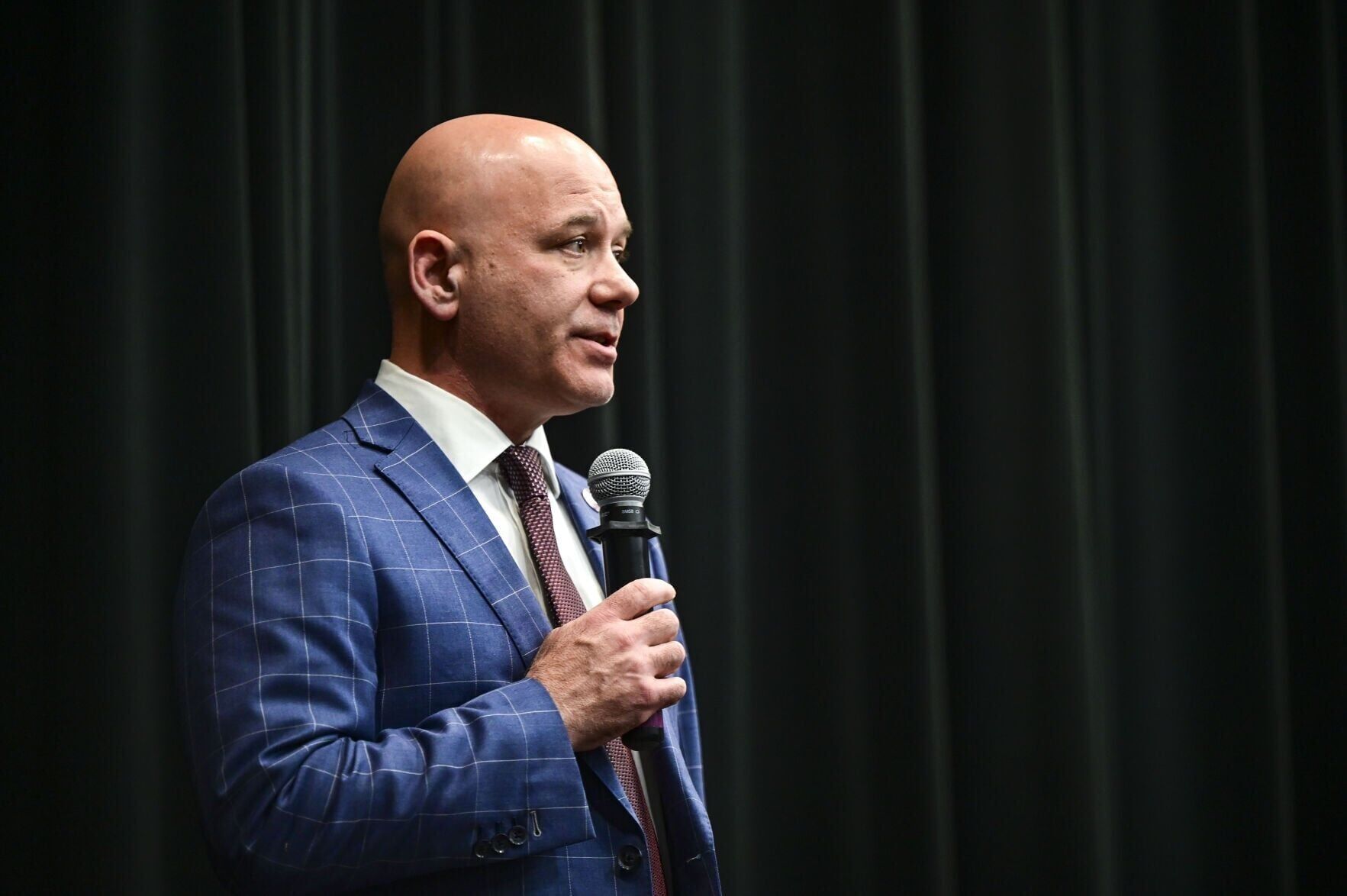
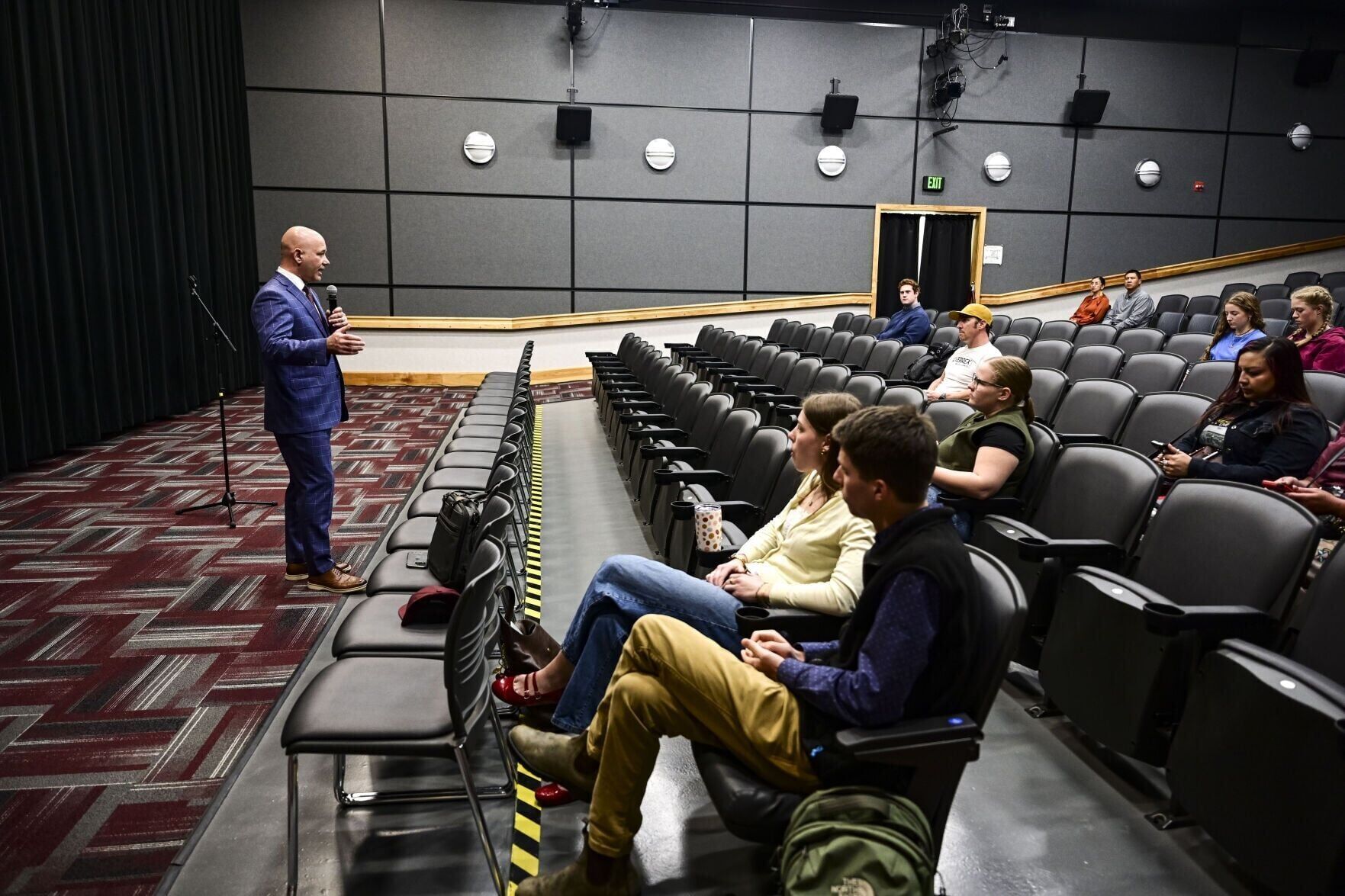
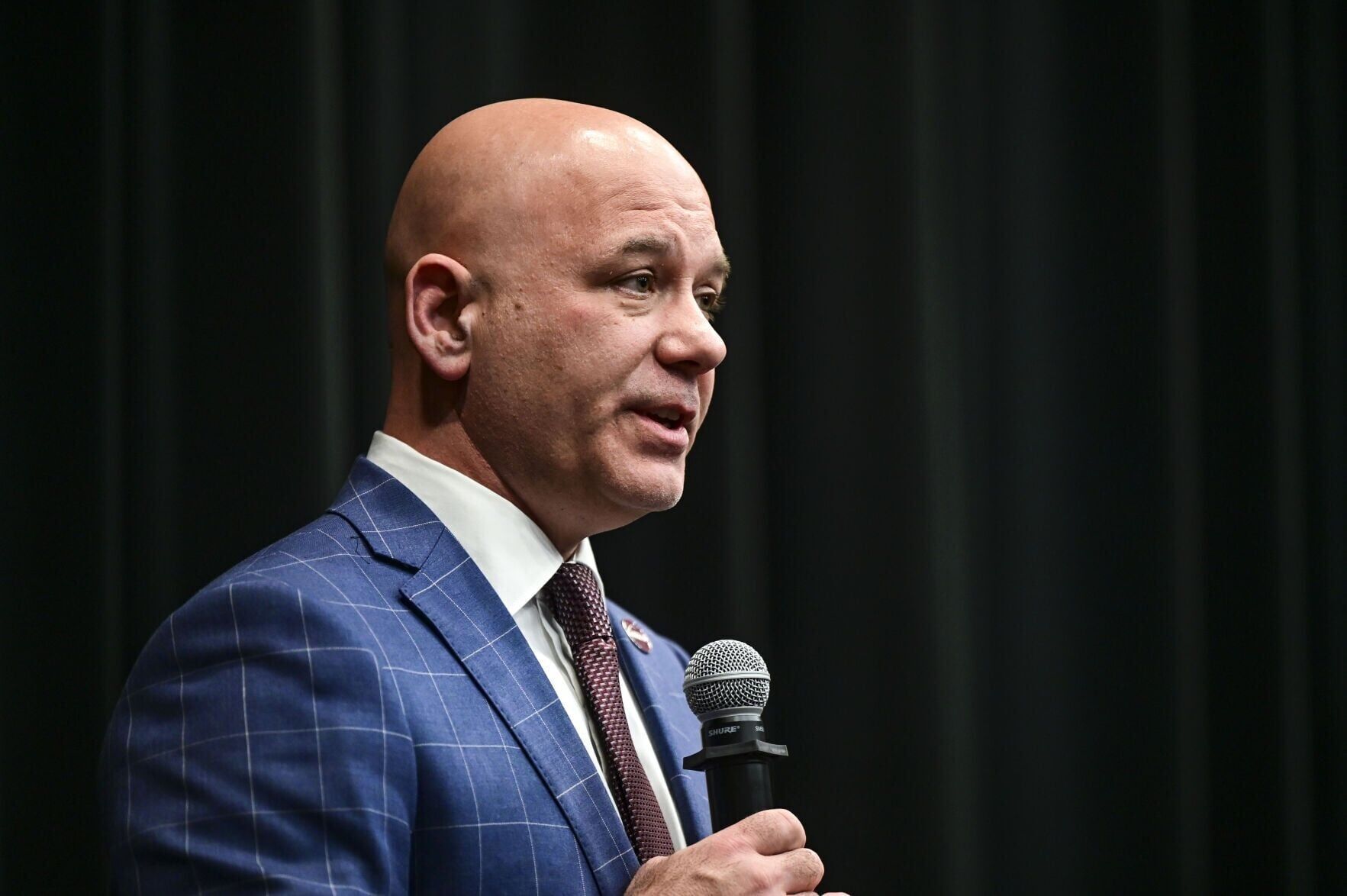
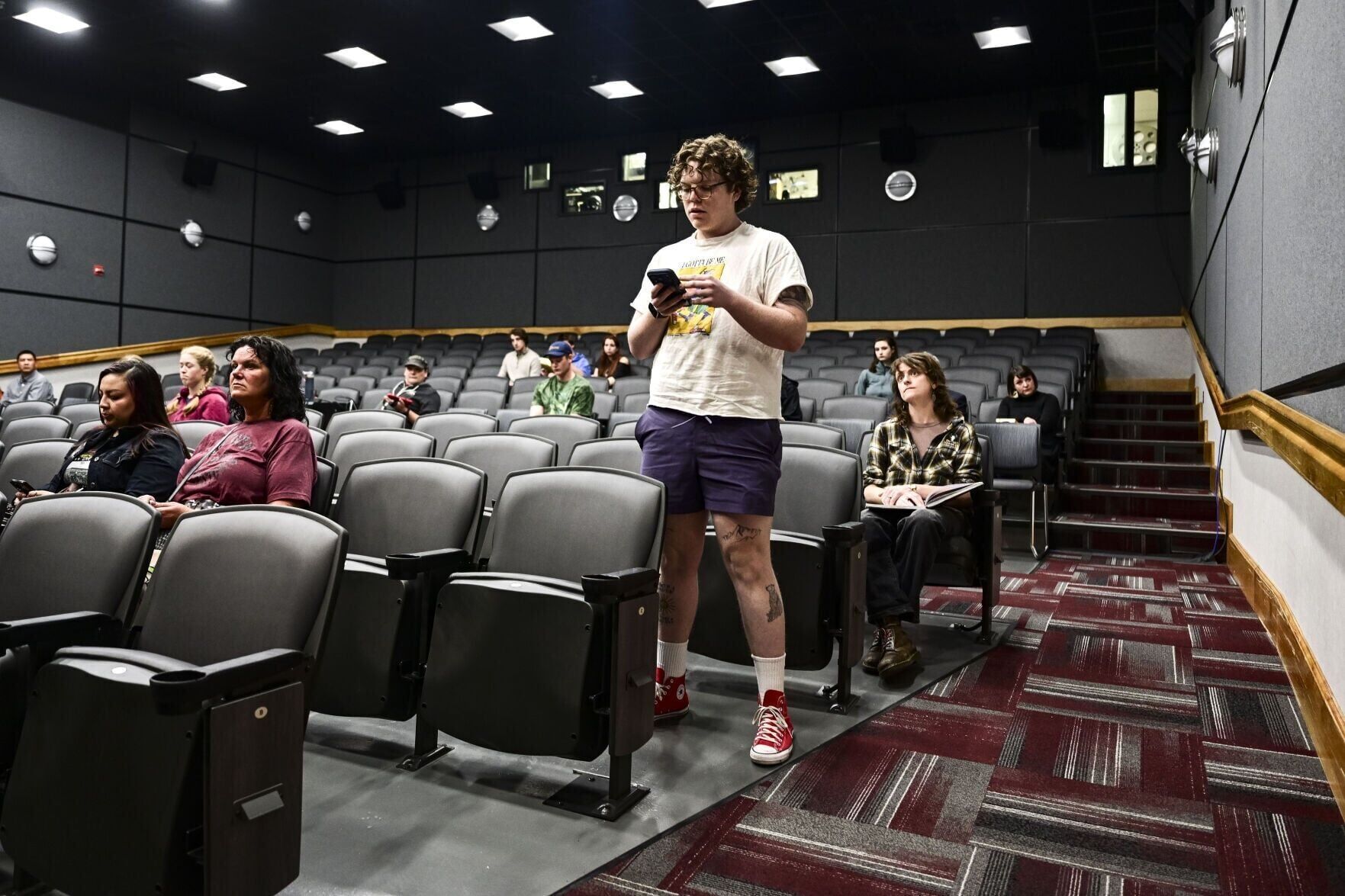
University of Montana students asked finalist candidate for president Jeremiah Shinn about transparency, student relationships, energy efficiency and green infrastructure, and tribal relationships during a Q&A session on Tuesday morning.
Shinn, current interim president of Boise State University, visited campus this week as he looks to fill the vacancy left by former UM President Seth Bodnar. Bodnar announced he would be stepping down as president in January amid rumors he was planning to run for U.S. Senate, later filing as an independent in the race in March.
Associated Students of the University of Montana President Buddy Wilson served on the advisory group that helped select Shinn as a finalist candidate, and said the group was “confident in the quality of our finalist,” as he introduced Shinn.
One student described transparency in leadership as a “big problem” at UM, and asked how Shinn planned to handle communicating with students and the public.
It depends on the circumstance, Shinn said, but added it’s important for the community to feel like the university if being forthright and honest.
“At my core, I believe that a community works better when people have confidence in it, when people have confidence in the leadership, when people have confidence in the information sharing, when people have confidence that we're doing our best to do right by our students,” he said. “That's my commitment.”
Shinn worked in Student Affairs at both BSU and Louisiana State University.
“I regularly attended executive board meetings for fraternities and sororities, student organizations, club sports, just again, to be part of the student population to understand what the student concerns were,” he said. “I would lean on you and others in the room to help me understand what is the best way to meet students where they are in this community, to make myself available and accessible.”
In response to a question about opportunities for green investments, Shinn said at BSU they’ve retrofitted buildings with energy efficient lighting and energy efficient windows, which he said led to thousands in savings. It took an upfront investment to get to those savings, he said.
“It's a really important conversation to have,” he said.
There were a handful of questions about tribal partnerships, one centering around the Native American Graves Protection and Repatriation Act (NAGPRA), which requires organizations receiving federal funding to return Native American remains and objects.
She described NAGPRA as an “unfunded mandate” which leans heavily on “government to government relationships,” and asked Shinn what he would do if there were a conflict around a university construction project that could potentially uncover Native American artifacts.
Shinn said it would be his job as president to know the applicable laws and policy were being followed, but he would also go “beyond that.”
“What I want to understand more deeply is from the perspective of tribal members and tribal leaders. I want to understand what's valuable to them and what role the University of Montana can play in not only maintaining great relationships, but extending our relationships.”
Another student said as a result of the federal government clamping down on diversity, equity and inclusion, the research lab she participated in on campus had to take down outreach language that said they would work with people from all backgrounds.
“How would you protect the best interests of students in the university in the face of public and state pressure?” she asked.
Shinn responded the same way he did to a similar question about transgender rights at an open forum for community members on campus on Monday.
“In the face of being asked not to do something, what are the things that we can do?” he said. “We're having to be creative about how we serve students.”


Comments ()